Fed Rate Hike: Barr Warns of Inflation Risk
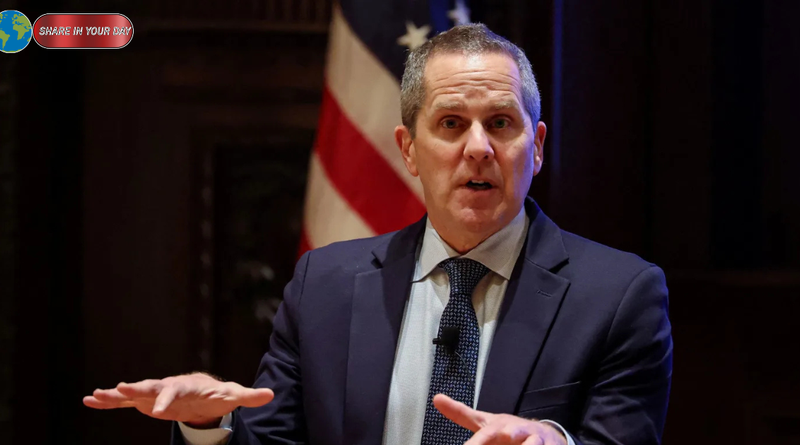
The Fed rate hike debate has taken a sharper turn after Federal Reserve Governor Michael Barr said he would support higher interest rates if inflation fails to ease sufficiently. Barr’s warning adds to growing pressure on policymakers as the central bank approaches its September meeting with price growth still above the Fed’s 2% target.
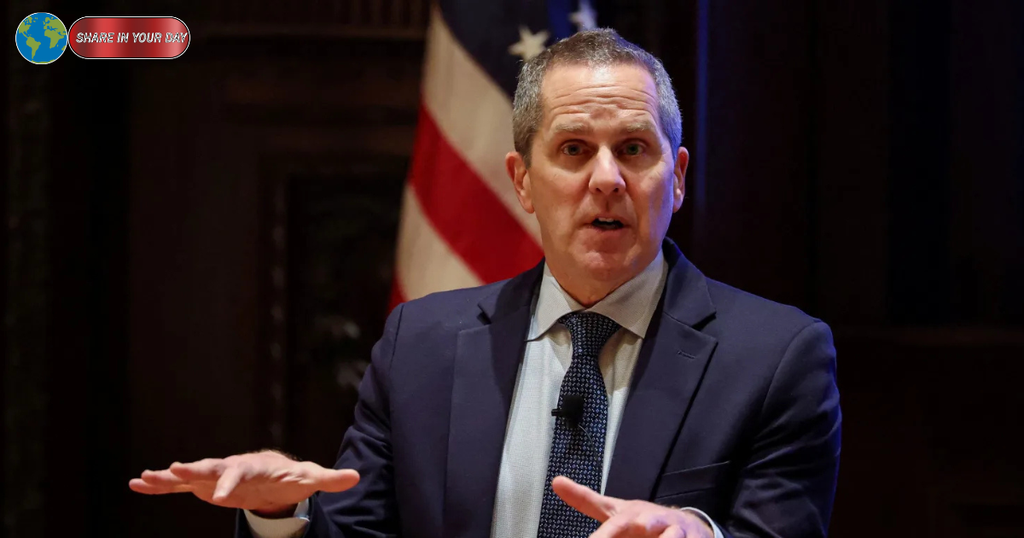
Speaking at a banking forum in Washington on Tuesday, Barr said policymakers could take more time to assess monetary policy if incoming data showed inflation moving convincingly toward the central bank’s goal. But if inflation does not moderate quickly enough, he argued that the Federal Reserve should act decisively.
The comments are significant because Barr is a permanent voting member of the Federal Open Market Committee, giving him a vote at every policy meeting. His remarks also come at a sensitive moment for financial markets, which have increasingly focused on whether the Fed may need to reverse course and raise borrowing costs again.
Fed rate hike warning puts inflation back in focus
Barr’s message was straightforward: inflation remains too high, and the Federal Reserve cannot assume that price pressures will automatically disappear.
Inflation has remained above the Fed’s 2% long-term objective for years. Barr has previously warned that policymakers need convincing evidence that goods-price inflation is moving sustainably lower before considering additional policy easing. In February, he said inflation based on personal consumption expenditures remained around 3% and described the risk of persistent inflation above the Fed’s target as significant. FFederal Reserve
His latest remarks go a step further.
If inflation begins moving clearly toward 2%, Barr indicated that policymakers can afford to be patient. But if the data fail to provide that reassurance, a rate increase could become necessary.
That creates a much more complicated policy environment for the Federal Reserve.
Why Michael Barr is considering higher rates
The Federal Reserve normally raises interest rates when it wants to slow demand and reduce inflationary pressure.
Higher borrowing costs can make mortgages, credit cards, business loans and other forms of financing more expensive. That can reduce spending and investment, potentially helping to bring price growth under control.
However, higher rates can also weaken economic activity and employment. That means policymakers have to balance inflation against the risk of unnecessarily slowing the economy.
Barr’s latest comments suggest that inflation is becoming the more immediate concern.
The broader economy has remained relatively resilient. Consumer spending has held up, unemployment remains comparatively low and investment connected to artificial intelligence has provided an important source of economic activity. Barr has previously described the labor market as stable while warning that inflation remains too high. FForex Factory+1
That combination gives the Fed more room to focus on prices.
If economic growth were collapsing at the same time that inflation remained elevated, policymakers would face a much more difficult decision. But with economic activity still showing strength, officials may have greater flexibility to keep monetary policy restrictive or even tighten it further.
Inflation remains above the Fed’s 2% target
The central issue behind the potential Fed rate hike is the distance between current inflation and the Federal Reserve’s 2% objective.
Barr has argued that inflation has been above target for an extended period. In his latest remarks, he warned about the possibility of broader price pressures becoming entrenched.
That is a critical concern for central bankers.
If households and businesses begin to expect higher prices to continue, inflation can become more persistent. Companies may raise prices in anticipation of higher costs, while workers may seek larger wage increases to compensate for rising living expenses.
Central banks generally want to prevent that process from becoming self-reinforcing.
The Federal Reserve’s official policy framework continues to emphasize returning inflation to 2% while supporting maximum employment. Earlier Fed discussions also acknowledged that inflation remained elevated and that the risk of persistent above-target inflation was meaningful. FFederal Reserve
Barr’s comments therefore fit into a broader debate already taking place inside the central bank.
September Fed meeting becomes increasingly important
The Federal Reserve’s September policy meeting is now one of the most closely watched economic events for investors.
Policymakers will have access to additional inflation and employment information before making their decision. The meeting is scheduled for September 15-16, according to reporting on Barr’s remarks. QQuartz+1
That timing matters because the incoming inflation reports could determine whether Barr’s warning becomes a realistic policy option or remains a conditional statement.
If inflation data show a clear slowdown, officials could argue that existing monetary policy is sufficiently restrictive. In that scenario, the Fed could wait for additional evidence before changing rates.
If inflation remains stubbornly high, however, the case for tightening would become stronger.
Markets have already been responding to the possibility.
According to reporting following Barr’s remarks, traders had assigned substantial odds to a September rate increase, although market expectations can change rapidly as new economic data are released. QQuartz
Fed rate hike could reshape financial markets
A renewed Fed rate hike would have consequences far beyond the federal funds rate itself.
Bond yields could rise as investors price in tighter monetary policy. Higher Treasury yields can then influence borrowing costs across the economy, including mortgages, corporate debt and consumer credit.
The U.S. dollar could also respond.
Higher U.S. interest rates can make dollar-denominated assets more attractive to international investors, potentially supporting the currency. A stronger dollar can reduce the cost of some imported goods, although it can also create challenges for U.S. companies that generate significant revenue overseas.
Stock markets would face another important adjustment.
Investors generally value companies partly on the basis of future earnings. When interest rates rise, the present value of those future earnings can fall. That can be particularly important for growth-oriented companies whose valuations depend heavily on expectations for future profits.
The effect would not necessarily be uniform, however.
Financial companies can sometimes benefit from higher interest rates, while heavily indebted businesses and rate-sensitive sectors may face greater pressure.
Artificial intelligence is another part of the economic picture
One unusual element of the current policy debate is the role of artificial intelligence investment.
The AI boom has driven substantial spending on data centers, computing infrastructure and related technologies. Barr has previously pointed to AI-related investment as one factor supporting economic growth. FFederal Reserve+1
That creates an interesting challenge for the Fed.
AI investment can boost productivity and economic growth over the long term. But strong investment and demand can also contribute to inflationary pressure if the economy’s capacity cannot keep pace.
For policymakers, the question is whether AI-driven investment represents a temporary source of demand or part of a broader improvement in productivity.
If productivity rises substantially, the economy may be able to grow faster without generating the same degree of inflation.
If demand rises faster than supply, however, price pressures could remain elevated.
That distinction could become increasingly important as the Federal Reserve evaluates the economic outlook.
Tariffs and energy costs add to inflation concerns
Inflation is not being driven by a single factor.
Barr has previously highlighted the impact of tariffs on goods prices. In February, he said the rise in goods-price inflation was linked in large part to tariffs and warned that inflation could remain elevated. FFederal Reserve
Energy prices are another potential source of pressure.
Higher oil prices can feed directly into gasoline and transportation costs while also increasing expenses for businesses that rely on energy-intensive production and logistics.
That can create second-round effects across the economy.
For the Fed, the challenge is determining whether these pressures are temporary or likely to become persistent.
Central banks generally try not to respond aggressively to short-lived price movements. But if temporary shocks begin spreading into broader inflation expectations and underlying prices, monetary policy may need to respond.
Could the Fed really raise rates again?
Barr’s comments do not mean that a rate increase is guaranteed.
His position is conditional on the incoming economic data.
If inflation moderates sufficiently, he indicated that policymakers can take more time to assess the situation. If inflation remains too high, however, he believes the Fed should be prepared to raise rates.
That distinction is important.
Federal Reserve officials regularly emphasize that monetary policy is data-dependent. The central bank does not want investors to assume that a single economic report automatically determines the next policy decision.
Instead, officials examine multiple indicators, including inflation, employment, wages, consumer spending, economic growth and financial conditions.
The Fed’s earlier policy discussions similarly emphasized that monetary policy was not on a preset course and would depend on incoming information and the balance of risks. FFederal Reserve
Barr’s comments therefore represent a warning rather than a firm promise.
Markets are watching every inflation report
With the September meeting approaching, upcoming inflation data will be critical.
Investors will be looking for evidence that price growth is slowing. A meaningful decline could reduce expectations for another rate increase and support the argument for keeping policy unchanged.
A disappointing inflation report could have the opposite effect.
If inflation remains stubbornly high, investors may increase expectations for tighter monetary policy. That could push Treasury yields higher and increase volatility across stocks, currencies and other financial assets.
The market reaction may be especially sensitive because expectations have already shifted significantly following recent comments from Fed officials.
That means even relatively small differences between expected and actual inflation data could produce substantial market movements.
What Barr’s comments mean for consumers
For ordinary Americans, the prospect of a Fed rate hike matters because changes in monetary policy eventually affect household finances.
Credit card rates are particularly sensitive to changes in short-term interest rates. Consumers carrying balances could therefore face higher borrowing costs if monetary policy becomes tighter.
Auto loans and other consumer credit could also become more expensive.
Mortgage rates do not move in lockstep with the federal funds rate, but expectations about future Fed policy can influence longer-term Treasury yields and mortgage borrowing costs.
Savers, meanwhile, could benefit from higher interest rates on some deposit products.
The overall impact therefore depends on an individual’s financial position.
Borrowers generally prefer lower rates, while savers may benefit from higher yields.
Fed faces a difficult policy balancing act
The Federal Reserve’s biggest challenge is avoiding a policy mistake.
If officials keep rates too low while inflation remains elevated, price pressures could become more entrenched. That could force the central bank to tighten more aggressively later.
If policymakers raise rates too quickly, they could unnecessarily weaken economic growth and the labor market.
Barr’s comments suggest he currently sees inflation as a risk serious enough to justify stronger action if necessary.
That does not mean the Fed has abandoned concerns about employment.
Instead, it reflects the central bank’s dual mandate. Officials must consider both price stability and maximum employment when setting monetary policy.
The latest economic picture gives them a difficult combination: inflation remains above target, while the labor market has shown signs of stability.
That may allow inflation concerns to take greater priority in the short term.
The next inflation reports could determine the Fed’s path
The coming days will be crucial for financial markets.
The Federal Reserve will receive additional economic data before its September meeting, giving officials another opportunity to assess whether inflation is finally moving in the right direction.
For Barr, the message is clear.
If inflation is moderating toward the Fed’s 2% goal, patience may be appropriate.
If it is not, he is prepared to support higher rates.
That puts the next inflation reports at the center of the debate over U.S. monetary policy.
The Fed rate hike question is therefore no longer simply about whether policymakers want to cut rates or hold them steady. A third possibility has become increasingly important: the Federal Reserve could tighten policy again if inflation refuses to cooperate.
For investors, businesses and consumers, that possibility means the September Fed meeting could become a major turning point for interest-rate expectations.