Germany-Russia Drone Attack Raises Alarm Across Europe
The Germany-Russia drone attack dispute has escalated sharply after Berlin formally accused Moscow of responsibility for an attempted attack involving an explosives-laden drone at Leipzig/Halle Airport. German officials said intelligence, police investigations and the pattern of the incident pointed to Russian state involvement. Moscow has rejected the accusation and warned that Germany is pursuing a course of escalation.
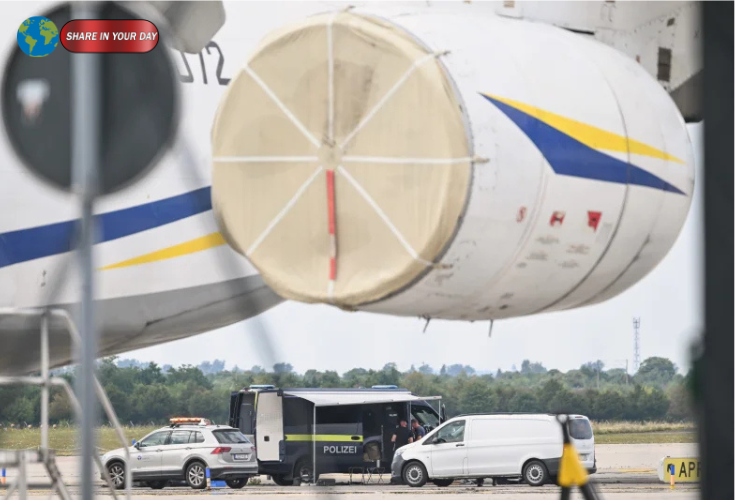
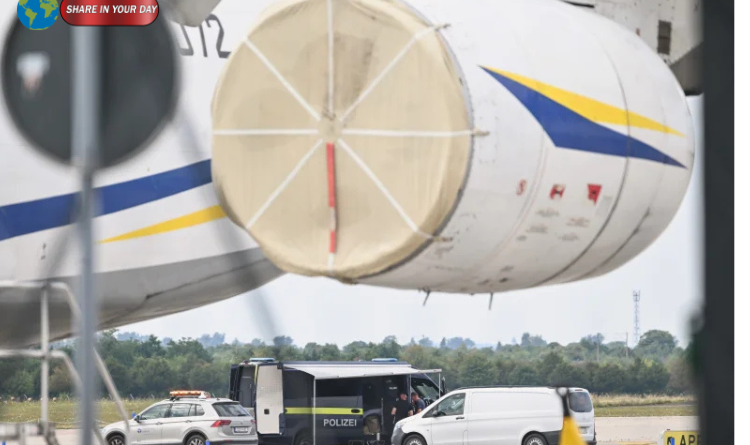
The incident happened on Aug. 4 at Leipzig/Halle Airport, one of Germany’s important international freight hubs. A drone carrying explosives was discovered near a Ukrainian cargo aircraft, and authorities were able to defuse the device before it detonated. AAP News
The case has since developed into a much broader diplomatic confrontation. Germany announced measures against Russian diplomatic and cultural institutions, while European Union officials began discussing possible collective action.
The dispute is also significant because Berlin says the airport incident was not an isolated security breach. German officials view it as part of a wider pattern of Russian hybrid operations across Europe.
What Happened in the Germany-Russia Drone Attack?
The incident centered on Leipzig/Halle Airport in eastern Germany.
According to German authorities, a drone carrying explosives was found near a Ukrainian cargo plane at the airport. The device was subsequently defused, preventing what could have become a far more serious incident at a major civilian aviation and freight facility. AAP News
The airport has particular strategic importance because it handles large volumes of international cargo and is also used in connection with logistical support for Ukraine.
That combination makes the location especially sensitive.
German officials have characterized the incident as an attempted attack rather than an ordinary drone intrusion. Interior Minister Alexander Dobrindt said intelligence findings indicated that people involved in the operation were acting on behalf of Russian state agencies.
He said the conclusion was based on several strands of information, including police investigations, the pattern of the offenses and intelligence findings. RReuters
The accusation marks a significant change in Berlin’s public position.
Rather than simply investigating an unidentified drone, the German government has now directly attributed responsibility to Russia.
Germany Blames Russia for the Leipzig Incident
The German government announced its conclusion on Sept. 1.
Dobrindt said the available evidence established Russian responsibility for the attempted attack. Foreign Minister Johann Wadephul went further, saying the Leipzig incident fits what Germany considers a broader pattern of Russian hybrid operations in Europe. RReuters
The term “hybrid operations” is important.
It generally refers to activities designed to pressure or destabilize another country without taking the form of conventional military warfare. Such activity can include sabotage, cyberattacks, disinformation campaigns, espionage and attacks against critical infrastructure.
Germany says the threat is becoming increasingly serious.
Dobrindt said European countries face a growing threat from actions targeting critical infrastructure, defense companies and assistance to Ukraine. RReuters
That interpretation places the Leipzig incident within a much larger security debate.
For Berlin, the concern is not simply that a drone appeared near an airport. The greater concern is whether hostile actors are deliberately testing the security of European infrastructure.
Why Leipzig/Halle Airport Matters
Leipzig/Halle Airport is more than a passenger aviation facility.
It is a major freight hub and has played an important role in transporting goods and supporting logistical operations connected with Ukraine. That makes the airport strategically significant amid the continuing Russia-Ukraine war.
The attempted attack therefore raises questions about the vulnerability of European logistics infrastructure.
An explosives-laden drone reaching an airport environment demonstrates how relatively small unmanned aircraft can create potentially serious security problems.
The threat does not necessarily require a large military operation.
A comparatively inexpensive drone can force airport closures, trigger emergency responses and disrupt aviation operations. If explosives are involved, the potential consequences become significantly more severe.
That is why European governments have increasingly focused on counter-drone technology and protection for airports, power networks, military facilities and other critical sites.
The Leipzig incident has added another layer to those concerns.
Russia Rejects Germany’s Accusations
Moscow has strongly denied responsibility.
Russian officials have described Germany’s accusations as unfounded and politically motivated. Kremlin spokesman Dmitry Peskov said serious accusations should be supported by evidence and argued that Germany was pursuing further escalation. RReuters
Russian President Vladimir Putin also rejected Berlin’s claims.
According to the Associated Press, Putin said evidence being presented had been planted and argued that the German government was using the Russia issue to distract from domestic political problems. AAP News
The Russian response means the dispute is unlikely to end with the German government’s announcement.
Instead, the episode has opened another diplomatic front between Berlin and Moscow.
Germany has summoned Russia’s ambassador, while Russian officials have warned that Moscow will respond to Germany’s measures.
Germany Takes New Action Against Russia
Berlin announced several measures following its attribution of the attack.
One of the most significant decisions is the planned closure of Russia’s consulate general in Bonn. Germany also intends to terminate its agreement involving the Russian House cultural center in Berlin. RReuters
Foreign Minister Wadephul said Germany would not allow hostile actions to intimidate the country or undermine social cohesion.
Berlin also plans to push for additional European sanctions and travel restrictions targeting Russian nationals.
The German government has indicated that it wants the response to extend beyond bilateral diplomatic measures.
That could mean additional EU sanctions against Russian individuals and entities, as well as stronger pressure on Russia’s so-called shadow fleet.
The shadow fleet refers to networks of vessels used to transport Russian oil while attempting to circumvent Western restrictions.
EU Officials Consider a Wider Response
The Germany-Russia drone attack has also become an EU problem.
European officials met Wednesday to discuss how the bloc should respond. EU foreign policy chief Kaja Kallas described the attempted attack as having the hallmarks of state-sponsored terrorism. AAP News
Her comments illustrate the seriousness with which some European governments are treating the case.
However, the EU faces a difficult balancing act.
European countries want to deter further Russian activity without triggering direct military confrontation with Moscow. Russia remains a nuclear-armed state, and many EU members are also NATO members.
That creates limits on the kinds of retaliation governments are prepared to consider.
Sanctions, diplomatic expulsions, intelligence cooperation and stronger infrastructure security are therefore likely to remain central tools.
The European Union already has extensive sanctions against Russia.
AP reported that the bloc has imposed almost two dozen sanctions packages since Russia’s full-scale invasion of Ukraine, targeting thousands of people and entities. AAP News
The challenge is determining what additional measures could create meaningful pressure without simply repeating existing policies.
France and Other European Countries Back Germany
Germany has received support from several European governments.
France has summoned Russia’s envoy and indicated support for additional measures, including sanctions targeting vessels linked to Russia’s shadow fleet. French Foreign Minister Jean-Noël Barrot said an incident of such gravity should have consequences. TThe Washington Post
Poland has also expressed solidarity with Germany.
Other European countries have warned that Russian hybrid activity is not confined to one country.
That concern has become increasingly prominent as European governments investigate suspected sabotage, cyber incidents, suspicious fires and unauthorized drone activity.
The Leipzig case therefore arrives at a particularly sensitive time.
European governments are trying to strengthen their security while continuing to support Ukraine, all while attempting to avoid a direct confrontation between NATO and Russia.
The Broader Russian Hybrid Warfare Concern
The most important consequence of the Germany-Russia drone attack may be the debate over hybrid warfare.
Traditional military attacks are usually easier to identify.
A missile strike, invasion or bombing campaign has an obvious physical signature. Hybrid operations can be much harder to attribute and may deliberately remain below the threshold of conventional warfare.
A drone near an airport, a cyberattack against infrastructure or an unexplained fire at a strategically important facility can create disruption without looking like a traditional military assault.
European officials say Russia has increasingly used such methods to pressure governments and undermine support for Ukraine.
The German government believes the Leipzig incident fits this pattern. RReuters
The issue is particularly sensitive because European countries depend heavily on interconnected infrastructure.
Airports, rail networks, energy grids, telecommunications systems and logistics centers are all potential targets for disruption.
Even when an attack causes no casualties, the economic and psychological impact can be substantial.
Germany Says It Is Not at War With Russia
Despite the seriousness of the allegations, Berlin has emphasized that Germany is not at war with Russia.
German officials instead describe the country as facing a continuing hybrid threat.
That distinction matters.
Germany is a NATO member and a major supporter of Ukraine. Any direct military clash between Germany and Russia could carry consequences far beyond the original incident.
Berlin’s response has therefore focused on diplomacy, sanctions, security measures and cooperation with European allies.
The objective is to demonstrate that hostile activity will have consequences without crossing into direct armed conflict.
That strategy is also being considered at the European level.
EU officials are discussing collective countermeasures while remaining cautious about actions that could lead to further escalation. TThe Washington Post
The Political Dimension Inside Germany
The timing of Berlin’s announcement also has domestic political significance.
Germany is approaching a state election in Saxony-Anhalt, where the right-wing Alternative for Germany, or AfD, has been polling strongly.
Reuters reported that the AfD had been leading the polls ahead of the Sept. 6 election, with the party calling for closer relations with Moscow. RReuters
The Russia debate has consequently become intertwined with German domestic politics.
AfD leader Tino Chrupalla criticized the government’s handling of the accusation and questioned why Berlin had not taken a similar approach to other controversial incidents, including the Nord Stream pipeline sabotage. RReuters
For the German government, however, the issue is primarily one of national security.
Officials argue that hostile operations should not be allowed to create divisions within German society.
That creates an additional challenge for Berlin: responding firmly to suspected foreign interference while preventing the issue from becoming a source of deeper political polarization.
What Happens Next?
The next stage will likely focus on evidence, European coordination and the Russian response.
Germany has already announced diplomatic consequences. The European Union is considering additional sanctions and other countermeasures.
At the same time, Moscow has warned that it will respond.
The central question is whether the dispute remains within the realm of diplomacy and economic pressure or develops into a broader confrontation.
For European governments, another question is equally important: how can airports and other critical infrastructure be protected from increasingly sophisticated drone operations?
The Leipzig incident has demonstrated the potential vulnerability.
It also illustrates how the security environment in Europe has changed since Russia’s full-scale invasion of Ukraine.
Germany-Russia Drone Attack: Why It Matters
The Germany-Russia drone attack controversy is significant far beyond one airport.
Germany says a drone carrying explosives was used in an attempted attack near a Ukrainian cargo aircraft at Leipzig/Halle Airport. Berlin has formally attributed the operation to Russian state actors and says the incident fits a broader pattern of Russian hybrid activity in Europe. RReuters+1
Russia denies the accusation and says Germany is escalating tensions.
Meanwhile, EU officials are considering how to respond without provoking direct military confrontation.
The incident is therefore becoming a test of Europe’s ability to respond to threats that fall somewhere between conventional warfare and covert sabotage.
For Germany, the message is clear: critical infrastructure must be better protected, and suspected foreign interference will face consequences.
For Russia, Berlin’s accusation represents another serious deterioration in relations.
And for the European Union, the Leipzig case is another warning that the conflict surrounding Ukraine increasingly extends beyond the battlefield.
The coming weeks could determine whether the incident remains a diplomatic crisis or becomes a catalyst for tougher European measures against Moscow.