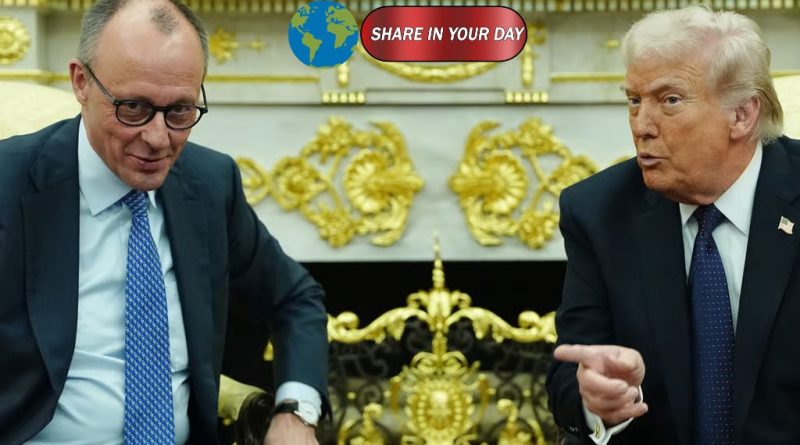
Friedrich Merz Appears Powerless as Trump Criticizes European Allies in Oval Office
A tense Oval Office meeting between German Chancellor Friedrich Merz and U.S. President Donald Trump has highlighted growing strains between Washington and its European allies, after the American leader openly criticized several NATO partners while Merz largely remained silent.
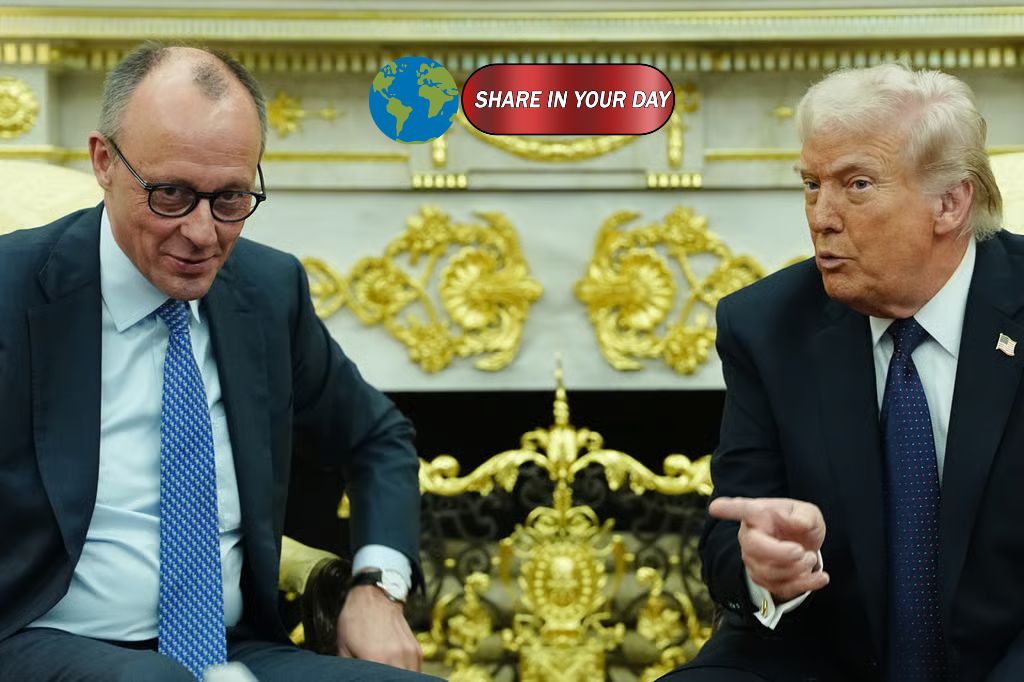
The encounter, intended to strengthen transatlantic cooperation during a period of escalating global crises, instead became a moment that exposed the delicate position European leaders face when dealing with the unpredictable U.S. president.
As Trump attacked allies over defense spending and their reluctance to support military operations against Iran, Merz chose not to publicly challenge the remarks — a strategy that has sparked debate across Europe about the limits of diplomatic pragmatism.
Trump Targets European Allies
During the meeting, Trump sharply criticized several European governments, particularly Spain and the United Kingdom, accusing them of failing to support U.S. military operations and not contributing enough to NATO defense spending.
Spain became a primary target after refusing to allow American forces to use joint military bases on its territory for strikes connected to the escalating war in Iran. Trump responded by threatening to halt trade with the country and accusing Madrid of being “uncooperative.”
The president also directed criticism at British Prime Minister Keir Starmer, suggesting that Britain had been reluctant to support U.S. military logistics in the region.
The unusually blunt remarks underscored Trump’s long-standing frustration with European allies, whom he has repeatedly accused of relying too heavily on American military power while failing to meet defense spending targets.
Merz Chooses Silence
Throughout the exchange, Merz largely avoided confronting Trump directly.
Observers noted that the German leader appeared cautious during the public portion of the meeting, choosing to emphasize cooperation rather than challenge the president’s criticisms.
Analysts say the approach reflects a calculated diplomatic strategy. Germany’s government depends heavily on maintaining stable relations with Washington, particularly as Europe confronts security threats ranging from Russia’s war in Ukraine to instability in the Middle East.
Confronting Trump publicly could risk worsening tensions at a time when European leaders still rely on American military support and intelligence.
Still, the optics of the meeting — with Merz sitting quietly while Trump criticized fellow European governments — have drawn criticism from some officials and commentators across Europe.
Pressure From European Partners
The episode has also created friction within Europe itself.
Spanish officials expressed surprise that Merz did not respond immediately when Trump threatened economic retaliation against Spain, arguing that EU countries should demonstrate solidarity when one member is targeted.
Later statements from German officials emphasized that trade policy is negotiated collectively by the European Union and that no single country can be isolated economically without affecting the entire bloc.
The controversy highlights the complicated balancing act for European leaders: defending European unity while preserving working relations with the United States.
A Broader Strain in Transatlantic Relations
The confrontation in the Oval Office comes at a moment when relations between the United States and Europe are already under pressure.
Disagreements over the Iran conflict, NATO spending, and global trade policies have created a series of tensions across the transatlantic alliance. Some European leaders have voiced concerns about the direction of U.S. foreign policy and the potential consequences for global stability.
At the same time, Washington remains Europe’s most important security partner, particularly in confronting Russian aggression and maintaining NATO’s military capabilities.
For Merz, navigating these competing priorities requires careful diplomacy — balancing the need to maintain strong ties with the United States while managing political expectations at home and across Europe.
The Political Risk for Merz
Domestically, the Oval Office meeting may carry political consequences for the German chancellor.
Critics argue that failing to challenge Trump’s attacks could make Europe appear weak or divided. Supporters, however, say Merz is pursuing a pragmatic strategy aimed at keeping relations with Washington stable during a volatile geopolitical moment.
The challenge for Merz is that Germany occupies a central role in European leadership. As the continent’s largest economy and a key NATO member, Berlin is often expected to speak for Europe — especially when tensions arise with the United States.
Remaining silent in such moments can therefore create uncomfortable perceptions of European weakness.
A Difficult Partnership
Despite the awkward exchange, both governments signaled that cooperation would continue.
Trump praised Merz personally during the meeting, describing the German leader as a “friend” and highlighting Germany’s role within NATO.
Yet the episode illustrates a broader reality: the relationship between the United States and Europe is entering a more complicated phase.
While the alliance remains vital for both sides, the political dynamics surrounding it are changing — and leaders like Merz must navigate a partnership that is increasingly defined by both cooperation and tension.