Woman Unknown Venice Win Takes Top Honor
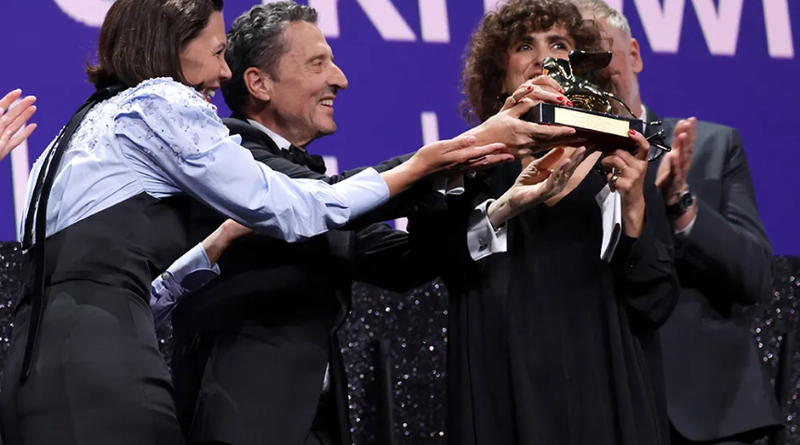
The Woman Unknown Venice win became one of the defining moments of the 2026 Venice Film Festival after Danish-Egyptian filmmaker May el-Toukhy took home the Golden Lion for Best Film. The victory came at the closing ceremony Saturday, bringing the festival’s top prize to a film that had already attracted attention for its intimate story and difficult questions about women, identity and social judgment.
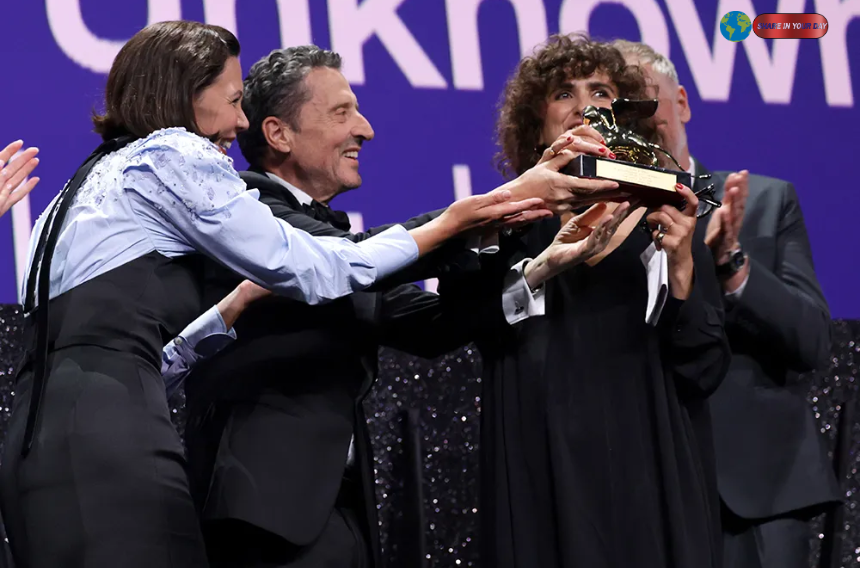
El-Toukhy’s film was the only feature in the main competition directed solely by a woman. That fact quickly became part of the conversation surrounding the award. However, Maggie Gyllenhaal, who served as president of the festival’s main jury, pushed back against the idea that the film won because of its director’s gender.
Gyllenhaal said the jury was responding to the quality and impact of the movie itself. She described the film as exceptionally focused, saying it affected her with the force of something precise and powerful.
Maggie Gyllenhaal Rejects Gender-Based Explanation
The debate over the Woman Unknown Venice win was closely tied to concerns about the representation of female filmmakers at major festivals.
Before the awards were announced, Gyllenhaal had openly criticized the lack of women directors in Venice’s competition lineup. At a jury press conference, she argued that the problem was not simply about selecting individual films. Instead, she pointed to a wider industry system in which women can face greater difficulty securing financing for movies.
That context made the Golden Lion result especially significant.
Yet Gyllenhaal did not want the award interpreted as a symbolic gesture. She argued that the jury’s decision was driven by the movie’s artistic strength rather than an attempt to correct a gender imbalance.
Her position gave the victory a more complicated meaning. A woman director had won the festival’s biggest prize at the end of a competition criticized for its shortage of female directors, but the jury president insisted that the film stood on its own merits.
May el-Toukhy’s Powerful Postwar Story
“Woman Unknown” is set in Denmark after World War II and follows a woman whose past relationship with a German soldier threatens her future.
The story takes place in a country emerging from Nazi occupation. During that period, women accused of having relationships with German occupying forces could face public humiliation and vigilante punishment.
El-Toukhy uses that historical setting to examine how society can turn a woman’s body and personal history into public property.
In her acceptance remarks, the filmmaker described the movie as being about the female body as a battleground and a public matter. She also emphasized the experiences of women who can become invisible, unheard and overlooked.
That combination of historical drama and contemporary relevance helped make the film one of the most discussed titles of the festival.
Mathilde Arcel Scores a Double Victory
The film’s success extended beyond the Golden Lion.
Mathilde Arcel, who stars in “Woman Unknown,” won the Best Actress award, giving the movie a rare double victory. Her performance was central to the film’s emotional weight as the story explores a woman attempting to build a future while being judged for her past.
The recognition also elevated Arcel’s profile on an international stage.
For the film, the two awards represented more than individual achievements. They reinforced the strength of both the directing and acting at the center of the production.
Other Major Venice Awards
The 83rd Venice Film Festival also produced several other notable winners.
South Korean filmmaker Lee Chang-dong received the Silver Lion Grand Jury Prize for “Possible Love.” Ilya Khrzhanovsky won Best Director for “DAU,” while John Malkovich received the Best Actor award for his performance in Martin McDonagh’s “Wild Horse Nine.”
The festival’s awards reflected a broad range of filmmaking styles, from historical drama and dark comedy to ambitious international cinema.
Politics also remained a major theme throughout the event. The documentary “NAZA,” directed by Israeli filmmakers Yuval Abraham and Rachel Szor, received the Special Jury Prize after drawing enormous attention and a lengthy standing ovation at its premiere.
A Significant Moment for Women in Cinema
The Woman Unknown Venice win is likely to remain part of the wider discussion about women in filmmaking.
El-Toukhy’s victory does not erase the concerns raised about the limited number of female directors represented in the competition. Instead, it highlights the tension between two ideas: the need for greater opportunities for women and the importance of judging individual films on artistic grounds.
For Gyllenhaal, those ideas can exist together.
She has argued that women still encounter systemic obstacles when attempting to finance films. At the same time, she made clear that “Woman Unknown” earned the Golden Lion because the jury believed it was an outstanding piece of cinema.
The result gives El-Toukhy a major international achievement while keeping the conversation about representation firmly in view.
As Venice closes another edition, the Golden Lion leaves the festival attached to a film that combines historical trauma, female experience and artistic ambition. For audiences and filmmakers alike, the victory could become one of the most memorable moments of the 2026 festival season.