North Korea Missile Test: 5 Shocking Naval Moves
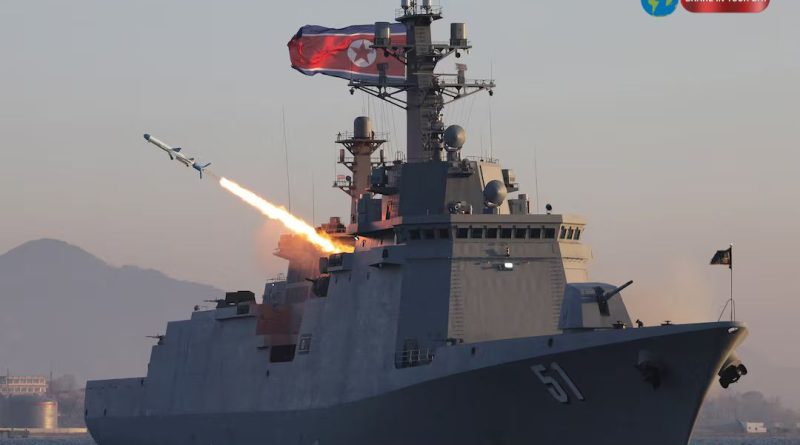
The latest North Korea missile test has once again raised alarm across the Asia-Pacific region, as Pyongyang demonstrated advanced naval strike capabilities from one of its newest warships. According to state media reports cited by Reuters, North Korea launched both strategic cruise missiles and anti-ship missiles from a naval destroyer, signaling a significant step forward in its maritime military ambitions.
The tests, overseen by leader Kim Jong Un, highlight the country’s continued push to enhance its nuclear deterrent and modernize its armed forces. While North Korea claims the launches were successful, analysts warn that the broader implications could reshape regional security dynamics.
Below are five key takeaways from the latest North Korea missile test and why it matters globally.
1. Launch From a Naval Destroyer Marks Strategic Shift
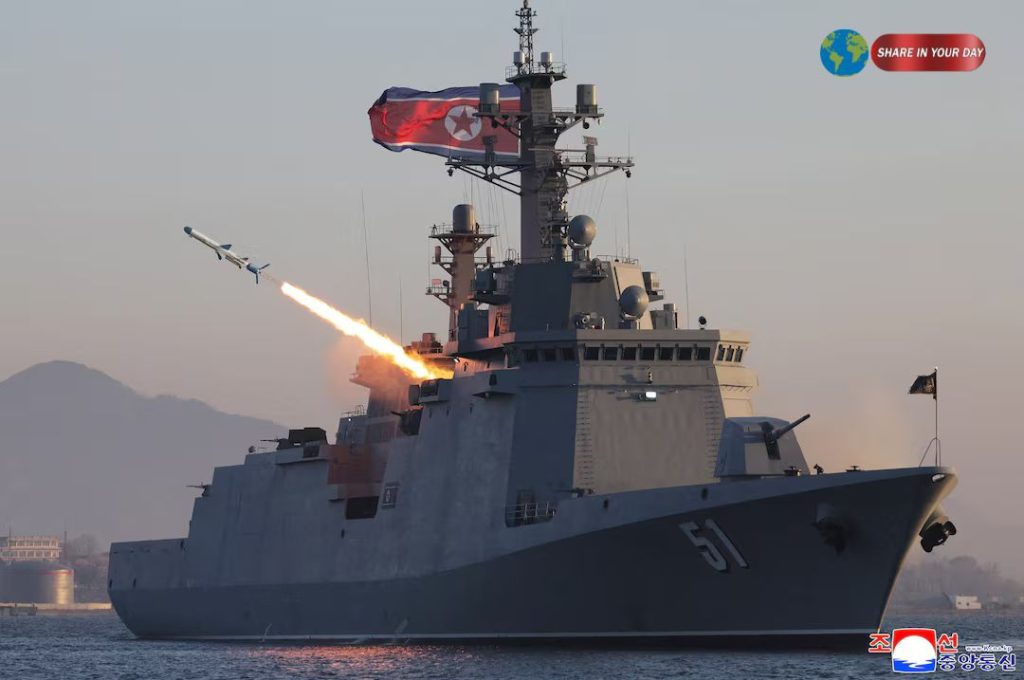
One of the most striking elements of this North Korea missile test is the launch platform itself: a naval destroyer.
The missiles were fired from the Choe Hyon-class destroyer, a relatively new addition to North Korea’s fleet. This marks a clear shift from land-based missile tests to sea-based operations, significantly increasing the country’s strategic flexibility.
Unlike fixed launch sites, naval platforms allow for:
- Greater mobility
- Increased survivability
- Expanded strike range
This evolution suggests North Korea is moving toward a more modern and adaptable military doctrine.
Moreover, the development of such capabilities indicates that Pyongyang is no longer focused solely on land-based deterrence but is actively pursuing maritime power projection.
2. Cruise and Anti-Ship Missiles Demonstrated Accuracy
During the North Korea missile test, both cruise missiles and anti-ship missiles were launched and reportedly hit their intended targets with high precision.
According to state media:
- Cruise missiles flew for more than two hours
- Anti-ship missiles flew for around 30 minutes
- All strikes were described as “accurate”
Cruise missiles are particularly concerning because they:
- Fly at low altitudes
- Can evade radar detection
- Are capable of carrying nuclear payloads
Meanwhile, anti-ship missiles enhance North Korea’s ability to target naval forces, including those of South Korea, Japan, and the United States.
Therefore, this test is not just symbolic—it represents a tangible increase in operational capability.
3. Kim Jong Un Emphasizes Nuclear Readiness
Following the North Korea missile test, Kim Jong Un reiterated the importance of strengthening the country’s nuclear deterrent.
He called for:
- Improved strategic strike capabilities
- Faster response readiness
- Continued development of advanced weapons systems
This rhetoric aligns with North Korea’s long-standing policy of prioritizing nuclear weapons as a central component of national defense.
However, the emphasis on rapid-response capabilities suggests a shift toward a more proactive military posture. Rather than relying solely on deterrence, North Korea appears to be preparing for scenarios that require quick and decisive action.
This development could further complicate diplomatic efforts in the region.
4. Expansion of Destroyer Fleet Underway
Another critical takeaway from the North Korea missile test is the revelation that additional warships are already under construction.
State media indicated that at least two more destroyers of the same class are being built.
This suggests a long-term strategy to establish a full fleet of advanced naval vessels rather than relying on a single flagship.
Experts believe this move is part of a broader plan to:
- Strengthen maritime defense
- Enhance nuclear delivery systems
- Increase regional influence
If completed, such a fleet would significantly boost North Korea’s naval capabilities and allow it to operate more effectively beyond its immediate coastal waters.
5. Rising Global Tensions and Strategic Timing
The timing of this North Korea missile test is particularly noteworthy.
Analysts suggest that Pyongyang may be accelerating its weapons development amid shifting global dynamics, including ongoing geopolitical conflicts elsewhere.
By conducting high-profile tests during periods of international distraction, North Korea can:
- Advance its military programs with less scrutiny
- Send strategic signals to adversaries
- Reinforce its domestic image of strength
Meanwhile, tensions with South Korea remain high, and diplomatic engagement with the United States has stalled.
This environment creates a volatile backdrop in which each new test carries heightened significance.
Understanding the Technology Behind the Test
To fully grasp the implications of the North Korea missile test, it is important to understand the technology involved.
Cruise Missiles
Cruise missiles are designed for precision strikes and can travel long distances while avoiding detection. Some North Korean variants are believed to be capable of carrying nuclear warheads.
Anti-Ship Missiles
Anti-ship missiles are specifically engineered to target naval vessels. They can pose a serious threat to aircraft carriers and destroyers, especially when deployed in coordinated attacks.
Naval Destroyers
The destroyer used in the test is equipped with vertical launch systems, allowing it to carry and fire multiple types of missiles. This versatility makes it a key asset in modern naval warfare.
Together, these technologies represent a significant leap in North Korea’s military capabilities.
Regional and Global Reactions
The North Korea missile test has drawn attention from governments and defense analysts worldwide.
South Korea and Japan
Both countries are likely to increase surveillance and strengthen missile defense systems in response to the test.
United States
The U.S. may view this development as a challenge to its military presence in the region, particularly given the potential threat to naval forces.
China and Russia
While maintaining diplomatic ties with North Korea, both countries are closely monitoring the situation, balancing regional stability with strategic interests.
What Comes Next?
The North Korea missile test raises important questions about the future of regional security.
Key issues include:
- Will North Korea continue expanding its naval capabilities?
- How will neighboring countries respond?
- Can diplomatic efforts be revived?
While there are no immediate answers, one thing is clear: North Korea’s military trajectory is moving toward greater sophistication and unpredictability.
Conclusion
The latest North Korea missile test represents more than just another weapons demonstration. It highlights a strategic shift toward naval power, showcases advanced missile capabilities, and underscores the country’s commitment to strengthening its nuclear deterrent.
From launching missiles off a destroyer to expanding its naval fleet, North Korea is signaling that it intends to play a more assertive role in regional security dynamics.
As global tensions continue to evolve, developments like these will remain closely watched by policymakers, analysts, and military leaders around the world.