Colorado River Mystery Revealed: 5 Million-Year Journey
A long-standing geological puzzle surrounding the Colorado River mystery has finally been unraveled, offering new insight into one of Earth’s most iconic landscapes—the Grand Canyon. Scientists have discovered what happened during a crucial five-million-year gap in the river’s history, shedding light on how the river evolved into the powerful force that carved the canyon we see today.
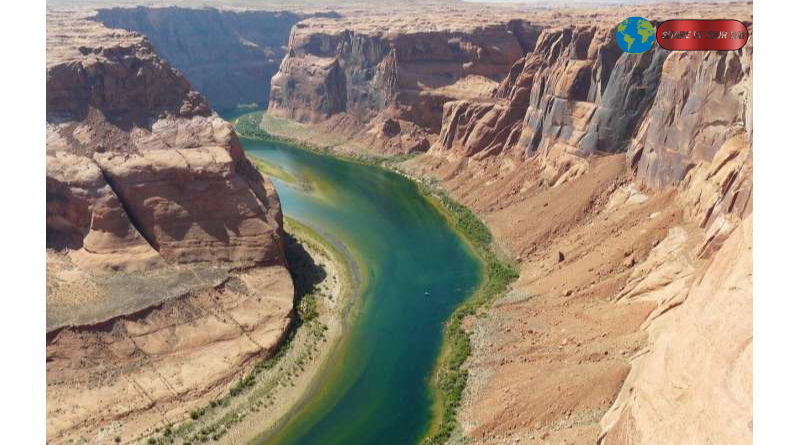
The findings not only clarify the ancient path of the Colorado River but also reshape our understanding of North America’s geological evolution. This breakthrough comes after decades of debate among geologists attempting to trace the river’s origins and its role in shaping the terrain.
A Missing Chapter in Earth’s Geological Record
For years, scientists knew that the Colorado River existed around 11 million years ago in what is now western Colorado. However, a major gap remained: where did the river go before it began carving the Grand Canyon roughly 5.6 million years ago?
This gap—lasting nearly five million years—was one of the most puzzling aspects of the Colorado River mystery. Without clear geological evidence, experts proposed multiple theories, ranging from underground flow systems to alternative river routes.
Now, new research has provided a compelling answer.
According to recent findings, the river did not disappear entirely. Instead, it pooled into a vast ancient lake east of the present-day Grand Canyon.
The Lake That Changed Everything
Scientists now believe that the Colorado River flowed into a large basin, forming a prehistoric lake known as the Bidahochi Basin. Over time, this lake grew as more water and sediment accumulated.
Eventually, the lake reached a tipping point.
Around 5.6 million years ago, the water overflowed its natural boundaries. This dramatic spillover event allowed the river to break through geological barriers, including elevated landforms like the Kaibab Arch.
This moment marked a turning point in the Colorado River mystery—it was effectively the birth of the modern Colorado River system.
Once the river escaped the basin, it began carving its way through rock layers, gradually forming the Grand Canyon over millions of years.
Scientific Evidence Behind the Discovery
The breakthrough did not come easily. Researchers relied on advanced geological techniques, particularly the analysis of zircon crystals found in sandstone deposits.
These microscopic minerals act like natural timestamps. By studying their composition and age, scientists were able to trace the origin of sediments carried by the river.
Additionally, volcanic ash layers embedded within the rock helped researchers determine precise timelines. Together, these clues created a detailed picture of the river’s ancient journey.
This combination of evidence provided the strongest support yet for the lake spillover theory, resolving a debate that has lasted for more than a century.
Connecting the River to a Continent
One of the most significant implications of this discovery is how it redefines the Colorado River’s role in shaping ecosystems.
Before the spillover event, the river was relatively isolated. However, once it broke free from the basin, it transformed into a continental-scale river system.
It eventually reached the Gulf of California around five million years ago, connecting ecosystems across vast distances.
This transition had profound environmental impacts. It allowed species to migrate, reshaped habitats, and influenced sediment distribution across the region.
Scientists describe this moment as a major evolutionary milestone—not just for the river, but for the entire landscape it influenced.
How the Grand Canyon Was Formed
The resolution of the Colorado River mystery also provides new clarity on how the Grand Canyon formed.
While parts of the canyon are much older, the canyon as we know it today began to take shape about five to six million years ago.
As the river gained momentum after the spillover, it began cutting through layers of rock at a steady rate. Over time, erosion deepened and widened the canyon.
Even today, the process continues. The Colorado River still carves into the canyon, albeit at a much slower pace.
This ongoing erosion highlights the immense power of natural forces operating over geological timescales.
Ongoing Debate Among Scientists
Despite the strong evidence supporting the lake spillover theory, not all scientists fully agree.
Some geologists argue that the river may have followed pre-existing pathways rather than forming a large lake. Others question the size and existence of the proposed basin.
However, there is growing consensus on several key points:
- The river reached northeastern Arizona around 6.6 million years ago
- It began carving the Grand Canyon after 5.6 million years ago
- The canyon formed through a combination of erosion and geological processes
These shared conclusions suggest that while details may still be debated, the broader picture of the Colorado River mystery is becoming clearer.
Why This Discovery Matters
Understanding the history of the Colorado River is about more than solving a scientific puzzle—it has real-world implications.
1. Geological Insight
This discovery helps scientists better understand how landscapes evolve over millions of years. It also provides a framework for studying other river systems around the world.
2. Climate and Environmental Research
By reconstructing ancient environments, researchers can gain insights into past climate conditions. This information can be used to predict future environmental changes.
3. Natural Resource Management
The Colorado River remains a vital water source for millions of people. Understanding its geological history can inform better management and conservation strategies.
A Window Into Deep Time
The story of the Colorado River is a reminder of the immense timescales involved in shaping our planet.
What appears today as a stable landscape is actually the result of countless changes—tectonic shifts, volcanic activity, and the persistent force of flowing water.
The resolution of the Colorado River mystery highlights how much there is still to learn about Earth’s past.
It also underscores the importance of modern scientific techniques in uncovering hidden chapters of geological history.
The Journey Continues
While this discovery answers many questions, it also opens the door to new ones.
Scientists are now exploring:
- How exactly the river overcame geological barriers
- The precise size and duration of the ancient lake
- The role of tectonic activity in shaping the river’s path
Future research will continue to refine our understanding of this complex system.
Conclusion
The unraveling of the Colorado River mystery marks a major milestone in geology. By identifying the river’s path during a five-million-year gap, scientists have provided a clearer picture of how one of the world’s most famous landscapes was formed.
From a quiet lake trapped in a basin to a powerful river carving through rock, the Colorado River’s journey is a story of transformation on a grand scale.
As research continues, this discovery serves as a powerful reminder: even the most familiar natural wonders still hold secrets waiting to be revealed.