Trump Iran Truth Social Posts Ignite Global Confusion Over War Claims
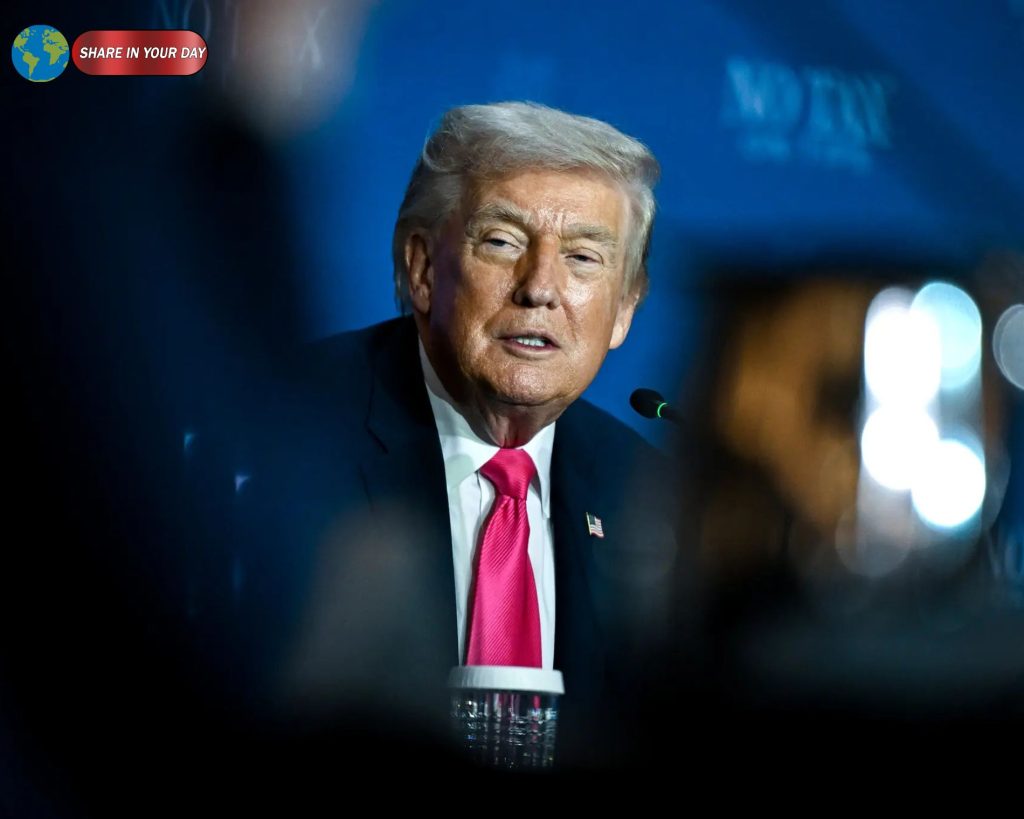
The latest escalation in the ongoing U.S.–Iran conflict has taken an unusual turn—not only on the battlefield and in diplomatic channels, but also on social media. Former U.S. President Donald Trump has made a series of high-profile statements on Truth Social regarding the war with Iran, claiming breakthroughs in negotiations and military positioning that have not been independently confirmed.
The Trump Iran Truth Social posts have quickly become a focal point of international debate, raising questions about the reliability of political communication in an active conflict and the potential consequences of premature or unverified claims.
While Trump presents a narrative of strategic success and diplomatic leverage, official responses from Iran and other global stakeholders suggest a far more complex and uncertain reality.
Claims of Major Breakthroughs Raise Eyebrows
In his recent Truth Social updates, Trump asserted that the United States had achieved significant progress in weakening Iran’s strategic capabilities while also pushing negotiations toward a resolution.
Among the most notable claims were suggestions that Iran had agreed to major concessions related to its nuclear program and regional military activity. Trump also implied that key strategic waterways, including the Strait of Hormuz, were under renewed control or influence following U.S. pressure.
However, these statements quickly drew scrutiny.
Diplomatic sources and Iranian officials publicly disputed several of the claims, stating that no formal agreement had been reached on the terms described. In particular, Iranian representatives rejected the idea of sweeping nuclear concessions or unconditional strategic commitments.
This divergence between political messaging and official diplomatic communication has created a widening gap in public understanding of the conflict.
Reality on the Ground Tells a Different Story
Despite the confident tone of the Trump Iran Truth Social posts, verified developments on the ground indicate a more cautious and fragmented situation.
Reports suggest that while there have been discussions around de-escalation and temporary ceasefire arrangements, no comprehensive peace agreement or long-term settlement has been finalized.
The Strait of Hormuz, one of the world’s most critical oil transit routes, has seen periods of tension and partial disruption. Although some stabilization efforts have been reported, the situation remains sensitive and subject to rapid change depending on military activity and diplomatic negotiations.
Military pressure from the United States continues in various forms, including strategic positioning and maritime monitoring, while Iran maintains that it will respond to any perceived aggression.
The result is a fragile and volatile environment where narratives differ sharply depending on the source.
Truth Social Becomes a Parallel Diplomatic Channel
One of the most striking aspects of this situation is the role of social media—specifically Truth Social—as an informal diplomatic channel.
Trump’s posts are not just commentary; they are being interpreted globally as political signals. Financial markets, foreign governments, and media organizations often react in real time to his statements, even before official confirmations are released.
This creates a parallel information ecosystem where:
- Political claims circulate instantly
- Official diplomatic confirmations lag behind
- Public perception shifts faster than verified facts
Experts warn that this dynamic can increase instability, especially during active conflicts where misinterpretation can escalate tensions.
International Response and Concerns
Global reactions to the Trump Iran Truth Social posts have been mixed.
Some political allies view the statements as strategic messaging intended to pressure Iran into concessions. Others argue that such public declarations risk undermining ongoing negotiations by exposing sensitive positions prematurely.
Diplomatic observers have also raised concerns about consistency in messaging between official U.S. government channels and individual political statements. This inconsistency can complicate negotiations, particularly when multiple international actors are involved.
Iranian officials, meanwhile, have dismissed several of the claims outright, reinforcing their position that negotiations remain unresolved and that no unilateral outcomes have been accepted.
The Information War Dimension
Beyond the military and diplomatic conflict, analysts increasingly describe the situation as an “information war.”
In this context, statements made on platforms like Truth Social become tools of influence, shaping perception as much as they report reality.
The risks of this environment include:
- Misinterpretation of incomplete negotiations
- Market volatility triggered by unverified claims
- Increased mistrust between negotiating parties
- Escalation driven by conflicting narratives
The Trump Iran Truth Social posts exemplify how digital communication can blur the line between official policy, political messaging, and public persuasion.
Economic and Strategic Implications
The geopolitical uncertainty surrounding the U.S.–Iran conflict has already had ripple effects across global markets.
Energy prices remain sensitive to developments in the Strait of Hormuz, which handles a significant portion of global oil transport. Any perceived threat to stability in this region can lead to immediate market fluctuations.
Investors and governments are therefore closely monitoring both official diplomatic statements and unofficial political commentary, despite the risks of reacting to incomplete information.
Strategically, the situation also highlights the importance of communication discipline during international crises. Conflicting messages can weaken negotiating positions and reduce trust among involved parties.
The Challenge of Verifying Modern Political Claims
One of the central issues highlighted by this episode is the difficulty of verifying political claims in real time.
In previous eras, diplomatic statements typically passed through official government channels before reaching the public. Today, social media allows leaders and political figures to bypass traditional filters and speak directly to global audiences.
While this increases transparency in some respects, it also introduces significant challenges:
- Speed often outpaces verification
- Political messaging competes with official diplomacy
- Audiences struggle to distinguish fact from interpretation
The result is an environment where narratives can shift rapidly, sometimes ahead of confirmed developments.
Conclusion: A Conflict Defined by Competing Narratives
The Trump Iran Truth Social posts have added a new layer of complexity to an already volatile geopolitical situation. While they project confidence and progress, official responses and on-the-ground realities suggest that the situation remains unresolved and highly fluid.
As the U.S.–Iran conflict continues to evolve, the gap between political messaging and verified diplomacy is becoming increasingly significant. In this environment, distinguishing between strategic communication and confirmed fact is more important than ever.
The coming weeks will likely determine whether current tensions move toward de-escalation or further escalation—but for now, the world remains caught between competing narratives.