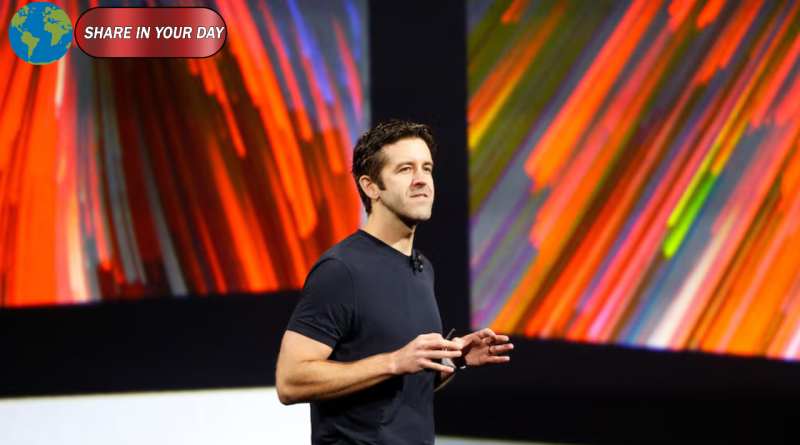
Apple has officially confirmed one of the most significant leadership transitions in its modern history, naming hardware chief John Ternus as its next chief executive officer while long-time leader Tim Cook will step into the role of executive chairman.
The announcement, which centers on the keyword Apple CEO John Ternus 2026, marks the end of an era for the tech giant and the beginning of a new strategic direction as Apple prepares for the next wave of technological disruption driven by artificial intelligence, spatial computing, and advanced hardware ecosystems.
A Historic Leadership Transition at Apple
Apple stated that Tim Cook will remain CEO through the summer of 2026 before formally handing over leadership to Ternus on September 1, 2026. After the transition, Cook will continue at the company as executive chairman, where he will focus on broader corporate strategy and global policy engagement.
According to Reuters, the decision follows a long-planned succession strategy approved unanimously by Apple’s board of directors .
This move is widely seen as one of the most carefully structured executive transitions in Silicon Valley history, reflecting Apple’s emphasis on stability, continuity, and internal leadership development.
Who Is John Ternus?
John Ternus, the incoming CEO featured in discussions around Apple CEO John Ternus 2026, is not an outsider executive but a long-serving Apple veteran.
He joined Apple in 2001 as part of the product design team and has spent over two decades rising through the company’s hardware engineering division. Over time, he became one of the most influential figures behind Apple’s core products, including the iPhone, iPad, Mac, and Apple Watch.
By 2021, Ternus had already been promoted to senior vice president of hardware engineering, placing him directly in charge of Apple’s entire hardware roadmap.
His background is rooted in engineering rather than finance or operations, giving him a profile more aligned with product innovation than corporate restructuring.
Why Apple Chose Ternus as CEO
Apple’s decision to elevate Ternus signals a strategic shift toward deeper hardware integration and next-generation device innovation.
Unlike traditional corporate CEOs who often come from finance or sales backgrounds, Ternus represents a “product-first” leadership style. His career has been defined by hands-on involvement in engineering decisions and product design evolution.
Industry analysts believe this could indicate Apple’s renewed focus on:
- Advanced AI-integrated devices
- Next-generation iPhone redesigns
- Mixed reality and AR ecosystems
- Custom silicon development
- Expansion of wearable computing
This aligns with Apple’s ongoing transition from a smartphone-centric company to a broader ecosystem-driven technology platform.
Tim Cook’s Legacy and New Role
Tim Cook’s transition into executive chairman marks the end of a 15-year tenure as CEO, during which Apple experienced unprecedented financial growth and global expansion.
Under Cook’s leadership, Apple’s market capitalization increased from approximately $350 billion to around $4 trillion, making it one of the most valuable companies in the world.
Cook is widely credited with:
- Scaling Apple’s global supply chain
- Expanding services like Apple Music and Apple TV+
- Launching Apple Watch and AirPods
- Strengthening operational efficiency
- Driving record-breaking revenue growth
Now, as executive chairman, Cook will focus on high-level strategic guidance, including regulatory relationships and global policy discussions.
Market Reaction and Industry Impact
The announcement of Apple CEO John Ternus 2026 triggered immediate attention across financial markets and tech analysts.
While leadership transitions often create uncertainty, Apple’s structured approach helped maintain investor confidence. The company emphasized that Cook and Ternus will work closely together throughout the transition period to ensure operational stability.
Analysts suggest the change could actually strengthen Apple’s long-term innovation pipeline, particularly as competition intensifies in AI hardware, augmented reality, and cloud-integrated ecosystems.
What This Means for Apple’s Future
The rise of Ternus marks a potential shift in Apple’s identity. While Cook’s era was defined by operational excellence and massive financial growth, Ternus may lead a phase centered on product reinvention.
Key expectations for Apple under Ternus include:
1. AI-Driven Devices
Apple is expected to deepen AI integration across iPhones, Macs, and wearables.
2. AR and Spatial Computing
Following the Vision Pro era, Apple may accelerate its push into immersive computing.
3. Hardware Innovation Cycles
More frequent redesigns and experimental form factors could emerge.
4. Expanded Ecosystem Strategy
Greater connectivity between Apple devices, services, and AI systems.
Challenges Ahead for the New CEO
Despite strong internal support, Ternus inherits a complex leadership environment.
Apple is currently facing:
- Increasing pressure in artificial intelligence innovation
- Slower growth in mature smartphone markets
- High expectations from investors after years of record profits
- Intense competition from companies like Google, Microsoft, and Nvidia
His ability to balance innovation with Apple’s traditionally conservative product rollout strategy will be critical.
A Carefully Planned Succession
One of the most notable aspects of this transition is how orderly it appears.
Unlike sudden CEO changes triggered by crisis or performance issues, Apple’s decision reflects years of internal planning. Ternus has long been viewed as a potential successor due to his leadership role in Apple’s core engineering divisions.
This makes the transition less about disruption and more about evolution.
Conclusion
The confirmation of Apple CEO John Ternus 2026 represents a defining moment in the company’s history.
With Tim Cook moving into an executive chairman role and Ternus stepping into the CEO position, Apple is entering a new phase—one that blends operational stability with a renewed focus on engineering-driven innovation.
As the tech industry rapidly evolves around artificial intelligence and next-generation devices, Apple’s leadership change signals a clear message: the future will be built not just on management excellence, but on deep product innovation.