Tesla FSD Upgrade Shock: Millions Affected Now
Tesla has delivered a major and unexpected update that is reshaping the future of autonomous driving. In a recent announcement, CEO Elon Musk confirmed that millions of Tesla vehicles will require hardware upgrades to achieve true Full Self-Driving (FSD) capability — a statement that contradicts years of earlier assurances.
The revelation has sparked widespread debate among Tesla owners, investors, and industry experts. For many, it raises a critical question: has Tesla overpromised on autonomy?
Tesla FSD Upgrade Becomes Unavoidable
For years, Tesla promoted the idea that its vehicles were already equipped with all the hardware necessary for full autonomy. Buyers were told that future software updates alone would unlock self-driving capabilities.
However, that narrative has now shifted.
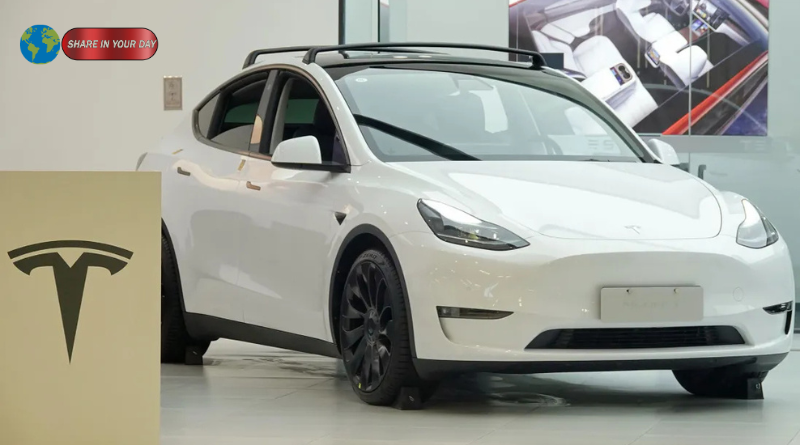
During Tesla’s latest earnings call, Elon Musk admitted that vehicles equipped with “Hardware 3” — installed in cars produced roughly between 2019 and 2023 — cannot support the upcoming version of FSD designed for unsupervised driving.
This means that millions of Tesla owners will need significant upgrades, including:
- A new onboard computer
- New camera systems
- Potential structural adjustments
Musk acknowledged that the process would be complex and resource-intensive, signaling a major operational challenge for Tesla.
Why Tesla FSD Upgrade Is Necessary
The issue comes down to computing power.
Hardware 3, once considered cutting-edge, lacks the memory bandwidth required to run advanced AI models needed for full autonomy. According to reports, its capability is only a fraction of Tesla’s newer Hardware 4 system.
Full Self-Driving in its future form aims to operate without human supervision — a major leap from today’s driver-assist systems. That leap requires:
- Faster processing speeds
- More advanced neural networks
- Enhanced sensor data handling
Without these, Tesla vehicles simply cannot meet the performance threshold for true autonomy.
Broken Promises? Owners React
The announcement has reignited criticism that Tesla may have misled customers.
Back in 2016, Tesla publicly claimed that all its vehicles had the hardware necessary for full self-driving.
Now, nearly a decade later, that promise appears to be partially reversed.
Many Tesla owners paid thousands of dollars upfront for FSD packages, expecting eventual activation through software updates. Instead, they now face:
- Additional upgrade costs
- Trade-in decisions
- Uncertainty about timelines
Some owners have already taken legal action, arguing that Tesla’s marketing created unrealistic expectations about autonomous capabilities.
Tesla’s Solution: Microfactories and Trade-Ins
Tesla is not ignoring the issue. Musk outlined a plan to address the upgrade challenge at scale.
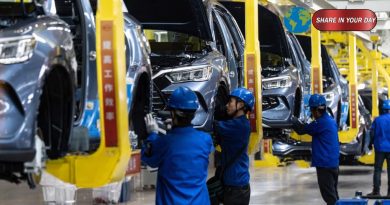
Instead of relying solely on traditional service centers, Tesla is considering building specialized “microfactories” in major cities. These facilities would function like production lines, designed specifically to retrofit vehicles with new hardware.
In addition, Tesla is expected to offer:
- Discounted upgrade packages
- Trade-in programs for older vehicles
- Incentives to transition to newer models
This approach reflects the sheer scale of the problem — potentially affecting millions of cars worldwide.
The Bigger Picture: Tesla’s Robotaxi Vision
The Tesla FSD upgrade is not just about improving driver assistance. It is central to the company’s long-term strategy.
Musk has repeatedly emphasized Tesla’s goal of building a global robotaxi network — a fleet of fully autonomous vehicles generating revenue without human drivers.
However, this vision depends on vehicles achieving unsupervised autonomy.
Without hardware upgrades, older Tesla models cannot participate in this future ecosystem. That creates a divide between:
- Newer vehicles capable of autonomy
- Older vehicles stuck with limited functionality
This shift could significantly impact resale values and customer satisfaction.
Financial and Strategic Implications
The announcement comes at a time when Tesla is investing heavily in artificial intelligence and robotics.
The company plans to increase spending on AI infrastructure, chips, and autonomous systems, signaling a major pivot beyond traditional car manufacturing.
At the same time:
- Tesla reported billions in quarterly revenue
- FSD subscriptions are growing
- But adoption remains limited among total owners
The need for hardware upgrades adds another layer of complexity:
- Increased costs for Tesla
- Potential customer backlash
- Logistical challenges in scaling upgrades globally
What This Means for Tesla Owners
For current Tesla drivers, the implications are significant.
If you own a Tesla with Hardware 3:
- Your vehicle will not support future unsupervised FSD
- You may need a costly upgrade
- Or consider trading in your vehicle
For new buyers:
- The announcement highlights the importance of hardware versions
- Future-proofing is no longer guaranteed
- Rapid technological changes may shorten vehicle lifecycles
Industry Impact: A Reality Check for Autonomy
Tesla’s admission is also a reality check for the broader autonomous vehicle industry.
For years, companies have promised rapid progress toward full self-driving. However, this development shows that:
- Hardware limitations remain a major barrier
- Software alone cannot solve autonomy
- Continuous upgrades may be unavoidable
Even Tesla — widely seen as a leader in the field — is facing challenges in delivering on its vision.
The Road Ahead for Tesla FSD
Despite the setback, Tesla continues to push forward.
The company is actively developing:
- More advanced AI chips
- Improved neural networks
- Expanded testing for autonomous driving
Meanwhile, pilot programs such as robotaxi services are already underway in limited areas, offering a glimpse into the future.
However, the timeline for fully autonomous driving remains uncertain.
Conclusion: A Turning Point for Tesla
The Tesla FSD upgrade announcement marks a pivotal moment in the company’s journey toward autonomy.
What was once marketed as a software problem has now become a hardware challenge — one that affects millions of vehicles and reshapes customer expectations.
While Tesla remains at the forefront of innovation, this development underscores a key reality:
True self-driving technology is far more complex — and costly — than originally promised.
For Tesla owners and the broader industry, the message is clear: the road to autonomy is still under construction.