China Pressure Taiwan Trip Sparks Global Outrage
The geopolitical landscape has intensified following revelations that China allegedly pressured several African nations to block a planned trip by Taiwan’s president. The controversy surrounding the China pressure Taiwan trip has drawn strong criticism from the United States and raised concerns among global powers about aviation norms and diplomatic coercion.
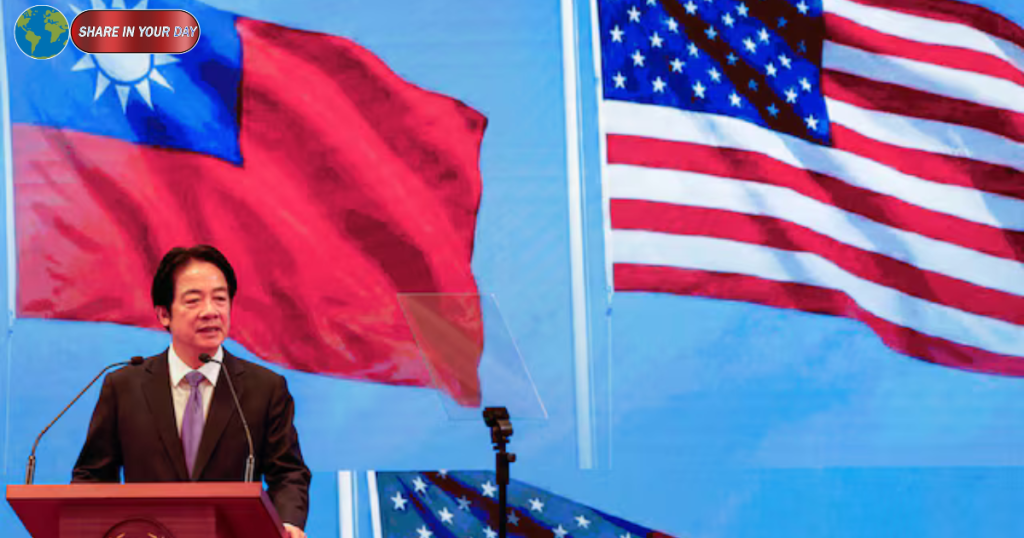
At the center of the dispute is Taiwan President Lai Ching-te, whose planned visit to Eswatini—one of Taiwan’s few remaining diplomatic allies—was abruptly canceled after multiple African countries denied overflight access.
What Happened: A Historic Travel Blockade
The China pressure Taiwan trip incident marks a historic moment in international diplomacy. For the first time, a Taiwanese president was forced to cancel an entire overseas trip due to airspace restrictions.
According to reports, countries including Seychelles, Mauritius, and Madagascar revoked previously granted overflight permissions.
These airspace denials made it impossible for President Lai’s aircraft to reach Eswatini, effectively halting the diplomatic visit.
The United States quickly condemned the move, describing it as an abuse of the international civil aviation system.
US Reaction: Strong Condemnation of China
Washington did not hold back in its response to the China pressure Taiwan trip situation.
A U.S. State Department spokesperson accused Beijing of orchestrating the move, stating that African nations were acting “at the behest of China.”
The U.S. further argued that:
- Airspace management should ensure aviation safety, not serve political agendas
- China’s actions represent a broader intimidation campaign
- Such behavior threatens international peace and stability
Meanwhile, U.S. lawmakers voiced support for Taiwan, reinforcing America’s longstanding—though unofficial—backing of the island.
China’s Response: Denial and Policy Defense
China, however, firmly rejected the accusations.
Officials denied applying coercion and instead praised the African nations for adhering to the “One China” policy—a principle that recognizes Beijing as the sole legitimate government of China.
From Beijing’s perspective:
- Taiwan is not a sovereign nation
- Countries are justified in limiting Taiwan’s diplomatic activity
- The decisions were independent and aligned with international norms
China’s stance reflects its long-standing position that Taiwan is a breakaway province, a claim strongly rejected by Taipei.
Taiwan’s Reaction: Accusations of Economic Coercion
Taiwan responded sharply, accusing China of using economic pressure to influence the decisions of the African countries.
Officials in Taipei claimed that Beijing threatened consequences such as:
- Withdrawal of debt relief
- Economic penalties
- Reduced financial cooperation
These allegations, if true, suggest a broader strategy by China to isolate Taiwan on the global stage.
President Lai condemned the move as a threat to international engagement and vowed that Taiwan would continue to strengthen its global relationships despite mounting pressure.
Why Africa Matters in the Taiwan-China Conflict
Africa plays a critical role in the ongoing diplomatic tug-of-war between China and Taiwan.
Currently, Eswatini remains the only African country that maintains formal diplomatic relations with Taiwan.
Most other African nations recognize Beijing under the One China policy, making them key players in China’s strategy to limit Taiwan’s international presence.
China’s economic influence across Africa—through infrastructure investments, trade, and loans—has significantly strengthened its diplomatic leverage.
This context helps explain why the China pressure Taiwan trip incident unfolded the way it did.
A New Strategy by China?
Analysts suggest that this event signals a shift in China’s approach toward Taiwan.
Rather than relying solely on military or direct diplomatic pressure, Beijing appears to be:
- Leveraging third-party countries
- Using economic influence as a tool
- Expanding pressure into global systems like aviation
This indirect strategy allows China to achieve its objectives while maintaining plausible deniability.
The cancellation of a presidential trip due to airspace denial represents a new frontier in geopolitical tactics.
International Concerns: Aviation and Politics
The incident has also sparked concern among international organizations and allies.
The European Union and the United Kingdom’s representatives expressed unease, emphasizing that aviation decisions should prioritize safety over politics.
Experts warn that politicizing airspace could:
- Undermine global aviation standards
- Set dangerous precedents
- Disrupt international travel norms
If such practices become widespread, they could complicate diplomatic travel worldwide.
Rising US-China Tensions
The China pressure Taiwan trip controversy is the latest flashpoint in the ongoing rivalry between the United States and China.
The two superpowers have clashed over:
- Trade policies
- Military presence in Asia
- Taiwan’s political status
This incident adds another layer to an already complex relationship.
Washington’s strong reaction signals that Taiwan remains a sensitive and strategic issue in U.S.-China relations.
Taiwan’s Diplomatic Challenges
Taiwan continues to face significant challenges in maintaining its international presence.
With only about a dozen countries recognizing it diplomatically, Taiwan relies heavily on informal relationships and strategic partnerships.
Incidents like this highlight:
- The fragility of Taiwan’s diplomatic network
- The growing influence of China globally
- The increasing difficulty of international engagement
Despite these obstacles, Taiwan has shown resilience in expanding unofficial ties and participating in global discussions.
What Happens Next?
The fallout from the China pressure Taiwan trip incident is still unfolding.
Potential outcomes include:
- Increased diplomatic tensions between the U.S. and China
- Greater scrutiny of aviation policies
- Strengthened support for Taiwan from Western allies
At the same time, China is likely to continue asserting its position on Taiwan, making similar incidents possible in the future.
Final Thoughts
The China pressure Taiwan trip controversy underscores the complexity of modern geopolitics, where diplomacy, economics, and international systems intersect.
What began as a routine presidential visit quickly escalated into a global issue involving major powers and international norms.
As tensions continue to rise, the world will be watching closely to see how this situation evolves—and what it means for the future of Taiwan’s global engagement.