Putin Decree Gives Russia New Power Over Drone-Hit Businesses
Russian President Vladimir Putin has signed a new Putin decree giving the Russian state the ability to take temporary control of critical private infrastructure if authorities determine that companies have failed to adequately protect their facilities from drone attacks or rebuild them after strikes.
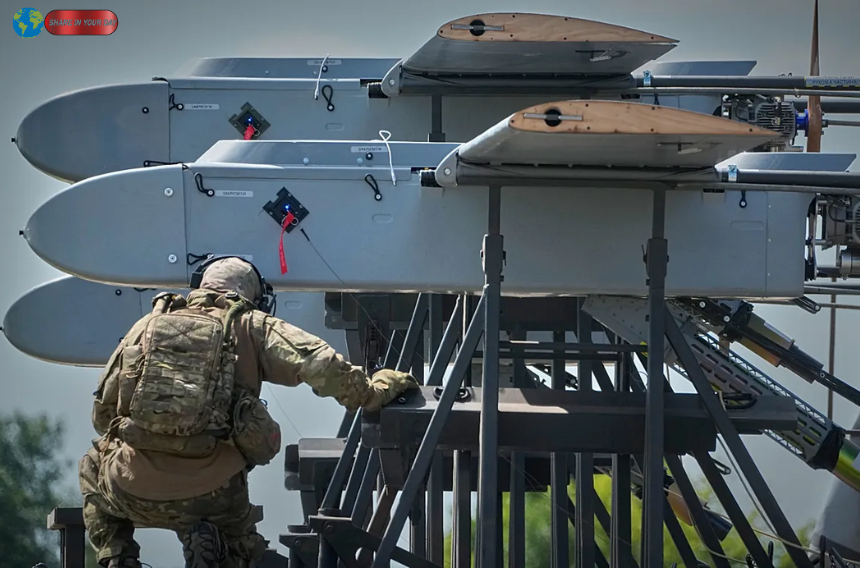
The measure covers a broad range of strategically important facilities, including businesses involved in energy, transportation, logistics, communications and industrial activity. The decree comes as Ukraine has intensified its long-range drone campaign against targets deep inside Russia, increasingly hitting oil facilities, warehouses and other economic infrastructure.
The Kremlin has presented the measure as a security response rather than a conventional nationalisation programme. Russian officials say temporary state involvement is intended to ensure that critical facilities remain operational and are adequately protected during a period of heightened security risks.
However, the decree has attracted attention because it gives the state significant authority over privately owned assets.
Experts cited by Euronews described the approach as a form of “hybrid nationalisation,” warning that security failures could become a justification for transferring control of private businesses to the state.
What Putin’s Decree Actually Allows
The new policy does not simply allow the government to take any business after a drone strike.
Instead, it establishes a mechanism for temporary state control over facilities considered important to national security or economic stability when authorities determine that their owners have failed to provide sufficient protection or restore damaged infrastructure.
The measure applies to physical and financial assets connected with affected infrastructure, according to reporting on the decree.
That distinction is important.
The policy is framed as a temporary intervention rather than an immediate permanent transfer of ownership. Russian officials have emphasized that the measure should not automatically be interpreted as a broad nationalisation campaign.
First Deputy Prime Minister Denis Manturov has described the measure as a case-by-case response to security concerns rather than a decision to nationalise businesses across the economy.
Nevertheless, the practical effect could be substantial.
If a major company repeatedly suffers attacks and authorities conclude that its facilities are insufficiently protected, the government could intervene directly in its management or operations.
That creates a new layer of pressure on companies already dealing with wartime disruption.
Why Russia Introduced the Measure Now
The Putin decree comes after months of increasingly damaging Ukrainian drone attacks on Russian territory.
Ukraine has developed the ability to launch long-range drones against targets far beyond the immediate front line. The campaign has increasingly focused on economic and logistical infrastructure that supports Russia’s war effort.
Oil refineries have been particularly important targets.
Other facilities, including warehouses and logistics centres operated by major Russian retailers, have also been hit.
The attacks have created operational and financial problems for companies while forcing the Russian government to confront a difficult question: who should bear responsibility when privately operated infrastructure is repeatedly damaged during wartime?
The Kremlin’s answer appears to be that private companies cannot simply wait for the government to repair their facilities.
If infrastructure is considered critical, businesses may be expected to take stronger measures to protect it and restore operations quickly.
The new decree gives the state additional leverage to enforce that expectation.
Ukrainian Drone Campaign Is Increasing Economic Pressure
The policy cannot be separated from Ukraine’s broader drone strategy.
Ukrainian forces have increasingly targeted facilities connected to Russia’s energy sector, military supply chains and logistics networks. The objective is not limited to causing immediate physical damage.
Strikes against oil refineries, warehouses and transport infrastructure can also disrupt production, distribution and supply.
Recent attacks have included facilities belonging to major Russian e-commerce companies.
The Associated Press reported that a Wildberries warehouse in Russia’s Tambov region was struck again, with the facility destroyed in the resulting fire. The attack followed an earlier strike against the same depot in July.
Wildberries has become one of the clearest examples of how the drone war is affecting major Russian businesses far from the front line.
The company operates a huge logistics network, meaning damage to individual facilities can have consequences beyond the location of the strike.
Another major retailer, Ozon, has also faced repeated attacks on logistics facilities. The Guardian reported that several Ozon facilities across southern Russia were attacked within a short period, causing fires, injuries and significant operational disruption.
These attacks help explain why Moscow is moving toward a system in which the state can intervene when private infrastructure is considered insufficiently protected.
Russia’s Oil Industry Faces Growing Risk
Energy infrastructure is another major concern.
Ukraine has repeatedly targeted Russian oil refineries and other energy facilities in an effort to disrupt fuel production and reduce revenues that help support Moscow’s war effort.
The consequences can extend beyond individual companies.
A refinery shutdown can affect regional fuel supplies, transportation and industrial activity. Repeated attacks can also increase repair costs and create uncertainty about future production.
Reuters reported that Putin’s decree covers fuel and energy infrastructure as well as industrial, communications, transport and logistics facilities.
The government therefore has a strong incentive to ensure that important energy facilities continue operating even after attacks.
The new rules provide a mechanism for doing so if private operators are considered unable or unwilling to meet the required security and reconstruction standards.
Wildberries Shows Why the Kremlin Is Concerned
The situation involving Wildberries illustrates the economic stakes.
The Financial Times reported that Putin had already promised government assistance to rebuild warehouses destroyed by Ukrainian drone strikes. The company has suffered extensive damage across its logistics network, with several of its largest facilities affected.
The attacks have reportedly generated enormous losses and created problems for sellers relying on the company’s distribution system.
For the Russian government, allowing major logistics infrastructure to remain damaged could have consequences for both the civilian economy and wartime supply chains.
The government therefore has a reason to push companies to restore facilities rapidly.
The new decree takes that approach further by creating the possibility of direct state control.
Instead of merely providing financial support, Moscow can potentially assume responsibility for the management of critical facilities when certain conditions are met.
Is This Nationalisation?
This is one of the biggest questions surrounding the new policy.
Russian officials say it is not a conventional nationalisation programme.
Nationalisation generally involves the permanent transfer of privately owned businesses or assets into state ownership.
The decree, by contrast, is described as allowing temporary state control when critical infrastructure faces security problems.
That difference is significant from a legal and economic perspective.
However, critics and analysts argue that temporary state control can still have many of the practical characteristics of nationalisation.
Once the government takes control of an important asset, the original owner may have limited ability to determine how the facility is operated.
Euronews cited experts who described the approach as “hybrid nationalisation” and warned that the security rationale could potentially be used to justify state intervention in private companies.
The real test will therefore be how the decree is applied.
If it is used narrowly against facilities posing an immediate national-security problem, the policy could remain a limited wartime measure.
If it is applied broadly, it could represent a significant expansion of state power over private industry.
Businesses Face New Responsibilities
The decree also changes the risks facing Russian businesses.
Companies operating important facilities may now face consequences beyond the immediate financial damage caused by a drone strike.
If authorities believe that a business failed to adequately protect its infrastructure, the company could potentially lose control of the affected facility.
That creates a strong incentive for companies to invest more heavily in security.
Anti-drone systems, physical protection, emergency response plans and rapid repair capabilities could become increasingly important components of corporate operations.
The Russian government has already encouraged companies to take greater responsibility for protecting their own facilities, including allowing businesses to acquire anti-drone equipment independently.
The new decree effectively raises the stakes.
A failure to protect infrastructure could potentially become a reason for government intervention.
The Financial Cost of the Drone War Is Rising
The policy also reflects the growing economic cost of the conflict.
Russia’s war effort is no longer affecting only military facilities near Ukraine.
Commercial warehouses, refineries, fuel infrastructure and transport networks are increasingly exposed to long-range attacks.
That means the economic consequences of the war are spreading deeper into Russia’s domestic economy.
The Financial Times reported that repeated attacks have affected Russia’s fuel supply and logistics networks, while damage to Wildberries facilities has produced losses on a very large scale.
For Moscow, the challenge is balancing the need to protect strategic infrastructure with the desire to maintain private-sector investment and normal economic activity.
If businesses believe that ownership rights can be overridden whenever authorities determine that security measures were inadequate, investors could become more cautious.
At the same time, Russian authorities may argue that wartime conditions require extraordinary measures.
Could the Decree Affect More Companies?
The potential reach of the Putin decree is broader than any single company.
The measure applies to infrastructure considered critical to national security and economic stability. That potentially includes companies operating in multiple sectors.
Energy companies could be affected if refineries or other facilities repeatedly suffer attacks.
Transport companies could face intervention if key infrastructure is damaged and not restored.
Logistics businesses could also come under scrutiny because warehouses and distribution hubs have increasingly become targets.
Communications infrastructure may face similar concerns.
The breadth of the categories means that the decree could become an important instrument of wartime economic policy.
Its actual impact, however, will depend heavily on how Russian authorities interpret and enforce the rules.
Moscow Wants Faster Repairs and Stronger Defenses
One of the clearest purposes of the measure is to prevent critical facilities from remaining damaged for long periods.
After a major drone strike, repairs can require significant resources.
Private companies may hesitate to spend heavily on rebuilding a facility that could be attacked again.
The government, however, has a broader interest in keeping strategically important infrastructure operating.
Temporary state control could therefore allow authorities to bypass private-sector hesitation and take direct responsibility for reconstruction and security.
The Associated Press reported that the decree was designed to allow state involvement when private owners fail to protect or repair critical infrastructure after drone attacks.
This suggests that the policy is as much about accelerating recovery as it is about punishment.
The Policy Comes Amid a Wider Russian Security Push
The new measure is part of a broader effort by Moscow to adapt its domestic economy to a war increasingly fought with long-range drones.
Ukraine’s ability to strike targets deep inside Russia has challenged assumptions about geographic protection.
Facilities hundreds of kilometres from the front line can no longer necessarily be treated as safe simply because they are far from active ground combat.
That changes the security calculations for Russian businesses.
Factories, warehouses, refineries and transport hubs must increasingly account for aerial threats.
The Kremlin’s response has included greater pressure on companies to participate in their own protection.
The latest decree provides the government with another tool if those measures are considered inadequate.
What It Means for the Russian Economy
The long-term economic implications are uncertain.
On one hand, greater state control could help Russia maintain critical production and logistics during repeated attacks.
The government can coordinate repairs, security and operations more directly than individual companies may be able to.
On the other hand, increased state intervention could undermine confidence among private businesses.
Investors generally value predictable ownership rights and clear rules.
If companies face the possibility of losing operational control after a security incident, they may reconsider investment decisions or demand greater compensation for operating strategically important infrastructure.
That could become a significant issue if the war continues and drone attacks remain frequent.
Ukraine’s Strategy Is Creating a Difficult Choice for Moscow
Ukraine’s drone campaign presents Moscow with a difficult strategic problem.
Russia can attempt to strengthen air defenses around every important facility, but that is expensive and technically challenging.
It can also impose greater responsibility on private companies.
Or it can take direct control of infrastructure considered essential to national security.
The new decree appears to combine the second and third approaches.
Companies are encouraged to improve security, while the state retains the ability to intervene when authorities believe those efforts are insufficient.
This may reduce the risk of prolonged disruptions in the short term.
But it could also increase the role of the Russian state in managing the private economy.
What Happens Next?
The key issue will be how the Kremlin uses the authority created by the decree.
If the government begins taking control of high-profile companies, the policy could quickly become one of the most consequential economic responses to Ukraine’s long-range drone campaign.
If the authority is rarely used, it may function primarily as a deterrent.
Either way, the message to Russian businesses is clear.
Critical infrastructure is now considered part of the country’s wartime security system, and private owners may be expected to accept greater responsibility for protecting it.
The measure also sends a message to Ukraine.
Russia is attempting to reduce the economic impact of deep strikes by ensuring that damaged facilities are repaired and kept operational, even when private operators struggle to do so.
Putin Decree Signals a New Phase in Russia’s Economic War
The latest Putin decree represents an important development in how Russia is responding to Ukraine’s expanding drone campaign.
The policy allows the state to temporarily take control of critical infrastructure when authorities determine that private owners have failed to adequately protect facilities or restore them after attacks.
Energy, transport, logistics, communications and industrial infrastructure can all fall within the broad categories covered by the measure.
Russian officials insist that the policy is not conventional nationalisation.
Yet analysts have warned that it could function as a form of hybrid nationalisation if used to transfer operational control of private assets under the justification of national security.
The move comes as Ukrainian drones increasingly strike economic targets inside Russia, including oil facilities and major logistics centres. Repeated attacks on businesses such as Wildberries and Ozon demonstrate how the conflict is placing pressure on Russia’s civilian economy as well as its military infrastructure.
For Russian companies, the new rules create both an obligation and a warning: protecting critical infrastructure is becoming a state security responsibility, and failure to do so could result in direct government intervention.
For the wider Russian economy, the decree raises a larger question about the future balance between private ownership and state control during wartime.
As Ukraine’s drone campaign continues, Moscow may increasingly rely on extraordinary economic measures to keep critical facilities operating.
The immediate goal is security and continuity.
The longer-term consequence could be a deeper expansion of state power over Russia’s private sector.
Source: Euronews, August 26, 2026.