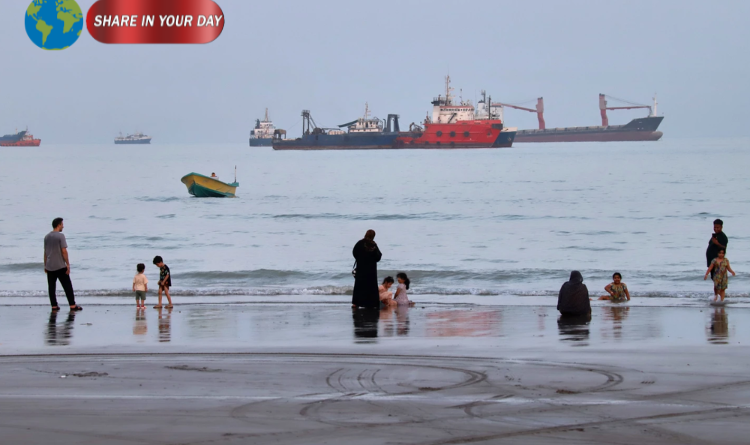
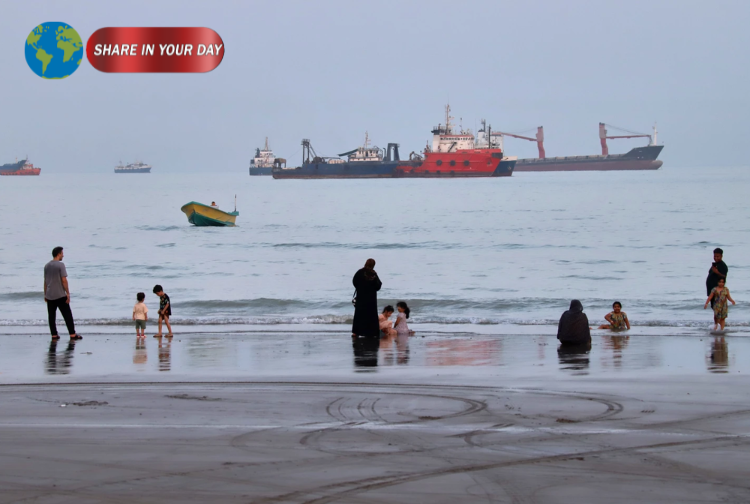
The Iran Hormuz deal is emerging as one of the most important developments in the Middle East, as Tehran and Oman discuss a temporary arrangement governing maritime traffic through the strategically vital Strait of Hormuz. The proposal comes amid a wider regional crisis involving Iran, the United States, Israel, Gaza and the occupied West Bank.
According to The Associated Press, Iran says it would prevent military vessels from transiting the strait if the agreement with Oman is finalized. Commercial shipping, meanwhile, would be routed through Iranian and Omani waters under the proposed arrangement.
The discussions are significant because the Strait of Hormuz is one of the world’s most important energy routes. Any prolonged disruption can affect shipping, fuel prices and global supply chains.
But the Iran Hormuz deal is only one part of a rapidly changing regional picture. Developments in Gaza, the West Bank and the international sanctions campaign against Tehran are adding further pressure.
Here are six major developments to understand.
1. Iran Hormuz deal could reshape maritime traffic
The most significant development is the proposed maritime arrangement between Iran and Oman.
Iranian and Omani officials are discussing a temporary navigational framework designed to establish a route for commercial shipping through the Strait of Hormuz. The two countries have also discussed mine-clearing operations and the possibility of creating a more permanent navigation system.
Under the proposal described by AP, military vessels would not be permitted to use the route.
Commercial ships, however, would receive a designated passage through Iranian and Omani waters.
That distinction is crucial.
The United States has opposed the proposed arrangement and has threatened action against Oman, according to AP. Washington’s position reflects the broader dispute over control and security in the waterway during the ongoing Iran conflict.
For shipping companies, the biggest question is whether any agreement can provide predictable and secure passage.
A temporary corridor could reduce uncertainty. However, it would not necessarily mean that the broader crisis has been resolved.
The talks therefore represent a possible opening for diplomacy rather than a final settlement.
2. The Strait of Hormuz remains a global economic pressure point
The importance of the Iran Hormuz deal extends far beyond the Middle East.
The Strait of Hormuz connects the Persian Gulf with the Gulf of Oman and the wider Arabian Sea. It is a critical route for energy exports, making disruptions there a major concern for governments, businesses and consumers around the world.
Recent reporting has shown just how much the conflict has affected energy markets.
Reuters reported that six months into the U.S.-Iran war, the conflict had developed into an extended struggle centered heavily on energy and the Strait of Hormuz. Brent crude was trading around $90 a barrel, significantly above prewar levels.
A successful maritime arrangement could therefore have consequences well beyond shipping.
More reliable tanker movements could ease some pressure on energy markets. It could also reduce insurance and transportation risks for companies operating in the region.
However, analysts have cautioned that a temporary navigational agreement alone would not necessarily restore oil flows to their previous levels.
The broader sanctions regime, military tensions and uncertainty surrounding Iranian ports remain important factors.
3. Iran faces intensified U.S. sanctions
At the same time that Tehran is negotiating with Oman, Washington is increasing economic pressure.
The United States has expanded sanctions targeting Iranian financial networks and other entities connected to the country’s economy. Reuters reported that the latest campaign is intended to restrict Tehran’s access to international financial flows.
Iran has strongly rejected the measures.
Iranian officials have described the sanctions as economic coercion and warned that countries supporting them could face consequences. Earlier this week, Tehran also condemned the expanded U.S. restrictions as unlawful.
The sanctions create a difficult diplomatic environment.
On one side, Washington wants to increase economic pressure on Tehran. On the other, regional mediators are attempting to create conditions for de-escalation.
That tension could determine whether the current diplomatic efforts produce a durable agreement.
Iran’s economic position is also becoming increasingly important to the negotiations. Restrictions on oil exports, banking and international trade can influence Tehran’s willingness to compromise.
At the same time, Iran has demonstrated that economic pressure does not automatically translate into immediate political concessions.
4. Gaza violence continues despite ceasefire efforts
The regional crisis is not limited to Iran.
In Gaza, Israeli military activity has continued despite a ceasefire framework. AP reported that Israeli airstrikes had increased, with civilian casualties raising fresh international concern.
Nickolay Mladenov, who heads President Donald Trump’s Gaza peace board, criticized the violence and called for the parties to respect existing peace arrangements, according to AP.
The humanitarian situation remains another major challenge.
European officials have expressed serious concern about conditions in Gaza and the West Bank. The European Council has called for sustained humanitarian access and emphasized the need to protect civilians under international humanitarian law.
Israel has maintained that Hamas must disarm before reconstruction can proceed.
That position continues to clash with demands for humanitarian assistance and broader political progress.
The result is a fragile situation in which diplomatic agreements exist alongside continued violence.
For the wider Middle East, developments in Gaza also matter because they can influence negotiations involving Iran, Israel and the United States.
5. West Bank settlement expansion raises tensions
Another major development concerns the occupied West Bank.
Israeli Prime Minister Benjamin Netanyahu has confirmed the legalization of more than 100 settlements and the establishment of 160 outposts, according to AP’s regional roundup.
The announcement has added another layer of tension to an already volatile political environment.
Settlement policy remains one of the most contentious issues in the Israeli-Palestinian conflict. The European Union has expressed concern about settlement expansion and settler violence against Palestinian civilians.
The developments are significant because they could complicate future negotiations over a political settlement.
European leaders continue to support a two-state solution, with Israel and Palestine living alongside each other within secure and recognized borders.
However, continued settlement activity creates additional obstacles to that objective.
The West Bank situation also demonstrates how interconnected the region’s crises have become.
While international attention is focused heavily on Iran and the Strait of Hormuz, events in the West Bank and Gaza continue to shape regional diplomacy.
6. Middle East instability is affecting travel and trade
The final major development is the broader economic impact.
Dubai International Airport has reported a substantial decline in passenger traffic amid regional instability, according to AP. The airport recorded a 31.3% decrease in passenger traffic as the conflict disrupted regional travel.
The aviation sector is only one example.
Shipping companies, energy producers, insurers and manufacturers are also dealing with uncertainty.
When major shipping routes become difficult to use, companies may need to reroute vessels, increase insurance coverage or accept longer delivery times.
Those costs can eventually affect consumers.
Energy is particularly sensitive.
If oil and gas transportation remains restricted, countries that depend heavily on imported energy can face higher costs. That can contribute to inflation and complicate monetary policy decisions.
This is why the Iran Hormuz deal has attracted attention far beyond Tehran and Muscat.
A stable maritime corridor could reduce some of these risks.
A breakdown in negotiations could produce the opposite effect.
Why the Iran Hormuz deal matters now
The timing of the negotiations is especially important.
The United States and Iran remain locked in a broader confrontation. At the same time, regional governments are searching for ways to reduce the risk of further escalation.
Oman has traditionally played a role as a diplomatic intermediary in disputes involving Iran and Western governments.
Its involvement in the Hormuz discussions therefore gives the negotiations a potentially important diplomatic dimension.
Qatar is also involved in regional diplomacy. AP reported that Qatar’s foreign minister was expected to travel to Tehran as part of efforts to promote de-escalation and restore conditions that existed before the war.
Pakistan has likewise been involved in diplomatic efforts surrounding the conflict.
These overlapping initiatives indicate that several governments are looking for ways to prevent the conflict from expanding further.
However, diplomacy remains fragile.
What happens if the agreement succeeds?
If the Iran Hormuz deal is finalized and successfully implemented, the immediate benefit could be greater predictability for commercial shipping.
A designated corridor could allow some vessels to resume passage under agreed conditions.
That would be significant for energy markets.
It could also reduce pressure on regional governments that have been forced to search for alternative transportation and export routes.
But a maritime agreement would not automatically resolve the Iran-U.S. conflict.
Sanctions would remain.
Political disagreements would remain.
And the disputes involving Gaza and Israel would continue.
The deal would therefore be better understood as one possible component of a broader de-escalation process.
What could derail the Iran Hormuz deal?
Several risks remain.
The first is the disagreement between Iran and the United States over maritime security.
Washington has opposed the proposed Iranian-Omani arrangement, meaning that an agreement between Tehran and Muscat could face pressure from the United States.
The second challenge is security.
Mine-clearing operations and safe navigation are difficult to guarantee in an active conflict environment. A single attack on a commercial vessel could undermine confidence rapidly.
The third problem is the wider diplomatic conflict.
If sanctions intensify or military confrontation resumes, shipping arrangements could become much harder to maintain.
Finally, the agreement would need cooperation from shipping companies and regional authorities.
A route can exist on paper but remain commercially unattractive if insurers, crews and shipping operators consider it too dangerous.
The bigger picture for the Middle East
The latest developments show how closely connected the region’s political and economic crises have become.
The Iran Hormuz deal is directly connected to energy security. Energy security is connected to international sanctions. Sanctions are connected to U.S.-Iran diplomacy. And that diplomacy exists alongside the unresolved conflicts involving Israel, Gaza and the West Bank.
That makes the current situation unusually complicated.
There is no single negotiation capable of resolving all of these disputes.
Instead, governments are pursuing several tracks simultaneously.
Oman is working on maritime arrangements.
Qatar is supporting diplomatic efforts.
Pakistan has been involved in communication between the parties.
The United States is applying economic pressure while also pursuing broader diplomatic options.
Meanwhile, Israel’s actions in Gaza and the West Bank remain central to the wider regional debate.
What to watch next
The next few days could be important.
The key issue will be whether Iran and Oman can turn their discussions into a functioning maritime arrangement.
If they do, the immediate response from the United States will be closely watched.
Energy markets will also provide an important signal. Falling oil prices and increased tanker traffic could indicate that traders expect conditions to improve.
At the same time, any new attack involving commercial shipping could quickly reverse that optimism.
Diplomatic developments involving Qatar, Iran and the United States will also matter.
Beyond the Hormuz negotiations, international attention will remain focused on Gaza and the West Bank, where continued violence and settlement expansion threaten to undermine wider de-escalation efforts.
Conclusion
The Iran Hormuz deal represents a potentially important attempt to manage one of the world’s most sensitive maritime chokepoints during an ongoing regional crisis.
Iran and Oman are discussing a temporary framework that could allow commercial shipping to move through designated waters while restricting military vessels. The proposal could provide some relief to global energy markets, but it remains politically and operationally fragile.
At the same time, the broader Middle East crisis continues to deepen through several interconnected developments.
U.S. sanctions are increasing pressure on Iran. Violence continues in Gaza. Israeli settlement expansion is fueling tensions in the West Bank. And regional instability is disrupting aviation, shipping and trade.
For now, the most important question is whether diplomacy can move faster than escalation.
If the Iran-Oman maritime arrangement succeeds, it could become an important first step toward greater stability.
If it fails, the Strait of Hormuz could remain a major source of economic and geopolitical uncertainty.
Either way, the coming days will be closely watched by governments, energy markets and shipping companies around the world.
Suggested External Links
- Associated Press — Iran and Middle East developments
- Reuters — U.S.-Iran energy conflict
- European Council — EU position on the Middle East
Internal Link Suggestions
Add links to relevant pages on your own website, such as:
- Middle East latest news
- Iran latest news
- Israel-Gaza conflict updates
- Oil price and energy news
- World news
- U.S. foreign policy