Housing Affordability Could Finally Improve: 5-Year Outlook Revealed
The U.S. housing affordability crisis could begin to ease over the next five years, but meaningful relief will depend on mortgage rates, home-price growth and rising household incomes. A new analysis from Redfin suggests that housing costs could return to more normal levels by around 2031 under certain economic conditions, offering a potential path forward for buyers who have struggled with years of expensive homes and high borrowing costs.
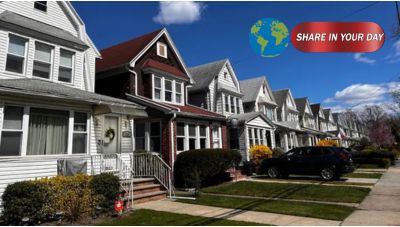
The outlook provides a measure of hope for prospective homeowners, particularly younger Americans and first-time buyers who have found it increasingly difficult to save for a down payment while keeping up with rent, everyday expenses and other financial obligations.
However, the analysis does not suggest that homes will suddenly become cheap or that prices are likely to collapse. Instead, affordability could gradually improve if incomes continue to rise while home-price increases moderate and mortgage rates decline.
According to Redfin’s chief economist, Daryl Fairweather, the improvement would largely reflect the narrowing gap between what households earn and what it costs to own a home. That process would take time, and the results would vary considerably between cities.
For buyers hoping to enter the market, the findings highlight an important distinction: housing may become more affordable relative to income even if nominal home prices do not fall significantly.
Housing Affordability Could Normalize Within Five Years
Redfin’s analysis, published October 8, 2026, outlines several possible scenarios for the U.S. housing market. The central finding is that housing costs could return to more normal levels within approximately five years if mortgage rates fall to 6% and home prices continue growing at a moderate annual rate of around 2.1%.
That scenario assumes economic conditions develop favorably rather than guaranteeing a particular outcome.
Redfin also examined what could happen if mortgage rates remained near 7.5%, but home-price growth flattened. Under that combination, housing costs could normalize in approximately six years.
The findings suggest that mortgage rates are important, but they are not the only factor determining whether households can afford a home.
When home prices rise more slowly than incomes, buyers gradually gain purchasing power. Their earnings can cover a larger share of a typical mortgage payment, even if the listed price of a property remains relatively stable.
Conversely, if home prices continue increasing faster than wages, affordability can deteriorate even when borrowing costs improve slightly.
This relationship helps explain why the housing market’s recovery may be gradual rather than immediate.
For buyers who have postponed purchases because of high monthly payments, the Redfin analysis offers a possible timeline for improvement. Nevertheless, the five-year scenario depends on mortgage rates and price growth following the assumptions used in the research.
Economic shocks, persistent inflation or faster-than-expected home-price increases could change that outlook.
Mortgage Rates Remain a Major Obstacle for Buyers
Mortgage rates are one of the most significant barriers to homeownership in the United States.
Even buyers who can afford a down payment may struggle to qualify for a mortgage when interest rates push monthly payments beyond their budgets. The effect becomes particularly pronounced for households purchasing homes at today’s elevated prices.
Recent market conditions illustrate the challenge.
The average U.S. 30-year fixed mortgage rate reached 7.40% during the week reported by Freddie Mac on October 8, 2026, rising from 7.28% the previous week. Reuters reported that the increase brought the rate to its highest level since November 2023.
Higher borrowing costs can significantly increase the total expense of financing a home.
Consider a buyer borrowing $350,000 through a 30-year fixed-rate mortgage. At an interest rate of 7.5%, the principal-and-interest payment would be approximately $2,448 per month. At 6%, the payment would fall to approximately $2,098.
Illustrative calculations; excludes property taxes, insurance, mortgage insurance, HOA fees and closing costs.
That difference amounts to approximately $350 each month, or about $4,200 annually.