Trump Reveals Why CIA Chief Made Moscow Trip
The CIA chief Moscow trip has triggered intense speculation after CIA Director John Ratcliffe traveled to Russia for previously unannounced talks with Russian intelligence officials. President Donald Trump has sought to play down the significance of the rare visit, describing it as “semi-routine” while suggesting that something could eventually emerge from the discussions.
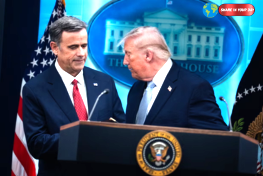
The unusual trip became public after reports of an American military aircraft flying to Moscow and a US diplomatic motorcade being seen in the Russian capital. The Kremlin later confirmed that Ratcliffe had held talks with Russian intelligence counterparts.
The circumstances surrounding the visit have raised questions about what Washington was seeking from Moscow and what message Ratcliffe may have delivered.
Trump, however, has rejected several theories about the purpose of the trip, including speculation that it was linked to Russia potentially testing NATO or to efforts to secure Russian support for tougher US sanctions against Iran.
CIA Chief Moscow Trip Comes Amid Rising Tensions
Ratcliffe’s trip comes at a particularly sensitive moment in relations between the United States and Russia.
The war in Ukraine continues to dominate the relationship between Washington and Moscow, while Ukrainian forces have increased attacks against targets deep inside Russia. At the same time, US officials have remained concerned about the possibility of a broader confrontation between Russia and NATO.
The visit was not publicly announced by the White House, the CIA or the Pentagon. Its existence emerged through media reports and flight-tracking information before the Kremlin acknowledged that discussions had taken place.
That secrecy is significant because visits by serving CIA directors to Moscow are extremely unusual.
The previous known trip by a CIA director to the Russian capital was made by William Burns in November 2021. Burns traveled to Moscow before Russia’s full-scale invasion of Ukraine and delivered a warning to President Vladimir Putin about the consequences of an invasion.
Ratcliffe’s visit therefore carries historical weight, even though the administration has attempted to characterize it as routine.
Trump Calls the Moscow Visit ‘Semi-Routine’
Trump addressed the controversy during an interview with conservative radio host Glenn Beck.
The president described Ratcliffe as a “fantastic guy” and said the CIA director was not in Moscow for the specific reasons suggested by the interviewer. Trump also indicated that the discussions could eventually produce developments related to the effort to end the war in Ukraine.
Trump’s comments were notable because they simultaneously downplayed the visit while acknowledging that something potentially important could come from it.
The president said his administration was working hard to end the Ukraine war and suggested that both sides wanted the conflict to end.
That statement leaves open the possibility that intelligence channels are being used alongside more visible diplomatic efforts.
The Kremlin has similarly avoided portraying the meeting as a breakthrough. Kremlin spokesperson Dmitry Peskov said it was too early to judge the significance of the contacts for the broader US-Russia relationship.
What Did John Ratcliffe Discuss in Moscow?
The exact agenda remains unclear.
The Kremlin said Ratcliffe met with Russian intelligence counterparts, but it did not say that he met personally with Putin. Peskov said the Russian president was informed about the meeting.
One major explanation reported by The Wall Street Journal is that Ratcliffe went to Moscow to warn Russia against attacking NATO countries.
According to the report, US intelligence assessments have raised concerns that Moscow could test NATO’s resolve through limited military actions, cyberattacks or other provocations, particularly in the Baltic region.
That possibility would give the trip a very different significance from Trump’s description of it as semi-routine.
However, the precise contents of intelligence discussions are rarely made public. Even when governments confirm that meetings occurred, they generally avoid disclosing operational details.
As a result, it is possible that the Moscow discussions covered several issues simultaneously, including Ukraine, NATO, Iran and broader US-Russia relations.
Russia’s Relationship With Iran Adds Another Complication
The CIA chief Moscow trip also occurred against the backdrop of tensions involving Iran.
Washington has been considering and implementing additional economic pressure on Iran, while Russia has maintained important relations with Tehran. Moscow’s ties with Iran make Russia a potentially relevant player in US efforts to influence the Middle East.
Trump has rejected suggestions that Ratcliffe’s trip was specifically intended to secure Russian cooperation on intensified Iran sanctions.
Still, intelligence agencies often discuss multiple international security issues during high-level meetings.
That makes it difficult to determine from the available public statements whether Iran was discussed privately.
The uncertainty is part of what makes the trip so unusual. The United States and Russia remain strategic rivals in many areas, yet their intelligence agencies have continued to maintain channels of communication.
A Rare Intelligence Channel Between Washington and Moscow
Despite years of confrontation, American and Russian intelligence officials have occasionally used direct communication to manage crises.
Those channels can be particularly valuable when relations between governments are strained.
Intelligence contacts allow officials to discuss sensitive security concerns without necessarily committing either government to a formal diplomatic agreement.
The Ratcliffe visit appears to fit into that broader pattern.
The Kremlin described the contacts as part of ongoing communication between the intelligence services. Peskov also indicated that the significance of the discussions should not yet be overstated.
For Washington, direct intelligence communication can provide another mechanism for delivering warnings or testing Russian intentions.
For Moscow, such meetings can provide an opportunity to hear directly from senior American officials while maintaining diplomatic flexibility.
Ukraine Was Reportedly Informed About the Visit
The Moscow meeting also had an immediate connection to the war in Ukraine.
According to reporting cited by The Associated Press, Kyiv was informed about the visit and was asked to limit attacks around Moscow and other northern Russian regions while the US delegation was in the country.
That detail highlights the complexity of the relationship between Washington and Kyiv.
The United States continues to support Ukraine while simultaneously attempting to communicate directly with Moscow. Any diplomatic or intelligence contact therefore has to be managed carefully to avoid misunderstandings between Washington and its Ukrainian allies.
The temporary reduction in attacks, if accurately reported, could also have been intended as a security precaution for the US delegation.
Why the Visit Is Historically Significant
The last publicly known CIA director to visit Moscow was William Burns in 2021.
Burns’ trip took place months before Russia launched its full-scale invasion of Ukraine. His mission was intended to warn Putin and other Russian officials about the consequences of military escalation.
Ratcliffe’s trip comes more than four years after that invasion and at a time when US-Russia relations remain deeply strained.
That comparison does not necessarily mean another major escalation is imminent.
Instead, it demonstrates how intelligence chiefs can become important intermediaries during periods of heightened international risk.
A CIA director traveling directly to Moscow signals that the issues under discussion are important enough to justify a highly sensitive channel.
Trump Wants to Avoid Alarm Over Russia
Trump’s decision to describe the visit as “semi-routine” appears designed to reduce speculation.
The president has repeatedly emphasized his desire to end the Ukraine war and has expressed frustration with the continuation of the conflict.
At the same time, reports that Ratcliffe may have delivered a warning about NATO suggest that Washington remains concerned about Russia’s broader military intentions.
The two messages are not necessarily contradictory.
A government can pursue negotiations with an adversary while simultaneously warning that certain actions would trigger serious consequences.
In fact, direct intelligence communication can be especially useful for preventing misunderstandings during periods of military tension.
What the Moscow Talks Could Mean for NATO
If reports about a NATO warning are accurate, the trip could have implications extending far beyond Ukraine.
NATO has spent years strengthening its eastern defenses in response to Russia’s invasion of Ukraine. Baltic states and other countries near Russia remain particularly sensitive to possible military or hybrid attacks.
A limited Russian action against a NATO member could create a difficult strategic dilemma.
The alliance’s credibility depends partly on its ability to demonstrate that an attack against one member will be treated as a threat to all.
That is why even a relatively small incident could have major consequences.
A direct warning from the CIA director would therefore be significant if it was intended to make clear that Washington is closely monitoring Russian military planning.
The Bigger Question: Is the Trip a Sign of Diplomacy?
The most important question surrounding the CIA chief Moscow trip may be whether it represents a new phase of US-Russia engagement.
The answer remains uncertain.
The Kremlin has confirmed that intelligence talks took place, but officials have not presented them as a breakthrough. Trump has said he hopes something positive could emerge while describing the visit as largely routine.
That combination suggests that both sides may want to preserve the communication channel without publicly attaching major political expectations to it.
This could be useful if Washington and Moscow need a confidential mechanism for managing future crises.
It could also become part of wider efforts to negotiate an end to the war in Ukraine.
However, the existence of direct talks does not by itself indicate that a peace agreement is close.
What Happens Next?
For now, the real outcome of Ratcliffe’s Moscow visit remains behind closed doors.
The Kremlin has acknowledged the discussions, while the Trump administration has offered only limited public information.
That leaves several possibilities.
The talks may have focused primarily on preventing escalation between Russia and NATO. They may have involved Ukraine and potential pathways toward ending the war. They could also have addressed Iran or other intelligence matters.
More information may emerge if either government decides that revealing portions of the discussions serves its interests.
Until then, the visit remains an unusual example of high-level intelligence diplomacy between two countries whose relationship is still marked by deep mistrust.
Bottom Line
The CIA chief Moscow trip is significant precisely because it was secretive, unusual and occurred at a moment of intense geopolitical tension.
John Ratcliffe traveled to Moscow for talks with Russian intelligence officials, and the Kremlin confirmed the meetings. Trump has called the trip “semi-routine” while saying his administration is working to end the war in Ukraine.
Reports that Ratcliffe may have warned Russia against attacking NATO countries add another layer to the story.
Whether the trip becomes the beginning of a broader diplomatic opening or simply another confidential intelligence contact remains to be seen.
For now, the message from Washington appears to be twofold: the United States is willing to maintain direct communication with Moscow, but it is also closely watching Russia’s military intentions.
And with the war in Ukraine continuing, those private conversations could become increasingly important.