
Taiwan Military Drone Spending Takes a New Direction
Under the government’s original proposal, Taiwan would have established a special budget of NT$210 billion, equivalent to about $6.6 billion, running through 2031. The program was designed to support the acquisition of approximately 210,000 military drones and other unmanned systems.
The government has described the program as an urgent defense requirement. Officials point to recent conflicts, particularly the wars in Ukraine and Iran, as evidence that unmanned weapons can play a decisive role in modern combat.
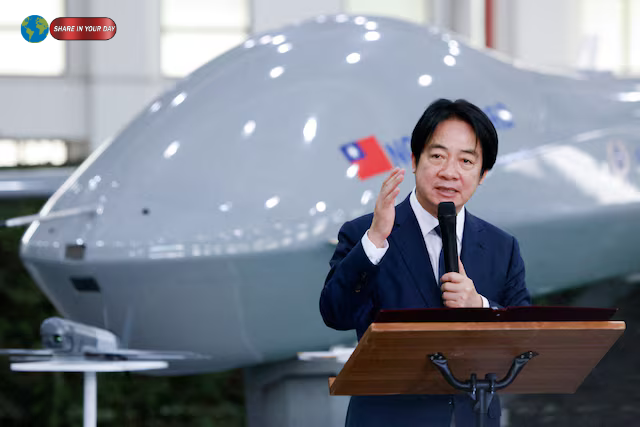
The new parliamentary plan increases the headline figure to NT$240 billion over six years. However, unlike the government proposal, the money would come from the regular annual budget. Annual spending would generally be limited to NT$40 billion, although the legislation allows the amount to be increased if necessary and subject to the relevant approval process.
That difference could have significant consequences for the speed of procurement.
Military equipment programs rarely spend money at an identical pace every year. Contracts can require larger payments during manufacturing, delivery or deployment periods. Consequently, an annual ceiling could create difficulties if Taiwan needs to make unusually large payments during a particular stage of the program.
Defense Minister Wellington Koo has already warned about this issue. He said a NT$40 billion annual limit could interfere with planned spending because the Ministry of National Defense had expected drone-related expenditure of NT$42.1 billion in 2027 alone.
Why Taiwan Wants More Military Drones
Taiwan’s interest in unmanned systems reflects a broader shift in its defense planning.
Traditional military platforms such as fighter aircraft, ships and armored vehicles remain important. However, drones can offer advantages in surveillance, reconnaissance, targeting and attack while potentially costing less than traditional manned platforms.
They can also be deployed in large numbers. That matters for Taiwan because its geography creates specific defense challenges. The island needs to monitor approaches from the sea, maintain awareness of potential military movements and prepare for scenarios in which communications, bases and conventional platforms could come under pressure.
Taiwan’s Ministry of National Defense has identified several categories of unmanned systems as strategically important. These include coastal surveillance drones, coastal attack drones and small one-way attack unmanned surface vessels.
The broader objective is to build an asymmetric defense capability.
An asymmetric strategy seeks to make an opponent’s military objectives more difficult and costly rather than attempting to match every capability directly. For Taiwan, unmanned systems can form part of that approach by expanding surveillance coverage and creating additional options for defense operations.
The experience of Ukraine has been particularly influential in this debate. The conflict has demonstrated how relatively inexpensive unmanned platforms can be used alongside artillery, missiles, electronic warfare and intelligence systems.
Taiwan is studying those developments while adapting them to its own geographic and strategic circumstances.
Parliament Rejects the Special Budget
The parliamentary rejection of the government’s special budget highlights Taiwan’s increasingly complicated domestic political environment.
The ruling Democratic Progressive Party does not control the legislature. Opposition lawmakers, including members of the Kuomintang and Taiwan People’s Party, have pushed for alternative approaches to defense spending.
Their argument is not necessarily that Taiwan should spend less on unmanned technology.
Instead, opposition lawmakers have emphasized legislative oversight and annual budget scrutiny. Their version would move the funding into the regular budget process, giving lawmakers more opportunities to examine how money is spent.
The alternative plan also places greater emphasis on the Ministry of Economic Affairs in areas involving industrial development. This reflects the opposition’s view that Taiwan’s drone strategy should involve not only military procurement but also the development of a domestic unmanned-vehicle industry.
That distinction is important.
Taiwan is attempting to build a defense ecosystem rather than simply purchase finished products. Domestic manufacturing, component production, software, communications, artificial intelligence and maintenance could all become part of a broader national drone industry.
Taiwan Military Drone Spending and the Domestic Defense Industry
The debate over Taiwan military drone spending is closely connected to the island’s push for defense self-reliance.
Taiwan’s Defense Ministry has said it wants to strengthen a supply chain that excludes potentially vulnerable Chinese-linked components. The objective is to ensure that critical systems can be manufactured, maintained and expanded domestically or through trusted international partnerships.
The ministry has described unmanned vehicles as an important part of this effort. The wider industry could involve aircraft manufacturing, batteries, optical sensors, artificial intelligence, communications equipment, software and maintenance services.
This creates an economic argument for the drone program as well as a military one.
If Taiwan can develop a competitive domestic drone industry, government procurement could create demand that encourages private companies to invest in production capacity and research.
However, that process also requires time.
Factories need equipment. Engineers need training. Supply chains need reliable access to specialized components. Testing facilities and cybersecurity standards must also be developed.
Taiwan’s parliament has therefore connected the latest legislation with broader goals for unmanned-vehicle industry development. Taiwan’s Central News Agency reported that the approved bill includes provisions related to testing sites, domestic production requirements and cybersecurity compliance.
The $7.5 Billion Question
The difference between NT$210 billion and NT$240 billion may appear straightforward, but the headline numbers do not tell the entire story.
The government’s original proposal offered a dedicated pool of funding designed to provide predictable resources through 2031. That could make it easier for defense planners to negotiate long-term procurement contracts and coordinate deliveries.
The parliamentary alternative provides a larger overall ceiling but ties spending more closely to the annual budget process.
For Taiwan’s military planners, predictability can be just as important as the total amount.
A drone manufacturer considering a major expansion needs confidence that orders will continue. The military needs confidence that deliveries can be funded when required. At the same time, lawmakers want mechanisms that prevent large amounts of public money from being spent without sufficient scrutiny.
The competing priorities explain why the debate has become so contentious.
Premier Cho Jung-tai said after the vote that the government would consider whether the legislation meets national defense requirements and the needs of Taiwan’s defense self-reliance and unmanned-vehicle industry.
Taiwan Military Drone Spending Faces a Timing Test
Timing could become one of the most important issues following the vote.
The government had argued that the drone program could not wait because warfare is changing rapidly. Officials believe Taiwan needs to accelerate development and procurement rather than build capabilities slowly over many years.
The Defense Ministry has also warned that returning the program to the ordinary annual budget process could affect procurement schedules.
Minister Koo previously argued that putting multiple categories of unmanned systems, testing facilities and industrial-development expenditures under a single annual ceiling could limit flexibility.
That concern becomes particularly relevant if Taiwan wants to scale production quickly.
Large-scale drone procurement is not simply a matter of purchasing aircraft. It involves training operators, establishing maintenance networks, developing secure communications and integrating drones with existing military systems.
Counter-drone capabilities are also increasingly important. An effective unmanned strategy must account for the possibility that an adversary will deploy large numbers of drones as well.
China Watches Taiwan’s Defense Build-Up
Taiwan’s drone expansion is taking place against the backdrop of long-running tensions with China.
Beijing claims Taiwan as part of China, while Taiwan’s government maintains that the island’s future should be determined by its people. The political dispute has been accompanied by increased military pressure and frequent Chinese military activity around Taiwan.
Taiwan therefore views stronger asymmetric capabilities as part of a deterrence strategy.
President Lai Ching-te has repeatedly argued that Taiwan must strengthen its ability to defend itself. Ahead of the parliamentary vote, he urged lawmakers to support the government’s six-year NT$210 billion proposal, describing unmanned systems as an increasingly important component of modern defense.
The president has also emphasized defense self-reliance and the development of Taiwan’s domestic defense industry.
Taiwan’s Defense Ministry says its overall approach is increasingly focused on technology, unmanned systems and AI-assisted capabilities. Its published defense policy calls for greater use of unmanned systems as part of a modernized force structure.
What Happens Next?
The parliamentary vote does not necessarily end the political fight.
The government must now assess the legislation passed by lawmakers and determine its next steps. At the same time, the Defense Ministry will need to evaluate how the new funding structure affects procurement schedules and planned programs.
The central question will be whether the NT$40 billion annual framework provides enough flexibility to meet military requirements while satisfying lawmakers’ demand for greater oversight.
There is also a wider question about how Taiwan balances immediate defense needs with the long-term development of a domestic drone industry.
A successful strategy would need to accomplish both.
Taiwan wants drones that can be deployed rapidly in a potential crisis. It also wants companies capable of producing those systems at scale and maintaining them during prolonged operations.
That makes the current budget dispute more than a disagreement over accounting.
It is effectively a debate over how Taiwan should build its future defense-industrial base.
Taiwan Military Drone Spending Could Shape Future Defense Strategy
The latest parliamentary decision sends a mixed but significant signal.
On one hand, lawmakers rejected the government’s special NT$210 billion package. On the other, they approved a framework that could ultimately provide NT$240 billion for unmanned systems over six years.
In other words, Taiwan has not abandoned its drone strategy.
Instead, the island’s lawmakers have chosen a different route toward funding it.
The government wants speed, concentrated resources and greater flexibility for military procurement. Opposition lawmakers want annual scrutiny, legislative control and stronger emphasis on industrial development.
Both approaches recognize that unmanned technology is becoming increasingly important to Taiwan’s defense.
The real test will now be implementation.
If the new funding system allows Taiwan to expand production, maintain procurement momentum and integrate drones into a broader asymmetric defense strategy, the parliamentary vote could become an important step toward a stronger domestic unmanned-vehicle industry.
If annual restrictions create delays or force major procurement programs to be repeatedly reconsidered, however, Taiwan could face a gap between its strategic ambitions and its ability to deliver them.
For now, the most important takeaway is clear: Taiwan military drone spending is moving forward, but under a new political and financial framework.
With tensions across the Taiwan Strait continuing and unmanned warfare evolving rapidly, the effectiveness of that framework could have consequences far beyond Taiwan’s parliament.
Sources and Further Reading
- Reuters: Taiwan parliament rejects government military drone plan and passes its own version
- Taiwan Ministry of National Defense: Special legislation for indigenous unmanned-vehicle procurement
- Taiwan Ministry of National Defense: Defense policy and budgeting information
- Focus Taiwan: Legislature passes drone procurement bill with NT$240 billion spending cap
Internal Link Recommendation
Add 2–3 links from your own website to relevant existing articles, ideally covering:
- Taiwan-China tensions
- Taiwan defense spending
- Drone warfare and modern military technology
Use descriptive anchor text such as “Taiwan’s growing defense budget”, “Taiwan-China military tensions”, and “the role of drones in modern warfare.”
Editorial Note
This article is an original news-style synthesis based on the supplied Reuters report and corroborating official and local sources. It does not reproduce the Reuters article verbatim.
