Canada Tariffs on U.S. Goods: $20B Move Revealed
Canada tariffs on U.S. goods are set to expand sharply as Ottawa prepares a new round of retaliatory duties worth about C$27.6 billion, or nearly US$20 billion, on American imports. The measures will take effect on September 8 and include tariffs of 15%, 25% and 50% across roughly 700 products.
The move comes after the United States imposed new 50% tariffs on about C$27.6 billion of Canadian goods. Ottawa says its response will match those U.S. duties dollar for dollar and rate for rate.
At the same time, Canada announced a C$7.5 billion package of new and enhanced support measures for businesses and workers affected by the escalating trade dispute. The package is designed to help companies manage cash-flow pressures, protect jobs and adapt to a more uncertain trading environment.
The announcement marks another major escalation in trade tensions between two of the world’s most closely connected economies.
Canada Tariffs on U.S. Goods Begin September 8
The new Canadian tariffs will come into force at 12:01 a.m. on September 8, according to Canada’s Department of Finance.
The duties will apply to products originating in the United States and will be set at 15%, 25% or 50%, depending on the corresponding U.S. tariff imposed on Canadian goods.
Canada says the approach is deliberately targeted. Rather than applying a blanket tariff to all American imports, Ottawa is focusing on products and industries affected by the latest U.S. measures.
The targeted categories include steel, aluminum, furniture, clothing, appliances, dairy products, fish and seafood, agricultural equipment, pulp and paper, electronics and other manufactured goods.
The Canadian government says the counter-tariffs will cover approximately C$27.6 billion in U.S. imports.
That figure is broadly equivalent to the value of Canadian goods affected by the latest U.S. tariffs. Reuters reported that the Canadian measures will cover around 700 products.
Why Canada Is Retaliating
Canada’s decision follows the implementation of new U.S. tariffs on Canadian products.
The Canadian government said Washington imposed a 50% tariff on C$27.6 billion of Canadian goods effective August 22. Ottawa argues that the measures have created additional pressure on Canadian workers, manufacturers, farmers and businesses.
Canadian Finance Minister François-Philippe Champagne said the government had attempted to negotiate a broader trade agreement with the United States.
Those negotiations were eventually suspended after Canada concluded that the proposed terms did not adequately protect Canadian economic interests.
Ottawa now says its response is intended to create a more balanced competitive environment for Canadian producers.
The government’s stated objective is not simply to impose costs on American exporters. It also wants to shield Canadian industries from the effects of U.S. tariffs and strengthen domestic production.
The timing is significant because Canada and the United States have deeply integrated supply chains. Goods frequently cross the border multiple times before reaching consumers.
As a result, tariffs imposed by one country can quickly create additional costs for companies operating on both sides of the border.
The Highest Canada Tariffs Target Key Industries
The new tariff structure is divided into three main rates.
Products facing the highest 50% rate include steel and aluminum products that were previously subject to a lower Canadian counter-tariff, as well as furniture and clothing and apparel.
A 25% tariff will apply to several other categories, including appliances, dairy products such as cheese, fish and seafood, and certain steel and aluminum derivative products.
Other products will face a 15% tariff, with electronics and tools among the categories identified in reporting on the measures.
This structure allows Ottawa to concentrate its response on specific areas rather than increasing duties across the entire U.S. import market.
The Canadian government has also published a detailed product list identifying the goods covered by the new measures.
Canada’s official list of products subject to the September 8 tariffs
That list is important for importers because the precise tariff treatment depends on individual product classifications.
Canada Unveils C$7.5 Billion Support Package
Alongside the retaliatory tariffs, Ottawa announced C$7.5 billion in new and enhanced measures for Canadian businesses and workers.
The government says the package builds on nearly C$25 billion in support already provided since the implementation of earlier U.S. tariffs.
The new measures are designed to address both immediate financial pressure and longer-term economic adjustment.
One major component is an additional C$1.5 billion for the Regional Tariff Response Initiative. The program is intended to help small and medium-sized businesses deal with tariff-related pressures, including liquidity needs.
The government is also introducing a new C$500 million liquidity stream under the Business Development Bank of Canada’s Pivot to Grow program.
That financing is intended to help businesses manage immediate cash-flow challenges while they adjust to changing trade conditions.
Eligibility for certain Business Development Bank of Canada tariff-related programs will also be expanded by lowering the minimum revenue requirement for applicants to C$1 million.
Canada Strong Diversification Fund Adds C$2 Billion
Another major part of the response is the new Canada Strong Diversification Fund.
Ottawa plans to invest C$2 billion through the initiative to support tariff-affected businesses and projects that can help companies maintain capital investment and adapt to changing market conditions.
The program is intended to complement Canada’s regional development programs.
The broader strategy reflects a growing focus on economic diversification.
For decades, Canada and the United States have relied heavily on cross-border trade. That relationship has delivered major economic benefits, but the latest tariff dispute has highlighted the risks of relying too heavily on one market.
Canadian policymakers are therefore looking for ways to help businesses expand into other international markets while strengthening domestic supply chains.
The federal government’s Canada Strong campaign includes programs for workers, exporters, businesses and industries affected by the changing relationship with the United States.
Workers to Receive Additional Support
The tariff response is not limited to businesses.
Canada is also allocating C$3.5 billion to a new suite of Rapid Response Supports for Workers and Employers.
The measures include temporary Employment Insurance flexibilities, additional training opportunities and improvements to Job Bank services.
The government also plans to establish a Worker Retention and Retraining Program.
The goal is to help employers retain workers during periods of disruption while giving employees opportunities to develop new skills if their existing jobs are threatened.
That approach could become increasingly important if the trade dispute lasts for months.
Tariffs can affect workers indirectly even when their own companies are not directly targeted. A manufacturer may face higher input costs, for example, while a supplier may lose orders because customers are cutting spending.
The Canadian government therefore wants its support programs to address both direct and indirect effects of the trade conflict.
What the Canada Tariffs on U.S. Goods Could Mean for Businesses
The immediate effect will vary significantly by industry.
U.S. companies exporting products covered by the new measures could face higher costs when their goods enter Canada.
Canadian importers may initially absorb some of those costs. However, businesses could eventually pass at least part of the additional expense to customers through higher prices.
Some companies may instead search for alternative suppliers in Canada or other countries.
That could accelerate a shift in supply chains.
For manufacturers, the outcome could be particularly complicated. A Canadian factory that imports American components may face higher costs even if its finished products are not directly targeted.
At the same time, Canadian companies competing against U.S. imports could benefit from greater price protection.
This is one reason Ottawa has described the tariffs as a measure intended to improve the competitive position of Canadian producers.
However, the overall economic impact will depend on how businesses respond.
Consumers Could Also Feel the Effects
Canadian consumers may not immediately notice a major change in prices across the economy.
The government has deliberately targeted a relatively limited group of products rather than applying new tariffs to all U.S. imports.
Still, some consumers could face higher prices for products affected by the duties.
Furniture, appliances, clothing, electronics, dairy products and other goods could become more expensive if importers pass the additional costs along the supply chain.
Retailers may respond by switching suppliers or sourcing products from Canadian manufacturers and other international markets.
Therefore, the final effect on consumers will depend on competition, inventory levels, exchange rates and the ability of businesses to find alternatives.
The government says its targeted approach is designed to limit the impact on Canadian consumers and businesses while putting pressure on U.S. exporters. Reuters reported that Canadian officials believe the strategy can minimize domestic disruption while still affecting U.S. interests.
Canada-U.S. Trade Relationship Faces a New Test
The latest tariffs represent another difficult moment in the economic relationship between Canada and the United States.
The two countries have one of the world’s largest bilateral trading relationships, with deeply connected manufacturing, agricultural and energy industries.
That integration makes a prolonged tariff conflict particularly complicated.
A tariff imposed at the border does not necessarily stop with the exporter. Costs can move through suppliers, manufacturers, distributors and retailers before reaching the final customer.
The dispute could also influence investment decisions.
Companies deciding where to build factories or establish supply chains may increasingly consider the risk of future trade restrictions.
Canada’s new support package is therefore about more than short-term financial assistance. It also signals Ottawa’s intention to make the economy more resilient to future trade shocks.
What Happens Next?
The immediate deadline is September 8.
That is when Canada’s new counter-tariffs are scheduled to begin.
Until then, businesses will have time to review the product list, assess their exposure and consider alternative sourcing strategies.
The Canadian government has indicated that it will continue assessing policies and programs as the situation develops.
Ottawa has also maintained a tariff remission framework that can provide exceptional relief in certain circumstances. Existing Canadian counter-tariffs on some products, including automobiles, remain in place.
Meanwhile, businesses on both sides of the border will be watching for signs of renewed negotiations.
The economic stakes are substantial, but so are the political pressures surrounding the dispute.
A prolonged confrontation could create additional costs for companies and consumers while encouraging businesses to restructure supply chains.
A negotiated settlement, by contrast, could prevent further escalation and restore greater certainty.
Canada Is Betting on a More Diversified Economy
The broader message from Ottawa is clear.
Canada does not want its economic future to depend entirely on the stability of its relationship with the United States.
The C$7.5 billion support package is designed to help companies survive the immediate shock. But government programs also emphasize investment, productivity, worker training and market diversification.
That strategy could have effects beyond the current tariff dispute.
If Canadian companies successfully expand into new international markets, the country could emerge from the trade conflict with a more diversified export base.
However, diversification takes time.
For businesses facing higher costs today, government assistance can provide breathing room. It cannot completely eliminate the uncertainty created by changing trade rules.
A High-Stakes September for North American Trade
The September 8 implementation date now becomes a key milestone in the Canada-U.S. trade dispute.
Canada has chosen a targeted response, matching U.S. tariff rates while limiting the scope of its countermeasures to selected goods.
At the same time, Ottawa is putting billions of dollars behind businesses and workers that could be affected.
The combination of tariffs and financial support reflects a two-track strategy: defend Canadian industries in the short term while building greater economic resilience for the future.
For U.S. exporters, the new measures mean higher costs and greater uncertainty in an important market.
For Canadian businesses, they bring both protection and new challenges.
And for consumers, the eventual impact will depend largely on how companies adjust their supply chains and pricing strategies.
The next several weeks could therefore prove decisive.
If negotiations resume, the new tariffs could become leverage in a broader agreement. If tensions continue to rise, September 8 could mark another major step toward a more fragmented North American trading system.
For now, Canada’s message is that it is prepared to respond while supporting its own economy.
The latest Canada tariffs on U.S. goods show just how quickly a bilateral trade dispute can move from diplomatic negotiations to direct economic action.
Suggested Internal Links
- Canada Business News: Link to your website’s main Canada business/economy category.
- U.S.-Canada Trade News: Link to your website’s previous coverage of U.S.-Canada trade relations.
- Global Tariffs Explained: Link to an existing explainer about tariffs and international trade.
- Canadian Economy: Link to your site’s latest Canadian economic news.
Credible External Sources
- Reuters report on Canada’s retaliatory tariffs
- Government of Canada tariff announcement
- Official Canadian tariff product list
- Canada Strong economic support programs
Image
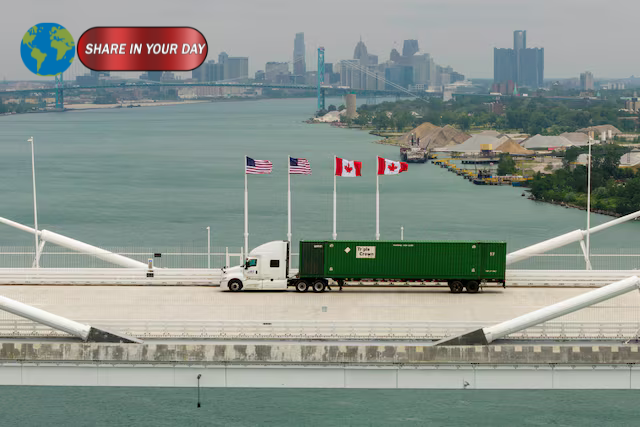
Recommended featured image: Canada and U.S. flags near a Canadian port, border crossing or cargo terminal, representing the escalating bilateral trade dispute.
Image ALT Text: Canada tariffs on U.S. goods at the Canadian-American trade border
Suggested Image Caption: Canada is imposing new retaliatory tariffs on selected U.S. goods beginning September 8, 2026.