
Putin Sees US Weakened as Iran War Drains Military Resources
The most important element of the new assessment is the reported perception inside the Kremlin that the United States has become less capable of responding to another major crisis.
That does not necessarily mean Russia is preparing to attack NATO.
Instead, the assessment suggests Putin may believe Washington has fewer military resources available than it did before the Iran conflict.
The distinction matters.
Military strength is not measured only by the number of troops a country has. It also depends on ammunition, air-defense interceptors, aircraft availability, logistics, industrial capacity and the ability to move forces quickly between theaters.
The Iran war has placed pressure on several of those areas.
The Washington Post reported that U.S. stockpiles of important weapons have been significantly depleted. These include Patriot air-defense interceptors, Tomahawk cruise missiles and Army Tactical Missile System weapons. The newspaper also previously reported losses involving U.S. Reaper drones.
A separate Associated Press report published Thursday described the situation involving Patriot interceptors in Europe as extremely serious, citing U.S. and NATO officials. NATO, however, disputed the characterization and said the alliance retains sufficient ammunition to defend itself.
That disagreement highlights an important point: the precise condition of U.S. and NATO inventories is classified and disputed.
Nevertheless, the perception of shortages can itself become strategically important.
Why Patriot Missiles Matter to NATO
Patriot systems are particularly important because they are designed to intercept some of the most dangerous missile threats.
Russia has used large numbers of missiles and drones against Ukraine throughout the war. Ukraine has repeatedly sought additional Western air-defense systems because advanced ballistic missiles are among the hardest threats to stop.
The AP reported that U.S. Patriot inventories have been heavily used during the Iran conflict, while previous transfers to Ukraine had already reduced available stocks. According to figures cited by the report from the Center for Strategic and International Studies, the Iran war has consumed a substantial share of the U.S. Patriot inventory.
For NATO planners, the concern is not simply whether Russia could launch an attack tomorrow.
The bigger issue is whether the alliance could sustain an extended high-intensity conflict.
A large Russian missile campaign could require enormous quantities of interceptors. If defensive missiles are consumed faster than they can be manufactured, even a powerful military alliance could face difficult choices about which bases, cities or infrastructure receive priority protection.
That is precisely the kind of vulnerability Moscow would be expected to study.
John Ratcliffe’s Secret Moscow Mission Raises Questions
The reported intelligence assessment helps explain why Ratcliffe’s trip to Moscow attracted so much attention.
Ratcliffe traveled to the Russian capital earlier this week and met with Naryshkin. Reuters reported that Naryshkin described the meeting as a working-level discussion involving sensitive intelligence matters. The Kremlin and White House have provided limited information about the purpose of the trip.
The Washington Post reported that Ratcliffe warned Russian officials against significantly escalating the war in Ukraine. According to a person familiar with the discussions, Ratcliffe argued that a major Russian escalation could ultimately push President Donald Trump closer to Ukrainian President Volodymyr Zelensky.
The message would represent an attempt to influence Moscow’s calculations without publicly escalating tensions.
It also reflects the delicate nature of U.S.-Russia communication.
The last known CIA director visit to Moscow occurred in 2021, when William Burns traveled to Russia as the Biden administration tried to discourage Putin from launching a full-scale invasion of Ukraine.
The historical parallel makes Ratcliffe’s trip particularly notable.
Putin Sees US Weakened, but Russia Has Problems Too
There is another side to the equation.
Even if Putin sees US weakened, Russia itself faces substantial military constraints.
The war in Ukraine has consumed enormous Russian resources. Moscow continues to conduct attacks across Ukraine while also dealing with Ukrainian strikes against targets inside Russia.
That means Russia would face serious challenges if it attempted to open a direct military confrontation with NATO.
A sustained conflict with the alliance would require large quantities of aircraft, missiles, drones, armored vehicles and personnel.
Russia would also have to consider the possibility of a direct U.S. response.
The Washington Post report notes that Russia’s battlefield progress in Ukraine remains limited, while Ukraine has continued launching strikes against important Russian targets.
Therefore, a perception of American weakness does not automatically translate into a Russian decision to attack.
Instead, Moscow could pursue less risky forms of pressure.
These could include cyber operations, disinformation campaigns, political interference, sabotage, airspace provocations or other forms of hybrid warfare.
Such activities can test NATO’s unity without immediately triggering a conventional military confrontation.
NATO’s Eastern Flank Faces Greater Pressure
Eastern European NATO members are particularly sensitive to any sign that Russia believes the alliance is vulnerable.
Countries along NATO’s eastern flank have already expressed concerns about Russian aircraft and drones entering or approaching allied airspace.
The Washington Post reported that European countries have also experienced a series of incidents described by officials and analysts as possible Russian hybrid warfare activity.
For countries such as Poland and the Baltic states, the central question is whether the United States would respond rapidly enough if Russia created a serious crisis.
NATO’s Article 5 commitment remains the foundation of the alliance’s deterrence strategy.
But deterrence depends on credibility.
If an adversary believes the United States lacks sufficient weapons or forces to respond effectively, the calculation could change.
That is why even a temporary shortage can have strategic consequences.
Trump Downplays the Threat
President Donald Trump has publicly rejected the idea that Putin is preparing to attack NATO.
On Thursday, Trump said Putin was not going to attack NATO territory and played down concerns surrounding Ratcliffe’s Moscow trip. Reuters also reported that Trump characterized the visit as routine or semi-routine.
The administration has also pushed back against reports describing U.S. weapons shortages as severe.
NATO officials have similarly disputed the most alarming descriptions of ammunition levels.
That creates a notable contrast with the intelligence assessment reported by The Washington Post.
Public statements emphasize deterrence and confidence.
The intelligence reporting, meanwhile, suggests that U.S. officials are concerned about what Russia believes.
Both can be true at the same time.
A military can remain extremely powerful while temporarily facing shortages in specific weapons. The United States also has enormous industrial capacity and the ability to increase production.
The challenge is time.
New missile factories and expanded production lines cannot instantly replace weapons consumed during a major war.
The Ukraine Problem Is Becoming More Complicated
Ukraine is directly affected by the situation.
Kyiv depends heavily on Western air-defense systems to protect its population, military facilities and critical infrastructure from Russian missile and drone attacks.
If U.S. inventories remain under pressure, Washington could face difficult decisions about how to divide available weapons between the Middle East, Europe and Ukraine.
The problem is especially difficult for systems such as Patriot.
Sending additional interceptors to Ukraine could strengthen Kyiv’s defenses but reduce reserves elsewhere.
Keeping more weapons in Europe could improve NATO’s preparedness but leave Ukraine with fewer tools to counter Russian attacks.
Meanwhile, continuing the Iran war creates another demand for the same limited resources.
This is the strategic dilemma that may be attracting Putin’s attention.
5 Major Risks if Putin Sees US Weakened
1. Increased Pressure on NATO
Russia could test NATO’s response through provocative military activity, airspace incidents or hybrid operations.
The goal would not necessarily be an invasion.
Instead, Moscow could seek to discover how quickly and decisively the alliance reacts.
2. Greater Pressure on Ukraine
Russia could intensify missile attacks, drone strikes and battlefield operations if it believes American support is constrained.
Ukraine’s need for air-defense interceptors makes this especially important.
3. More Hybrid Warfare
Cyberattacks, sabotage, disinformation and covert operations could become more attractive because they carry less immediate risk than conventional war.
4. U.S. Strategic Overstretch
The Iran war, Ukraine and broader NATO commitments place competing demands on American military resources.
The longer multiple crises continue simultaneously, the harder it becomes to maintain large reserves.
5. A Deterrence Crisis
Perhaps the greatest danger is miscalculation.
If Moscow believes Washington is too depleted to respond, while Washington believes Moscow will remain cautious, both sides could misread the other’s intentions.
History shows that major conflicts can emerge from precisely those kinds of miscalculations.
China Is Watching the Same Problem
The implications extend beyond Russia.
U.S. weapons shortages have already raised questions among American allies in Asia about Washington’s ability to respond to a potential crisis involving China.
The Pacific presents a different military challenge from Europe.
A confrontation involving Taiwan would require enormous quantities of long-range missiles, air-defense weapons, aircraft, ships and logistics support.
If the United States is simultaneously engaged in a major Middle Eastern war, Beijing could study the resulting constraints carefully.
That does not mean China would immediately act.
But military planners everywhere pay close attention to an opponent’s available resources.
The Iran conflict therefore has consequences far beyond the Middle East.
It is becoming a test of how much strategic pressure the United States can absorb while maintaining credible deterrence in several regions at once.
What Happens Next?
The most immediate question is whether Russia changes its behavior.
For now, there is no public evidence that Putin has decided to launch a direct attack against NATO.
In fact, Russia continues to face major military demands in Ukraine.
The more likely near-term risk could be incremental escalation.
Moscow may test Western resolve through cyber operations, political pressure, covert activity or limited military provocations.
Washington, meanwhile, will need to demonstrate that temporary ammunition shortages do not represent a permanent decline in military power.
That will require rebuilding inventories.
The United States and its allies are already working to increase weapons production. However, expanding industrial capacity takes time, particularly for sophisticated missiles and air-defense interceptors.
Europe is also seeking to increase its own defense production and reduce dependence on U.S. supplies.
That could eventually make NATO more resilient.
For now, however, the strategic gap between current demand and available weapons remains a major concern.
A Warning About Perception, Not Proof of War
The headline that Putin sees US weakened is striking, but it should not be interpreted as proof that Russia is preparing to attack NATO.
The intelligence assessment described by The Washington Post is about the Kremlin’s perception of American military strength. The people familiar with the intelligence did not publicly explain how the assessment was collected or how confident analysts were in it.
That uncertainty matters.
Intelligence assessments can be wrong.
Leaders can also misunderstand one another.
Nevertheless, the reported assessment deserves attention because perception itself can influence strategic decisions.
If Putin believes the United States is temporarily stretched by the Iran war, he may conclude that Washington has less freedom to respond elsewhere.
That could encourage Moscow to take greater risks.
The challenge for the United States is therefore not only rebuilding weapons stocks. It is also convincing allies and adversaries that American deterrence remains credible.
Final Takeaway
The report that Putin sees US weakened by the Iran war reveals a potentially important shift in the strategic environment.
The United States remains one of the world’s most powerful military powers. However, a prolonged conflict can expose weaknesses in weapons inventories, production capacity and the ability to manage several theaters simultaneously.
Russia is watching those pressures.
So are NATO allies.
And China is likely watching as well.
Ratcliffe’s secret Moscow mission suggests Washington is taking Moscow’s calculations seriously. Reuters confirmed that the CIA director met Russia’s foreign intelligence chief, while the Trump administration has publicly sought to downplay concerns about an imminent NATO conflict.
The biggest danger may not be an immediate Russian invasion of NATO territory.
It may be miscalculation.
If Russia believes the United States is too stretched to respond, and Washington fails to convince Moscow otherwise, the risk of increasingly aggressive Russian behavior could rise.
For NATO and the United States, restoring weapons inventories and maintaining a credible deterrent will therefore be critical.
The Iran war may eventually end.
But the strategic consequences of the resources consumed during the conflict could shape U.S.-Russia relations, NATO security and global military planning for years to come.
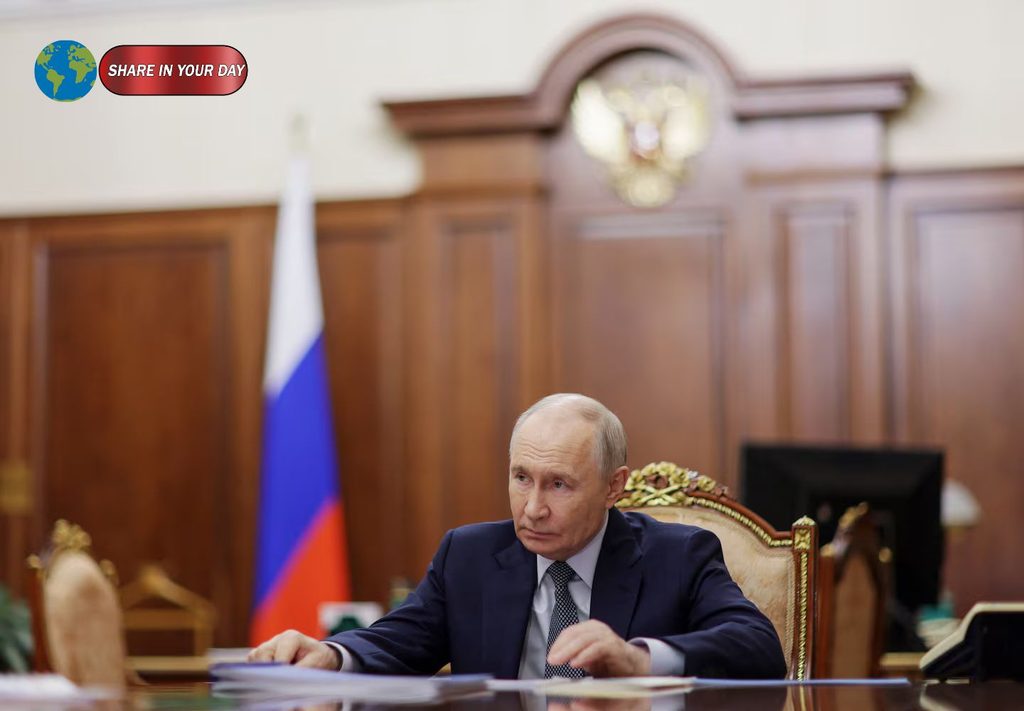
Suggested image: A news photograph showing Vladimir Putin or a NATO/U.S. military installation.
Image ALT: Putin sees US weakened by Iran war as NATO security concerns grow
Suggested external sources:
- The Washington Post report
- Reuters report on the Ratcliffe-Naryshkin meeting
- Associated Press report on Patriot missile stocks
Internal-link placeholders:
- [Internal link: Latest Russia-Ukraine War News]
- [Internal link: NATO Security Updates]
- [Internal link: U.S. Military News]
- [Internal link: Iran War Updates]