Nvidia Revenue-Sharing Deals Face Sudden Pause
Nvidia revenue-sharing deals with AI cloud companies have been put on hold, marking a surprising change to a financing strategy the chip giant introduced less than two months ago.
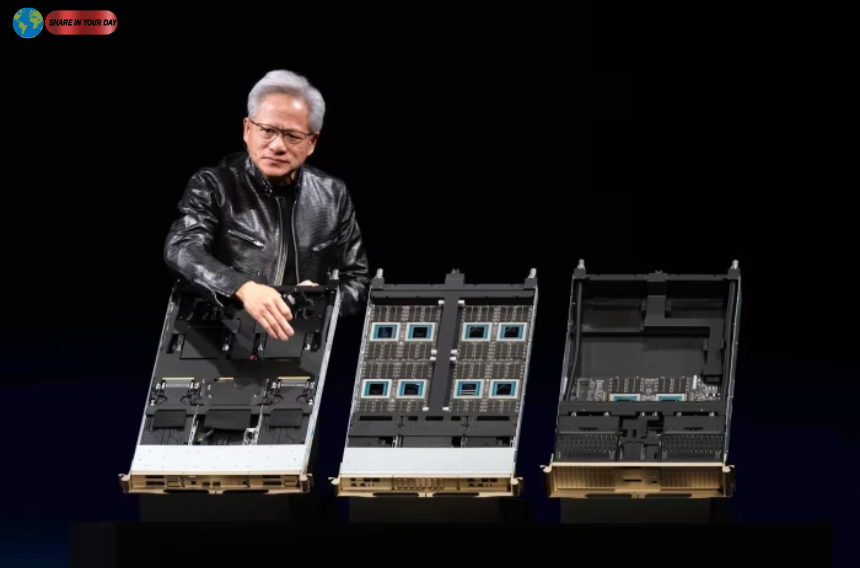
The initiative was designed to help smaller AI cloud providers finance expensive Nvidia chips. In return, Nvidia would receive a share of the revenue generated when those companies rented out computing capacity powered by Nvidia hardware.
However, the strategy quickly raised concerns inside the company and among potential partners. According to The Wall Street Journal, some Nvidia employees warned customers that the arrangement could attract antitrust scrutiny, while some prospective partners reportedly objected to the level of control Nvidia sought over how its computing capacity could be used.
Nvidia has now stepped back from some of those deals.
The company has not abandoned its broader strategy of expanding access to AI computing. Instead, Nvidia says the business model announced in July remains active and is evolving because demand for computing infrastructure remains strong.
The pause nevertheless highlights the increasingly complicated role Nvidia plays in the AI economy.
The company is no longer simply selling chips to cloud providers and technology companies. It is also becoming a financier, infrastructure partner and investor across an AI ecosystem that depends heavily on its processors.
That expansion brings significant opportunities.
It also brings new financial, competitive and regulatory risks.
6
Nvidia Revenue-Sharing Deals Were Designed to Expand AI Computing
The financing program was unveiled in July as part of Nvidia’s effort to help smaller AI cloud providers obtain the capital needed to purchase expensive computing equipment.
AI models require enormous amounts of computing power. Building data centers capable of supporting those workloads can cost billions of dollars.
That creates a financing problem.
A young AI cloud company may have strong customer demand but lack the balance sheet required to purchase enough GPUs and construct the necessary infrastructure.
Nvidia’s program attempted to address that problem.
Instead of simply selling chips, Nvidia could help support the financing of the infrastructure and then participate in the revenue generated from customers using that capacity.
The model potentially gave Nvidia two ways to benefit.
First, it could sell its AI processors.
Second, it could receive a portion of the revenue generated when customers rented computing capacity powered by those processors.
The strategy was especially attractive at a time when demand for AI computing remains extraordinarily high.
But the arrangement also created questions about how much influence a chip supplier should have over companies that buy and rent its hardware.
Why Nvidia Paused the Program
The reported pause appears to involve several concerns rather than a single problem.
One of the biggest is potential antitrust scrutiny.
Nvidia is the dominant supplier of advanced AI accelerators, and its chips are deeply embedded throughout the AI infrastructure market.
When the company also helps finance cloud providers and receives revenue from their operations, questions can arise about whether Nvidia is influencing competition among its customers.
The Journal reported that some Nvidia employees expressed concerns about the potential for antitrust attention.
The issue is particularly sensitive because Nvidia was reportedly seeking some control over how participating providers used the computing capacity.
According to the report, some customers were told that Nvidia chips could be rented only to approved customers. Nvidia also indicated a preference for capacity to be distributed among multiple smaller AI companies rather than concentrated in a single large customer.
For cloud providers, those conditions could limit their ability to determine their own business strategies.
That created friction early in the program.
Nvidia Wanted More Than a Traditional Chip-Selling Relationship
The development is important because it illustrates how Nvidia’s business model has been expanding.
For decades, semiconductor companies primarily generated revenue by selling hardware.
Nvidia’s position in the AI boom has allowed it to move much further into the ecosystem.
Its GPUs are essential components of AI data centers. But the company is also investing in AI developers, supporting infrastructure projects and establishing financing arrangements that can stimulate demand for its processors.
The revenue-sharing initiative represented another step in that direction.
Instead of waiting for cloud providers to raise enough money to purchase Nvidia hardware, the company could help create the financial conditions necessary for those purchases.
That could accelerate deployment.
It could also strengthen Nvidia’s relationship with the next generation of AI infrastructure providers.
However, the more Nvidia becomes involved in its customers’ businesses, the more complicated those relationships become.
A traditional supplier has relatively clear boundaries.
A supplier that finances customers, receives a share of their revenue and influences who they can serve occupies a much more powerful position.
That is where regulatory questions become more important.
AI Cloud Companies Need Huge Amounts of Capital
The backdrop to the controversy is an unprecedented expansion in AI infrastructure spending.
AI cloud companies need massive quantities of GPUs, networking equipment, electricity and data-center space.
Demand for computing remains strong enough that Nvidia recently projected approximately 70% revenue growth for its fiscal year 2028. Its latest quarterly results also showed the extraordinary scale of the AI infrastructure boom, with data-center revenue reaching about $89 billion.
That demand creates an opportunity for specialized cloud providers.
Companies known as “neoclouds” can build infrastructure around high-performance GPUs and rent that computing power to AI developers.
But the business is capital-intensive.
A provider must spend heavily before it can generate substantial revenue from customers.
That makes financing critical.
Nvidia’s original initiative was therefore aimed at a genuine market problem.
The question is whether Nvidia should be the company solving it.
Nvidia Revenue-Sharing Deals Could Create Regulatory Questions
Antitrust authorities generally become concerned when powerful companies use their market position to restrict competition or favor particular customers.
The Nvidia situation is especially sensitive because of the company’s position in AI chips.
If Nvidia controls which companies can access its financed computing capacity, regulators could potentially examine whether that influence affects competition.
That does not mean Nvidia has been found to violate antitrust laws.
There is an important distinction between regulatory scrutiny and an actual finding of wrongdoing.
The current development is about concerns surrounding the structure of the program.
Nvidia’s decision to pause some deals could therefore be interpreted as an attempt to reduce those risks while preserving the broader objective.
The company could revise the terms.
It could remove restrictions.
It could change how revenue-sharing arrangements are structured.
Or it could integrate the concept into another financing program.
The Journal reported that Nvidia could potentially revamp the initiative or fold it into another program.
Nvidia Says Its Broader AI Strategy Is Still Intact
Despite the pause, Nvidia has emphasized that its larger strategy has not changed.
A company spokesperson said the business model introduced in July remains in place and continues to evolve because of high demand.
That distinction matters for investors.
The pause does not appear to represent a retreat from AI infrastructure financing.
Instead, Nvidia may be adjusting the structure.
The company has enormous financial resources and is increasingly using its balance sheet to support the expansion of the AI ecosystem.
Recent reports have highlighted the scale of Nvidia’s commitments, including financing and infrastructure support tied to AI companies and data centers. The Financial Times has estimated that Nvidia’s broader financing exposure could become substantial as the company expands these arrangements.
Nvidia has defended these moves as strategic investments in an industry where demand remains exceptionally strong.
The revenue-sharing program fits into that larger philosophy.
The Pause Comes After a Powerful Nvidia Earnings Report
The timing is also notable.
Nvidia’s reported decision to pause some revenue-sharing arrangements came just as the company delivered another blockbuster earnings report.
The chipmaker reported quarterly revenue of approximately $96.2 billion, significantly above Wall Street expectations. Data-center revenue rose 117% from a year earlier to around $89 billion.
Nvidia also projected approximately $108 billion in revenue for the following quarter.
The company expects AI demand to remain strong enough to support major growth for years.
That explains why Nvidia is willing to experiment with new ways of financing the ecosystem.
The company is not facing a shortage of demand.
Instead, the challenge is ensuring that customers can build enough infrastructure to satisfy that demand.
Financing can help solve that bottleneck.
But financing also creates new risks.
Nvidia’s Financial Strategy Is Becoming More Aggressive
Nvidia’s growing use of its balance sheet has attracted increasing attention from investors.
The company is committing capital to infrastructure, AI startups and other parts of the ecosystem.
Its goal is clear: strengthen the ecosystem around Nvidia hardware and ensure that customers have the resources needed to continue buying GPUs.
That strategy can create a powerful feedback loop.
More financing can lead to more data centers.
More data centers can lead to more GPU deployments.
More GPU deployments can generate more cloud computing capacity.
And higher computing demand can ultimately support more Nvidia chip sales.
But there is a potential downside.
If AI demand slows dramatically, some of those infrastructure investments could become less valuable.
That is one reason investors are closely examining Nvidia’s financial commitments alongside its impressive revenue growth.
The company currently has extraordinary momentum.
However, the larger its financial involvement becomes, the more exposure it has to the companies and infrastructure projects it supports.
AI Cloud Providers Want More Independence
The reported tensions with cloud providers reveal another challenge.
AI cloud companies need Nvidia’s GPUs, but they also want freedom to decide how those GPUs are used.
A cloud provider’s business depends on serving customers efficiently.
If a hardware supplier restricts which customers can rent computing capacity, that could interfere with the provider’s commercial strategy.
This is particularly important for smaller AI cloud companies.
They need flexibility to respond quickly to changing demand.
One customer might require massive computing capacity today, while another could become more attractive tomorrow.
Rules governing who can rent Nvidia-powered infrastructure could therefore have a meaningful impact on their businesses.
That tension may have contributed to the decision to pause the current structure.
Nvidia needs its customers.
Its customers also need Nvidia.
But the relationship becomes more complicated when the company supplying the hardware also finances the infrastructure and shares in the resulting revenue.
Nvidia Is Trying to Shape the AI Infrastructure Market
The bigger picture is that Nvidia is not simply responding to the AI boom.
It is actively helping shape it.
The company has become one of the most important players in determining how AI computing infrastructure is built.
Its GPUs are at the center of the industry’s expansion.
Its software ecosystem makes Nvidia hardware difficult to replace.
And its investments and financing arrangements increasingly connect it to companies across the AI value chain.
That gives Nvidia extraordinary influence.
It also means every major strategic decision receives close attention from investors, customers and regulators.
The revenue-sharing initiative is a clear example.
A program intended to solve a financing problem quickly became a question about competition, customer independence and regulatory risk.
Could Nvidia Revise the Revenue-Sharing Model?
The most likely outcome may not be a complete abandonment of the concept.
Nvidia could modify the program to address the concerns raised by customers and employees.
For example, the company could reduce restrictions on which customers cloud providers serve.
It could also separate financing decisions from customer allocation decisions.
Another possibility would be to work more closely with financial institutions rather than directly controlling parts of the commercial relationship.
The goal would remain the same: help AI cloud providers acquire Nvidia GPUs and build more computing capacity.
The structure could simply become less intrusive.
Nvidia’s statement that its model is continuing to evolve suggests that the company remains interested in the underlying concept.
What the Nvidia Decision Means for the AI Market
The pause sends a broader message to the AI industry.
The next phase of the AI boom will not be determined only by technological progress.
Money matters too.
Building AI infrastructure requires enormous amounts of capital, and companies across the industry are experimenting with creative ways to finance that expansion.
Nvidia’s experience demonstrates that those financing structures can create complications.
The closer a hardware supplier becomes to its customers’ businesses, the more difficult it may become to separate ordinary commercial relationships from competitive influence.
That issue will likely become more important as AI infrastructure grows.
Cloud providers, chipmakers, model developers and financial institutions are increasingly intertwined.
Investors will therefore watch not only how much companies spend on AI but also how that spending is financed.
Investors Will Watch Nvidia’s Next Move
For Nvidia shareholders, the immediate impact of the pause appears limited because the company’s core chip business remains extremely strong.
Nvidia shares rose sharply after the company’s latest earnings and long-term growth forecast reassured investors that AI demand remains powerful. Reuters reported that Nvidia shares gained 8.7% following the results and outlook.
The bigger question is strategic.
Can Nvidia continue expanding its influence across AI infrastructure without creating excessive financial or regulatory exposure?
The company has enormous resources and a dominant market position.
That gives it opportunities few competitors can match.
But it also means regulators are likely to pay closer attention as Nvidia becomes more deeply involved in financing and operating the ecosystem around its chips.
The AI Infrastructure Race Is Entering a New Phase
The pause in Nvidia revenue-sharing deals does not signal the end of Nvidia’s AI strategy.
Instead, it highlights how quickly that strategy is evolving.
The company wants to make it easier for AI cloud providers to obtain the computing power they need. It also wants to capture more value from the infrastructure built around its technology.
Those goals make commercial sense.
Yet they must be balanced against the independence of customers and the requirements of competition law.
Nvidia’s challenge is therefore becoming more complicated.
Selling more GPUs is only part of the opportunity.
The company is increasingly trying to influence how those GPUs are financed, deployed and monetized.
That strategy could ultimately make Nvidia even more powerful within the AI economy.
But it also increases the company’s exposure to regulatory scrutiny and financial risk.
For now, Nvidia says its broader financing model remains active and is evolving in response to strong demand.
The next version of the program will therefore be closely watched.
If Nvidia can redesign the initiative without sacrificing its economic benefits, the company could continue using its enormous financial strength to accelerate AI infrastructure growth.
If regulatory or customer concerns prove too difficult to resolve, Nvidia may have to take a more traditional approach.
Either way, the pause is an important signal.
The AI boom is no longer just a race to build better chips and smarter models.
It is increasingly a race to determine who finances the infrastructure, who controls access to computing power and who captures the revenue generated by the AI economy.
And Nvidia is now at the center of all three questions.