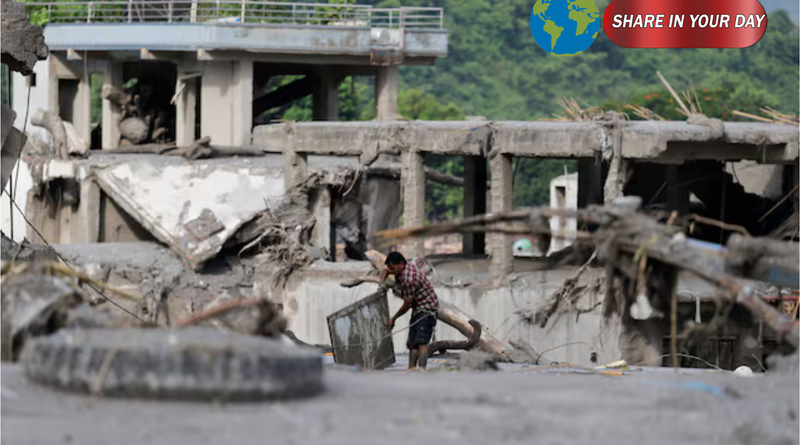
Nepal Floods: New Lakes Raise Fresh Disaster Fears
The Nepal floods crisis has entered a dangerous new phase after Nepal and China warned that newly formed lakes in the Himalayas could burst, potentially sending another wave of water and debris through communities already devastated by a catastrophic flood.
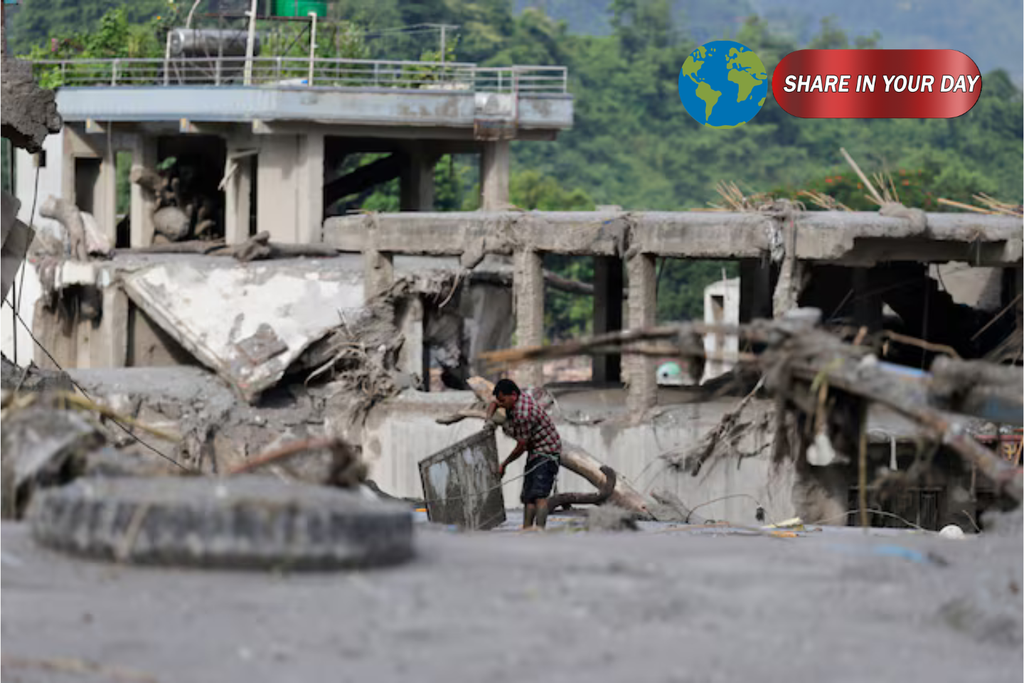
The warnings came after a massive flood earlier in the week killed hundreds of people and left nearly 1,000 others missing across Nepal and Tibet. Rescue teams have been searching damaged valleys and hillsides while authorities monitor unstable areas for signs of another sudden release of water.
The latest threat has raised fears that the region could face a second major disaster before emergency crews have finished responding to the first.
Authorities in Nepal have urged residents, rescuers and travelers to stay away from high-risk areas, particularly near rivers and downstream valleys. Meanwhile, Chinese officials have been monitoring a lake that has formed behind a natural barrier created by rock, mud and other debris.
The situation remains highly fluid, with additional rainfall expected to potentially increase pressure on already unstable terrain.
Nepal Floods Trigger New Emergency Warnings
The immediate concern is the formation of new lakes created when massive amounts of rock, ice and debris blocked natural river channels.
In Nepal, authorities reported that debris had obstructed a river, causing water to accumulate rapidly. The resulting lake could become unstable if the natural barrier fails.
A sudden breach could release a powerful surge downstream, carrying water, mud, rocks and other debris into areas that may already have weakened infrastructure.
That is particularly dangerous following the destruction caused by the earlier flood.
Roads, bridges and other infrastructure have been damaged, making evacuation and rescue operations significantly more difficult. Helicopters and emergency teams have been deployed, but difficult Himalayan terrain continues to complicate access to affected communities.
The latest warnings therefore focus not only on the lakes themselves but also on the communities located downstream.
China Monitors a Rapidly Filling Lake
China has issued its own warning over a lake that has formed on the Tibetan side of the border.
According to Reuters, Chinese authorities expect roughly 3 million cubic meters of water to flow into the already dammed lake over a three-day period. Officials warned that this could significantly increase the likelihood of the natural barrier failing around September 1.
Aerial imagery showed brown water accumulating behind a barrier of debris.
The growing volume has created concerns that the natural dam may eventually be unable to withstand the pressure.
If that happens, water could rush downstream with little warning.
The risk is particularly serious because the region is connected by river systems that cross the Nepal-China border. A major release on the Tibetan side could therefore affect communities far beyond the immediate location of the lake.
Why the Himalayan Terrain Is So Dangerous
The Himalayas are naturally prone to landslides, avalanches, glacier collapses and sudden changes in river levels.
The latest disaster demonstrated how quickly conditions can deteriorate.
A large collapse of ice and rock triggered a torrent of water and debris that moved through valleys, destroying structures and overwhelming river systems.
Reuters reported that the earlier disaster killed at least 359 people and left nearly 1,000 missing as rescuers searched for survivors.
The death toll and number of missing people have continued to change as authorities gain access to isolated areas.
The geography of the Himalayas makes rescue operations particularly challenging. Steep valleys can concentrate floodwater into narrow channels, increasing its speed and destructive power.
At the same time, damaged roads and bridges can prevent emergency vehicles from reaching communities.
That combination means that even a relatively localized lake breach can potentially have consequences across a much larger area.
Nepal Floods Threaten Rescue Operations
The threat of another flood is also affecting the rescue effort itself.
Some emergency teams have reportedly been moved to safer locations because of concerns over additional flooding.
That creates a difficult dilemma for authorities.
Rescuers need to reach people who may still be trapped or missing. However, sending personnel into an unstable valley could expose them to another sudden flood or landslide.
Authorities must therefore balance the urgency of rescue operations against the possibility of a second disaster.
The situation also creates difficulties for families waiting for information about missing relatives.
In some areas, communications infrastructure has been damaged, while roads and bridges have been destroyed or blocked by debris.
As a result, determining the exact number of missing people may take time.
Rain Could Increase the Risk
Weather conditions are another major concern.
Additional rainfall is expected in parts of the region in the coming days, according to the Reuters report.
Heavy rain could increase water levels in rivers and newly formed lakes while also weakening unstable slopes.
That could increase the possibility of landslides or natural barriers collapsing.
For communities downstream, the danger is that a lake breach could occur suddenly, leaving very little time to evacuate.
Early warnings are therefore critical.
Authorities have been using aerial surveillance and other monitoring methods to assess the lakes and surrounding terrain.
However, predicting exactly when a natural debris dam will fail remains extremely difficult.
A Second Disaster Could Be Even More Destructive
The prospect of another major flood is especially alarming because many communities have already suffered extensive damage.
Homes, roads and other structures were destroyed during the first disaster. People who survived may now be living in temporary shelters or relying on emergency assistance.
A second flood could hit areas where infrastructure is already weakened.
Bridges damaged by the first flood could collapse completely. Roads covered by mud and debris could become impassable. Power and communications systems could also suffer additional damage.
The consequences could extend beyond immediate loss of life.
A prolonged disruption to transportation could make it more difficult to deliver food, medicine and other essential supplies.
For isolated mountain communities, that could become a major humanitarian challenge.
Nepal and China Face a Shared Risk
The current emergency also highlights the importance of cooperation between Nepal and China.
The two countries share a mountainous border where rivers and watersheds do not follow political boundaries.
A natural disaster originating on one side can therefore have consequences on the other.
That makes cross-border communication particularly important during emergencies.
Information about changing water levels, unstable slopes and potential lake breaches can help authorities downstream prepare evacuation plans.
The latest warnings demonstrate that both countries are closely monitoring the evolving situation.
However, the scale of the disaster means that local authorities may need continued support from national governments and international organizations.
What Is a Glacial Lake Outburst Flood?
One of the major hazards in the Himalayan region is known as a glacial lake outburst flood, or GLOF.
These events occur when water stored behind a natural barrier suddenly escapes.
The barrier can consist of glacial ice, rock, sediment or a mixture of debris.
When it fails, a large volume of water can move downstream extremely quickly.
The resulting flood may also carry rocks, mud, trees and other debris, making it considerably more destructive than an ordinary river flood.
The Himalayas are particularly vulnerable because glaciers and high-altitude lakes are located above densely populated valleys.
Researchers have warned for years that changing temperatures and retreating glaciers can contribute to the expansion and formation of unstable glacial lakes.
The current crisis has once again placed that risk under international attention.
Climate Change Adds to Long-Term Concerns
The immediate cause of the current disaster is still being investigated, and scientists continue to examine the precise sequence of events that triggered the massive flood.
However, the broader vulnerability of Himalayan environments is increasingly connected to a changing climate.
Glacier retreat can create new bodies of water and alter existing mountain landscapes.
Warming temperatures can also affect frozen ground and destabilize slopes.
Reuters has reported that experts are examining the causes of the recent disaster, including the possibility that geological instability played a role.
This does not mean every Himalayan flood can be directly attributed to climate change.
Instead, scientists are increasingly concerned about how warming conditions can change the background risks facing mountain communities.
The challenge for governments is to prepare for hazards that may become more difficult to predict.
Early Warning Systems Could Save Lives
The latest crisis also highlights the importance of early warning systems.
When people receive reliable information even minutes before a sudden flood, they may have enough time to move to higher ground.
For communities living close to rivers, that warning can mean the difference between life and death.
Monitoring lakes and unstable slopes is therefore an increasingly important part of disaster preparedness.
Authorities can use satellite imagery, aerial surveys, sensors and ground-based monitoring to identify changes.
But technology alone is not enough.
Warnings must also reach people quickly and in a form they understand.
Communities need evacuation routes, safe areas and emergency plans that can be activated immediately.
Rescue Teams Face a Race Against Time
For rescuers, the coming days will be crucial.
Teams must continue searching for missing people while also monitoring the threat posed by the newly formed lakes.
The combination of damaged infrastructure, unstable terrain and changing weather makes the operation exceptionally dangerous.
Some areas may only be accessible by helicopter, while others could require teams to move through damaged roads and river valleys.
Authorities are also expected to continue updating casualty figures as search operations reach previously inaccessible locations.
The number of missing people remains particularly difficult to determine because the disaster affected remote areas and international travelers.
Nepal Floods Put Himalayan Preparedness Under Spotlight
The latest Nepal floods have become more than a single natural disaster.
They are now a warning about the wider vulnerability of Himalayan communities to cascading hazards.
A glacier collapse or landslide can block a river. That blockage can create a lake. If the natural barrier fails, another flood can follow.
In other words, one event can create the conditions for another.
That chain reaction makes disaster preparedness especially important in high mountain regions.
Authorities must monitor not only existing rivers and lakes but also newly created blockages that can develop after landslides and glacier failures.
The current situation shows how quickly such hazards can emerge.
What Happens Next?
The immediate priority for Nepal and China is preventing another catastrophic flood.
Authorities will continue monitoring the lakes and natural barriers while warning people in potentially affected areas.
If water levels rise faster than expected, evacuations could become necessary.
Meanwhile, rescue teams will continue searching for survivors and recovering bodies from areas affected by the first flood.
The international community is also likely to pay close attention to the situation as the humanitarian impact becomes clearer.
The danger will not necessarily end when the current lakes stabilize.
The destruction caused by the initial disaster has left mountain communities more vulnerable to subsequent landslides, floods and infrastructure failures.
For now, the focus remains on keeping people away from the most dangerous valleys and monitoring the rapidly changing conditions.
The Nepal floods crisis has already produced a devastating loss of life. The emergence of new lakes means authorities must now prepare for the possibility that the Himalayan disaster could enter another dangerous chapter.
With millions of cubic meters of water potentially accumulating behind unstable natural barriers, the coming days could prove critical.
For communities downstream, the message from authorities is clear: remain alert, follow evacuation warnings and stay away from rivers and other high-risk areas.
The immediate threat may come from water, but the deeper challenge is understanding and managing an increasingly