Iran War: 5 Shocking Middle East Developments
The Iran war entered another tense phase Thursday as Qatar stepped up diplomatic efforts to reduce tensions, another tanker was reportedly attacked in the Strait of Hormuz, and the broader Middle East crisis continued to spread across Gaza, Lebanon and the West Bank.
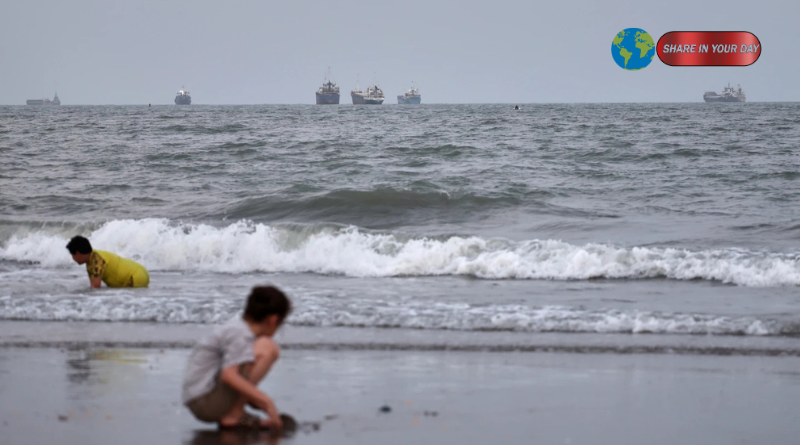
The developments came as the conflict between Iran and the United States approached its sixth month. While direct large-scale fighting has eased at times, there has been no lasting political settlement, and critical disputes over sanctions, maritime access and regional security remain unresolved.
Qatar has emerged as one of the key regional players attempting to create an exit from the conflict. Its prime minister traveled to Tehran for discussions with Iranian officials, focusing on de-escalation and a possible framework for restoring commercial shipping through the Strait of Hormuz.
At the same time, however, tensions remained high. A tanker was reportedly struck in the strategic waterway, while Washington continued to apply economic pressure on Tehran.
Here are five major developments shaping the Iran war and the wider Middle East crisis.
1. Iran War Diplomacy Gets a New Push From Qatar
One of the most important developments Thursday was Qatar’s renewed diplomatic effort.
Qatar’s Prime Minister and Foreign Minister Sheikh Mohammed bin Abdulrahman Al Thani traveled to Tehran and met with Iranian Foreign Minister Abbas Araghchi. Their discussions focused on reducing escalation and creating conditions for renewed dialogue between Iran and the United States.
Qatar has a unique position in the conflict.
The Gulf state is a U.S. ally and hosts the American military’s Al Udeid Air Base, yet it also maintains relations with Iran. Doha has previously played a role in facilitating communication between Washington and Tehran.
The latest diplomatic initiative comes as both sides remain far apart.
Washington has increased economic pressure on Iran, while Tehran has demanded changes to U.S. policy before agreeing to a broader settlement. The dispute over the Strait of Hormuz has become one of the most difficult issues to resolve.
Qatar’s involvement therefore reflects a broader effort by regional powers to find a way out of the conflict without triggering another major escalation.
The diplomatic push also involves Pakistan, which has been seeking to encourage dialogue between the United States and Iran.
Why Qatar matters in the Iran war
The stakes are particularly high for Qatar because its economy depends heavily on international energy exports.
The Strait of Hormuz is a critical route for oil and gas shipments. Before the war, roughly 20 million barrels of oil per day passed through the waterway, according to shipping and industry data cited in recent reporting.
Any prolonged disruption therefore has consequences far beyond Iran and the Gulf.
2. Another Tanker Attack Raises Strait of Hormuz Fears
Diplomacy was accompanied by another alarming development at sea.
A tanker was reportedly hit by an unidentified projectile in or near the Strait of Hormuz. The resulting fire was extinguished, and the crew was reported safe.
The incident highlights the continuing risks facing commercial vessels.
The Strait of Hormuz is one of the world’s most important maritime chokepoints. It connects the Persian Gulf with the Gulf of Oman and the wider Arabian Sea, making it essential for energy exports from several Gulf countries.
Shipping traffic remains significantly below normal levels.
Reuters reported that 10 visible commodity vessels transited the strait Wednesday, compared with eight the previous day. However, the figure remained below the 10-day moving average of 15 vessels.
Oil flows have also fallen dramatically compared with prewar levels.
The disruption has created major concerns for energy markets, shipping companies and governments that depend on reliable access to Gulf supplies.
For Qatar, the issue is even more significant because the country is a major liquefied natural gas exporter.
A possible Hormuz agreement
Iran and Oman have been discussing a temporary framework intended to facilitate commercial shipping through the strait.
The proposal has reportedly included arrangements for commercial vessels to use Iranian and Omani waters, along with efforts to clear mines from the waterway.
However, questions remain over the precise terms and whether a lasting agreement can be reached.
That uncertainty means the Strait of Hormuz will likely remain one of the most closely watched flashpoints in the Iran war.
3. Washington Intensifies Economic Pressure on Tehran
While Qatar was pushing diplomacy, the United States continued its economic campaign against Iran.
President Donald Trump said Washington was not currently engaged in direct talks with Tehran and instead was focusing on economic pressure. The administration has warned countries and companies that continue certain financial relationships with Iran that they could face secondary sanctions.
Iran has strongly rejected the U.S. approach.
Iranian officials have described the new measures as economic warfare and have criticized countries that cooperate with Washington’s sanctions strategy.
The confrontation demonstrates how the conflict has increasingly moved beyond the battlefield.
Economic restrictions have become a central element of U.S. strategy as Washington seeks to pressure Tehran into accepting a political settlement.
However, sanctions also create risks for civilians and the wider Iranian economy.
The Iranian government has faced pressure over inflation, trade restrictions and difficulties maintaining economic activity under international sanctions.
A difficult diplomatic calculation
For Washington, economic pressure is intended to strengthen its negotiating position.
For Tehran, accepting U.S. demands could carry significant political costs.
That creates a difficult cycle: Washington wants greater concessions before easing pressure, while Iran wants sanctions relief and changes to U.S. policy before making major commitments.
As a result, diplomatic efforts remain fragile.
4. Israel’s Gaza and Lebanon Strikes Add to Regional Tensions
The Iran war is unfolding alongside continued violence elsewhere in the region.
In Gaza, Israeli strikes continued despite a U.S.-brokered ceasefire framework. The latest violence drew criticism from international officials, including Nickolay Mladenov, the diplomat overseeing the U.S.-backed Gaza peace effort.
Israeli officials maintain that Hamas must disarm before reconstruction can proceed.
The humanitarian situation remains a major concern, with civilians continuing to face the consequences of military operations and restrictions.
The situation is also tense along Israel’s northern border.
Israeli airstrikes in southern Lebanon reportedly killed one woman and wounded six others, including a child, according to Lebanon’s state-run National News Agency. Israel said the strikes followed attacks involving explosive drones that it attributed to Hezbollah.
The developments demonstrate how the conflict continues to involve multiple interconnected theaters.
Even when fighting between major parties temporarily decreases in one location, violence elsewhere can quickly create new pressure on the broader regional situation.
5. West Bank Violence Adds Another Dangerous Front
The occupied West Bank remains another major source of instability.
Israeli forces have continued operations in Palestinian areas, while settler violence and tensions surrounding Israeli settlements remain significant concerns. Recent developments have included Israeli military raids and restrictions affecting Palestinian communities.
The West Bank is particularly important because developments there could influence the prospects for a broader Israeli-Palestinian political settlement.
Settlement expansion has long been one of the most contentious issues in the conflict.
Recent Israeli government actions involving settlements and outposts have intensified criticism from Palestinians and other governments.
Meanwhile, Palestinians face growing pressure from security operations, movement restrictions and settler attacks.
The situation adds another layer to the already complicated regional crisis.
Why the West Bank matters to the wider Iran war
The West Bank is not directly part of the maritime dispute between Iran and the United States.
However, the conflicts are increasingly connected through regional politics.
Iran’s confrontation with Israel and the United States has implications for groups and governments across the Middle East. Meanwhile, Israeli military operations in Gaza, Lebanon and the West Bank influence political calculations throughout the region.
That makes a broader de-escalation much harder to achieve.
The Strait of Hormuz Could Determine What Happens Next
Among all the developments, the Strait of Hormuz may be the most important issue for the global economy.
The waterway is narrow but strategically critical. Before the war, it carried a substantial share of global oil shipments and was also essential for Gulf LNG exports.
The current reduction in shipping activity has already demonstrated how quickly a regional conflict can become an international economic problem.
Energy prices, insurance costs, shipping routes and supply chains can all be affected when vessels face greater risks.
For that reason, reopening the waterway safely could provide an important first step toward broader stabilization.
Qatar has called for conditions in the strait to return to the situation that existed before the war. Iran and Oman have meanwhile continued discussions over a temporary shipping arrangement.
But reopening the route is not simply a technical question.
It is tied directly to the larger political dispute between Tehran and Washington.
What Comes Next for the Iran War?
The latest developments suggest that the Iran war has reached a complicated stage.
On one side, regional governments increasingly want the conflict to end. Qatar and Pakistan are pushing diplomatic initiatives, while Oman has been involved in discussions concerning maritime access.
On the other side, Washington continues to apply economic pressure, and Tehran remains unwilling to accept terms that it considers unacceptable.
Meanwhile, military incidents at sea and continued fighting in Gaza and Lebanon demonstrate how quickly the situation could deteriorate.
The possibility of a diplomatic breakthrough cannot be ruled out.
However, there is still a substantial gap between the parties.
A temporary agreement over the Strait of Hormuz could become an important confidence-building measure. If commercial vessels can move more safely, it could reduce immediate economic pressure and create additional space for negotiations.
But a lasting settlement would require much more.
The United States and Iran would need to resolve disputes over sanctions, security guarantees, maritime access and the broader future of the region.
Why the Latest Iran War Developments Matter
Thursday’s events show that the Middle East crisis is no longer defined by a single battlefield.
The Iran war now involves diplomacy in Tehran, maritime security in the Strait of Hormuz, economic pressure from Washington, Israeli military operations in Gaza and Lebanon, and continuing instability in the West Bank.
Qatar’s diplomatic initiative offers a potential path toward de-escalation.
Yet the tanker incident in the Strait of Hormuz shows how fragile the situation remains.
For global markets, the immediate priority will be whether commercial shipping can return to more normal levels.
For governments across the Middle East, the larger question is whether diplomacy can prevent another cycle of escalation.
And for civilians throughout the region, the hope is that these diplomatic efforts can eventually produce something more durable than another temporary pause.
For continuing coverage, readers can follow the latest reporting from The Associated Press.