
Freedom Edge Military Drills: 3 Allies Send Strong Signal
The Freedom Edge military drills will bring the United States, South Korea and Japan together in September for a major trilateral exercise focused on preparing for North Korea’s nuclear and missile threats. The annual exercise is expected to strengthen military coordination among the three allies while sending a clear message about regional security.
South Korea’s Joint Chiefs of Staff said the exercise will be conducted in international waters south and east of Jeju Island. Reuters reported that the drills are scheduled for September 9 to 11, while South Korean military reporting has described the broader exercise period as September 7 to 11.
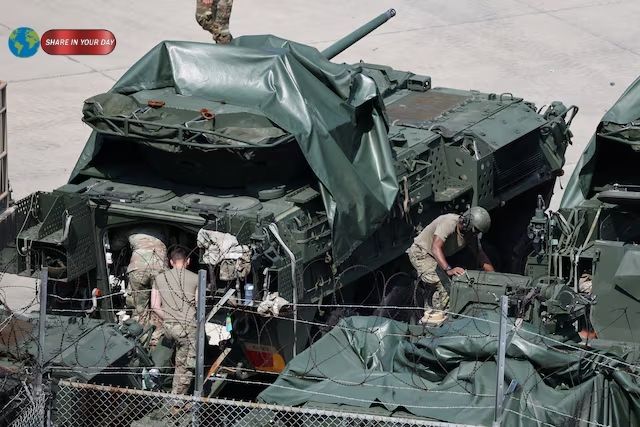
The announcement comes at a particularly sensitive moment. Washington has recently reduced the scale of a separate major military exercise with Seoul, while President Donald Trump has continued efforts to reopen dialogue with North Korean leader Kim Jong Un.
That combination makes the latest Freedom Edge military drills more significant than a routine annual exercise.
Freedom Edge Military Drills Focus on North Korea
The primary purpose of the exercise is to improve the three countries’ ability to respond to North Korea’s evolving military capabilities.
Pyongyang has continued developing nuclear weapons and ballistic missiles, creating a major security challenge for South Korea and Japan. Both countries rely heavily on cooperation with the United States for deterrence and missile defense.
South Korea’s military describes Freedom Edge as defensive in nature. The exercise is designed to improve readiness against nuclear and missile threats while supporting regional peace and stability.
The location is also strategically important.
The drills will take place in international waters around the southern Korean Peninsula, near Jeju Island. The area provides an environment for the three countries to practice coordinated maritime and air operations without conducting the exercise directly inside North Korean territory.
US, South Korea and Japan Expand Military Cooperation
The Freedom Edge military drills are part of a broader effort to strengthen security cooperation among Washington, Seoul and Tokyo.
The three countries have increasingly emphasized information sharing, military interoperability and coordinated responses to threats in Northeast Asia.
According to South Korea’s Joint Chiefs of Staff, this year’s exercise will include enhanced real-time data sharing and more synchronized coordination between the participating forces. U.S. military officials also said the exercise would incorporate multinational maritime and aviation capabilities.
The training is expected to include several areas of military cooperation.
These include air defense, maritime operations, medical evacuation training and maritime interdiction. Such activities are intended to ensure that forces from the three countries can work together quickly during a potential regional crisis.
That interoperability could become particularly important during a missile attack or other rapidly developing military emergency.
Why the Jeju Area Matters
Jeju Island sits at a strategically important point in Northeast Asia.
Its location gives South Korea access to major sea routes connecting the Korean Peninsula with Japan and the wider Pacific. Military activity around the island therefore has significance beyond the immediate Korean Peninsula.
Conducting the Freedom Edge military drills in international waters also allows the participating countries to train together in a realistic maritime environment.
The exercise is not a new development.
Freedom Edge emerged from the closer security cooperation established between the United States, South Korea and Japan following their leaders’ Camp David summit in August 2023. The trilateral exercise was subsequently held in 2024 and 2025.
The continuation of the exercise demonstrates that military coordination between the three governments has become more institutionalized.
Trump’s North Korea Strategy Adds Another Layer
The timing of the Freedom Edge military drills is particularly noteworthy because of the Trump administration’s approach toward North Korea.
President Donald Trump has been seeking another meeting with Kim Jong Un. Trump and Kim previously met in 2018 and 2019 as part of an unprecedented diplomatic effort between Washington and Pyongyang.
At the same time, Trump recently moved to reduce the scale of the Ulchi Freedom Shield exercise conducted by U.S. and South Korean forces.
The decision reflected his argument that some military exercises could send an unnecessarily hostile message to North Korea. A separate U.S.-South Korean Marine Corps exercise scheduled for next month was also canceled. Reuters reported that the decisions came amid broader military resource constraints and Trump’s efforts to improve prospects for dialogue with Pyongyang.
That creates an unusual strategic situation.
On one side, Washington is pursuing diplomacy.
On the other, the United States continues participating in trilateral military exercises designed to prepare for North Korean nuclear and missile threats.
Seoul Wants Security and Diplomacy
For South Korea, the two approaches do not necessarily have to conflict.
Seoul has expressed support for efforts to restart dialogue with North Korea while also emphasizing the importance of maintaining a strong security posture.
South Korean National Security Adviser Wi Sung-lac said Seoul wants to ensure that it remains an active participant in any future negotiations involving Washington and Pyongyang. Reuters reported that Seoul is also seeking deeper coordination with Washington on security and other alliance issues.
This position reflects a long-standing challenge for South Korea.
Diplomacy could potentially reduce tensions on the Korean Peninsula. However, Seoul must also prepare for the possibility that negotiations fail or that North Korea continues expanding its military capabilities.
The Freedom Edge military drills therefore provide a practical way for Seoul to maintain military readiness while diplomatic efforts continue.
Japan’s Role Is Also Important
Japan is another critical participant.
North Korean ballistic missiles have repeatedly been a major concern for Tokyo because some missile trajectories have passed over or near Japanese territory and surrounding waters.
Japan also depends on close defense cooperation with the United States and has increasingly expanded security coordination with South Korea.
The trilateral format allows Japan, South Korea and the United States to improve their ability to share information and coordinate responses.
For Tokyo, the exercise is therefore about more than the Korean Peninsula. It is part of a wider strategy to improve security cooperation in an increasingly tense Indo-Pacific region.
North Korea Is Likely to Watch Closely
Pyongyang has consistently rejected the argument that U.S.-led military exercises in the region are purely defensive.
North Korean authorities have historically described major drills involving South Korea and the United States as preparations for an invasion.
That means the announcement of the Freedom Edge military drills could produce another negative reaction from Pyongyang.
The timing is especially sensitive because North Korea has recently continued missile activity despite diplomatic signals from Washington.
The latest exercise could therefore become another test of how Pyongyang responds to Trump’s attempts to reopen negotiations.
A Different Kind of Military Signal
The importance of Freedom Edge goes beyond the number of ships, aircraft or personnel involved.
Military exercises can serve several purposes at once.
First, they provide practical training.
Second, they demonstrate that allied forces can operate together.
Third, they send a deterrence message to potential adversaries.
Finally, they can reassure allies that security commitments remain active.
The Freedom Edge military drills perform all four functions.
This is particularly relevant after the recent scaling back of the U.S.-South Korea Ulchi Freedom Shield exercise. Yonhap reported that questions had emerged over whether the trilateral Freedom Edge exercise would proceed, making its continuation a notable development.
What the Exercise Could Mean for Regional Security
The exercise could have several implications for Northeast Asia.
Stronger Missile Defense
Improved coordination could help the three countries respond more effectively to ballistic missile launches.
Real-time information sharing is particularly important because missiles can travel extremely quickly. Faster communication between military commands can improve the ability to detect and respond to threats.
Better Maritime Coordination
The exercise will also strengthen cooperation between naval forces.
That matters because the waters surrounding the Korean Peninsula and Japan are strategically important for trade, military movement and regional security.
Greater Trilateral Interoperability
Repeated exercises help military forces become familiar with each other’s procedures.
That can reduce confusion during an actual emergency.
Continued US Commitment
The participation of American forces also provides a visible demonstration that Washington remains engaged with its Asian allies despite the recent adjustments to some bilateral exercises.
Diplomacy and Deterrence Will Continue Together
The biggest question is whether military readiness and diplomacy can coexist without undermining each other.
The Trump administration appears interested in reopening communication with North Korea. Meanwhile, South Korea and Japan continue to view North Korea’s nuclear and missile programs as serious threats.
That means the three countries need to balance two competing objectives.
They must avoid unnecessary escalation while ensuring that North Korea does not interpret diplomatic outreach as a weakening of allied defenses.
The Freedom Edge military drills are therefore likely to remain an important part of that balance.
What to Watch Next
Several developments will be worth watching as September approaches.
The first is the exact scale of the exercise and which major U.S., Japanese and South Korean military assets participate.
The second is North Korea’s response.
The third is whether the Trump administration makes further changes to military exercises while pursuing talks with Kim Jong Un.
Finally, the reaction of South Korea and Japan will be important. Both countries have strong reasons to maintain close defense ties with Washington, even as the United States explores a new diplomatic approach toward Pyongyang.
The upcoming Freedom Edge military drills could therefore provide an early indication of how the three allies intend to balance deterrence, military readiness and diplomacy in the months ahead.
Bottom Line
The Freedom Edge military drills represent more than another annual military exercise.
They demonstrate that the United States, South Korea and Japan continue to strengthen practical security cooperation despite Washington’s recent efforts to reduce some bilateral exercises with Seoul.
The drills will focus on preparing for North Korea’s nuclear and missile threats and improving coordination across air, maritime and other military domains.
At the same time, President Trump is attempting to reopen dialogue with Kim Jong Un.
That creates a delicate strategic balance. The allies want diplomacy to succeed, but they also want to ensure that any diplomatic opening does not weaken their ability to respond to a potential military crisis.
As the September exercise approaches, North Korea’s reaction and Washington’s next diplomatic moves will be closely watched across the region.
For now, the message from Seoul, Washington and Tokyo is clear: diplomacy may be on the table, but military preparedness remains firmly in place.
:::
Suggested image source: Use an appropriately licensed image from the South Korean Joint Chiefs of Staff or another authorized provider showing the three countries’ naval forces during a previous Freedom Edge exercise. Yonhap’s current report also identifies a 2025 Freedom Edge image involving South Korean and U.S. warships south of Jeju.
External-source references: Reuters, Yonhap News Agency and South Korean military reporting are suitable authoritative references for the article.
For internal links, because you haven’t provided the target domain or its existing URLs, I have not fabricated links. Add 2–3 relevant articles from your own site, ideally covering North Korea, South Korea, Japan, U.S. foreign policy, or East Asian security.