Trump’s Russian Diesel Deal Gives Putin Economic Relief and Deepens Tensions With Ukraine
President Donald Trump’s decision to ease restrictions on Russian diesel exports has intensified tensions between Washington and Kyiv, raising concerns among European allies that the move could strengthen Moscow’s position in its war against Ukraine.
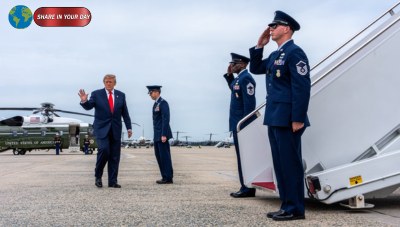
The agreement, announced by Trump on October 9, 2026, allows Russian diesel to reach international markets following a temporary easing of U.S. sanctions. The president has defended the decision as a way to increase fuel supplies and help reduce rising energy costs for American consumers.
However, the move has drawn criticism from lawmakers, European officials and Ukraine’s leadership, who argue that restoring access to energy markets could provide Russia with additional revenue while undermining international efforts to pressure President Vladimir Putin to end the war.
Trump’s Diesel Agreement Raises Questions About Sanctions
The agreement comes as global energy markets face significant uncertainty and fuel prices remain a political concern in the United States ahead of the November midterm elections.
Trump has argued that additional Russian diesel supplies could help ease pressure on energy markets. His administration has also criticized Ukrainian attacks on Russian oil refineries, which have disrupted fuel production and exports.
The decision to relax restrictions has nevertheless raised questions about the effectiveness of sanctions imposed after Russia launched its full-scale invasion of Ukraine in 2022.
Critics contend that easing economic pressure before securing meaningful Russian concessions could weaken Washington’s negotiating position. The agreement also creates uncertainty about how the United States will enforce restrictions intended to limit Moscow’s ability to finance its military operations.
The Associated Press reported on October 13 that the deal had triggered criticism from both Republicans and Democrats, with lawmakers questioning its legal implications and potential consequences for U.S. support for Ukraine.
Ukraine Warns Russia Could Benefit From the Decision
Ukrainian President Volodymyr Zelenskyy has strongly criticized the agreement, arguing that additional revenue from Russian fuel exports could help Moscow sustain its military campaign.
Kyiv has relied on economic sanctions, military assistance and international diplomatic pressure as part of its effort to resist Russia’s invasion. From Ukraine’s perspective, relaxing restrictions without a meaningful reduction in Russian military activity risks weakening that strategy.
The timing has also complicated diplomatic efforts. Ukrainian representatives were engaged in discussions with U.S. officials when the diesel agreement emerged, prompting concerns that Washington was making important decisions without securing Kyiv’s agreement.
Trump has separately called for Ukraine to consider new leadership, arguing that Zelenskyy has failed to reach an agreement capable of ending the war. The comments have added another layer of friction between the two presidents.
The disagreement centers on competing approaches to ending the conflict. Trump has emphasized negotiations and measures intended to stabilize energy markets, while Ukraine insists that any settlement must account for Russia’s continued military attacks and provide credible protections against future aggression.
Europe Faces a Difficult Diplomatic Balancing Act
European governments are also concerned about the potential consequences of the agreement.
Many European countries have supported sanctions against Moscow and provided financial, military and humanitarian assistance to Ukraine. Their governments fear that a unilateral reduction in economic pressure could weaken a coordinated Western strategy and give Russia additional opportunities to exploit divisions among its opponents.
European officials have continued to emphasize the importance of maintaining pressure on Moscow while pursuing diplomatic options to end the fighting.
The disagreement also presents a challenge for transatlantic relations. European leaders must maintain cooperation with Washington, a crucial security partner, while responding to decisions that may conflict with their own policies toward Russia.
A divided approach could make negotiations more difficult by allowing Moscow to pursue separate economic and diplomatic arrangements with individual Western governments.
Will Russian Diesel Supplies Lower Fuel Prices?
The potential economic benefits of the agreement remain uncertain.
Additional fuel supplies can help ease shortages in some circumstances, but the effect on consumer prices depends on several factors, including production capacity, transportation costs, refinery operations and broader geopolitical risks.
Energy market analysts have questioned whether Russia can deliver the volumes discussed by officials. Reuters reported on October 13 that some analysts doubted Russia could supply between 3 million and 3.5 million metric tons monthly by the end of the year, citing problems in the country’s refining sector.
The global energy market also faces risks unrelated to Russian diesel exports. Security concerns involving shipping routes, attacks on energy infrastructure and instability in the Middle East continue to influence prices and transportation costs.
Consequently, the agreement may not provide American consumers with the substantial relief that the administration hopes to achieve.
Even if additional exports help stabilize supply, the broader economic benefits will depend on how much fuel reaches the market and whether those supplies translate into lower prices at the pump.
A Strategic Advantage for Putin?
Beyond its immediate economic implications, the agreement could offer Putin a diplomatic advantage.
Russia has faced extensive international restrictions intended to reduce the revenue available to finance its war. An easing of those restrictions, even if temporary or limited in scale, could signal that Moscow can negotiate economic concessions with Washington before reaching a comprehensive peace settlement.
The deal could also deepen disagreements between the United States and Ukraine, potentially weakening the unity that has underpinned Western support for Kyiv.
At the same time, the agreement does not guarantee a major financial windfall for Russia. Its actual impact will depend on export volumes, market conditions and the duration of the relaxed restrictions.
The political consequences, however, may extend beyond the immediate value of the fuel shipments.
What Happens Next?
The Russian diesel agreement highlights the competing priorities shaping the next phase of the Ukraine war: reducing energy costs, maintaining economic pressure on Moscow and finding a diplomatic path toward a lasting settlement.
For Trump, the challenge is demonstrating that engagement with Putin can produce tangible benefits without undermining American commitments to Ukraine and European security.
For Zelenskyy, the priority remains preventing Russia from gaining economic or military advantages while negotiations continue.
European governments must meanwhile determine how to preserve cooperation with Washington without abandoning their own sanctions strategy.
Whether the agreement ultimately helps stabilize energy markets or complicates efforts to end the war will depend on developments in the coming weeks. For now, the decision has intensified an already difficult diplomatic dispute and raised fresh questions about the balance between economic interests and security commitments.