
Trump Iran War: 6 Months Later, A Shocking Stalemate
Six months after the Trump Iran war began, the conflict has become one of the biggest challenges of Donald Trump’s second presidency. What was initially presented as a potentially short military campaign has instead developed into a prolonged confrontation with no obvious end.
The war has also produced a difficult strategic reality for Washington. Iran’s government has survived, the Strait of Hormuz remains deeply contested, U.S. military resources have been stretched and the political cost of the conflict is becoming harder for the White House to ignore.
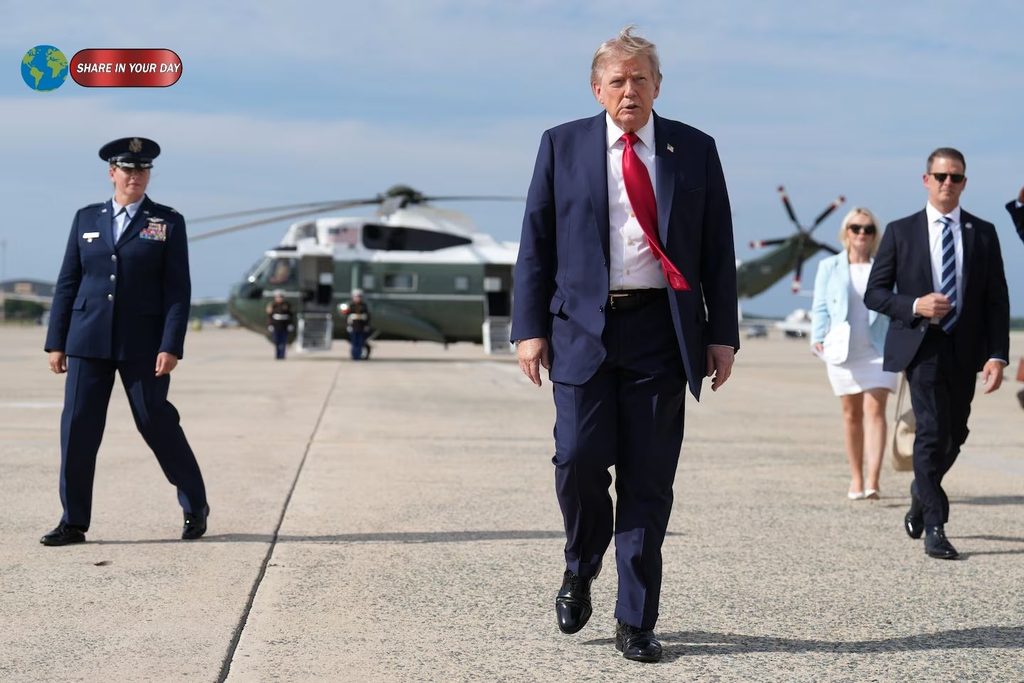
The anniversary comes as diplomatic efforts remain uncertain. At the same time, Washington has increased economic pressure on Tehran, while Iran continues to use its geographic and military position to challenge the United States and disrupt regional stability.
Trump Iran War Enters a Critical Six-Month Phase
The conflict began on Feb. 28, 2026, when the United States and Israel launched major attacks against Iran. Washington said the military campaign was intended to eliminate threats posed by Iran’s nuclear and missile programs while weakening its military capabilities.
Trump initially projected confidence that the conflict could be resolved relatively quickly.
Six months later, that prediction looks increasingly difficult to sustain.
The Washington Post reports that the Iranian regime has endured while Trump’s domestic standing has suffered. Meanwhile, the Strait of Hormuz has remained a central pressure point and American weapons stocks have been placed under additional strain.
That combination creates a complicated strategic problem.
The United States has demonstrated enormous military superiority, but destroying military infrastructure has not automatically translated into a political settlement. Iran remains capable of resisting pressure, while Washington has yet to secure an outcome that clearly matches its original objectives.
Iran Has Survived the Initial Assault
One of the most important developments is the survival of Iran’s political system.
The opening phase of the war inflicted severe damage on Iranian military and government targets. Yet the expected collapse of the Iranian regime did not occur.
Instead, Iran has continued fighting while attempting to preserve its strategic leverage.
Reuters reports that the conflict has evolved into a prolonged stalemate. Iran has suffered military and economic damage, but it remains capable of attacks and continues to exert pressure on U.S. interests and regional allies.
That outcome matters because regime survival was one of the most consequential questions surrounding the war.
Military strikes can destroy facilities. They cannot necessarily force a government to surrender.
Iran has also demonstrated its ability to absorb pressure and adapt. Its experience with sanctions and previous international confrontations has given Tehran a significant institutional capacity to operate under economic restrictions.
The Strait of Hormuz Has Become a Major Battlefield
The Strait of Hormuz remains at the center of the conflict.
The waterway is one of the world’s most important energy corridors. Any prolonged disruption can affect oil markets, shipping costs, insurance rates and energy supplies far beyond the Middle East.
Iran has sought to use its position around the strait as leverage against Washington.
At the same time, the United States has attempted to restore freedom of navigation and protect commercial shipping.
The two governments now offer sharply different descriptions of the situation.
U.S. officials say American military operations have cleared shipping lanes of Iranian mines and that protected commercial traffic can move through the waterway. Iranian officials, meanwhile, continue to claim significant control over the strait.
That disagreement is more than a public-relations battle.
It reflects the broader strategic stalemate.
Washington wants to demonstrate that military power can secure the waterway. Tehran wants to show that the United States cannot easily remove Iran’s ability to threaten or restrict maritime traffic.
Oil Markets Are Still Feeling the War
The consequences are not limited to military operations.
The prolonged conflict has disrupted energy markets and increased uncertainty for businesses and consumers.
Reuters reported that Brent crude was trading substantially above its prewar level, although prices had fallen from earlier peaks. The disruption around Hormuz has also affected liquefied natural gas shipments and created additional risks for global energy markets.
That creates another dilemma for Trump.
A prolonged war can become increasingly expensive for American consumers if energy prices remain elevated. Higher gasoline prices can quickly become a political problem, particularly before major elections.
The White House therefore faces pressure to demonstrate that the military campaign is producing tangible results without allowing the economic consequences to become politically damaging.
Trump Faces a Growing Political Problem
The Trump Iran war is also becoming a domestic political issue.
Trump built much of his political identity around an “America First” approach and criticism of prolonged U.S. military involvement overseas.
A war that continues for months therefore presents an uncomfortable contradiction.
The president can argue that military pressure is necessary to protect American interests. But the longer the conflict lasts, the more difficult it becomes to distinguish the campaign from the kind of open-ended Middle East intervention Trump and his supporters have historically criticized.
Reuters reported that Trump’s approval rating had fallen significantly as gas prices and economic pressures increased. The war has also intensified disagreements within the Republican Party.
That political dimension could become increasingly important.
Presidents can sustain public support for military action when the conflict appears short, successful and clearly defined.
The political equation changes when the war becomes expensive, prolonged and uncertain.
U.S. Military Resources Are Under Pressure
The six-month anniversary also highlights another problem: military sustainability.
American forces have been operating continuously across a dangerous and strategically important region.
ABC News reported that the prolonged conflict has placed pressure on Pentagon resources while U.S. personnel and equipment have continued to absorb the costs of the campaign.
This does not mean the United States has lost its military advantage.
Far from it.
The United States remains vastly more capable than Iran in terms of airpower, naval capabilities, intelligence and long-range strike capacity.
The problem is different.
A military can win individual battles while still facing strategic difficulties in achieving a political objective.
The longer a conflict lasts, the more ammunition, maintenance, personnel rotations and logistical support are required.
That makes time itself an important factor.
Washington Is Increasing Economic Pressure
With negotiations stalled, the Trump administration has increasingly turned toward economic pressure.
Washington has expanded sanctions targeting Iranian economic networks and foreign entities accused of facilitating trade with Tehran.
Reuters reported Aug. 28 that the United States had imposed additional sanctions as Iran faced severe economic pressure. Iranian officials condemned the measures while diplomatic efforts continued around the possibility of reopening the Strait of Hormuz.
The strategy is straightforward in theory.
If military strikes cannot force Tehran to surrender, economic pressure could weaken the Iranian government’s ability to continue the war.
But sanctions have limitations.
Iran has spent decades developing mechanisms for surviving sanctions. It also has major trading relationships outside the Western financial system.
China, in particular, remains an important economic partner.
That means Washington must decide how far it is willing to escalate economic pressure and how much international cooperation it can obtain.
Diplomacy Remains the Missing Piece
Despite the military escalation, diplomacy has never completely disappeared.
Various countries have attempted to mediate between Washington and Tehran.
Qatar, Pakistan and Oman have all played roles in regional diplomatic efforts, while discussions have focused on issues including sanctions, nuclear restrictions and the Strait of Hormuz.
The problem is that the two sides want fundamentally different outcomes.
The United States has sought extensive restrictions on Iran’s nuclear capabilities, missiles and regional military influence.
Iran, meanwhile, has demanded security guarantees, relief from sanctions and an end to attacks.
Those positions are difficult to reconcile.
A successful agreement would require both governments to accept compromises that could be politically painful at home.
Iran’s Nuclear Program Remains a Major Question
The nuclear issue is another reason the war is difficult to conclude.
American and Israeli strikes have damaged Iran’s nuclear infrastructure and delayed aspects of its nuclear capabilities.
However, physical destruction does not permanently eliminate scientific knowledge.
Reuters reported that the strikes may have pushed back Iran’s estimated ability to produce a nuclear weapon, but uncertainty remains because international inspectors do not have complete access to Iranian facilities.
That leaves Washington with a difficult choice.
It can continue military pressure in an attempt to prevent Iran from rebuilding.
Or it can pursue an agreement that creates verifiable restrictions and international monitoring.
The second option could provide greater long-term stability, but it would require negotiations that have so far failed to produce a durable settlement.
Six Months Later, What Has the Trump Iran War Achieved?
The answer depends heavily on how success is defined.
From a purely military perspective, the United States and Israel have inflicted serious damage on Iran’s military infrastructure.
Iran’s capabilities have been degraded.
But the broader strategic objectives remain less certain.
Iran’s government has survived.
The war has not produced a clear political settlement.
The Strait of Hormuz remains a major source of tension.
U.S. military resources are under pressure.
Energy markets have been disrupted.
And Trump’s political position has become more complicated.
The Associated Press similarly reported that the conflict has produced an outcome significantly different from what its architects initially expected. Iran’s leadership survived and has retained strategic influence, particularly around the Strait of Hormuz.
That is why the six-month milestone matters.
It is not simply a measurement of time.
It is a test of whether the original strategy can still produce the outcome Washington wants.
Trump Now Has Few Easy Choices
The president essentially faces several difficult paths.
He could continue the military campaign and attempt to force Iran into a settlement.
He could intensify sanctions and economic pressure while reducing the pace of direct military operations.
He could return to serious diplomatic negotiations.
Or he could attempt some combination of military pressure, sanctions and diplomacy.
None of these choices is easy.
Continuing the war risks further casualties, military depletion and political damage.
Reducing military pressure could give Iran time to rebuild.
More sanctions could deepen economic hardship while failing to force Tehran to surrender.
Diplomacy could require concessions that Trump previously rejected.
The central problem is therefore not whether the United States has enough power to continue fighting.
It is whether additional military power can deliver a political outcome that six months of war have failed to secure.
The Next Six Months Could Be Decisive
The second half of the conflict could look very different from the first.
The initial phase was dominated by airstrikes and military operations.
The next phase may increasingly revolve around economic pressure, maritime security and negotiations.
The future of the Strait of Hormuz will be particularly important.
If shipping can return to something close to normal, pressure on global energy markets could ease.
If the disruption continues, however, the economic and political consequences could become more severe.
Iran also faces its own enormous challenges.
The country’s economy has been battered by war and sanctions, while inflation and trade disruptions have created growing pressure inside the country. Reuters reported that Iranian inflation had reached extremely high levels as economic difficulties deepened.
Neither side therefore has an easy path.
That may ultimately create the strongest incentive for negotiations.
Conclusion: A War Without a Clear Winner
Six months into the Trump Iran war, the central reality is increasingly difficult to ignore: military superiority has not translated into a decisive political victory.
The United States has demonstrated enormous destructive power.
Iran has demonstrated resilience.
The Strait of Hormuz has become a symbol of that strategic contest, while the wider Middle East continues to absorb the consequences.
Trump now faces the challenge of converting military pressure into a sustainable end to the conflict.
That will likely require more than another round of strikes.
It may require diplomacy, economic compromise and a realistic definition of what victory actually means.
For now, the war remains unfinished.
And the longer it continues, the harder it may become for the White House to explain why a conflict once portrayed as potentially brief has become a defining challenge of Trump’s second term.
Image ALT Text
Trump Iran war six months later as U.S. conflict with Iran continues
Suggested Image Caption
The Trump Iran war has entered its sixth month, with military pressure, economic sanctions and the struggle over the Strait of Hormuz continuing to shape the conflict.
Suggested External Sources
- The Washington Post — original report
- Reuters — six consequences after six months of war
- Reuters — Iran sanctions and Strait of Hormuz diplomacy
- Associated Press — six months of the Iran war
- ABC News — Pentagon resources after six months
Internal link suggestion: Add a link from the phrase “Strait of Hormuz” to your existing article covering oil prices, Middle East geopolitics, Iran, or global energy markets.
Note: The article above is an original synthesis, not a reproduction of the Washington Post article. It incorporates independently reported current developments and attributes key