Nepal Floods: 579 Dead as Fresh Threat Emerges
The Nepal floods have killed at least 579 people in Nepal, while five deaths have been reported in China’s Tibet region, after a catastrophic chain of events in the Himalayas triggered devastating torrents of water, ice, rock and mud.
The disaster began on Wednesday, August 26, along the mountainous border between Nepal and Tibet. A suspected glacier collapse sent a huge volume of debris into river valleys, producing destructive flash floods that swept through communities, roads, bridges and critical infrastructure.
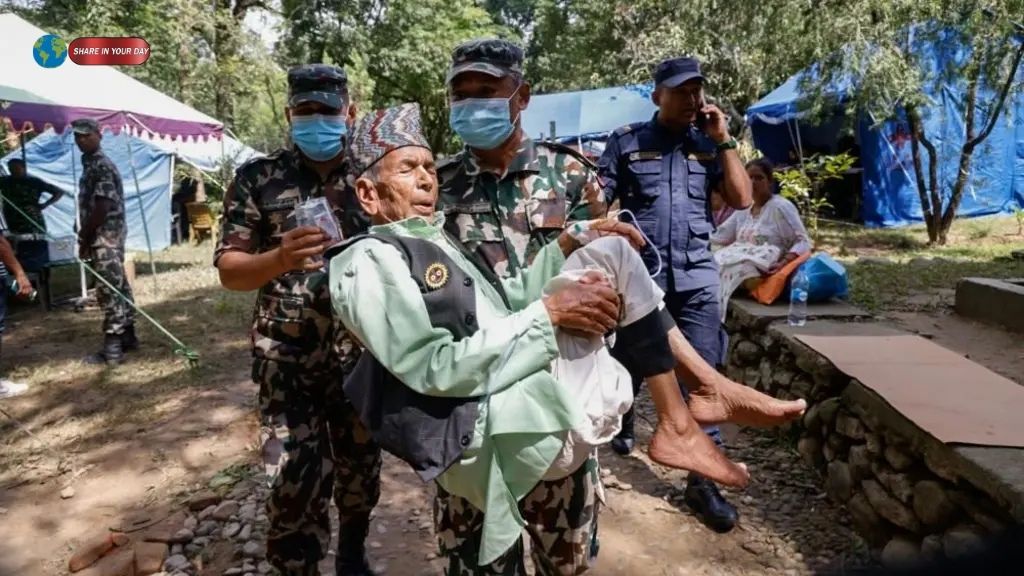
Rescue operations have since been complicated by the formation of unstable lakes behind massive debris blockages. On Friday, one such lake began overflowing, forcing rescue teams to temporarily halt operations because of fears that another surge of water could hit already devastated communities.
The latest reported figures underline the scale of the disaster. Reuters reported that at least 579 people had died in Nepal and five in Tibet, while nearly 1,924 people remained missing in Nepal and another 558 were missing on the Tibetan side. More than 90,000 people have been affected.
Nepal floods trigger a new emergency
The initial disaster was already among the most serious natural catastrophes to hit the Himalayan region in recent years. However, the danger did not end when the first floodwaters receded.
A lake created by debris blocking the Bhotekoshi River began to rise, raising fears that the temporary natural barrier could fail. Such an event could release a large volume of water downstream with little warning.
Reuters reported that the lake’s overflow briefly caused panic on Friday. Residents moved toward higher ground while officials monitored rising river levels. Rescue operations were temporarily suspended as authorities assessed the danger.
The threat illustrates the unusual nature of the disaster. Instead of dealing with a single flood event, authorities are confronting a rapidly changing landscape in which landslides, debris dams and newly formed lakes can create additional flooding long after the original torrent has passed.
Chinese rescue teams also temporarily withdrew from dangerous areas on the Tibetan side before operations resumed after authorities determined that the immediate risk had become manageable.
What caused the Nepal floods?
Scientists believe the disaster was likely connected to a glacial collapse.
The U.S. Geological Survey said a catastrophic debris flow and flood on August 26 was likely triggered by a glacial collapse.
Early reports had raised the possibility that an earthquake was responsible. However, subsequent analysis indicated that the seismic signal associated with the event could have been generated by the collapse itself rather than by a conventional earthquake.
Reuters reported that satellite imagery showed a substantial section of a glacier had collapsed and that the resulting mass of ice, rock and sediment poured into the valley below.
The exact sequence of events remains under investigation. Experts have also been examining whether unusually warm conditions and accelerated melting contributed to the instability.
That distinction is important.
Scientists have warned for years that warming temperatures are changing high-altitude environments. Melting glaciers can expose unstable slopes, while thawing frozen ground can weaken mountain terrain. But determining whether climate change directly caused a particular collapse requires detailed scientific analysis.
In this case, experts have pointed to climate change as a potential contributing factor rather than claiming that it has been definitively established as the sole cause.
Nepal floods devastate communities and infrastructure
The floods struck an exceptionally difficult environment.
The affected region contains steep mountain valleys where settlements, roads and rivers are tightly concentrated. Once the debris flow entered the river systems, the water and sediment were able to travel rapidly through the valleys.
Villages were damaged or destroyed. Roads and bridges were swept away, while hydropower facilities and other infrastructure suffered severe damage.
The disaster also hit a strategically important route connecting Nepal with Tibet. The Gyirong border crossing, an important trading and transportation link, was affected by the flood and debris.
The destruction has made rescue work considerably harder.
In some areas, rescuers have had to clear enormous quantities of mud, rocks and other debris before they can reach potential survivors. Helicopters have been used to search remote areas and transport people and supplies.
Emergency teams have also faced the possibility that the terrain could shift again.
That makes every search operation more complicated. A location that appears safe can become dangerous if water levels rise or another landslide occurs.
Thousands remain missing
One of the most painful aspects of the disaster is the large number of people who remain unaccounted for.
According to the latest Reuters reporting, nearly 1,924 people were still missing in Nepal, while 558 were reported missing in Tibet. The figures can change as authorities reconcile reports, identify victims and determine which missing-person reports relate to the same individuals.
The missing include foreign nationals.
The region is a destination for tourists, trekkers and religious pilgrims, including people traveling toward Mount Kailash in Tibet.
The presence of international visitors has given the disaster a wider global dimension. Families in several countries have been waiting for information about relatives who were traveling in the affected region when the floods struck.
The uncertainty is especially difficult because communications and transportation infrastructure have been damaged.
Authorities must therefore establish lists of survivors, missing people and recovered bodies while rescue workers continue searching difficult terrain.
A second flood remains a major concern
The formation of debris-blocked lakes is now one of the biggest dangers facing communities in the disaster zone.
When a landslide blocks a river, water can accumulate behind the debris. The resulting lake may initially appear stable. However, continued rainfall, rising water pressure or erosion can weaken the natural barrier.
If the barrier collapses suddenly, the lake can release a powerful surge downstream.
That is why authorities on both sides of the border have been closely monitoring water levels.
Reuters reported that the volume of water in one newly formed lake had risen sharply before it began overflowing. The situation prompted evacuations and a temporary suspension of rescue operations.
For survivors, this creates a frightening situation.
Many communities have already lost homes and infrastructure. Some people are sheltering in temporary locations, while others have been moved away from rivers and unstable slopes.
The possibility of another flood means that emergency officials must balance two urgent objectives: searching for people who may still be alive while protecting rescuers and survivors from another disaster.
Nepal’s rescue effort expands
Nepal has mobilized large numbers of security personnel and emergency workers for the response.
Rescuers have used helicopters, heavy machinery, sniffer dogs and other equipment to search through debris and reach isolated areas. Thousands of people have already been rescued, but the scale of the affected region means that operations remain challenging.
The government is also working to restore transportation routes and provide essential supplies to communities cut off by the destruction.
Food, clean water, medical assistance and temporary shelter are among the immediate priorities.
Healthcare facilities face additional pressure because injuries and displacement have occurred at the same time that access to some communities has become difficult.
The International Red Cross has estimated that tens of thousands of people need assistance following the disaster.
International concern grows
The disaster has attracted international attention because of its unusually high death toll and the number of foreign nationals reported missing.
Several countries have offered support, while neighboring states and international organizations have monitored the developing humanitarian situation.
Nepal has indicated that it can manage much of the rescue operation itself while remaining open to technical assistance.
The international response is likely to become increasingly important during the recovery phase.
Rescue operations may last for days, but rebuilding will take far longer.
Entire sections of roads and bridges have been destroyed. Homes, businesses and public facilities have been damaged. Communities dependent on tourism and cross-border trade may also face prolonged economic disruption.
Why Himalayan disasters are becoming a growing concern
The Nepal floods have also renewed attention on the wider risks facing the Himalayas.
The region contains some of the world’s largest concentrations of glaciers outside the polar areas. These glaciers are sensitive to rising temperatures, and scientists have documented substantial ice loss across the Himalayas.
That does not mean every glacier collapse is caused by climate change.
Mountain disasters are influenced by many factors, including geology, rainfall, temperature, snow conditions and the structure of individual glaciers.
However, a warmer climate can change the physical conditions that determine how stable ice and mountain slopes are.
Reuters reported that Nepal’s glaciers have experienced significant ice loss in recent decades and that scientists are examining whether warming conditions contributed to the latest collapse.
The USGS analysis likewise highlights the importance of understanding landslide and glacial hazards in mountainous environments.
The lesson is not simply that another flood could happen.
It is that high-altitude hazards can interact.
A glacier can collapse. That can trigger a landslide. The landslide can block a river. The blocked river can form a lake. The lake can then overflow or collapse its natural barrier.
Each stage can create another hazard.
What happens next?
The immediate priority remains finding survivors and recovering those who died.
At the same time, authorities must monitor unstable slopes, rivers and debris-dammed lakes.
The latest reports that rescue operations have resumed are encouraging, but they do not mean the danger has disappeared. Officials continue to assess water levels and the stability of temporary barriers in the mountains.
For families of missing people, the coming days will be crucial.
Rescuers will continue searching damaged settlements, river channels and debris fields. Identification efforts will also remain important as more victims are recovered.
Meanwhile, government agencies face the enormous task of assessing infrastructure damage and restoring access to isolated communities.
The disaster will likely prompt renewed discussion about early-warning systems in the Himalayas.
Better satellite monitoring, glacier surveillance, rainfall measurement and communication systems could help authorities identify dangerous changes earlier. Communities living downstream of unstable glaciers and debris dams may also benefit from clearer evacuation procedures.
The broader warning from the Nepal floods
The devastation along the Nepal-Tibet border demonstrates how quickly a mountain hazard can become a regional humanitarian crisis.
What began high in the Himalayas developed into a destructive chain reaction involving ice, rock, water and mud. Communities far downstream were caught in the path of the resulting flood.
The continuing threat from unstable lakes makes the situation even more difficult.
The latest death toll has already reached hundreds, while thousands of families remain uncertain about missing relatives. Infrastructure has been destroyed across a mountainous region where access is difficult even under normal circumstances.
The Nepal floods therefore represent more than a single extreme-weather event.
They are a stark reminder of the risks faced by communities living beneath rapidly changing mountain environments.
As rescue teams continue their work, the focus will remain on saving lives, locating missing people and preventing another flood.
In the longer term, however, the disaster is likely to raise difficult questions about how governments, scientists and communities can better prepare for cascading hazards in the Himalayas.
The immediate emergency is still unfolding. But the need for stronger monitoring, faster warnings and more resilient infrastructure is already clear.
Sources
- BBC News live coverage
- U.S. Geological Survey — 2026 Nepal Debris Avalanche and Flash Flood
- Reuters — Nepal and China resume flood rescue after lake threat eases
- Reuters — Glacier collapse may have triggered deadly Nepal flash flood
Internal Link
[Insert relevant article from your website here] — Ideally link to an existing article about Nepal, climate change, floods, natural disasters or Himalayan geography