King Harald V Dies at 89 After 35 Years on Norway’s Throne
King Harald V dies at the age of 89, bringing an end to a 35-year reign that transformed Norway’s royal family while strengthening his reputation as a warm, accessible and modern monarch.
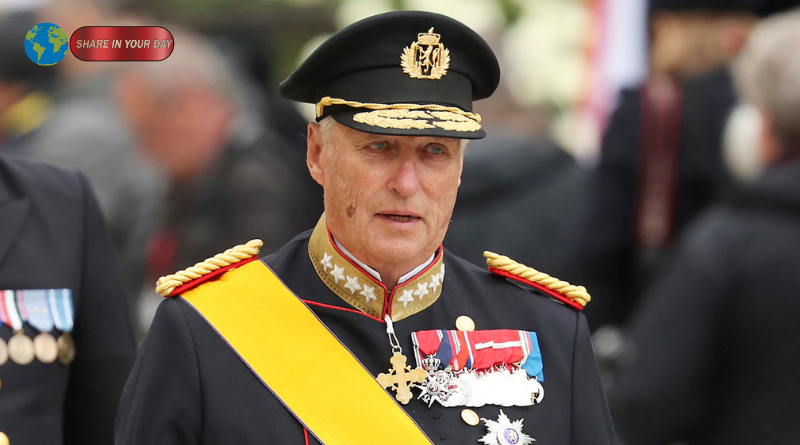
The Norwegian Royal Court announced that King Harald V died peacefully at Oslo University Hospital Rikshospitalet at 6:35 a.m. on Friday, Aug. 28, 2026. The palace did not initially give a cause of death.
His death prompted an immediate period of national mourning and tributes from political leaders and royal families across Europe. Norway’s prime minister said the country was mourning a monarch who had devoted his life to serving the nation.
Harald’s death also marks a major transition for Norway’s monarchy. His son, Crown Prince Haakon, automatically succeeded him and became King Haakon VIII.
King Harald V Dies After Decades of Service
King Harald V became king in 1991 after the death of his father, King Olav V. For more than three decades, he remained one of Norway’s most recognizable public figures.
Although Norway’s constitutional monarchy gives the sovereign a largely ceremonial role, Harald used the position to build a close relationship with the public. He became particularly known for speaking openly about equality, diversity, religious tolerance and the changing nature of Norwegian society.
His approach was less formal than that of many earlier European monarchs. Harald frequently appeared in ordinary settings and was willing to discuss personal experiences, family life and national challenges.
That accessibility became an important part of his legacy.
Norway’s government said Harald demonstrated an “unwavering faith” in the Norwegian people and helped the country recognize its own strengths.
A Childhood Shaped by War
Harald was born Feb. 21, 1937, at the Skaugum estate near Oslo. He was the first Norwegian-born prince in more than five centuries.
His childhood changed dramatically after Nazi Germany invaded Norway in April 1940.
As the royal family and Norwegian government attempted to escape the German occupation, Harald left Norway with his mother, Crown Princess Märtha, and his two sisters. The family eventually traveled to the United States, where they received protection and hospitality during the war.
Harald spent part of his childhood in Washington, D.C., including time at the White House during President Franklin D. Roosevelt’s administration. His father and grandfather, meanwhile, established a government-in-exile in London.
The experience left Harald with a lifelong connection to the United States. He later spoke warmly about the hospitality his family received during the war.
After returning to Norway in 1945, he continued his education and later attended the University of Oxford. He also received military training before beginning his long preparation for royal duties.
King Harald V and Queen Sonja’s Love Story
One of the most defining chapters of Harald’s personal life was his relationship with Sonja Haraldsen, a commoner who eventually became Queen Sonja.
The couple met in 1959 and fell in love. But their relationship created a serious problem for the young crown prince.
Royal tradition favored marriages between members of European royal or aristocratic families. Harald’s wish to marry Sonja therefore faced opposition from parts of the establishment.
According to the Washington Post obituary, Harald eventually made clear that if he could not marry Sonja, he would remain unmarried. His father ultimately gave his approval.
Harald and Sonja married in Oslo Cathedral in 1968.
What had initially been viewed as a potential threat to the monarchy instead became an important part of Harald’s popularity. Their decades-long marriage helped reinforce the image of a royal family capable of adapting to modern Norwegian society.
The couple remained together for more than five decades.
A Monarch Who Helped Modernize Norway’s Royal Family
When Harald became king in 1991, Norway already had a well-established constitutional monarchy. Yet he continued moving the institution toward greater openness.
Among his efforts was a more transparent approach to the royal household. The monarchy published annual financial reports and Harald became more willing to participate in interviews and public discussions.
He also spoke about subjects that traditional monarchs had sometimes avoided.
In 1997, Harald publicly apologized to the Arctic Sami people for historical government policies aimed at suppressing their culture. That gesture was part of a broader effort to acknowledge difficult aspects of Norway’s history.
His most memorable public moments, however, often came during times of national tragedy.
His Emotional Response to the 2011 Attacks
King Harald V became an especially powerful symbol of national unity following the terrorist attacks in Norway in 2011.
The attacks in Oslo and on Utøya killed 77 people and shocked the country.
Harald responded with an emotional speech emphasizing compassion, democracy and an inclusive society. His message helped define the role he wanted the monarchy to play: not as a political institution, but as a source of national unity during moments of extraordinary pain.
That approach continued throughout his reign.
In 2016, another speech attracted international attention when Harald spoke passionately about the diversity of Norwegian society.
He described Norway as a country that included people of different religions, family structures and sexual orientations. His message was widely viewed as an unusually direct statement of inclusion from a European monarch.
For many Norwegians, moments such as these made Harald feel less like a distant head of state and more like a national grandfather figure.
King Harald V Was Also a Passionate Athlete
Away from official duties, Harald was an accomplished sailor and enthusiastic sportsman.
He represented Norway in sailing at three Olympic Games: Tokyo in 1964, Mexico City in 1968 and Munich in 1972. His connection to sailing continued throughout much of his life.
His sporting interests contributed to another aspect of his public image. Rather than presenting himself exclusively through ceremony and tradition, Harald was often associated with outdoor life, competition and Norway’s strong connection to nature.
He also had a long association with environmental causes.
The Washington Post reported that he led the Norwegian chapter of the World Wide Fund for Nature for two decades. He was also the first king to have an area of the Arctic named after him.
Health Problems in His Final Years
Harald’s final years were marked by recurring health problems.
In 2024, he announced a permanent reduction in his official duties because of his health. However, he rejected the idea of abdicating.
His position was consistent with the oath he had taken when he became king. Harald viewed the role as a lifelong responsibility.
In August 2026, his health deteriorated significantly. The Royal Court said he had been receiving treatment for a serious bacterial infection and that his condition later became very serious.
He died at the National Hospital in Oslo on Aug. 28.
The Royal Court subsequently confirmed that he had died peacefully at 6:35 a.m.
King Haakon VIII Takes the Throne
Harald’s death immediately triggered a change in Norway’s monarchy.
His son, Crown Prince Haakon, became King Haakon VIII. The succession occurred automatically under Norway’s constitutional system.
Haakon, born in 1973, had spent decades preparing for the role. He frequently represented his father at official events and had served as regent during periods when Harald was unable to perform his duties.
The transition also places a new generation of the Norwegian royal family in the spotlight.
Princess Ingrid Alexandra, Haakon’s daughter, is now next in line to the throne. Norway changed its succession rules in 1990 so that the eldest child would take precedence regardless of gender, although transitional provisions meant Haakon remained ahead of his older sister because of the rules in place when he was born.
A New Chapter for the Norwegian Monarchy
King Harald V leaves behind a complicated but largely admired legacy.
His reign was not without controversy. Like other European royal families, Norway’s monarchy faced scrutiny over expenses, personal decisions and controversies involving members of the wider royal family.
Yet Harald himself maintained considerable public respect.
His ability to combine tradition with modernization became one of the defining characteristics of his reign. He remained a constitutional monarch while gradually making the institution more open, personal and reflective of contemporary Norwegian society.
His marriage to Sonja challenged old royal expectations. His speeches embraced diversity. His response to national tragedies emphasized unity. His sporting career gave him a connection with ordinary Norwegian interests.
Most importantly, he consistently presented the monarchy as an institution that existed to serve the country rather than stand above it.
Norway Mourns a Monarch Who Bridged Generations
The death of King Harald V represents more than the passing of a head of state.
For many Norwegians, he represented continuity across generations.
He was born before World War II, experienced exile as a child, witnessed the transformation of postwar Norway and eventually became the longest-serving Norwegian monarch of his generation.
He ruled through major social, political and technological changes while maintaining a remarkably stable relationship with the Norwegian public.
The Norwegian government said the country was left with a “deep sense of gratitude” for his long life of service.
International tributes have similarly emphasized Harald’s warmth, humility and commitment to public service. His death has been mourned by European royal families and leaders beyond Norway.
As King Haakon VIII begins his reign, Norway enters a new royal era.
But the legacy of King Harald V — the wartime child who became king, the sailor who competed at three Olympics, the royal who married for love and the monarch who championed an inclusive Norway — is likely to remain deeply connected to the modern identity of the Norwegian monarchy.
After 35 years on the throne, King Harald V dies having left behind an institution markedly different from the one he inherited.
And for a nation now mourning its king, his most enduring legacy may be the simple idea he repeatedly communicated throughout his reign: that the monarchy should reflect the people it serves.