
Kevin Warsh Interest Rate Hike: 3 Powerful Signals
The Kevin Warsh interest rate hike debate has entered a new phase after the Federal Reserve chairman delivered a closely watched speech at the Jackson Hole Economic Policy Symposium. Warsh stopped short of announcing a specific rate move, but his remarks made clear that stubborn inflation could force the central bank to raise interest rates again.
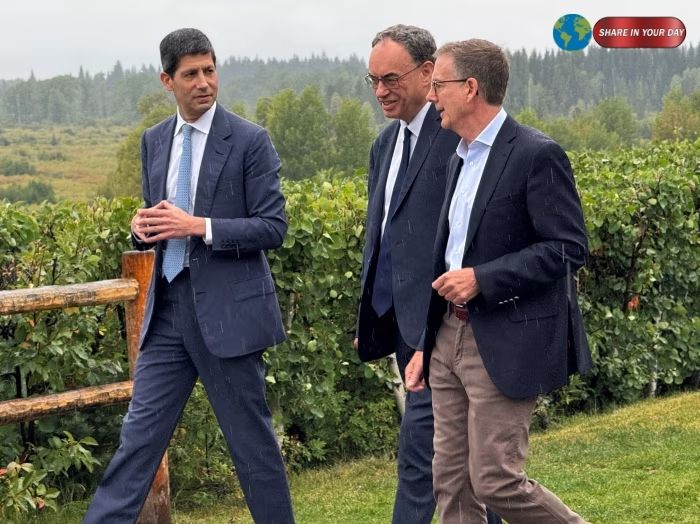
The message was important for financial markets because Warsh did not frame monetary policy around a predetermined path. Instead, he emphasized inflation trends, financial conditions, economic activity and incoming data. That approach leaves the door open to a rate increase at the Federal Reserve’s September meeting.
The shift matters because investors had been trying to determine whether the new Fed chairman would prioritize supporting economic growth or focus more aggressively on restoring price stability.
Warsh’s answer was increasingly clear: inflation remains the central problem.
Kevin Warsh Interest Rate Hike Debate Gains Momentum
Warsh’s Jackson Hole speech provided one of the clearest indications yet that higher interest rates remain on the table.
The chairman said the Fed needs to be confident that underlying inflation is moving toward its 2% objective at a sufficient speed. If policymakers cannot reach that conclusion, he indicated that the central bank still has work to do.
That distinction is crucial.
Warsh did not promise a rate hike. Instead, he established a standard for monetary policy. If inflation continues to remain above target and does not show convincing progress, maintaining the existing interest-rate setting could become increasingly difficult to justify.
This has changed the way investors are looking at the September meeting.
According to Reuters, market expectations for a September rate increase rose sharply following Warsh’s remarks. The probability moved from roughly 35% before the speech to around 60% afterward.
That does not mean a hike is guaranteed.
It does mean markets now see a meaningful possibility that the Fed could tighten policy again.
Read the original Wall Street Journal report
1. Inflation Remains the Biggest Warning Sign
The first major signal behind the Kevin Warsh interest rate hike story is inflation.
Warsh emphasized that the Federal Reserve’s 2% inflation target remains firm. He also argued that recent improvements in inflation data have not been sufficient to establish that underlying price pressures are moving decisively toward that goal.
The latest consumer inflation data help explain his concern.
The U.S. Bureau of Labor Statistics reported that the Consumer Price Index increased 3.4% over the 12 months through July. Core CPI, which excludes food and energy prices, increased 2.5% over the same period.
Those figures are significantly lower than the inflation peak reached earlier in the post-pandemic period. However, they remain above the Federal Reserve’s 2% objective.
Warsh went further by examining how broadly price increases are distributed across the economy.
According to his speech, more than half of the individual goods and services components in the Fed’s preferred PCE inflation measure recorded price increases above 3% over the previous 12 months. That percentage has fallen substantially from its post-pandemic peak, but it remains higher than the pre-pandemic norm.
For Warsh, that suggests the inflation problem has not disappeared.
Instead, it may have become more persistent.
Why This Matters for Interest Rates
Central banks generally want inflation expectations to remain anchored. If households and businesses begin to assume that prices will continue rising rapidly, inflation can become more difficult to control.
That is why Warsh appears unwilling to declare victory based on a few favorable inflation reports.
His approach focuses more heavily on the trend than on any single monthly figure.
That could make upcoming inflation releases especially important.
The BLS has scheduled the August CPI report for September 11, only days before the Fed’s September policy meeting.
In other words, policymakers will have a fresh inflation reading almost immediately before deciding what to do with interest rates.
2. Warsh Says Financial Conditions May Not Be Restrictive Enough
The second major signal is financial conditions.
Warsh argued that the economy continues to show considerable resilience. Business investment is growing, corporate profits remain strong and consumer spending has held up despite various economic shocks.
More importantly, he said several financial indicators show relatively little evidence that monetary policy is seriously restraining economic activity.
Credit spreads are low, corporate borrowing remains active and bank lending standards are relatively easy compared with historical ranges. Warsh therefore said he would find it difficult to characterize broad financial conditions as restrictive.
That observation has significant implications.
If interest rates are supposed to slow demand and reduce inflationary pressure, policymakers need evidence that monetary policy is actually transmitting through the economy.
If companies can still borrow relatively easily, consumers continue spending and businesses continue investing aggressively, the Fed may conclude that its current policy setting is not sufficiently restrictive.
That strengthens the argument for another rate increase.
AI Investment Adds Another Layer
One unusual factor in Warsh’s economic assessment is the rapid growth in investment linked to artificial intelligence.
The Fed chairman said business capital expenditures have been rising rapidly, with more than half of this year’s capital expenditure growth potentially attributable to AI-related investment. He also pointed to strong corporate earnings and low equity-market volatility.
AI investment could eventually increase productivity and economic growth.
But from a monetary-policy perspective, rapid investment also matters because it can support demand.
If economic activity remains strong while inflation is still elevated, the Fed has less reason to believe that current interest rates are sufficiently restrictive.
That creates a difficult policy calculation.
The central bank wants to avoid unnecessarily weakening the economy. At the same time, it does not want to allow inflation to become entrenched.
3. Warsh Is Abandoning Traditional Forward Guidance
The third signal is about how the Federal Reserve communicates.
Warsh has made it clear that he does not want the central bank to rely heavily on traditional forward guidance.
Under previous Fed leadership, investors often received extensive explanations about the likely direction of interest rates. Warsh argued that excessive guidance can limit policymakers’ flexibility and encourage financial markets to focus too heavily on predicting the Fed instead of evaluating the underlying economy.
That represents an important change.
Instead of telling investors exactly what the Fed is likely to do, Warsh wants markets to pay closer attention to economic data and financial conditions.
This could make monetary policy more unpredictable in the short term.
However, it also gives the Fed greater flexibility.
If inflation suddenly accelerates, policymakers do not have to worry as much about contradicting previous guidance. Similarly, if economic activity deteriorates sharply, they can respond without being tied to an earlier policy signal.
For investors, the consequence is straightforward: economic data may become more important than Fed rhetoric.
September Inflation Data Could Decide the Next Move
The timing of the upcoming data is particularly important.
The August CPI report is scheduled for September 11. The Fed’s September policy meeting is scheduled for September 15-16.
That gives policymakers only a few days to assess the latest inflation figures before making a decision.
The August employment report is also scheduled for September 4, providing another important piece of evidence about the health of the economy.
This creates a potentially decisive sequence:
Jobs data → inflation data → Fed decision.
If employment remains relatively stable and inflation proves stubborn, the case for a rate hike could strengthen.
If employment weakens significantly while inflation also shows signs of cooling, policymakers could have more justification for keeping rates unchanged.
Therefore, the September decision will probably depend less on one speech and more on how the next two major data releases change the overall picture.
What the Kevin Warsh Interest Rate Hike Means for Markets
The financial-market reaction to Warsh’s speech was immediate.
Short-term Treasury yields moved higher as investors increased their expectations for tighter monetary policy. The dollar also strengthened, while rate-sensitive assets faced renewed pressure.
This is a conventional response to a more hawkish Federal Reserve outlook.
Treasury Bonds
A higher probability of a rate increase generally puts upward pressure on short-term Treasury yields because investors demand greater returns on securities that are closely linked to Federal Reserve policy.
Longer-term yields are more complicated.
They depend not only on short-term Fed policy but also on inflation expectations, economic growth, government borrowing and investor demand.
U.S. Dollar
Higher U.S. interest rates can make dollar-denominated assets more attractive to global investors.
If markets believe the Fed will maintain tighter policy for longer, the dollar could receive additional support.
However, currency markets also depend on economic developments outside the United States, so a stronger dollar is not guaranteed.
Stocks
Equities face a more complicated environment.
Higher rates can pressure stock valuations because future corporate earnings become less valuable when discount rates rise.
Yet Warsh’s comments also highlighted strong corporate earnings, robust investment and resilient consumer spending. That means the economic backdrop is not necessarily negative for stocks.
The key question is whether stronger economic growth can outweigh the valuation pressure created by higher interest rates.
The Fed Faces a Difficult Balancing Act
Warsh’s stance also highlights the broader challenge facing the Federal Reserve.
The U.S. economy appears resilient, but inflation remains above target.
That combination is difficult for policymakers.
If economic growth were collapsing, a rate cut would be easier to justify even with inflation above target. Conversely, if inflation were falling rapidly while growth remained strong, the Fed could potentially leave rates unchanged.
The current situation offers neither simple answer.
Economic activity is holding up.
Inflation is still elevated.
Financial conditions do not appear especially restrictive.
That combination gives Warsh a stronger argument for keeping higher rates on the table.
Political Pressure Adds Another Risk
The Fed’s policy decision is also occurring in a politically sensitive environment.
President Donald Trump has repeatedly advocated lower interest rates, while Warsh’s emphasis on price stability suggests the central bank is prepared to maintain a restrictive stance if inflation requires it.
That makes the Fed’s independence particularly important.
A rate hike shortly before the U.S. midterm elections could generate political controversy, especially if financial markets interpret the decision as unnecessarily restrictive.
Warsh therefore faces pressure from both directions.
If he raises rates, critics could argue that the Fed is damaging economic growth.
If he does not raise rates while inflation remains stubborn, markets could question whether his Jackson Hole message was merely rhetoric.
The credibility of the Fed’s inflation strategy could therefore depend on what happens next.
What Investors Should Watch Next
The Kevin Warsh interest rate hike story is ultimately about data.
Three indicators deserve particular attention.
Inflation
The August CPI report on September 11 will be critical. A hotter-than-expected reading could increase expectations for a September rate hike, while a meaningful slowdown could reduce those expectations.
Employment
The August employment report arrives September 4. A resilient labor market would give the Fed more room to prioritize inflation. A sharp deterioration could make policymakers more cautious about tightening policy.
Financial Conditions
Treasury yields, credit spreads, bank lending and equity-market conditions will also remain important.
Warsh has explicitly argued that policymakers should pay attention to market signals rather than relying exclusively on traditional economic forecasts.
Bottom Line
The Kevin Warsh interest rate hike debate is no longer a distant possibility.
Warsh has not promised to raise rates, but his Jackson Hole speech significantly strengthened the case for keeping a hike on the table. His concern is straightforward: inflation remains above the Fed’s 2% target, while economic activity and financial conditions remain strong enough that monetary policy may not be sufficiently restrictive.
The next few weeks could therefore be decisive.
The August employment report will provide a fresh look at the labor market. The August CPI report will arrive just days before the Fed’s September meeting. Together, those reports could determine whether Warsh’s hawkish message turns into an actual policy move.
For now, the central bank’s message is clear: the Fed wants convincing evidence that inflation is moving toward 2%, not simply evidence that inflation has improved slightly.
That raises the stakes for September.
And it means investors should prepare for a Federal Reserve that is increasingly willing to let economic data—not forward guidance—determine the next interest-rate decision.