Samsung has expanded its laptop lineup with the new Galaxy Book6, a more affordable 14-inch Windows 11 notebook starting at $799. The laptop brings several attractive features to a lower price point, including Intel Core processors, Galaxy AI tools, a compact design and Samsung’s promise of up to 25 hours of battery life. However, the Galaxy Book6 also makes several hardware compromises that buyers should consider before spending their money.
The new model is designed to make the Galaxy Book experience accessible to a wider audience. Samsung says the laptop is aimed at everyday computing, combining dependable performance, long battery life and connected Galaxy experiences at a lower entry price.
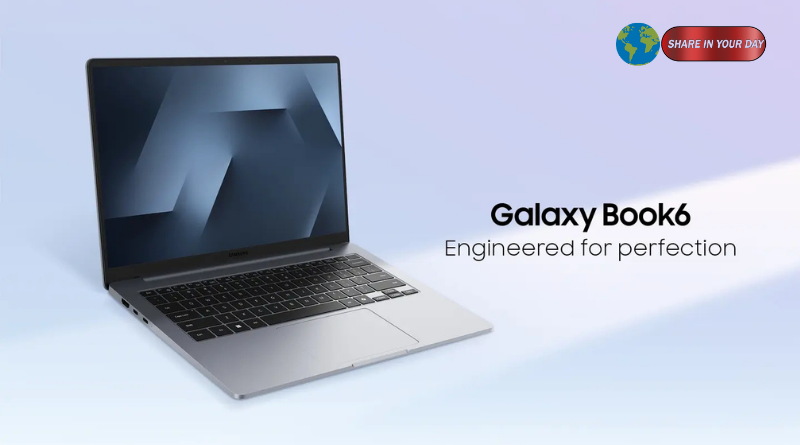
At first glance, that sounds like an appealing package. Yet the $799 price does not tell the whole story.
Samsung has cut costs in several areas. The result is a laptop that could be attractive for students, office workers and Galaxy smartphone owners, but less convincing for users expecting premium features.
Galaxy Book6 Brings a Lower $799 Starting Price
The biggest selling point of the Galaxy Book6 is its price.
Samsung’s new 14-inch model starts at $799 in the United States, putting it below the earlier Galaxy Book6 configurations that entered the market at considerably higher prices. Samsung is positioning the machine as a more accessible option for people who want a modern Windows laptop without moving into the company’s premium Galaxy Book6 Pro or Ultra range.
The lower price is significant because Samsung is still offering several features normally associated with more expensive laptops.
The Galaxy Book6 has a 14-inch display with a 1,920 x 1,200 resolution. The base configuration includes 8GB of LPDDR5X memory and 256GB of PCIe SSD storage, while higher configurations can increase memory to 16GB and storage to 1TB.
For basic productivity, those specifications can be sufficient.
Web browsing, email, document editing, video streaming and everyday multitasking should fit naturally within the intended use case. However, users planning to keep the laptop for many years may want to think carefully about the entry-level 8GB/256GB configuration.
Galaxy Book6 Makes Important Hardware Cuts
The most important issue with the Galaxy Book6 is not necessarily what Samsung included. It is what the company left out.
To reach the $799 price, Samsung made several hardware compromises.
One of the most noticeable omissions is a backlit keyboard. That may seem like a minor detail, but it can become frustrating for people who frequently work in dim environments. Backlit keyboards have become common even on many affordable laptops, making the omission more noticeable on a machine carrying an $800 starting price.
Samsung also uses an HDMI 1.4 connection on the new model. Neowin notes that the port is limited to 4K output at 30Hz. That may be adequate for presentations, office work and basic external-monitor use, but it is less flexible than the newer HDMI standards found on more premium laptops.
The webcam is another area where Samsung has kept costs under control.
The Galaxy Book6 includes a 2MP 1080p camera. While Full HD resolution is useful for video calls, buyers looking for a more premium camera experience should not expect flagship-level imaging performance from this model.
Galaxy Book6 Has a Useful Port Selection
Despite those compromises, the Galaxy Book6 does have an advantage over some competing thin laptops: connectivity.
The laptop includes two USB Type-C ports, one USB Type-A port, HDMI and a 3.5mm headphone jack. That combination gives users several ways to connect accessories without immediately reaching for a USB hub.
This is particularly useful for students and office workers.
A user can connect a traditional USB accessory, plug in a display and use wired headphones without relying entirely on adapters. For people moving from an older Windows laptop, the selection of physical ports may be more convenient than the minimalist approach found on some modern notebooks.
Samsung’s port strategy also makes the Galaxy Book6 more practical as an everyday productivity machine.
However, buyers should distinguish between having multiple ports and having the latest port standards. The Galaxy Book6’s connectivity is useful, but not every connection represents the newest technology.
Galaxy Book6 Promises Up to 25 Hours of Battery Life
Battery life is another major part of Samsung’s pitch.
Samsung advertises up to 25 hours of battery life for the Galaxy Book6, depending on the testing conditions and configuration. The laptop uses a 61.2Wh battery and includes a 45W USB-C charger.
A long-lasting battery could make the Galaxy Book6 particularly appealing to mobile users.
Students could potentially use it through long classes without constantly searching for a power outlet. Office workers may also appreciate the ability to move between meetings and workspaces without carrying the charger everywhere.
However, advertised battery figures should always be treated as a manufacturer claim rather than a guarantee of real-world usage.
Battery life can change significantly depending on screen brightness, workload, wireless connectivity, applications and power settings. Heavy multitasking or demanding applications will generally consume considerably more power than basic web browsing or video playback.
Therefore, the 25-hour figure is best understood as an indication of the laptop’s efficiency potential rather than a promise that every user will get 25 hours of normal work.
Galaxy Book6 Includes Galaxy AI Features
Samsung is also using artificial intelligence as part of the Galaxy Book6’s appeal.
The laptop supports Galaxy AI features designed to connect the Windows PC experience more closely with Samsung’s broader ecosystem. Samsung highlights tools such as AI Select and Note Assist, while the company also emphasizes the ability to find information, move content and work across connected Galaxy devices.
For people already using Galaxy smartphones or tablets, this ecosystem integration could be one of the strongest reasons to choose the Galaxy Book6.
The experience becomes more compelling when devices work together rather than operating as isolated products. Samsung is clearly trying to make its laptop part of a larger Galaxy environment.
However, there is an important technical distinction.
The entry-level Galaxy Book6’s Intel Core 3 and Core 5 processors include an integrated NPU rated at up to 15 TOPS, according to Neowin. That is below Microsoft’s Copilot+ PC requirement, meaning buyers should not automatically assume that the $799 model qualifies for every feature associated with Microsoft’s Copilot+ branding.
This distinction could become increasingly important as Windows AI capabilities continue to develop.
Galaxy Book6 Runs Windows 11
The operating system is another major advantage for buyers who prefer Microsoft’s desktop environment.
The Galaxy Book6 is offered with Windows 11 configurations, including Windows 11 Pro 25H2 and Windows 11 Home 25H2. Samsung also lists a Linux option for certain configurations, although users wanting a different Linux distribution can install one after purchase.
Windows 11 gives the Galaxy Book6 access to a broad software ecosystem.
That makes the laptop suitable for common office applications, education platforms, browsers, creative programs and a wide range of Windows software. For users who do not want to adapt to another operating system, this is an important advantage.
The combination of Windows 11 and Samsung’s Galaxy ecosystem also creates a familiar environment for users already invested in Samsung hardware.
Galaxy Book6 Is Lightweight for Everyday Carrying
Portability is another positive feature.
The 14-inch Galaxy Book6 weighs about 1.35kg and measures 15.7mm thick, according to Neowin’s report. That makes it relatively easy to carry between home, school and the office.
The compact size is especially relevant for students and commuters.
A 14-inch screen offers more workspace than many smaller ultraportables while remaining substantially easier to carry than a large 16-inch notebook.
Samsung is therefore targeting a practical middle ground: enough screen real estate for productivity without making portability a major problem.
The Display Is Functional, Not Premium
The Galaxy Book6’s 14-inch 1,920 x 1,200 LCD panel is designed for everyday computing rather than high-end visual work.
The screen reaches up to 350 nits of brightness and uses a 60Hz refresh rate. It also features an anti-glare treatment, according to reporting on the new model.
For office applications, web browsing and streaming, these specifications should be perfectly serviceable.
However, users shopping for a premium laptop may notice the difference between this display and higher-end OLED or high-refresh-rate panels.
Photographers, video editors and other creative professionals may want better color performance and contrast than the entry-level Galaxy Book6 is designed to provide.
That does not make the screen poor. Instead, it reinforces Samsung’s positioning of the laptop as an everyday productivity device.
Who Should Buy the Galaxy Book6?
The Galaxy Book6 makes the most sense for a specific group of buyers.
Students are one obvious audience. The combination of a 14-inch screen, Windows 11, relatively low weight and long advertised battery life could make it useful for studying, writing and online classes.
Office workers are another potential audience.
The physical ports are convenient, and the laptop should handle common productivity tasks without difficulty. Users already carrying a Galaxy smartphone may also get additional value from Samsung’s connected-device features and Galaxy AI tools.
The laptop could also appeal to consumers who want Samsung’s design and ecosystem without paying for a premium Galaxy Book6 Pro or Ultra configuration.
However, buyers should think twice if they expect premium hardware.
The lack of a backlit keyboard, modest webcam, 60Hz display and HDMI 1.4 connection are all reminders that this is an entry-level Galaxy Book6 rather than a flagship notebook.
Who Should Skip the Galaxy Book6?
Power users may want to look elsewhere.
The base configuration’s 8GB of RAM and 256GB of storage could become limiting for users who regularly work with large files, demanding applications or extensive multitasking. Higher configurations are available, but increasing the specifications also reduces the value advantage of the $799 starting price.
Creative professionals should also examine the display and performance requirements of their workloads before buying.
Similarly, buyers who expect a premium webcam, illuminated keyboard or advanced display technology may find the compromises difficult to justify.
Gamers are another group that should approach the Galaxy Book6 carefully. The machine is designed primarily for everyday computing, and its integrated graphics and 60Hz display do not position it as a dedicated gaming laptop.
Is the Galaxy Book6 Worth $799?
The answer depends heavily on what you expect from a laptop.
At $799, the Galaxy Book6 offers a useful combination of Windows 11, Galaxy AI features, modern Intel processors, multiple ports, a compact 14-inch design and a large advertised battery-life figure. Samsung’s official positioning is clear: this is a more accessible way to enter the Galaxy Book ecosystem.
But the lower price comes with compromises.
The non-backlit keyboard is arguably the most surprising omission. The 60Hz LCD display, 1080p webcam and HDMI 1.4 port further demonstrate where Samsung has reduced costs.
That means the Galaxy Book6 is not necessarily a bad laptop.
Instead, it is a laptop with a very specific value proposition.
If your priority is reliable everyday computing, portability, battery life and access to Samsung’s ecosystem, the Galaxy Book6 could be an attractive option.
If your priority is premium hardware, advanced AI processing, a high-end display or a feature-rich keyboard, the cheaper Galaxy Book6 may leave you wanting more.
Galaxy Book6 Shows the Challenge of Affordable AI PCs
The launch also highlights a broader trend in the laptop market.
Manufacturers are increasingly trying to bring AI features to lower-priced computers. Samsung is doing that by combining Galaxy AI software with more affordable Intel hardware.
The challenge is balancing price with future-proofing.
As AI workloads become more demanding, dedicated NPU performance could become increasingly important. The entry-level Galaxy Book6’s up-to-15-TOPS NPU illustrates the gap between an affordable AI-branded laptop and the more powerful hardware associated with Microsoft’s Copilot+ requirements.
For buyers, that means the most important question is not simply whether a laptop has AI features today.
It is whether the hardware will continue to support the features they want several years from now.
Final Verdict
The Galaxy Book6 is an interesting addition to Samsung’s 2026 laptop lineup.
Its $799 starting price makes the Galaxy Book ecosystem more accessible, while Windows 11, Galaxy AI, multiple ports and an advertised battery life of up to 25 hours give the machine several strong selling points.
However, Samsung has clearly made compromises to achieve that price.
The lack of a backlit keyboard stands out. The 60Hz LCD, 1080p webcam and HDMI 1.4 connection also show that buyers are getting a more basic version of the Galaxy Book experience.
For students, office workers and Galaxy users who value portability and ecosystem integration, the Galaxy Book6 could still be a compelling choice.
For power users and buyers looking for premium hardware, however, spending more on a higher-end configuration may be the smarter long-term investment.