Project Helix Disc Drive: Xbox Reveals Big Twist
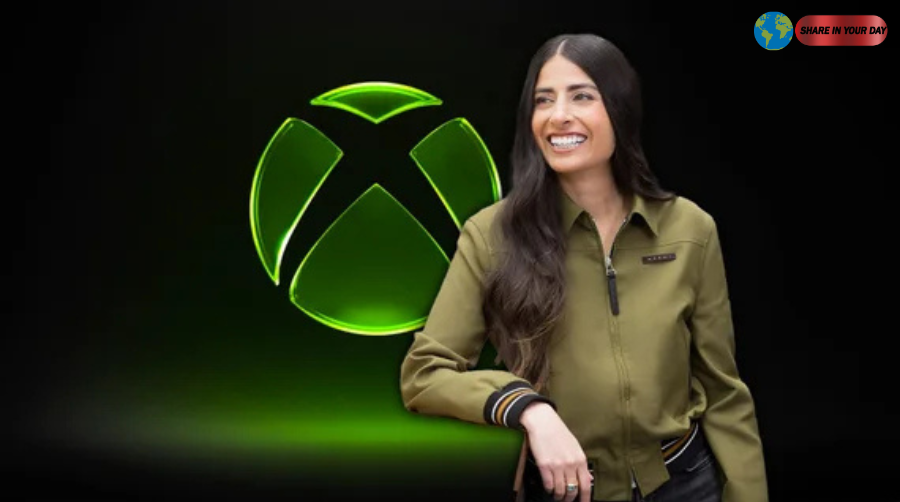
The Project Helix disc drive question remains unanswered, but Xbox CEO Asha Sharma has offered several clues about Microsoft’s approach to its next-generation hardware. When asked directly whether Project Helix would include a disc drive, Sharma declined to confirm or deny it, instead emphasizing the importance of affordability, efficiency and performance.
The response comes as the gaming industry moves deeper into the transition from physical games to digital libraries. Sony has already signaled a major shift away from physical game discs for its next generation, putting additional attention on Microsoft’s plans for Project Helix.
For Xbox players who still own physical games, the uncertainty matters. A disc drive would allow them to continue using physical Xbox games directly on new hardware. A discless system, meanwhile, would represent a significant change for players who have spent years building physical collections.
Microsoft has not announced the final hardware configuration for Project Helix. However, the company has confirmed that the next generation is being designed to play both Xbox console games and PC games, while developer-facing alpha hardware is planned to begin shipping in 2027.
Project Helix disc drive remains a mystery
The biggest unanswered question surrounding Project Helix is simple: will the next Xbox have a disc drive?
So far, Microsoft is refusing to provide a definitive answer.
During an interview with the BBC, Sharma was asked directly about physical media support for the next-generation Xbox. Rather than confirming a drive, she redirected the conversation toward the challenges facing the hardware industry.
“This next generation, we have to be thinking about efficiency and affordability alongside performance,” Sharma said.
That response does not confirm a digital-only console. However, it does highlight one of the biggest challenges facing Microsoft as it develops its next hardware generation.
A disc drive adds hardware, manufacturing complexity and cost. If Microsoft wants to make Project Helix competitive on price while also delivering a major performance upgrade, eliminating unnecessary components could become an important part of the design.
At the same time, Xbox has made it clear that physical games still matter to its audience.
Sharma has acknowledged that players value physical media while also pointing to the advantages of digital gaming. Microsoft has therefore avoided completely abandoning the physical-game conversation, even as it prepares for a future where digital libraries are increasingly important.
Xbox is focusing on affordability
The discussion around the Project Helix disc drive cannot be separated from the rising cost of gaming hardware.
Modern consoles already contain expensive processors, graphics hardware, memory and storage. Project Helix is expected to deliver a substantial performance increase, with Microsoft working with AMD on custom hardware for the next generation.
Microsoft’s official announcement says Project Helix is being developed around a custom AMD system-on-chip and next-generation DirectX and FSR technologies. Xbox also says the hardware is targeting a major improvement in ray-tracing performance while increasing efficiency.
Those ambitions create an obvious challenge.
The more powerful the hardware becomes, the more difficult it can be to maintain an affordable retail price.
Sharma has therefore emphasized efficiency alongside performance. That could influence everything from the processor and memory configuration to storage capacity and physical-media support.
A disc drive may seem relatively small compared with the rest of a modern console, but every component matters when manufacturers are trying to reduce costs.
This is especially important because Xbox is not necessarily building one device.
Project Helix is now a family of devices
One of the most interesting recent developments is Microsoft’s description of Project Helix as a “family of devices.”
Sharma said Xbox has been working on a “great family of devices for Helix” and promised that more information would be shared in the future.
That wording could have major implications for the disc-drive question.
Instead of creating a single next-generation Xbox with one fixed configuration, Microsoft could potentially offer several devices with different specifications and prices.
For example, one model could prioritize maximum performance, while another could focus on affordability.
Microsoft has not confirmed those specific configurations, so they should not be treated as announced products. However, the family-of-devices language makes it possible that disc support could vary across the lineup.
That would give Xbox another option.
Rather than forcing every customer to pay for a disc drive, Microsoft could potentially make physical-media support available on one device while offering a cheaper digital-focused option elsewhere.
Again, this is speculation rather than confirmed hardware information.
But the strategy would fit Microsoft’s broader approach to making Xbox available across different devices and price points.
Xbox is already preparing for a digital future
While Microsoft has not confirmed the Project Helix disc drive, the company has already introduced a major feature designed to make physical Xbox games more useful in a digital ecosystem.
Xbox recently announced a disc-to-digital initiative that allows eligible physical games to receive digital entitlements.
The program is intended to help players transition supported physical Xbox One and Xbox Series X games into digital versions. Microsoft says the initiative will begin with Xbox Insiders and expand afterward.
The significance is clear.
If future Xbox hardware does not include a disc drive, players could still benefit from digital access to games they originally purchased physically.
The system does not make physical media irrelevant. Instead, it creates a bridge between physical ownership and Microsoft’s increasingly digital ecosystem.
Supported games can potentially gain access to features such as Xbox Play Anywhere and Xbox Cloud Gaming, depending on the title and its publisher’s participation.
That makes the initiative particularly interesting in the context of Project Helix.
Microsoft could be preparing its existing player base for a future where physical discs are less important without immediately abandoning the people who still own them.
Physical games are still important to Xbox players
The uncertainty surrounding Project Helix does not mean physical games are disappearing immediately.
Xbox still supports physical games on current hardware, particularly through the Xbox Series X. Many players also value physical copies because they can be collected, resold, traded or shared.
Physical games can also provide a sense of ownership that digital licenses do not always replicate.
That issue has become increasingly important as the industry discusses digital ownership.
Players are asking whether purchasing a game digitally gives them permanent access, whether licenses can be transferred and what happens when online services eventually shut down.
Xbox’s approach appears to recognize that concern.
The company’s new disc-to-digital program is particularly notable because it attempts to preserve the connection between physical purchases and digital access.
Microsoft has also reiterated its commitment to backward compatibility. The company says it wants games from four generations of Xbox to remain playable for years to come.
That could become one of Project Helix’s biggest selling points.
Project Helix could change what an Xbox console means
Project Helix is shaping up to be different from previous Xbox generations.
Microsoft has described it as hardware capable of playing both Xbox console games and PC games. The company is also working to create a more unified Xbox experience across screens and devices.
That means the next Xbox may be less about one box sitting underneath a television and more about an ecosystem.
This direction could explain why Microsoft is describing Helix as a family of devices.
Instead of asking customers to choose between Xbox and PC, Microsoft appears to be trying to make the distinction less important.
A player could potentially buy a powerful Xbox device, use a Windows PC or choose another compatible device while keeping access to the same broader library.
The strategy could also make physical media less central.
If players can access their Xbox libraries across multiple devices, digital ownership becomes much more convenient.
However, that also creates a challenge for physical-game collectors.
A disc can be inserted into a console. A digital license can be accessed across supported devices. Microsoft will need to explain how these two models coexist in the Project Helix generation.
What Microsoft’s silence really means
It would be easy to interpret Sharma’s refusal to confirm a disc drive as evidence that Project Helix will definitely be discless.
That conclusion would be premature.
Microsoft has not announced that Project Helix will remove optical media.
The company has simply declined to provide the answer.
There are several possible reasons.
First, the hardware design may not be finalized.
Microsoft has already said that developer alpha versions of Project Helix hardware are planned for 2027. That suggests the company still has considerable development work ahead before retail hardware is finalized.
Second, Microsoft may be evaluating different hardware configurations.
The newly confirmed “family of devices” approach makes that possibility especially interesting.
Third, the company may simply be waiting for the right time to reveal its strategy.
Hardware manufacturers often keep major specifications secret until they are ready to begin their marketing campaigns.
For now, the safest conclusion is that Project Helix disc drive support is unknown.
The PS6 situation puts pressure on Xbox
Microsoft’s decision will also be influenced by what happens with Sony.
The PlayStation ecosystem is moving toward a more digital future, and discussions around future PlayStation hardware have intensified the debate over physical games.
That creates an opportunity for Xbox.
If Microsoft keeps a disc drive on at least one Project Helix model, it could use physical-media support as a way to differentiate itself.
That could be particularly attractive to gamers unhappy with the industry’s movement toward digital-only hardware.
However, maintaining physical support also comes with costs.
Microsoft must balance consumer demand against the need to keep its hardware affordable.
That is why Sharma’s comments about efficiency and affordability are so important.
Xbox is not simply deciding whether players like discs.
It is deciding whether the cost of supporting them makes sense in a next-generation ecosystem increasingly designed around digital libraries, PC compatibility, cloud gaming and cross-device access.
When will we learn more about Project Helix?
Microsoft has not announced a final consumer release date for Project Helix.
What it has confirmed is that alpha hardware is planned for developers beginning in 2027.
That means more detailed information should eventually emerge as development progresses.
For now, Microsoft is keeping specifications, pricing and physical-media plans under wraps.
The “family of devices” description also suggests that the eventual announcement could be broader than a traditional console reveal.
Instead of unveiling one Xbox and one set of specifications, Microsoft may introduce an entire range of hardware.
That could make the disc-drive question even more complicated.
What Project Helix could mean for physical Xbox games
If Project Helix eventually launches without a disc drive, Microsoft’s disc-to-digital system could become extremely important.
Players with large physical libraries would have a pathway toward digital access for supported games.
However, that does not mean every physical game would automatically become a digital license.
Publisher participation and compatibility remain important factors.
For collectors, that distinction matters.
A physical copy is still different from a digital entitlement. Players who care about preserving, lending or reselling physical games may continue to prefer hardware that includes an optical drive.
Microsoft therefore has a delicate balance to maintain.
It needs to embrace the future of digital gaming without alienating the players who helped build the Xbox ecosystem through physical purchases.
Project Helix disc drive: Final verdict
The Project Helix disc drive remains one of the biggest unanswered questions surrounding Microsoft’s next-generation Xbox hardware.
Xbox CEO Asha Sharma has refused to confirm whether the system will include one. Instead, she has emphasized affordability, efficiency and performance while describing Helix as a “family of devices.”
That wording leaves several possibilities open.
Microsoft could launch multiple devices with different hardware configurations. It could include a disc drive on one model while offering another as a digital-only option. Or it could ultimately move the entire lineup toward digital gaming.
None of those possibilities has been confirmed.
What is certain is that Xbox is preparing for a major shift in how its hardware and game libraries work.
Project Helix is designed to bridge Xbox and PC gaming, support a broad backward-compatible library and operate as part of a wider family of devices. Meanwhile, Microsoft’s new disc-to-digital program suggests the company is already preparing players for a world where digital access becomes increasingly important.
For now, Xbox fans who want physical games will have to wait.
Microsoft has not confirmed that Project Helix will have a disc drive — and it has not confirmed that it won’t.
Until Xbox reveals the final hardware lineup, the future of physical games on Project Helix remains one of the generation’s biggest unanswered questions.
Project Helix at a glance
- Developer: Microsoft / Xbox
- Codename: Project Helix
- Hardware partner: AMD
- Game support: Xbox console and PC games
- Architecture: Custom AMD SoC
- Developer alpha hardware: Planned for 2027
- Disc drive: Not confirmed
- Digital gaming: Increasingly important to Microsoft’s strategy
- Device strategy: Xbox describes Helix as a family of devices
- Release date: Not announced
Image ALT Text
Project Helix disc drive question surrounding Microsoft’s next-generation Xbox console