Iran War Escalates: 5 Alarming New Developments
The Iran war escalates into a dangerous new phase as the United States and Iran exchange fresh attacks across the Middle East, threatening to pull American allies and critical energy routes deeper into the conflict.
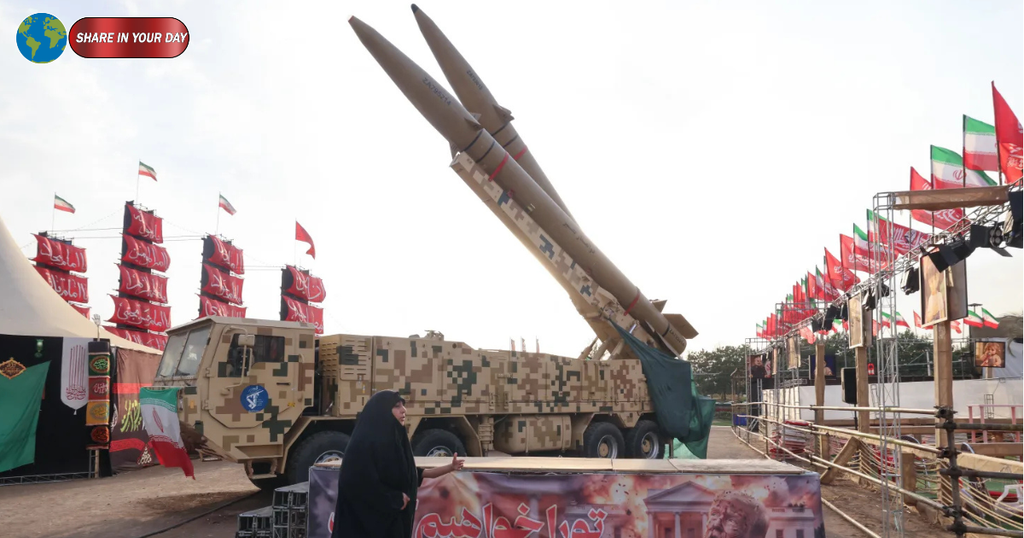
The latest escalation follows new U.S. strikes on Iranian military targets, including positions associated with the Islamic Revolutionary Guard Corps, or IRGC. Iran responded with missile and drone attacks aimed at U.S. military interests in countries including Jordan, Bahrain and Iraq. RReuters+1
The developments mark a sharp reversal after a period of relative calm.
At the center of the confrontation is the Strait of Hormuz, one of the world’s most strategically important waterways. Any prolonged disruption could have consequences far beyond the Middle East, affecting oil supplies, shipping costs and global financial markets.
Here are five major developments to watch.
1. Iran war escalates after new U.S. strikes
The latest confrontation began with a renewed American military campaign against Iranian targets.
The U.S. military said its latest wave of strikes targeted IRGC infrastructure and other military capabilities. Reuters reported that the operation included attacks on air-defense systems, radar installations, maritime assets, mine-laying capabilities and communications facilities. RReuters
The strikes came after Washington accused Iran of threatening U.S. forces and commercial shipping in the region.
The conflict had entered a period of relative lull. That pause now appears to have ended.
Reuters described Wednesday’s fighting as the most significant exchange of fire between Washington and Tehran since July, with U.S. forces striking Iran’s southern coast while Iran launched attacks against American positions across the region. RReuters
The renewed attacks raise an important question: Can the conflict remain limited to U.S. and Iranian forces?
For now, the answer is uncertain.
The geography of the fighting makes escalation particularly difficult to contain because American forces operate from bases across the Gulf and nearby countries.
That means Iran can retaliate against U.S. interests without necessarily striking the American mainland.
2. Iran targets U.S. interests in Jordan and Bahrain
Iran’s response has expanded the conflict beyond Iranian territory.
Iranian forces launched missiles and drones toward U.S. military interests in Jordan, Bahrain and Iraq, according to multiple reports. Kuwait also reported intercepting drones. AAP News+1
The attacks are significant because both Jordan and Bahrain are important U.S. security partners.
Bahrain hosts the U.S. Navy’s Fifth Fleet, making the country a critical component of America’s military presence in the Persian Gulf.
Jordan, meanwhile, has long been an important U.S. security partner and hosts American military personnel and facilities.
Any repeated attacks on these locations could place governments in an increasingly difficult position.
They must protect their own territory while maintaining relationships with Washington. At the same time, they face the possibility that further involvement could make them targets for Iranian retaliation.
Iran’s Islamic Revolutionary Guard Corps has also issued increasingly forceful warnings to Arab countries hosting U.S. forces. Current reporting says the IRGC has demanded that regional governments expel American forces or face a severe response. TThe Jerusalem Post
That threat could create additional pressure on U.S. allies across the Gulf.
3. The Strait of Hormuz is becoming the central battlefield
The most important economic dimension of the conflict may be the Strait of Hormuz.
The narrow waterway connects the Persian Gulf with the Gulf of Oman and the Arabian Sea. It is a crucial route for global energy shipments.
That makes the strait strategically important to both sides.
For Iran, control or disruption of shipping through Hormuz provides a powerful form of leverage.
For the United States, keeping the waterway open is closely tied to protecting commercial shipping and preventing a broader global energy crisis.
Recent fighting has already affected maritime traffic.
Reuters reported that 17 million barrels of crude passed through the strait on Monday, a wartime high, even as attacks on shipping continued. The report also said exchanges of fire involving two tankers exiting Hormuz had disrupted the crucial route. RReuters
The United States has also moved toward a more aggressive approach to Iranian shipping.
Axios reported that American forces struck two Iranian government-owned tankers as part of what officials described as a new “tanker for tanker” policy. The broader operation reportedly involved roughly 100 targets. AAxios
That represents a potentially important change.
Instead of simply trying to defend commercial shipping, Washington is increasingly targeting Iranian maritime capabilities and assets.
If that strategy continues, the risk of additional confrontations at sea could rise sharply.
4. Trump warns Iran of tougher consequences
President Donald Trump has repeatedly warned Tehran against retaliating against American forces.
The latest escalation now puts those warnings to the test.
Trump has threatened that Iran would face even more severe consequences if it attacks U.S. personnel or interests. Reuters reported that the president threatened further strikes while Tehran accused Washington of causing civilian casualties in southern Iran. RReuters
The two sides therefore appear locked in a dangerous cycle.
The United States says its military actions are designed to stop threats against American personnel and commercial shipping.
Iran says American strikes justify retaliation.
Each side then uses the other’s actions as justification for another round of attacks.
That dynamic is one of the biggest reasons analysts are concerned about a wider war.
A single strike causing significant American, Iranian or allied casualties could produce pressure for an even larger response.
That could make diplomacy much harder.
5. Civilian casualties are adding pressure
The latest U.S. strikes have also generated controversy over civilian casualties.
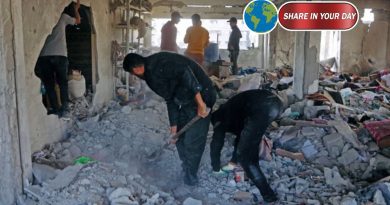
Iranian authorities said an American strike near Sirik in southern Iran hit a location where a wedding was taking place, killing at least five people and injuring dozens. Reuters and AP both reported Iranian claims of civilian casualties, while the United States said civilians were not intentionally targeted. RReuters+1
The allegations have become another source of tension.
Civilian deaths can dramatically increase political pressure on governments involved in a war.
For Iran, reports of civilian casualties provide another argument for retaliation.
For Washington, the incidents increase scrutiny over the targeting decisions behind its military campaign.
The conflicting accounts also highlight the difficulty of establishing facts during active combat.
More information is likely to emerge as investigators assess the damage and independent reporting becomes possible.
Why the Iran war matters to oil markets
The Iran war escalates at a particularly sensitive location for global energy markets.
The Strait of Hormuz is not simply another shipping route.
It is a critical artery for the international oil market.
Any prolonged disruption could force energy companies to reroute shipments, increase insurance costs and rely more heavily on alternative transportation routes.
That could push crude prices higher.
The consequences would not necessarily be limited to gasoline prices.
Higher oil prices can raise transportation costs, increase production expenses and contribute to broader inflation.
For central banks, that creates a difficult problem.
A geopolitical shock can increase prices at the same time that weaker economic confidence reduces growth.
That combination can complicate decisions over interest rates.
Financial markets therefore have a major reason to monitor every development in the Gulf.
Why Jordan and Bahrain matter
The attacks on Jordan and Bahrain are especially significant because they demonstrate how quickly the conflict can spread.
Neither country is Iran.
Yet both are closely connected to the U.S. military presence in the region.
Bahrain’s strategic importance comes largely from the presence of the U.S. Navy’s Fifth Fleet.
Jordan has also served as an important base for American military operations and regional security cooperation.
If attacks on U.S. facilities continue, Washington could face pressure to strengthen defenses in both countries.
That could mean additional air-defense deployments, fighter aircraft, naval assets or other military resources.
At the same time, regional governments may seek to avoid becoming direct participants in the war.
That balancing act could become increasingly difficult if Iranian attacks continue.
What the IRGC wants
The Islamic Revolutionary Guard Corps is central to Iran’s military strategy.
The IRGC operates separately from Iran’s conventional military structure and plays a major role in the country’s missile, drone and maritime capabilities.
Its involvement also makes the conflict particularly difficult to resolve through traditional diplomatic channels.
Current reporting indicates that the IRGC is demanding that Arab states remove U.S. forces from their territory. TThe Jerusalem Post
That demand strikes directly at the foundation of the American security architecture in the Gulf.
The United States maintains military facilities throughout the region because of longstanding security relationships, energy interests and the need to deter threats.
Iran’s strategy, meanwhile, is aimed at raising the cost of that American presence.
The attacks on Jordan, Bahrain and Iraq fit that broader approach.
The risk of a wider Middle East war
The latest fighting raises concerns about a conflict that could expand beyond U.S. and Iranian forces.
The Middle East already contains multiple overlapping conflicts and rivalries.
Iran has relationships with armed groups in Iraq and Lebanon, while Israel remains deeply involved in the broader confrontation with Tehran.
A major escalation could therefore activate additional fronts.
That is why even a relatively limited attack can have consequences far beyond its immediate target.
For example, an attack on a U.S. base could trigger an American response against an Iranian military facility.
That strike could then provoke another Iranian attack on shipping.
A maritime attack could affect oil prices.
Higher energy prices could then affect consumers and financial markets around the world.
The chain reaction can move quickly.
Diplomacy faces a difficult test
Despite the military escalation, diplomacy remains possible.
Neither Washington nor Tehran necessarily benefits from an uncontrolled regional war.
The economic costs are enormous.
The military risks are also substantial.
However, the positions of the two sides remain far apart.
The United States wants to prevent Iran from threatening American forces and commercial shipping while maintaining pressure on Tehran.
Iran wants to resist American military pressure and preserve its ability to operate in the region.
The Strait of Hormuz has become one of the key bargaining points.
Who controls access to the waterway — and under what conditions — could become central to any future arrangement.
What happens next?
The next several days could determine whether the latest escalation becomes another short exchange or the beginning of a much larger phase of the war.
Three developments will be especially important.
First, markets will watch the Strait of Hormuz.
Any sustained decline in shipping would likely increase concern over energy supplies.
Second, governments will watch for casualties among U.S. forces.
A large number of American deaths could dramatically increase political pressure on the Trump administration to expand military operations.
Third, regional governments will watch whether Iranian attacks continue.
If Jordan, Bahrain, Iraq or other U.S. partners face repeated strikes, Washington could increase its military response.
That could create a cycle of escalation that becomes increasingly difficult to stop.
A dangerous new phase for the Iran conflict
The Iran war escalates as the United States and Iran return to direct military confrontation after a period of relative calm.
The latest fighting is significant because it is no longer confined to Iran.
American allies and U.S. military positions across the region are now part of the battlefield.
At the same time, the Strait of Hormuz remains a critical pressure point.
The waterway connects the military conflict to the global economy. Any serious disruption could affect oil prices, shipping costs and inflation far beyond the Middle East.
For President Trump, the challenge is balancing military pressure against the risk of a wider war.
For Iran, the challenge is retaliating against the United States without triggering an overwhelming American response.
And for countries such as Jordan and Bahrain, the challenge is protecting their territory while avoiding being dragged further into a conflict they did not start.
For global markets, the immediate question is simple: How far will this escalation go?
The answer may depend on what happens next in the skies over Iran, around U.S. bases in the region and, perhaps most importantly, in the narrow waters of the Strait of Hormuz.