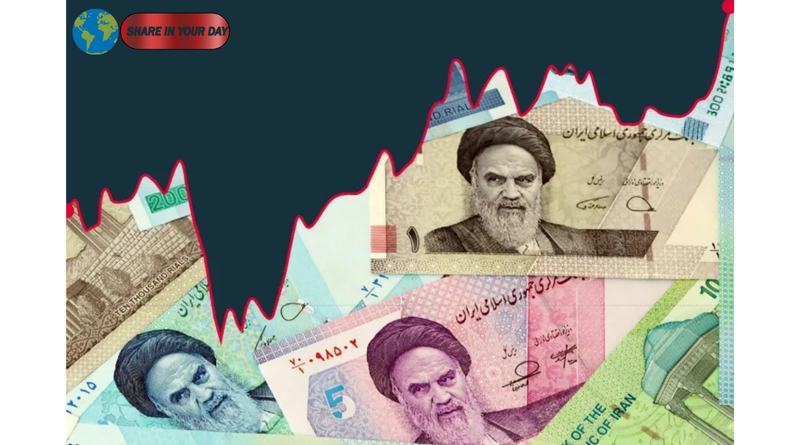
The Iran rial crisis has reached a dramatic new milestone, with the Iranian currency falling to around 2 million rials for one US dollar on the open market. The historic exchange-rate collapse is intensifying pressure on households already struggling with soaring prices, shortages and declining purchasing power.
The milestone is more than a striking currency statistic. For ordinary Iranians, the weakening rial directly affects the cost of food, medicine, imported products, fuel and other essentials. As the currency loses value, salaries and savings also become worth less when measured against the goods people need to buy.
The development comes as Iran faces an extraordinary combination of US sanctions, economic isolation and the continuing consequences of the US-Israel war. Al Jazeera reported that the rial’s latest decline has pushed the currency to an all-time low, leaving people increasingly unable to keep pace with rising prices.
Iran rial crisis pushes currency beyond historic threshold
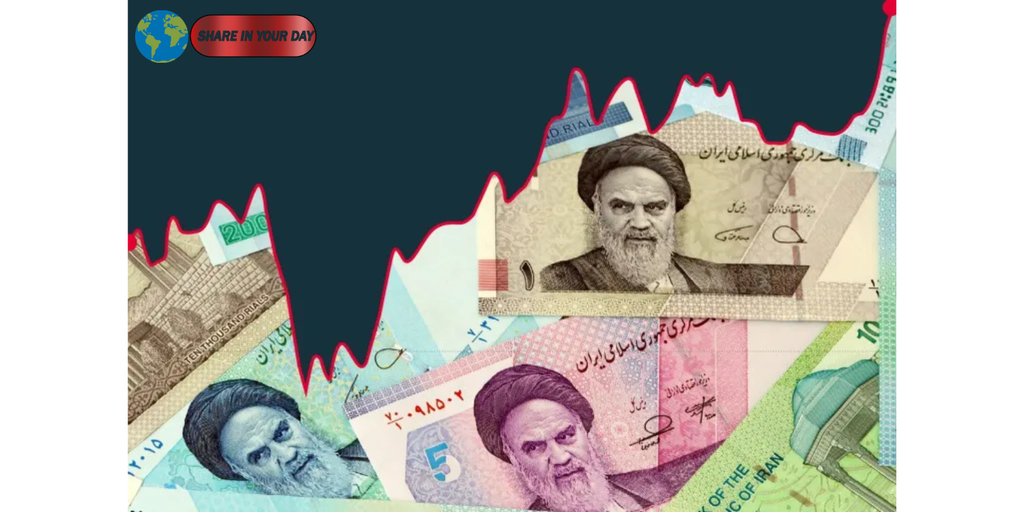
The Iranian rial has been under sustained pressure for years, but crossing the 2-million-rial-per-dollar level represents a particularly powerful psychological milestone.
Market data on August 26 showed the dollar trading at roughly 2.02 million rials, although the exchange rate can move rapidly in Iran’s open market. One market tracker reported a rate around 2.02 million rials on Wednesday, with intraday prices moving above and below that level.
The rate also reflects the difference between Iran’s official and open-market currency systems. The government has historically maintained preferential exchange rates for certain transactions, while ordinary consumers and businesses can face dramatically different rates in the open market.
That gap makes the headline exchange rate particularly important for understanding the real economic pressure facing households and businesses.
What does 2 million rials buy in Iran?
The simple conversion of $1 into roughly 2 million rials can be misleading.
A large number of rials does not mean that Iranians suddenly have more spending power. It means the opposite: each rial buys substantially less than it once did.
For people receiving their income in rials, the collapse creates a difficult race between wages and prices.
If wages rise more slowly than the cost of food and other necessities, household purchasing power falls. If people have savings in rials, those savings can also lose value quickly as the exchange rate deteriorates.
The result is that a currency crisis eventually becomes a cost-of-living crisis.
Food prices become a major concern
Food is among the most immediate areas where currency weakness can affect ordinary families.
Iran produces many agricultural products domestically, meaning not every food item is directly linked to the dollar. However, agriculture and food production can still depend on imported machinery, ingredients, packaging, animal feed, fertilizers and other inputs.
When the rial loses value, imported components become more expensive.
Businesses may respond by increasing prices. Consumers then face higher grocery bills, while families may have to reduce the quantity or quality of what they buy.
This is particularly damaging when inflation is already extremely high.
The Iran rial crisis is eroding household purchasing power
Currency depreciation is especially painful for workers whose income remains fixed in rials.
Imagine a worker whose salary is negotiated months in advance. If the rial suddenly loses a large portion of its value, that person’s nominal salary may remain unchanged while food, household products and imported goods become more expensive.
The worker effectively becomes poorer without receiving a formal pay cut.
This is one reason currency depreciation can create such severe social pressure.
Savings face a similar problem.
A household that keeps its savings in cash rials may discover that money accumulated over years can purchase significantly less after a sharp currency decline.
That encourages people who can afford to do so to seek alternative stores of value, including foreign currency, gold or other assets.
Why is the Iranian rial collapsing?
The latest decline is not the result of a single event.
Iran has faced long-running economic pressure from US sanctions, restrictions on international financial transactions and difficulties accessing foreign currency. The continuing war has added another layer of uncertainty and disruption.
Al Jazeera reported that sanctions and the US-Israel war have contributed to the latest deterioration in the currency’s value.
Other reporting has also linked the currency’s latest collapse to intensifying economic pressure on Tehran.
The National reported on August 26 that Iranian bazaar merchants were being squeezed by the combination of currency depreciation, inflation and falling living standards.
Meanwhile, Reuters reported that the conflict has evolved into a prolonged economic and energy confrontation, with Iran’s oil exports suffering a major decline.
Sanctions make access to foreign currency harder
Foreign currency is essential for countries that need to import products, technology, machinery and raw materials.
Iran has significant energy resources and a large domestic economy, but sanctions make international transactions substantially more difficult.
Restrictions can increase the cost of trade and limit the channels through which companies obtain dollars and other foreign currencies.
That puts additional pressure on the rial.
When businesses and consumers expect the currency to weaken further, demand for dollars can increase. That can push the open-market exchange rate even lower, creating a vicious cycle.
Inflation makes the currency problem worse
A collapsing currency and high inflation can reinforce each other.
When imported products become more expensive because of a weaker rial, businesses often face higher costs. Those costs can eventually reach consumers through higher prices.
At the same time, if people expect prices to rise further, they may accelerate purchases rather than holding cash.
That behavior can increase demand for goods and foreign currency, adding further pressure to the economy.
Iran therefore faces a difficult economic feedback loop.
A weaker rial raises costs.
Higher costs reduce purchasing power.
Falling purchasing power increases economic uncertainty.
And uncertainty can increase demand for assets perceived as safer than the local currency.
Iran’s official exchange rate adds another layer
The 2-million-rial figure refers to the open-market environment, not necessarily every official transaction in Iran.
The country has operated with multiple exchange rates, including preferential rates for certain essential imports.
Earlier this year, Al Jazeera reported that Iran planned to use an official rate of 285,000 rials per dollar for certain essential-goods imports, compared with an open-market rate that had already reached around 1.55 million rials at the time.
That enormous difference illustrates the complexity of Iran’s currency system.
For ordinary people, however, the open-market rate remains an important indicator of economic confidence because it reflects what participants are willing to pay for dollars outside preferential official channels.
Businesses are caught between rising costs and weaker demand
The currency crisis also creates a major problem for Iranian businesses.
Importers have to pay more rials to obtain the same amount of foreign currency.
Manufacturers may face higher prices for imported machinery and components.
Retailers can struggle to predict replacement costs.
At the same time, consumers have less money available to spend.
That combination creates a difficult environment in which businesses face both rising costs and weaker demand.
Some companies may respond by reducing product sizes, changing suppliers or increasing prices. Others may delay investment because the economic outlook is too uncertain.
The impact extends beyond imported products
It would be a mistake to assume that only imported goods are affected by the rial’s collapse.
Even products made inside Iran can become more expensive when production depends on imported materials, equipment or transportation.
There is also an expectation effect.
If consumers believe that prices will rise tomorrow, sellers may adjust prices today.
That means currency depreciation can influence domestic prices even when a product is technically produced locally.
The result is a broader inflationary environment.
Fuel and energy add to the pressure
Iran has historically benefited from heavily subsidized energy prices, particularly gasoline.
That system has helped keep fuel relatively cheap for consumers, but it also places a major burden on government finances.
Recent reporting indicates that Iran is facing significant fuel shortages and long queues at petrol stations amid the broader economic and wartime pressure. The Financial Times reported that Iran’s fuel system is experiencing a substantial daily supply shortfall.
Fuel problems can have consequences far beyond the price paid at a petrol station.
Transportation costs affect food distribution, manufacturing and retail.
If fuel becomes harder to obtain, businesses can face additional operating costs, while consumers can experience shortages or delays.
What the 2 million rial milestone means for Iranians
The psychological importance of the 2-million-rial threshold should not be underestimated.
Exchange rates are not just financial statistics. They can become symbols of economic confidence.
For Iranian households, each new record low raises questions about what their money will be worth next week or next month.
That uncertainty can change everyday behavior.
People may spend money sooner rather than later.
Others may attempt to buy dollars or gold.
Businesses may adjust prices more frequently.
Workers may demand higher wages.
Landlords and service providers may also seek to protect themselves against future depreciation.
These reactions can make inflation more difficult to control.
Could the rial recover?
A sustained recovery would likely require more than a temporary intervention in the foreign-exchange market.
Iran would need greater access to foreign currency, stronger economic confidence and improved conditions for international trade.
A reduction in geopolitical tensions could also help.
However, the immediate environment remains extremely difficult.
Reuters reported on August 26 that the US-Iran conflict had settled into a prolonged economic confrontation, while Iran’s oil exports had suffered a major decline.
That means pressure on government revenues and foreign-exchange availability could remain substantial.
The wider consequences for Iran’s economy
The Iran rial crisis is ultimately about much more than the exchange rate.
A weak currency affects household savings, business investment, imports, wages and government finances.
It can also widen the gap between people who have access to foreign currency or hard assets and those whose wealth is held primarily in rials.
That creates an unequal economic environment.
People with dollar savings, gold or overseas assets may have greater protection against depreciation. Workers dependent entirely on rial income have far fewer options.
This makes currency collapse particularly painful for lower- and middle-income households.
Iran’s economic challenge is becoming harder to ignore
The rial’s fall to around 2 million per dollar is an unmistakable warning sign for Iran’s economy.
The figure itself is dramatic, but its real significance lies in what it represents: declining confidence, shrinking purchasing power and a growing struggle for households to keep up with prices.
The country still has major economic resources, including oil and gas reserves, a large population and substantial domestic production capacity.
But those strengths cannot fully protect consumers from currency instability when sanctions, war and inflation combine.
The immediate question is therefore not simply how many rials one US dollar can buy.
It is how much less those rials will buy tomorrow.
For millions of Iranians, that is the question that matters most.
Final Takeaway
The Iran rial crisis has entered a new and highly visible phase after the currency fell to around 2 million rials per US dollar on the open market.
The milestone highlights the extraordinary pressure facing Iran’s economy as sanctions, war-related disruption, inflation and limited access to foreign currency collide.
For ordinary people, the consequences are measured not in exchange-rate charts but in grocery bills, shrinking savings and increasingly uncertain household budgets.
Unless economic and geopolitical conditions improve, the pressure on the rial and on Iranian living standards could remain severe.