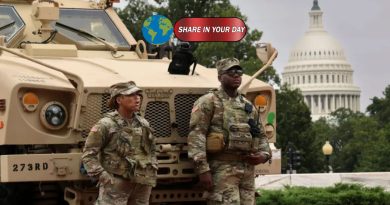
US Cancels South Korea Military Drill Amid Iran War
The US South Korea military drill scheduled for next month has been canceled as Washington faces growing demands on its forces because of the war in Iran. The decision means the United States will not participate in a major amphibious landing exercise with South Korea, adding to concerns about the future of joint military training between the two allies.
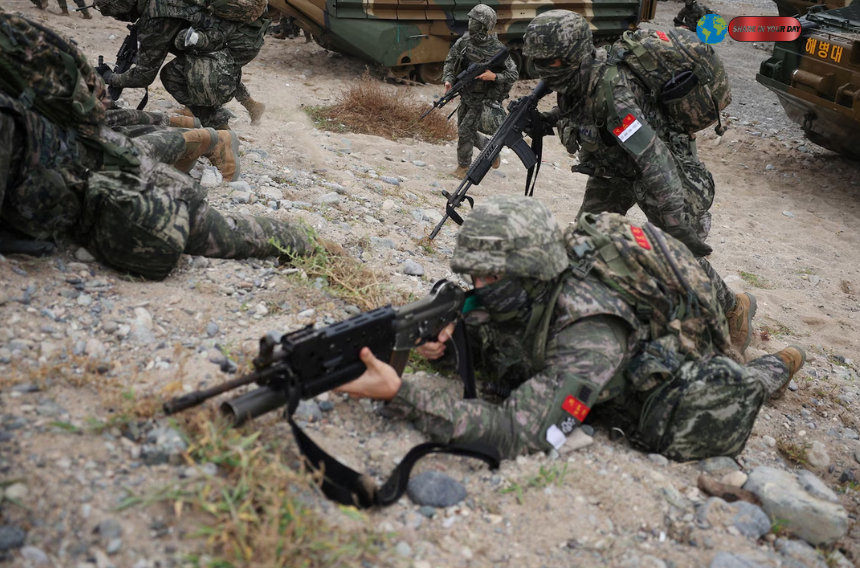
The canceled exercise, known as Ssangyong, was scheduled for September and is designed to strengthen the ability of U.S. and South Korean forces to conduct large-scale amphibious operations. South Korea’s Marine Corps said the United States informed Seoul about the cancellation in June.
The move comes at a sensitive moment for the U.S.-South Korea alliance.
Washington is increasingly focused on the Middle East, where the ongoing conflict with Iran is placing additional demands on American military personnel and equipment. At the same time, President Donald Trump has ordered reductions in other joint military activities with South Korea and has renewed his interest in improving relations with North Korean leader Kim Jong Un.
Together, those developments are raising questions about whether the United States is beginning to shift its military priorities away from the Korean Peninsula.
Why the US South Korea Military Drill Was Canceled
The immediate reason for the cancellation is the shortage of available U.S. forces.
American military resources are heavily committed to the Iran conflict, limiting Washington’s ability to support major exercises elsewhere. Reuters reported that the U.S. Marine Corps informed South Korea that the Ssangyong exercise would not proceed as planned because of the demands created by the war.
The exercise involves substantial numbers of personnel, ships, aircraft and other military assets.
Large amphibious drills are particularly demanding because they require extensive coordination between naval, air and ground forces. They also involve moving troops and equipment over significant distances, making them difficult to conduct when the U.S. military is already operating under pressure in another region.
South Korean officials have indicated that the two countries remain in discussions about the possibility of resuming the exercise in the future.
That suggests the cancellation is not necessarily a permanent end to Ssangyong. Instead, it reflects the current strain on U.S. military resources.
What Is the Ssangyong Exercise?
The Ssangyong exercise is one of the most important combined amphibious training events conducted by the United States and South Korea.
Its purpose is to improve the two countries’ ability to coordinate large-scale operations in a crisis on the Korean Peninsula.
Amphibious operations are especially important in military planning because they can allow forces to move personnel and equipment from sea to land. Training for such operations requires complex coordination and extensive preparation.
The exercise resumed in recent years after a period of suspension.
Its cancellation therefore represents more than the loss of a single training event. It removes an opportunity for U.S. and South Korean forces to practice together on a scale that is difficult to replicate through smaller exercises.
Cancellation Comes After Trump Cut Other Drills
The decision to cancel the September exercise comes only days after Trump ordered the Pentagon to substantially reduce other military exercises with South Korea.
Trump criticized the cost of joint drills and argued that they could send an inappropriate signal to North Korea. He also pointed to his relationship with Kim Jong Un and South Korea’s decision not to participate in U.S. military operations connected to Iran.
The most prominent example was the Ulchi Freedom Shield exercise.
The annual exercise began on August 17 but was shortened significantly at the request of the United States. South Korea’s Joint Chiefs of Staff said the exercise would end on August 21 instead of continuing for its originally planned duration.
That decision immediately generated concern in Seoul.
South Korean officials have continued to emphasize the importance of the U.S. alliance, even as Washington pushes for fewer large-scale exercises.
South Korea Faces a Difficult Security Calculation
For South Korea, joint military exercises are closely connected to deterrence against North Korea.
Seoul relies heavily on its alliance with Washington, including the presence of U.S. forces and the ability of the two militaries to operate together during a crisis.
Any reduction in training can therefore raise questions about readiness.
The issue is particularly sensitive because North Korea continues to maintain significant conventional and missile capabilities. Pyongyang has historically condemned U.S.-South Korean exercises as preparations for an invasion.
Yet the opposite argument also exists.
Supporters of reducing the exercises say they can lower tensions with North Korea and create more space for diplomacy. Trump’s outreach to Kim Jong Un appears to be part of that broader approach.
The challenge for Seoul is finding a balance between diplomacy and military preparedness.
Trump Wants a Different Approach to North Korea
Trump’s decision comes alongside a renewed effort to improve relations with Kim Jong Un.
The president has praised his relationship with the North Korean leader and has argued that Pyongyang has been relatively respectful toward his administration. He has also criticized exercises that North Korea considers provocative.
That represents a significant policy shift.
For decades, Washington and Seoul have treated large joint exercises as a central part of maintaining military readiness. Reducing them can potentially create diplomatic opportunities, but it can also make South Korea question how much Washington is willing to invest in its defense.
Reuters reported that Trump’s approach has already caused concern among U.S. allies across Asia about the reliability of American security commitments.
Those concerns extend beyond South Korea.
Japan, Taiwan and other U.S. partners are watching developments closely because American military resources are increasingly being redirected toward the Middle East.
The Iran War Is Changing U.S. Military Priorities
The cancellation of the South Korea exercise cannot be separated from the wider conflict involving Iran.
The United States has moved significant military resources toward the Middle East, creating pressure on personnel and equipment that would otherwise be available for operations and exercises in the Indo-Pacific.
The shift has already affected the American military presence in Asia.
Reuters reported that more than 2,000 U.S. Marines were redeployed from Japan and that the aircraft carrier USS George Washington was reassigned to the Middle East.
Those movements illustrate the difficult choices facing the Pentagon.
Military forces cannot be everywhere at once.
When a major conflict demands additional ships, aircraft, troops and support capabilities, exercises in other regions can become easier targets for cancellation or reduction.
South Korea Still Emphasizes the Alliance
Despite the cancellations, Seoul has continued to stress that the alliance with Washington remains essential.
On August 24, South Korean Foreign Minister Cho Hyun spoke by phone with U.S. Secretary of State Marco Rubio. According to South Korean officials, the two sides reaffirmed the importance of close coordination over North Korea and maintaining a strong joint defense posture.
The conversation is important because it demonstrates that military exercises are only one part of the broader alliance.
The United States and South Korea continue to cooperate on diplomacy, intelligence, defense planning and the North Korean nuclear issue.
However, military training remains a visible symbol of the alliance.
That is why cancellations can have an impact beyond the immediate loss of a particular exercise.
North Korea Could Watch the Changes Closely
Pyongyang is likely to pay close attention to the reduction in U.S.-South Korean military activities.
North Korea has repeatedly demanded an end to joint exercises, describing them as threats to its security. Washington’s decision to reduce some drills could therefore be welcomed by the North Korean government.
But reduced exercises do not automatically mean reduced tensions.
Reuters reported that North Korea launched 10 short-range ballistic missiles around the period of the scaled-back U.S.-South Korean drills and continued criticizing the exercises.
That response demonstrates the complicated nature of deterrence on the peninsula.
Even when the United States and South Korea reduce military activities, North Korea may continue developing and testing its own weapons.
Could the Cancellation Weaken Deterrence?
The central question for analysts is whether fewer exercises will meaningfully weaken deterrence.
The answer is not simple.
A single canceled drill does not eliminate the combined military capabilities of the United States and South Korea. Both countries retain substantial forces, advanced weapons and established command structures.
However, regular exercises are important because they allow personnel to practice procedures before a real crisis occurs.
Large-scale training can also demonstrate political commitment.
For South Korea, the concern may therefore be less about the loss of one exercise and more about the direction of U.S. policy.
If cancellations remain temporary and are driven primarily by the Iran conflict, their long-term effect could be limited.
If reductions become a lasting feature of the alliance, however, the strategic consequences could be much greater.
Washington’s Asian Allies Are Also Watching
The implications extend beyond the Korean Peninsula.
U.S. allies throughout Asia rely on American military power to deter potential threats. Any visible reduction in U.S. military activity can lead those countries to reassess their own defense strategies.
Reuters reported that concerns about American reliability are emerging in Japan, Taiwan and India as Washington reallocates resources and pursues a more transactional approach to alliances.
That could encourage some countries to increase defense spending or seek stronger independent military capabilities.
South Korea already has one of the world’s most advanced conventional militaries.
However, its alliance with the United States remains a critical part of its national security strategy, particularly because North Korea possesses nuclear weapons.
What Happens Next?
The immediate focus will be on the continuing U.S. military commitment to the Middle East and whether the pressure on American forces begins to ease.
If the Iran conflict continues to require large numbers of U.S. troops and military assets, further changes to overseas exercises could become possible.
For South Korea, the key issue will be whether Washington’s reduction in military exercises remains temporary.
The two countries have said they will continue discussing future training opportunities, suggesting that joint exercises have not been abandoned altogether.
The diplomatic track with North Korea will also be closely watched.
If Trump succeeds in reopening direct dialogue with Kim Jong Un, Washington could maintain its argument that fewer exercises can support diplomacy.
If talks fail, pressure may grow for the United States and South Korea to restore larger-scale military training.
A Major Test for the U.S.-South Korea Alliance
The cancellation of the September US South Korea military drill is more than a scheduling change.
It reflects the growing pressure on U.S. military resources created by the Iran war, while also highlighting a broader shift in Washington’s approach to military exercises and North Korea.
For Seoul, the challenge is to preserve military readiness without closing the door to diplomacy.
For Washington, the challenge is balancing competing security priorities across two strategically important regions.
And for North Korea, the changes provide an opportunity to test whether reduced military activity creates room for diplomatic leverage.
The cancellation of Ssangyong does not mean the U.S.-South Korea alliance is ending. But combined with the earlier reduction of Ulchi Freedom Shield, it has created a moment of uncertainty that allies and adversaries across Asia will be watching closely.
For now, one fact is clear: the United States will not join South Korea’s planned September amphibious exercise, with the Iran war and the resulting strain on American military resources driving the decision.