Sonos Beam Ultra brings 7.1.2 Dolby Atmos to a compact soundbar
The Sonos Beam Ultra is officially here, giving Sonos’ compact soundbar lineup a major audio upgrade while keeping the footprint surprisingly small. Priced at $699, the new soundbar adds true 7.1.2 Dolby Atmos, nine drivers, improved bass and AI-powered speech enhancement.
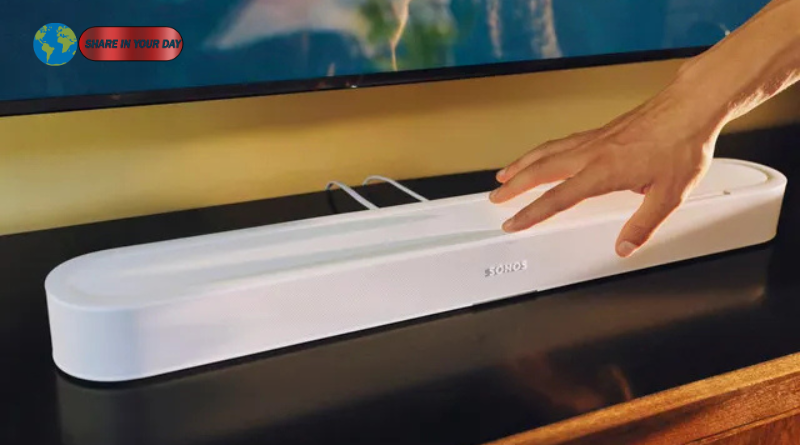
Sonos announced the Beam Ultra on Sept. 1 alongside the new Sonos Ace Ultra headphones and the company’s updated Sonos 27 audio platform. Preorders are now available, while general availability is scheduled for Sept. 29, 2026.
The launch represents a significant step up from the previous Beam generation. Instead of relying primarily on virtualized Atmos effects, the Beam Ultra uses dedicated upward-firing drivers to create actual height channels for compatible Dolby Atmos content.
That makes the new model particularly interesting for viewers who want a more immersive home theater experience without installing a large soundbar or a full surround-speaker system.
Sonos Beam Ultra delivers true Dolby Atmos
The biggest upgrade in the Sonos Beam Ultra is its Dolby Atmos architecture.
Sonos says the soundbar can produce true 7.1.2 Dolby Atmos. The configuration includes seven horizontal surround channels, a subwoofer channel and two height channels designed to create the impression of sound coming from above.
Two of the Beam Ultra’s five tweeters fire upward through directional horns. Those dedicated drivers are designed to reproduce spatial and overhead effects in Dolby Atmos movies, shows and music.
This is an important distinction for a compact soundbar.
Traditional virtualized surround systems can simulate height and surround effects through audio processing. The Beam Ultra instead combines processing with physical upward-firing drivers, giving it dedicated hardware for the vertical component of Atmos.
For viewers, that could make scenes involving helicopters, aircraft, rain, explosions and other overhead effects feel more convincing.
Sonos also says the Beam Ultra supports Dolby Atmos Music, allowing compatible music tracks to take advantage of its spatial-audio capabilities.
Sonos Beam Ultra packs nine drivers
The Beam Ultra’s compact design hides a relatively sophisticated speaker system.
Inside are nine Class-D amplifiers, five tweeters and four low-profile woofers. The tweeter arrangement includes a forward-firing center tweeter, two side-firing horn-loaded tweeters and two upward-firing tweeters.
The four woofers are designed to provide stronger low-frequency performance while maintaining the soundbar’s relatively slim profile.
That balance is central to the Beam Ultra’s appeal. Many consumers want better TV audio but do not necessarily want a large soundbar dominating the space beneath their television.
The Beam Ultra measures approximately 29.53 inches wide, 2.48 inches high and 4.13 inches deep. It weighs about 6.35 pounds.
In other words, Sonos has increased the audio hardware considerably without turning the Beam Ultra into a massive home theater component.
AI Speech Enhancement targets a common TV problem
Immersive sound is only useful if viewers can understand what characters are saying.
For that reason, Sonos has placed considerable emphasis on dialogue clarity with the Beam Ultra. The soundbar features AI Speech Enhancement, which uses artificial intelligence to detect human voices and improve dialogue clarity.
Users can choose from four levels of Speech Enhancement through the Sonos app.
That could be particularly useful during movies and television programs where quiet dialogue is followed by loud music or action sequences.
Instead of simply turning up the overall volume, viewers can increase speech enhancement to make voices easier to follow.
The Beam Ultra also includes Night Sound, which reduces the intensity of louder sounds while making quieter details easier to hear. That feature is designed for late-night viewing when users want to avoid waking other people in the house.
Sonos Beam Ultra uses Trueplay room tuning
Room acoustics can have a major impact on the performance of a soundbar.
The same speaker can sound noticeably different in a small bedroom, an open-plan living room or a room with hard reflective surfaces. Sonos addresses that problem through its Trueplay tuning technology.
Trueplay analyzes the acoustics of the listening environment and adjusts the Beam Ultra’s sound accordingly. The company says the system can tune the soundbar to different room configurations.
That matters even more for Dolby Atmos.
Upward-firing speakers depend partly on the room’s ceiling and surrounding surfaces to create the perception of overhead audio. A well-tuned system can therefore make the spatial effect more convincing.
The Beam Ultra also includes microphones with beamforming and multichannel echo cancellation. Those microphones support voice control, Trueplay tuning and connections with compatible Sonos speakers.
Compact design remains a major selling point
Despite the significant internal changes, the Sonos Beam Ultra still looks like a compact Beam-family soundbar.
Sonos describes the product as having a design nearly the same size as the existing Beam, while delivering a substantially different audio experience.
That makes the Beam Ultra an intriguing middle ground in Sonos’ lineup.
At the lower end, Sonos offers smaller and less expensive options designed for straightforward TV upgrades. At the premium end, the Arc Ultra is built for larger rooms and more demanding home theater setups.
The Beam Ultra sits between those extremes.
Sonos’ own comparison places the Beam Ultra at $699, while the Arc Ultra is positioned as the company’s larger premium soundbar. The Beam Ultra offers 7.1.2 Dolby Atmos and nine drivers, whereas the Arc Ultra uses a larger configuration with additional drivers and Sound Motion technology.
For people who want immersive audio but do not have the room or budget for a full premium system, that positioning could be attractive.
Sonos Beam Ultra can grow into a larger system
Another advantage of the Beam Ultra is that it does not have to remain a standalone soundbar.
Sonos designed it as the starting point for a broader home theater system. Owners can add a Sonos subwoofer for deeper bass and compatible surround speakers for a more enveloping experience.
This approach gives buyers the option of starting with a relatively simple setup and expanding later.
For example, someone could initially connect the Beam Ultra to a television and use it on its own. Later, they could add a subwoofer and rear speakers without replacing the original soundbar.
The Beam Ultra can also participate in Sonos’ broader multi-room ecosystem.
Sonos says its products can work together across rooms, allowing users to expand their audio setup over time. The company’s updated Sonos 27 platform is designed to further connect the company’s newer hardware and existing ecosystem.
Connectivity includes HDMI eARC and Bluetooth
The Beam Ultra is designed to work with modern televisions and streaming devices.
Connectivity includes Wi-Fi, Bluetooth and HDMI eARC. It also supports Apple AirPlay 2 and works with a television’s existing remote control.
HDMI eARC is especially important for users who want to take advantage of higher-quality Dolby Atmos formats.
Sonos lists support for Dolby Atmos through Dolby Digital Plus and Dolby TrueHD, as well as several other home theater formats. Some of the higher-bandwidth formats require an HDMI eARC connection.
Setup is designed to be relatively straightforward. Sonos says users can connect the Beam Ultra to their TV and use the Sonos app to complete the setup process.
The company also includes an HDMI cable in the box.
Sonos Beam Ultra price and release date
The Sonos Beam Ultra price is $699 in the United States.
Preorders opened on Sept. 1, 2026, through Sonos and select retail partners. General availability is scheduled for Sept. 29, 2026.
The soundbar will be available in black and white, giving buyers the choice between two understated finishes.
At $699, the Beam Ultra is not a budget soundbar. However, its price also reflects the combination of dedicated Atmos hardware, room tuning, AI-powered dialogue enhancement and access to the wider Sonos ecosystem.
The value proposition will therefore depend heavily on what a buyer wants.
Someone looking for a basic speaker to make TV dialogue louder may not need the Beam Ultra. But consumers interested in a compact Dolby Atmos system that can grow over time may find the product considerably more compelling.
Is the Sonos Beam Ultra worth $699?
The answer will ultimately depend on room size, listening habits and whether buyers plan to expand their system.
For a smaller or medium-sized room, the Beam Ultra could provide a strong balance between size and performance. Its nine-driver architecture and dedicated upward-firing tweeters give it capabilities that go well beyond a conventional compact TV soundbar.
The AI Speech Enhancement feature also addresses one of the most common complaints about modern television audio: dialogue that becomes difficult to understand when background music and action get louder.
Meanwhile, Trueplay gives the soundbar a way to adapt to the room rather than relying on one fixed audio profile.
The bigger question is whether buyers need the broader Sonos ecosystem.
The Beam Ultra becomes more attractive for people who already own Sonos products or intend to build a multi-room setup. Its ability to work with additional speakers and a subwoofer means the $699 purchase can serve as the foundation for a larger system.
However, buyers who simply want the maximum possible home theater performance may want to compare it with larger premium soundbars, including Sonos’ own Arc Ultra.
A major upgrade for Sonos’ compact home theater lineup
The Sonos Beam Ultra is more than a routine refresh.
By adding true 7.1.2 Dolby Atmos, dedicated upward-firing drivers, nine-driver amplification, AI Speech Enhancement and room-specific Trueplay tuning, Sonos has significantly expanded what its compact soundbar can do.
The product also preserves one of the original Beam’s biggest advantages: a relatively small footprint.
That combination could make the Beam Ultra one of the more interesting new premium soundbars of 2026. It offers a path to immersive audio without requiring consumers to immediately install multiple speakers around their living room.
The $699 price puts it firmly in premium territory, but Sonos is clearly positioning the Beam Ultra as more than a standalone TV speaker. It is intended to be the centerpiece of a scalable home entertainment system.
With preorders already open and shipments expected to begin Sept. 29, the next major test will be how well the Beam Ultra performs in real living rooms.
For now, its specifications make a strong case: true Dolby Atmos, compact dimensions, stronger bass, clearer dialogue and a Sonos ecosystem that can grow with the buyer.