Nepal Hydropower Tunnel Rescue Brings Hope After 9 Days
The Nepal hydropower tunnel rescue has delivered a rare moment of hope after two workers were pulled alive from a buried tunnel nine days after catastrophic flooding swept through Nepal’s Trishuli River valley.
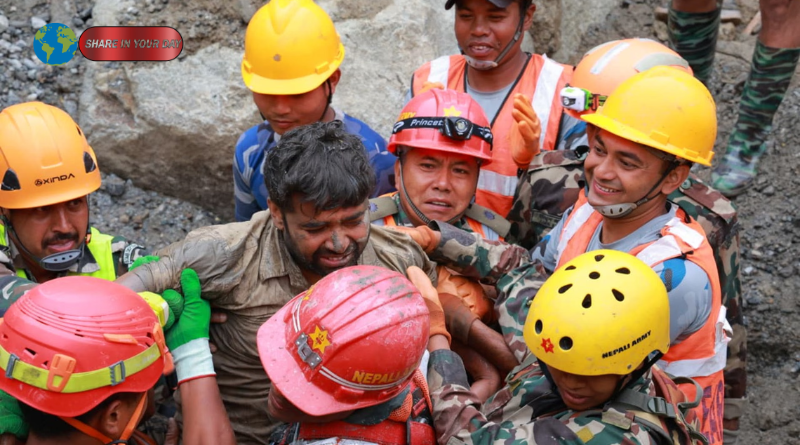
Sanjay Sah, a mechanical foreman, and Kabir Maharjan, a mechanical supervisor, were rescued from the Upper Trishuli 3A Hydropower Station on Friday. Their survival has energized a massive search operation that is still looking for hundreds of people believed to be trapped inside hydropower tunnels across the disaster zone.
The rescue came after a devastating event on August 26, when an enormous surge of ice, rock, mud and debris tore through communities and infrastructure along the Trishuli River. The disaster has killed more than 1,200 people in Nepal and left thousands missing, according to figures that continue to be updated as search teams reach previously inaccessible areas.
For tunnelling experts, the successful operation was more than a technical achievement. It demonstrated what can happen when rescuers combine engineering knowledge, local experience, international cooperation and a willingness to continue working long after the chances of survival appear to be diminishing.
Two Workers Survived Inside a Buried Tunnel
The two survivors were found at the Upper Trishuli 3A project after rescuers worked through a dangerous mixture of mud, debris and damaged tunnel infrastructure.
According to reports, the men had been underground for nine days. Rescue teams eventually detected signs that people were still alive inside the tunnel, prompting an intensified effort to reach them.
The rescue was particularly significant because the wider disaster had created extremely difficult conditions for emergency crews.
Roads and bridges had been destroyed. Access to hydropower sites was severely restricted. Tunnels had been flooded or blocked by debris, while rescuers also had to consider the possibility of further flooding and unstable structures.
The Nepali government said specialized tunnel rescue teams from India, China and South Korea were working alongside Nepali security forces. Equipment including drones, drilling machinery and other specialist tools has also been deployed.
That international cooperation became increasingly important as rescuers attempted to reach multiple hydropower facilities simultaneously.
Why the Nepal Hydropower Tunnel Rescue Was So Difficult
Tunnel rescues are challenging even under normal circumstances. In the Trishuli valley, the situation was made significantly more dangerous by the scale of the flooding.
A tunnel is normally designed to control the movement of water, air, people and equipment. When a catastrophic flood enters such a structure carrying huge quantities of rock and sediment, however, established routes can disappear almost instantly.
Rescuers may not know exactly where survivors are located. They also have to determine which sections of a tunnel remain structurally stable.
At Upper Trishuli 3A, teams had to remove large amounts of material while trying to avoid triggering additional collapses or exposing workers to renewed flooding.
The disaster also created a communications problem. Rescue teams needed accurate information about tunnel layouts, underground rooms, access points and blocked passages.
Reuters reported that a large group of engineers and specialists used a WhatsApp group to exchange information during the response. More than 500 engineers and experts were reportedly involved, sharing technical information and tunnel plans that could help teams understand the underground environment.
That kind of real-time cooperation can be critical when conventional access to a disaster site has been destroyed.
A Rescue Described as a Triumph for Humanity
Australian tunnelling expert Arnold Dix, who has experience in major underground rescue operations, described the successful operation in deeply human terms.
Dix became internationally known for his involvement in the 2023 rescue of 41 workers trapped in a collapsed tunnel in India. His expertise has again been relevant as specialists assess the complex conditions facing Nepal’s rescue teams.
The successful recovery of Sah and Maharjan was therefore viewed as more than a single rescue. It became evidence that engineering expertise and determination can create possibilities even in seemingly hopeless circumstances.
The Guardian reported Dix describing the rescue as a “triumph for humans and humanity.”
That message has particular significance in Nepal, where the disaster has caused widespread loss of life and enormous damage.
For families waiting for information about missing relatives, the rescue of two workers offers something that statistics cannot provide: proof that people can survive underground for days under extraordinary conditions.
The Survivors Offer New Hope for Others
The rescue of Sah and Maharjan has not ended the emergency.
Instead, it has intensified hopes that additional workers may still be alive.
Nepalese authorities have estimated that hundreds of people could remain trapped in tunnels and underground facilities connected to hydropower projects along the affected river system.
Reuters reported that around 900 people were believed to be trapped or missing in connection with six hydropower projects in the region.
The exact number remains difficult to establish because communications have been disrupted and many project sites are inaccessible.
At some locations, rescue teams have had to work from above ground. At others, they have attempted to create openings into blocked tunnels.
Nepal’s Ministry of Foreign Affairs said rescue operations were continuing at sites including Langtang, Chilime, Upper Trishuli 1, Upper Trishuli 3A, Upper Trishuli 3B and other projects.
The government also confirmed that international tunnel rescue teams were operating with Nepali forces.
Nepal’s Army Leads a Race Against Time
The Nepal Army and other security agencies have been central to the rescue effort.
More than 21,000 security personnel have been mobilized for search, rescue and relief operations, according to a government diplomatic briefing. Specialized teams from India, China and South Korea have also been assigned to different tunnel rescue locations.
At Upper Trishuli 3A, Chinese tunnel rescue specialists have been working with Nepali teams.
At other locations, Indian and South Korean specialists have supported operations, reflecting the international scale of the response.
The government has also requested additional equipment, including high-capacity drones, LiDAR systems, ground-penetrating radar, high-capacity pumps and other specialist tools.
Such technology could help rescuers determine what lies beneath unstable ground without immediately sending personnel into potentially deadly areas.
Sanjay Sah Stayed Behind to Help Others
The story of survivor Sanjay Sah has added another human dimension to the disaster.
Reuters reported that Sah was inside the hydropower facility when the disaster struck. Instead of immediately attempting to escape alone, he reportedly warned and helped other workers as floodwaters approached.
He ultimately became trapped himself.
Sah survived in darkness for nine days before being rescued alongside Maharjan.
His experience illustrates the chaotic nature of the disaster.
Workers inside underground facilities had very little time to react as floodwaters and debris entered the area. In some locations, people had to navigate through darkness and damaged structures while trying to find an escape route.
Another hydropower worker, Dhan Bahadur Tamang, previously described fighting through floodwaters and darkness before eventually reaching safety. His account highlighted the extraordinary danger faced by workers across the region.
These individual stories have helped reveal what the disaster looked like from inside the tunnels rather than from the perspective of rescuers outside.
The Bigger Disaster Behind the Rescue
The dramatic tunnel rescue is only one part of a much larger humanitarian crisis.
The August 26 disaster devastated parts of Nepal and also affected areas across the border in Tibet. The sudden release of ice, rock and water caused widespread destruction along river valleys.
Entire communities were damaged or destroyed.
Hydropower facilities were especially vulnerable because many are constructed in steep, mountainous terrain where tunnels and underground structures are necessary to harness river systems.
Reuters reported that the disaster affected a significant portion of Nepal’s electricity infrastructure, with damage reported at multiple hydropower projects.
The consequences therefore extend beyond the immediate rescue operation.
Nepal now faces the difficult task of restoring electricity, roads, telecommunications and other critical infrastructure while simultaneously searching for missing people and supporting survivors.
The country’s government has said that restoring connectivity and delivering relief supplies remain major priorities.
Why Hydropower Matters So Much to Nepal
Hydropower is central to Nepal’s energy system and economic ambitions.
The Himalayan country has enormous potential for generating electricity from its rivers. Over the years, hydropower projects have expanded across mountainous regions, providing electricity for domestic consumption and creating opportunities for exports.
But the same geography that makes Nepal attractive for hydropower also creates significant engineering challenges.
Projects are often located in narrow valleys and steep terrain. Roads can be difficult to construct and maintain. Landslides, earthquakes, floods and other natural hazards can complicate both construction and long-term operation.
The latest disaster has therefore raised difficult questions about how infrastructure should be designed for increasingly severe natural hazards.
The immediate priority, however, remains human life.
Rescue Efforts Continue Despite the Risks
The successful Nepal hydropower tunnel rescue has given rescuers and families renewed determination, but underground operations remain dangerous.
The Guardian reported that rescue teams continued to face the risk of flooding because some workers were operating below the floodplain.
That means every additional excavation must be carefully assessed.
Removing debris too quickly could destabilize a tunnel. Pumping water can alter pressure conditions. Heavy machinery can create vibration near already weakened structures.
Rescue leaders must balance speed with safety.
The challenge is particularly painful for families because every hour matters, yet sending rescuers into an unstable tunnel without sufficient preparation could create more casualties.
This is why technical specialists, engineers and security forces are working together rather than relying on a single approach.
Technology Is Becoming a Critical Rescue Tool
Modern disaster response increasingly depends on technology.
Drones can survey areas that are too dangerous for people. LiDAR can help map terrain. Ground-penetrating systems may provide information about underground conditions. Pumps can remove water, while drilling equipment can create new access routes.
Nepal has requested several of these technologies as the search continues.
However, technology cannot replace human judgment.
A tunnel map may show where a passage should be, but flooding or a collapse can completely change conditions underground.
That is why the combination of engineering knowledge and information from workers familiar with each facility remains so important.
The WhatsApp-based network of engineers is one example of how digital communication can bring together expertise from different locations during a rapidly changing emergency.
A Moment of Hope in a National Tragedy
The images of rescuers bringing the two men out of the Trishuli 3A tunnel have become a powerful symbol of hope.
For nine days, Sah and Maharjan were hidden beneath a landscape transformed by floodwaters and debris.
Their survival does not reduce the enormous scale of Nepal’s tragedy. Thousands of families are still waiting for news. Communities remain damaged, and rescue workers continue to confront dangerous conditions.
Yet their recovery demonstrates why search teams continue to work.
It is a reminder that the line between hope and despair can change quickly during a disaster.
The rescue also highlights the importance of cooperation. Nepali soldiers, engineers, hydropower workers, international specialists and emergency personnel have all contributed to the effort.
In a disaster of such extraordinary scale, no single team can do everything alone.
What Happens Next?
The next phase will be focused on reaching more missing people while maintaining the safety of rescue crews.
Authorities will continue searching hydropower tunnels and underground facilities across the affected region. Teams will also have to assess damaged infrastructure before workers can safely enter.
At the same time, hospitals and emergency services will continue treating survivors.
The Nepalese government has reported that more than 13,000 people had been rescued across the affected areas as of September 4, while 1,287 bodies had been recovered and about 5,083 people remained missing. Officials stressed that the figures were subject to ongoing verification and updates.
Those numbers underline both the scale of the disaster and the importance of continued search operations.
The rescue of two hydropower workers after nine days has shown that survival remains possible even under extraordinary circumstances.
For the families still waiting, that may be the most important message of all.
The Nepal Hydropower Tunnel Rescue Is Not Over
The Nepal hydropower tunnel rescue has already produced one extraordinary result: two men who spent nine days underground have been brought back alive.
But the wider operation is far from finished.
Hundreds of people may still be trapped or missing. Rescue crews must continue clearing tunnels, assessing damaged structures and searching locations that remain difficult to reach.
The disaster has also exposed the vulnerability of critical infrastructure in one of the world’s most challenging mountainous environments.
For now, however, the focus remains on saving lives.
The survival of Sanjay Sah and Kabir Maharjan has given Nepal a powerful reason to keep searching. Their rescue is a remarkable engineering achievement, but it is also something more basic and more universal: evidence that people can keep fighting for one another even when the odds appear overwhelmingly against them.
That is why the rescue has resonated far beyond the walls of the Trishuli 3A tunnel.
It is a story about engineering, courage and international cooperation — but above all, it is a story about hope.