Controversial College Football Endings: 8 Wild Calls
Few things create more debate in college football than a game that ends with confusion, controversy and a decision that changes the result. The latest example came when Michigan defeated Western Michigan 13-12 after officials restored one second to the clock, giving the Wolverines another chance to throw a game-winning Hail Mary. The dramatic finish immediately joined the long list of controversial college football endings that remain part of the sport’s history.
Michigan entered its 2026 opener as a heavy favorite, but Western Michigan pushed the Wolverines to the limit. The Broncos appeared to have secured one of the biggest upsets of the opening weekend when Michigan’s first Hail Mary attempt fell incomplete with the clock showing zero.
Then everything changed.
Officials reviewed the final play and determined that Western Michigan defender Micah Davis had touched the ball while starting from an established out-of-bounds position. According to the Big Ten, the contact occurred with one second remaining. That ruling put one second back on the clock.
Michigan took advantage.
Quarterback Bryce Underwood launched another 47-yard Hail Mary, and JJ Buchanan came down with the touchdown as time expired. The Wolverines escaped with a 13-12 victory, while Western Michigan was left to process a finish that quickly became one of the most debated moments of the young season. CCBS Sports+1
The ending also revived memories of other games in which officiating, replay, timing or unusual rules played a decisive role.
Here are eight of the most memorable controversial college football endings highlighted by CBS Sports.
1. Michigan vs. Western Michigan: The One-Second Miracle
The newest addition to the list may be the strangest because it involved not just one Hail Mary, but two.
Michigan trailed Western Michigan 12-7 late in the fourth quarter. After the Broncos extended their lead with a field goal, the Wolverines needed a touchdown on their final possession to avoid a stunning upset.
Underwood’s first Hail Mary appeared to end the game. The pass sailed beyond the end zone, and the clock appeared to reach zero.
Western Michigan players began celebrating.
Officials, however, went to replay.
The Big Ten later said the review showed Davis had started his jump from an established out-of-bounds position and touched the football with one second remaining. The conference said the replay system used synchronized cameras, including a direct view of the stadium clock, to determine the ruling. CCBS Sports+1
The decision was controversial because television viewers saw a different sequence. NBC rules analyst Terry McAulay questioned how officials had determined that the ball was touched before the clock reached zero.
The controversy did not prevent Michigan from finishing the job.
Underwood got another opportunity and found Buchanan for a 47-yard touchdown. The Wolverines won 13-12, turning a potential upset into an unforgettable escape.
The episode also demonstrates why replay can be both a solution and a source of controversy. The NCAA maintains an official football rule book and instant replay case book, while the 2026 season also includes an experimental proposal allowing replay video to be made available in real time to coaches’ booths. NNCAA.org+1
Read the original CBS Sports report
2. Colorado vs. Missouri: The Infamous Fifth Down
Long before modern replay technology, there was the infamous 1990 game between Colorado and Missouri.
Colorado won 33-31, but the victory became permanently associated with an administrative mistake involving the down count.
The Buffaloes were effectively awarded a fifth down.
Four downs are normally available to an offense to gain the necessary yardage or score. Colorado’s extra opportunity allowed the Buffaloes to run another play, ultimately producing the winning result as time expired.
The controversy became even more significant because of what happened afterward.
Colorado finished the season 10-1-1 and shared the national championship with Georgia Tech. The disputed victory over Missouri therefore became more than an isolated officiating mistake. It became part of the championship story.
CBS Sports describes the incident as one of the original examples of college football administrative chaos. The controversy remains famous because the mistake was not simply about a judgment call. The basic sequence of downs was wrong.
That distinction matters.
Some controversial decisions involve subjective judgments. The fifth-down incident involved an error that affected the fundamental structure of the game.
3. Texas vs. Nebraska: One Second in the Big 12
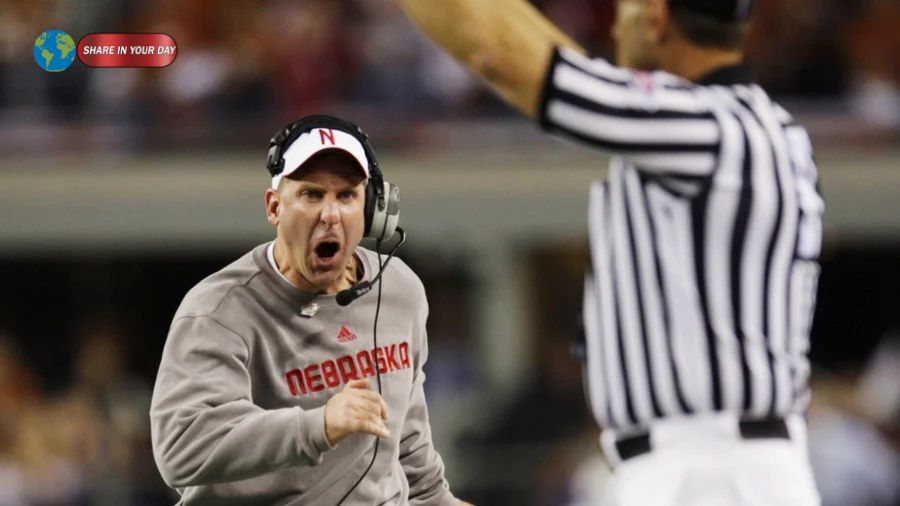
The 2009 Big 12 Championship Game produced another controversial ending involving the clock.
Texas entered the game ranked No. 3 and needed a victory to maintain its path toward the BCS Championship Game. Nebraska led 12-10 late, and the Longhorns were desperately trying to move into position for a winning field goal.
Texas quarterback Colt McCoy threw a pass out of bounds as time appeared to expire.
The clock reached zero.
Nebraska celebrated.
Texas coach Mack Brown, however, believed there was still time remaining. He held up one finger, signaling that the officials should review the play.
They did.
Officials determined that one second remained.
That single second changed everything.
Texas used the final play to attempt a 46-yard field goal. Hunter Lawrence converted, giving Texas a 13-12 victory and sending the Longhorns to the BCS Championship Game. CCBS Sports
Texas eventually lost the national championship game to Alabama, but the Big 12 Championship finish remained one of the defining moments of the season.
The similarities with Michigan’s 2026 victory were immediate.
In both games, a team appeared to lose because the clock reached zero. In both cases, replay restored one second. And in both cases, that extra second created an opportunity for a dramatic winning play.
4. Central Michigan vs. Oklahoma State: The Untimed Down
Another infamous finish came in 2016 when Central Michigan faced Oklahoma State.
The Cowboys appeared to have survived after a late play near midfield. But officials subsequently threw a flag for intentional grounding, creating an unusual situation.
Central Michigan received an untimed down.
The Chippewas were nowhere near field-goal range, so their only realistic chance was a desperate pass.
That desperation produced one of the wildest endings in recent college football.
Cooper Rush launched the ball downfield. The pass fell short of its intended destination, but Jesse Kroll lateraled the ball to Corey Willis, who ran into the end zone.
Central Michigan won.
The problem was that the untimed play should not have been awarded under the applicable rule interpretation. CBS Sports notes that the officiating crew misapplied the rule, meaning Central Michigan effectively received an additional opportunity that should not have existed. CCBS Sports
Unlike the Michigan-Western Michigan controversy, this incident was not primarily about whether the clock had one second remaining.
It was about whether another play should have existed at all.
5. Miami vs. Ohio State: The Pass Interference That Changed History
The 2002 BCS National Championship Game between Miami and Ohio State is remembered as one of the defining games of the BCS era.
It is also remembered for one controversial penalty.
Miami entered the championship game with a 34-game winning streak and appeared to be on the verge of another national title. In overtime, however, Ohio State needed a crucial score.
A pass intended for Chris Gamble resulted in significant contact between Gamble and Miami defensive back Glenn Sharpe.
A defensive pass interference penalty was called.
Miami supporters argued that the contact was not enough to warrant the call. CBS Sports’ retrospective notes that some of the most obvious contact appeared to occur after the ball had reached Gamble, while the flag came from the back of the end zone rather than from the referee closest to the action. CCBS Sports
The penalty gave Ohio State new life.
The Buckeyes eventually won the national championship in double overtime, defeating Miami 31-24.
For Miami, the call became part of a painful what-if scenario. For Ohio State, it became part of one of the most important victories in program history.
Few officiating decisions demonstrate more clearly how one flag can alter the legacy of an entire season.
6. California vs. Stanford: The Band Is on the Field
Not every controversial ending is about a referee making a bad call.
Sometimes the chaos is the story.
The 1982 California-Stanford game ended with one of the most famous plays in college football history.
California returned a kickoff as time expired and used a series of laterals to keep the play alive. Stanford’s marching band had already moved onto the field, believing the game was over.
Instead, California’s Kevin Moen ran through the Stanford band and into the end zone.
The Bears won 25-20.
The play has been replayed countless times because it combines almost everything that makes college football unusual: rivalry, confusion, laterals, a marching band and a score that came after the clock appeared to have expired.
There remains debate about whether every aspect of the play was handled correctly, including whether a Stanford player was down during the return. But its place in college football history is secure.
“The band is out on the field” became an immortal phrase.
And the ending remains one of the most entertaining examples of football chaos ever recorded.
7. Ohio State vs. Michigan: The J.T. Barrett Spot
Michigan has appeared in more than one controversial finish, and the 2016 rivalry game against Ohio State is another prime example.
Ohio State and Michigan played into double overtime with the Buckeyes leading 27-24.
Ohio State quarterback J.T. Barrett took off on fourth-and-1 at the Michigan 16-yard line. Barrett’s run ended in a pile near the first-down marker.
Officials initially ruled that he had gained enough.
Michigan disagreed.
Replay followed, but the ruling stood. Ohio State then scored on the next play, with Curtis Samuel rushing for a 15-yard touchdown that gave the Buckeyes a 30-27 victory. CCBS Sports Racing
Michigan coach Jim Harbaugh was furious.
His postgame criticism of the officiating became almost as famous as the play itself. He was fined $10,000 by the Big Ten.
The controversy remains relevant because the play demonstrates how difficult it can be for replay to definitively settle close measurements.
A first-down decision may depend on a player’s forward progress, the location of the ball and the exact point at which the runner’s progress is stopped.
Even with multiple camera angles, there can be disagreement.
8. Miami vs. Virginia Tech: The Hail Mary That Wasn’t
In 2024, Miami was involved in another controversial ending.
Virginia Tech needed a touchdown on the final play. Quarterback Kyron Drones launched a Hail Mary toward the end zone, and receiver Da’Quan Felton appeared to make the catch for a 30-yard touchdown.
For a moment, Virginia Tech appeared to have won.
Then replay intervened.
The touchdown was overturned, giving Miami a 38-34 victory.
The ACC explained that the loose ball had been touched by a Miami player while he was out of bounds, making the pass incomplete and ending the play. CCBS Sports Racing
The decision generated immediate debate because of the extraordinary circumstances surrounding the play.
Miami players celebrated.
The stadium lights began flashing.
Virginia Tech appeared to have pulled off a miracle.
Then the replay review changed the ending.
It was another reminder that a touchdown is not always the final word until the officials complete the review process.
Why Controversial College Football Endings Keep Happening
Technology has dramatically changed college football officiating.
Officials now have access to multiple camera angles, replay systems and increasingly sophisticated technology. The NCAA maintains formal playing rules and an instant replay case book designed to create greater consistency. NNCAA.org
Yet controversial endings have not disappeared.
In some ways, technology has made them more visible.
A fan watching in the stadium may see one angle. A television audience may see another. Social media can produce frame-by-frame analysis within minutes.
That creates an unusual situation.
A referee may make a decision based on replay footage that viewers never see.
That is precisely what happened during the Michigan-Western Michigan ending. The Big Ten defended its decision, saying the replay system used synchronized camera feeds and showed Davis touching the ball with one second remaining. Meanwhile, broadcast analysis raised questions about how the replay crew arrived at that conclusion. CCBS Sports+1
The disagreement is therefore not simply about whether the call was correct.
It is also about transparency.
Replay Can Solve Problems — and Create New Ones
Instant replay was introduced to reduce major officiating errors.
It has succeeded in many situations.
A missed boundary call can be corrected. A fumble can be reviewed. A touchdown can be confirmed or overturned. Clock issues can be examined more carefully.
But replay also creates a new expectation.
Fans now expect certainty.
When multiple cameras are available, supporters naturally assume the correct answer must be obvious. Yet football remains a sport involving split-second movement, complicated rules and imperfect camera angles.
The NCAA continues to evolve its approach to technology. In 2026, an experimental proposal allows conferences to provide instant-replay video to coaches’ booths during games, illustrating how quickly the technology surrounding officiating is developing. NNCAA.org
The goal is straightforward: get more calls right.
The challenge is ensuring that additional technology does not create additional confusion.
The Michigan Finish May Not Be the Last
The Michigan-Western Michigan game will likely be debated for years.
Western Michigan’s players believed they had completed the upset. Michigan believed it had one final opportunity. Officials reviewed the play and ultimately determined that one second remained.
Then Underwood and Buchanan produced the kind of play that normally exists only in college football dreams.
The Broncos later accepted the ruling and chose to move forward rather than continue fighting the result. PPodtail
That decision does not eliminate the controversy.
Instead, it adds another chapter to the history of controversial college football endings.
From Colorado’s fifth down to Texas’ restored second, from Oklahoma State’s untimed play to Miami’s disputed penalties, the sport has repeatedly demonstrated one simple truth:
A football game is not necessarily over when it looks over.
Sometimes the clock changes.
Sometimes replay changes the call.
Sometimes an official’s flag changes history.
And occasionally, as Michigan discovered against Western Michigan, one extra second is all a team needs to turn a heartbreaking loss into an unforgettable victory.
External Sources
- CBS Sports — Controversial college football endings
- NCAA Football Playing Rules and Instant Replay Resources
- NCAA 2026 football technology proposal
- Big Ten Conference official website
Internal Link Suggestions
Because you did not provide the target website/domain, these should be replaced with your site’s actual URLs before publishing:
- Michigan football news:
/michigan-football/ - College football news:
/college-football/ - College football history:
/college-football-history/ - Sports news:
/sports/
SEO note: The article is written to target the supplied keyword naturally rather than artificially repeating it. No SEO plugin can guarantee a green score without seeing your site’s actual permalink structure, internal-link architecture, image metadata and plugin settings.C
N
C
Sources