
Trump FISA Defeat: 5 Shocking Political Impacts
The Trump FISA defeat has emerged as one of the most unexpected political developments in Washington this year, exposing deep fractures within the Republican Party and raising fresh questions about leadership, surveillance policy, and party unity ahead of critical legislative deadlines.
Former President Donald Trump, long known for his influence over Republican lawmakers, failed to rally enough support to pass a key renewal of the Foreign Intelligence Surveillance Act (FISA). The setback not only disrupted a major national security initiative but also highlighted shifting dynamics within the GOP.
As lawmakers scrambled to pass a short-term extension instead, the implications of the Trump FISA defeat quickly rippled across Capitol Hill.
What Is Behind the Trump FISA Defeat?
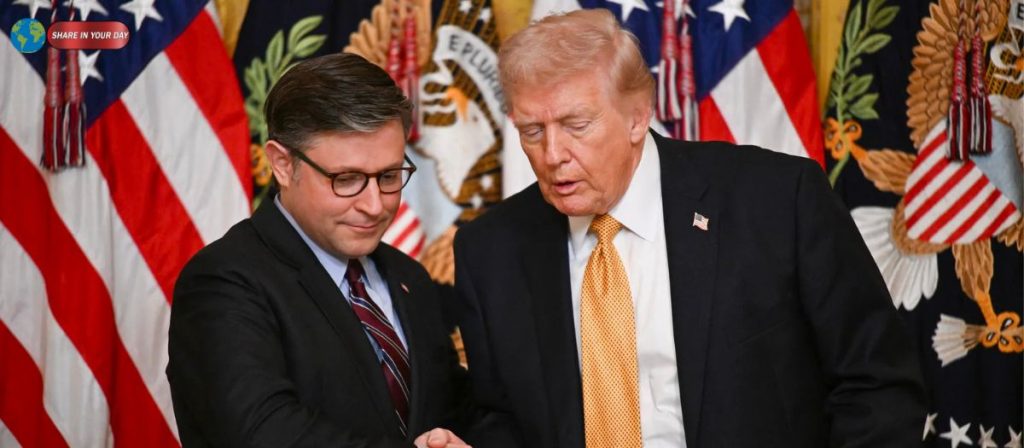
At the heart of the Trump FISA defeat is a growing ideological divide among Republicans. While party leadership, including House Speaker Mike Johnson, pushed for a long-term renewal of surveillance powers, a significant bloc of GOP lawmakers resisted.
FISA, particularly Section 702, allows U.S. intelligence agencies to monitor foreign targets without a warrant. However, critics argue that the law can also capture communications involving American citizens, raising civil liberties concerns.
This tension has been building for years. However, the Trump FISA defeat brought it into sharp focus.
Some Republicans aligned with Trump’s broader political movement have increasingly adopted a more skeptical stance toward government surveillance. Meanwhile, national security-focused conservatives continue to defend FISA as essential.
As a result, the party found itself unable to unify—even under Trump’s influence.
GOP Divisions Become Impossible to Ignore
One of the most striking consequences of the Trump FISA defeat is how clearly it revealed internal Republican divisions.
Roughly 20 GOP lawmakers broke ranks, effectively blocking the long-term extension. This rebellion underscores a broader transformation within the party, where loyalty to leadership no longer guarantees legislative success.
The divide can be understood in two camps:
- Security Conservatives: Prioritize intelligence capabilities and counterterrorism tools
- Liberty Conservatives: Focus on privacy rights and limiting government overreach
The Trump FISA defeat demonstrates that these factions are now equally powerful—and increasingly unwilling to compromise.
Mike Johnson’s Leadership Put to the Test
House Speaker Mike Johnson entered the FISA debate hoping to demonstrate control and unity. Instead, the Trump FISA defeat has complicated his position.
Johnson relied heavily on Trump’s endorsement to push the bill forward. However, when that strategy failed, it exposed limitations in both Johnson’s leadership and Trump’s influence.
This moment could have lasting consequences:
- It weakens Johnson’s authority in future negotiations
- It signals to lawmakers that defiance carries fewer risks
- It complicates efforts to pass other major legislation
In Washington, perception often shapes power. The Trump FISA defeat may therefore linger far beyond this single vote.
Short-Term Fix, Long-Term Uncertainty
Following the failed vote, Congress moved quickly to approve a short-term extension of FISA, buying time for further negotiations.
However, this temporary solution creates new challenges.
Lawmakers now face a tight deadline to reach a compromise. Meanwhile, intelligence agencies operate under continued uncertainty about the future of critical surveillance tools.
The Trump FISA defeat ensures that any long-term agreement will likely involve:
- Stronger safeguards for civil liberties
- Increased oversight mechanisms
- Intense political bargaining
In other words, the path forward is far from straightforward.
What the Trump FISA Defeat Means for Trump
For Donald Trump, the FISA vote represents a rare political setback.
Despite maintaining significant influence within the Republican Party, the Trump FISA defeat suggests that his ability to deliver votes is no longer absolute.
This does not mean Trump’s influence has disappeared. However, it does indicate:
- Lawmakers are more willing to break from him on specific issues
- His endorsements may carry less weight in complex policy debates
- Internal party dynamics are evolving
As the political landscape shifts, moments like the Trump FISA defeat become key indicators of broader change.
The Bigger Picture: Surveillance vs. Freedom
Beyond party politics, the Trump FISA defeat reflects a deeper national debate about the balance between security and privacy.
Supporters of FISA argue that surveillance tools are essential for preventing threats and maintaining national security. Critics counter that these powers risk undermining constitutional rights.
This debate is not new. However, the Trump FISA defeat shows that it is entering a new phase—one where bipartisan skepticism of surveillance is growing.
As technology advances and data collection expands, the stakes of this debate will only increase.
How This Could Shape Future Legislation
The impact of the Trump FISA defeat is likely to extend well beyond this single issue.
In the months ahead, lawmakers will need to navigate:
- Renewed debates over intelligence authorities
- Increasing pressure from voters on privacy concerns
- Internal party divisions across multiple policy areas
This could lead to slower legislative processes and more fragmented policymaking.
At the same time, it may also produce more nuanced and balanced laws—if compromise can be achieved.
Internal Link Example
For more political analysis, visit:
https://yourwebsite.com/us-politics-analysis
External Link Example
Read the original report from Axios:
https://www.axios.com/2026/04/17/trump-johnson-fisa
Conclusion: A Turning Point in GOP Politics
The Trump FISA defeat is more than a failed vote—it is a revealing moment in American politics.
It highlights the limits of political influence, the growing complexity of party dynamics, and the enduring tension between security and liberty.
As Congress races to find a long-term solution, the consequences of this defeat will continue to unfold.
Whether it leads to meaningful reform or deeper division remains to be seen. However, one thing is clear: the Trump FISA defeat has reshaped the conversation in Washington—and its effects are just beginning.