College Basketball Eligibility Puts 25 Players in Limbo
College basketball eligibility has become one of the biggest storylines of the 2026-27 season before teams have even begun playing meaningful games.
Across the country, coaches are preparing for a season in which some of their most important players may not know whether they are allowed to compete. Court rulings, NCAA challenges and conference policies have created an unusually complicated situation for players seeking another year of eligibility.
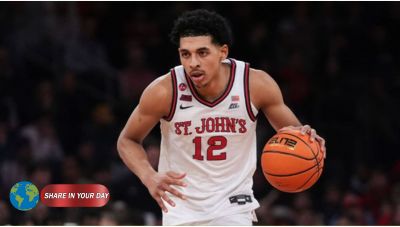
ESPN recently examined the situation by ranking 25 of the players most affected by the ongoing eligibility disputes. The list includes established stars, high-level transfers, former All-Americans and players with professional or international experience.
The uncertainty matters because several of these players could have major roles for teams with postseason ambitions.
A player receiving clearance can significantly change a roster. Conversely, a ruling against a player can force a coaching staff to redesign its rotation only weeks before the season.
The situation is particularly unusual because the disputes are not limited to one rule or one court.
Some cases involve athletes seeking a fifth season. Others involve players with professional experience, while international players face separate questions about their previous basketball backgrounds.
As a result, college basketball programs are dealing with several overlapping eligibility questions at once.
Why College Basketball Eligibility Became So Complicated
The current situation stems largely from changes surrounding additional eligibility for players from the 2022 high school class.
The NCAA’s new framework opened the door for many athletes to receive a fifth season, but players from the 2022 class were initially excluded. That led to a series of lawsuits and temporary court orders seeking to give those players another opportunity.
The legal disputes have expanded beyond simple fifth-year cases.
The NCAA has also continued challenging attempts by players with professional experience to return to college basketball.
Meanwhile, several major conferences have adopted their own restrictions involving former professionals.
The Big Ten, Big 12 and SEC have all moved toward policies restricting athletes with certain professional backgrounds, while the ACC has also considered similar measures.
That creates an important distinction.
A player might receive relief from a court but still face a conference-specific obstacle.
That is one reason the eligibility picture remains fluid even as preseason practices approach.
RJ Luis Jr. Is at the Center of the Debate
RJ Luis Jr. is one of the most prominent players involved.
The former St. John’s standout was the 2025 Big East Player of the Year and subsequently pursued a professional career after entering the NBA draft.
Luis went undrafted and signed a two-way contract with the Utah Jazz before later moving through the NBA system. He eventually signed with LSU, creating a major question over whether his professional experience would prevent him from returning to college basketball.
ESPN placed Luis at the top of its ranking of players in eligibility limbo.
His situation illustrates why the current debate is more complicated than simply deciding whether fifth-year seniors should receive another season.
Luis did not merely finish his college career and immediately seek an additional year.
He entered the NBA draft, signed professional contracts and then attempted to return to college.
A Louisiana judge granted him a preliminary injunction allowing him to pursue eligibility, but the SEC subsequently adopted restrictions affecting players with professional experience.
That means the court ruling did not completely settle the issue.
For LSU, Luis remains a potentially significant piece of the roster.
For the wider college basketball landscape, his case could become an important example of how courts and conferences interact over eligibility.
Mark Mitchell’s Eligibility Case Takes Another Turn
Mark Mitchell is another major name caught in the dispute.
Mitchell played at Missouri before seeking an additional season and initially committed to Kentucky.
A Kentucky court allowed him to pursue another year through a temporary restraining order. However, SEC rules concerning intra-conference transfers created another obstacle.
Mitchell had not entered the transfer portal during the traditional window because the new eligibility framework was not yet in place when that window occurred.
That left his Kentucky move vulnerable to additional scrutiny.
The case demonstrates how a player can clear one eligibility hurdle and immediately encounter another.
The issue is not only whether Mitchell qualifies for an additional season.
It is also whether the conference will recognize the transfer under its own rules.
Mitchell’s situation therefore remains an important example of the layered nature of the current college basketball eligibility system.
Keyshawn Hall Could Add Another Major Scorer
Keyshawn Hall is another high-profile player whose status has drawn significant attention.
Hall transferred from Auburn to St. John’s after establishing himself as one of the SEC’s productive offensive players.
CBS Sports identified Hall among the notable fifth-year players who moved during the offseason while still facing eligibility uncertainty.
His potential addition would give St. John’s another experienced scoring option.
But the larger issue remains whether the NCAA and courts ultimately allow him to compete.
For programs such as St. John’s, this uncertainty makes roster planning difficult.
Coaches can recruit a player, design offensive schemes around him and prepare him for the season, only to discover that his eligibility remains unresolved.
That is the unusual reality facing many teams this year.
Darrion Williams Adds More Uncertainty for Texas Tech
Darrion Williams is another important player in the eligibility debate.
Williams previously established himself as a major contributor at Texas Tech before transferring to NC State.
His return to Texas Tech has the potential to strengthen a roster that is already being closely watched ahead of the new season.
CBS Sports included Williams among the prominent fifth-year transfers whose eligibility remains subject to the continuing legal battles.
His situation is important because Texas Tech is among the teams that could see a significant difference between its projected roster and its final roster.
If Williams is available, the coaching staff can build around his experience.
If he is not, the team must redistribute those minutes and possessions.
The difference could affect everything from lineup combinations to late-game situations.
Malik Reneau’s Case Could Affect Miami
Malik Reneau is another prominent name caught in the eligibility uncertainty.
The former Indiana forward transferred to Miami after producing one of the strongest seasons of his college career.
Reneau’s potential return would give Miami another experienced interior scorer and rebounder.
His case also illustrates how the fifth-year debate extends beyond players who were merely role players during their original college careers.
Several of the athletes involved were already major contributors before their eligibility became uncertain.
That makes the legal decisions especially significant for the programs that recruited them.
A coaching staff can build an offseason around an experienced player only to face a major roster adjustment if eligibility is denied.
Trey Kaufmann-Renn Seeks Another College Season
Trey Kaufmann-Renn is another player whose case has attracted attention.
The former Purdue standout had already exhausted what was previously considered his normal college eligibility.
He also entered the NBA draft and was selected in the second round by the Minnesota Timberwolves.
Despite that professional opportunity, Kaufmann-Renn pursued another college season.
A judge granted a temporary restraining order in September allowing him to continue seeking eligibility.
His case raises questions about how the new eligibility environment should apply to players who have already entered the professional draft process.
It also highlights the unusual path available to athletes in the current college sports system.
A player can move toward professional basketball, return to college and then find his eligibility determined through a combination of NCAA rules and court decisions.
Seth Trimble Is Another Louisville Question
Seth Trimble is another experienced player whose availability could affect his new team.
Trimble transferred to Louisville after spending time at North Carolina.
His arrival gives Louisville additional experience in the backcourt, but the program must still monitor the continuing eligibility process.
The uncertainty means coaches cannot always finalize their rotations as early as they normally would.
That creates complications during practice.
A player in eligibility limbo can still prepare with teammates, but the coaching staff must account for the possibility that he may not be available when games begin.
For teams with multiple players involved in these cases, the challenge becomes even greater.
LSU Faces Multiple Eligibility Questions
LSU has become one of the programs most closely connected to the eligibility controversy.
RJ Luis Jr. is the biggest name, but he is not the only LSU player whose status has attracted attention.
The Tigers have several players with international or professional backgrounds whose eligibility has required additional scrutiny.
CBS Sports reported that LSU had only four publicly disclosed players on its roster at one point during the offseason, illustrating the extreme uncertainty surrounding the program.
First-year LSU coach Will Wade therefore has had to operate under circumstances that are highly unusual for a major college program.
Instead of entering the preseason with a settled roster, LSU has had to prepare around ongoing court cases and NCAA challenges.
The outcome of those cases could substantially alter the team’s rotation.
International Players Face a Different Question
Not every eligibility case involves a fifth season.
International players have also been affected by questions surrounding their previous basketball experience.
Players arriving from Europe or other international leagues may have extensive competitive backgrounds before entering American college basketball.
That can create questions over whether previous participation qualifies as professional experience under conference or NCAA rules.
The issue is particularly complicated because international basketball structures vary significantly.
A player may have competed in a high-level league without having the same contractual or financial relationship associated with American professional sports.
The NCAA and conferences therefore have to determine how those backgrounds fit within their eligibility rules.
Conferences Are Becoming Major Players
The NCAA is not the only organization influencing these cases.
Major conferences have increasingly taken independent positions.
The SEC, Big Ten and Big 12 have adopted policies concerning former professional athletes returning to college sports. The ACC has also been considering similar restrictions.
That development makes the eligibility landscape more complicated.
Previously, a court order involving the NCAA could potentially provide a relatively straightforward path for an athlete.
Now, the player may also need to satisfy conference requirements.
That creates the possibility of different outcomes for athletes with similar backgrounds.
A player could receive eligibility relief through litigation but still face questions about whether his conference will allow him to compete.
The NCAA Is Challenging Court Decisions
The NCAA has also increased its efforts to challenge state and federal decisions that provide additional eligibility.
According to ESPN’s broader reporting, the organization has been pushing back against the various eligibility rulings while continuing to oppose the return of players with professional experience.
The result has been a series of temporary orders, appeals and stays.
For players and coaches, that means a ruling is not always the end of the process.
A favorable decision can be challenged.
A temporary order can be stayed.
Another court can issue a different ruling.
This legal uncertainty is one of the main reasons the 2026-27 preseason has been so difficult to predict.
Why These Cases Matter to College Basketball
The eligibility disputes matter because the players involved can directly change the competitive makeup of major programs.
A veteran scorer returning for another season can alter a team’s offensive system.
An experienced forward can change a frontcourt rotation.
A former All-American can give a program a different level of depth.
That is why ESPN focused on the 25 players it considered most significant in the current eligibility limbo.
The list itself is an editorial assessment rather than an official NCAA ranking.
Still, the players featured illustrate the scale of the issue.
These are not simply fringe roster decisions.
Several involve players who could become major contributors if cleared.
Coaches Are Preparing for Multiple Roster Scenarios
The uncertainty is forcing coaches to prepare differently.
Normally, once recruiting and the transfer portal settle, programs can establish their rotations and focus on team development.
This year, some coaches must prepare for multiple versions of their roster.
A player might be available.
A player might not be available.
Another athlete could become eligible through a court decision several weeks later.
That means practices, scholarship planning and rotation development all require additional flexibility.
It can also affect recruiting.
A coach who does not know whether a veteran player will return may be reluctant to make certain roster decisions.
The uncertainty therefore extends beyond the individual cases.
It can influence the entire structure of a program.
The Player Impact Is Significant
For the athletes involved, the stakes are much more personal.
Another college season can provide an opportunity to compete for a championship, finish a degree, develop professionally or improve an NBA résumé.
For players who already exhausted their expected eligibility, the additional season could also represent a final opportunity to play college basketball.
The legal uncertainty can therefore affect both athletic and personal plans.
Some players have already committed to new schools.
Others have enrolled or begun preparing with their teams.
Yet their futures can still depend on a court hearing or NCAA appeal.
The 2026-27 Season Could Begin With Unresolved Cases
The biggest question is how long the uncertainty will continue.
ESPN’s broader coverage has described eligibility as one of the major storylines shaping the upcoming season. The outlet has also noted that multiple top programs remain affected by the issue.
The situation could continue into the regular season.
If that happens, some teams could enter November without knowing whether their complete roster will be available for conference play.
That would be highly unusual.
It also means preseason projections should be viewed with caution.
A team’s expected lineup could change after a ruling.
A transfer commitment could become more important.
A player who appeared unavailable could suddenly become eligible.
College Basketball Eligibility Remains Fluid
The current college basketball eligibility situation is ultimately bigger than the 25 players highlighted by ESPN.
Their cases represent a larger debate over how college athletics should handle athletes whose careers no longer fit the traditional four-year model.
The introduction of additional eligibility, combined with NIL opportunities, the transfer portal and professional pathways, has fundamentally changed the relationship between college and professional basketball.
The courts are now playing a role in deciding where those boundaries should be drawn.
The NCAA is defending its rules.
Conferences are establishing their own policies.
Players are challenging those decisions through litigation.
And coaches are attempting to build competitive teams while the rules remain unsettled.
For players such as RJ Luis Jr., Mark Mitchell, Keyshawn Hall, Darrion Williams, Trey Kaufmann-Renn and others, the immediate question is whether they will be able to take the court.
For their teams, the answer could reshape the season.
And for college basketball as a whole, the 2026-27 campaign may become an important chapter in the ongoing evolution of eligibility rules.
Until the remaining cases are resolved, the rosters fans see on preseason projections may not be the rosters that ultimately take the floor.