Germany Military Rebuild: 5 Key Facts Behind Europe’s Concerns
Germany’s military rebuild is entering a new phase, with Berlin committing substantially more money, personnel and equipment to its armed forces. The transformation is being driven largely by the security situation created by Russia’s war against Ukraine and growing uncertainty about the future of European defense.
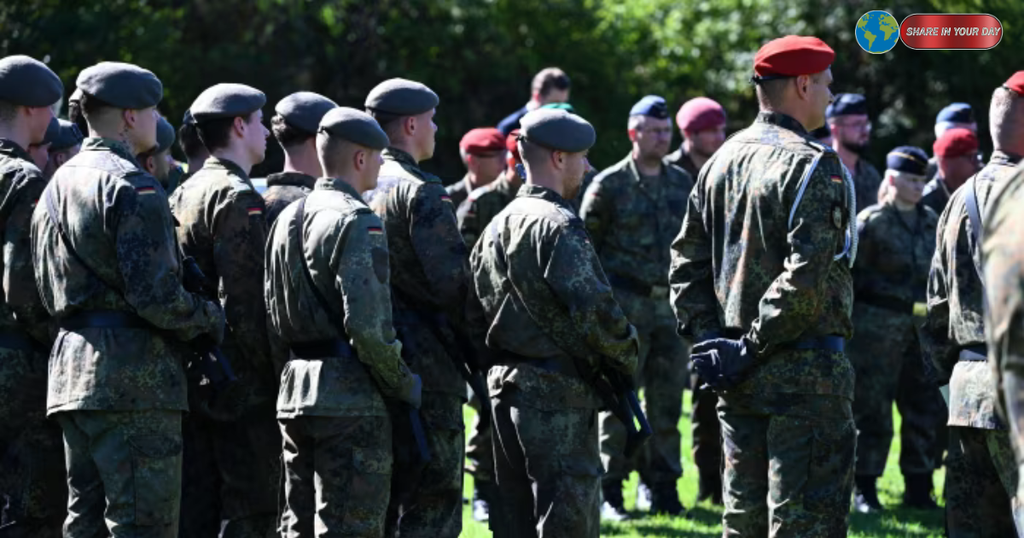
The scale of the change is considerable. Germany’s planned defense spending is rising sharply, while the Bundeswehr is expanding its personnel and building new capabilities. A permanent German combat brigade is also being established in Lithuania, placing German troops directly on NATO’s eastern flank. DDeutscher Bundestag+1
The changes have been welcomed by governments that want Europe to carry a larger share of its own defense burden. At the same time, the Wall Street Journal reports that Germany’s growing military power is generating unease in some neighboring countries, reviving questions about how Berlin’s new strength should fit into Europe’s broader security structure. TThe Wall Street Journal
That debate is taking place against a very different backdrop from the decades following German reunification.
Here are five important facts about Germany’s military rebuild and why it matters for Europe.
1. Germany Military Rebuild Is Backed by a Major Increase in Spending
One of the clearest signs of Germany’s military rebuild is the dramatic increase in defense spending.
According to Germany’s Bundestag, planned defense expenditure for 2027 is expected to reach €139.6 billion, representing another major increase from 2026. The figure combines €109.7 billion in the regular defense budget with €29.9 billion from the Bundeswehr special fund. DDeutscher Bundestag
For comparison, the regular defense budget for 2026 was planned at €82.7 billion, with an additional €25.5 billion coming from the special fund.
That means Germany is not simply making a modest adjustment to its military budget. Defense is becoming a much larger component of government spending.
The increase is also intended to support procurement.
The Bundestag says more than €60 billion is planned for military procurement in 2027. That spending covers efforts to replenish existing equipment, acquire new weapons systems and improve the Bundeswehr’s overall readiness. DDeutscher Bundestag
The German government has also described faster procurement and expansion of defense-industrial capacity as major priorities.
In a government statement concerning the 2026 defense budget, Defense Minister Boris Pistorius said Germany was providing substantially more resources for the Bundeswehr, including funding for the Lithuania brigade and both short- and long-term weapons programs. BBundesregierung
The spending increase therefore has two dimensions.
First, Germany wants more equipment for its armed forces.
Second, it wants the industrial capacity to produce and maintain that equipment over the long term.
2. The Bundeswehr Is Expanding Its Personnel
Money alone cannot rebuild a military.
Germany is therefore also attempting to increase the number of people serving in the Bundeswehr.
The government’s 2026 budget plans included up to 10,000 additional soldiers for the year. Germany has also introduced changes intended to establish a stronger foundation for military service and personnel growth. BBundesministerium der Finanzen+1
The personnel challenge is particularly important because modern armed forces require more than frontline troops.
Tanks need crews and maintenance personnel. Air-defense systems require operators, technicians and support staff. Logistics units are essential for moving ammunition, fuel and equipment. Communications and intelligence capabilities also require specialized personnel.
The new German brigade in Lithuania illustrates this challenge.
The Bundeswehr says approximately 80% of the positions in the brigade are already filled by volunteers, but shortages remain in certain areas. In September 2026, the German military announced additional measures to address personnel gaps, including possible temporary assignments and other compulsory measures where necessary. BBundeswehr
By the end of 2027, Germany expects roughly 4,800 soldiers and 200 civilian employees to be based in Lithuania as part of the permanent brigade. BBundeswehr+1
This makes personnel one of the central tests of Germany’s military rebuild.
A larger budget can purchase equipment relatively quickly. Building a larger force with trained personnel takes much longer.
3. Germany Is Building a Permanent Brigade in Lithuania
Perhaps the most visible part of the Germany military rebuild is taking place outside Germany itself.
Berlin is establishing a permanent combat brigade in Lithuania as part of NATO’s effort to strengthen its eastern flank.
The project was announced after NATO allies agreed to reinforce the alliance’s eastern defenses following Russia’s full-scale invasion of Ukraine. Germany’s brigade is expected to become fully operational by the end of 2027. BBundeswehr
The Bundeswehr describes the project as an unusually significant step in its history.
It will be the first time since the creation of the Bundeswehr that a complete German brigade is permanently stationed abroad. The planned force includes approximately 4,800 military personnel and 200 civilian employees. FFederal Court of Audit
The brigade will operate around locations including Rūdninkai and Rukla, near Vilnius and Kaunas.
Germany is not presenting the deployment as an independent military initiative. Berlin says it is part of NATO’s collective defense arrangements and intended to strengthen the alliance’s eastern flank.
For Lithuania and other countries close to Russia, the permanent German presence has an important deterrence dimension.
For Germany itself, however, the deployment represents a significant transformation in the Bundeswehr’s role.
The military is moving from a force primarily structured around territorial defense and international missions toward one expected to maintain substantial combat-ready capabilities for collective European defense.
4. The Rebuild Is Changing Germany’s Role in Europe
Germany has long been Europe’s largest economy, but its military role has traditionally been more restrained than its economic influence.
That balance is changing.
Berlin is now being asked to take greater responsibility for European security. The pressure has increased as European governments reassess their defense requirements following Russia’s invasion of Ukraine and uncertainty surrounding the future role of the United States in European security.
Germany’s government has emphasized that it wants to work closely with its European partners and NATO allies.
A German-Polish defense cooperation agreement approved by the German cabinet in June 2026 is one example. The agreement was designed to intensify defense cooperation between two of Europe’s largest countries. BBundesregierung
At the same time, Germany’s military expansion is large enough to raise broader questions about how European power should be organized.
The Wall Street Journal reported that some neighboring governments are concerned about the long-term implications of a significantly stronger German military, particularly given Germany’s history and current political debates. TThe Wall Street Journal
Those concerns do not mean that European countries oppose German defense spending.
In fact, Germany’s stronger military can directly support countries on NATO’s eastern flank.
The issue is more complicated: European governments must balance Germany’s need to develop credible military capabilities with the importance of keeping those capabilities embedded within NATO and European cooperation.
5. Germany’s Political Debate Adds Another Layer
The military rebuild is occurring alongside a changing political environment inside Germany.
The Wall Street Journal report highlights concerns in some neighboring countries about the rise of the Alternative for Germany, or AfD, and the possibility that a future German government could approach foreign and security policy differently. TThe Wall Street Journal
These are political concerns rather than evidence that Germany’s current military policy is directed toward territorial expansion.
Germany remains a NATO member and an EU member, and the current government presents the military expansion as part of collective European and transatlantic defense.
The political debate nevertheless matters because military capabilities can last for decades, while governments change.
Weapons systems purchased today could remain in service under administrations with very different foreign-policy priorities.
That is one reason the WSJ report focuses not only on the size of Germany’s military spending but also on questions about how the country’s growing military power should be integrated into European institutions. TThe Wall Street Journal
For Germany’s neighbors, the issue is therefore not simply whether Berlin should have a stronger military.
It is also how that military should be used, controlled and integrated into Europe’s security framework.
Why Germany Is Rebuilding Its Military Now
The immediate reason for Germany’s military transformation is the deteriorating European security environment.
Russia’s invasion of Ukraine fundamentally changed the assumptions that shaped European defense policy after the end of the Cold War.
Germany responded in 2022 by announcing the Zeitenwende, or “turning point,” in its security policy.
The country established a €100 billion special fund for the Bundeswehr and began changing its defense priorities.
Several years later, the transformation is becoming more visible.
The latest budget plans show that the special fund was only the beginning of a much broader increase in defense spending. The Bundestag says the special fund, together with changes to Germany’s fiscal rules, has enabled the government to increase military investment substantially. DDeutscher Bundestag
The result is a German defense policy that looks very different from the one that existed before 2022.
The NATO Dimension
Germany’s military rebuild cannot be separated from NATO.
Berlin is one of the alliance’s most important European members, and German territory is central to NATO’s ability to move forces and supplies across Europe.
Germany’s planned brigade in Lithuania is a direct example.
The Bundeswehr says the deployment is designed to strengthen NATO’s eastern flank. The brigade will include armored and supporting elements and is scheduled to become fully operational in 2027. BBundeswehr+1
Germany is also expected to contribute personnel and capabilities to NATO’s broader defense plans.
That means the country’s military expansion is not occurring in isolation.
It is part of a larger European effort to increase military readiness.
Other European countries are simultaneously raising defense spending, strengthening their armed forces and expanding cooperation.
The result could be a Europe with considerably greater military capacity than it had before Russia’s invasion of Ukraine.
Why Some Neighbors Remain Cautious
The historical dimension cannot be ignored.
Germany’s 20th-century history makes the expansion of German military power more politically sensitive than a similar increase in many other European countries.
The Wall Street Journal reports that officials in Poland and elsewhere are watching the transformation closely, particularly because of concerns about the country’s domestic political direction. TThe Wall Street Journal
At the same time, Poland has a strong interest in NATO’s eastern defense and has developed its own substantial military capabilities.
This creates an important distinction.
Concern about German military power does not necessarily mean opposition to German military capability.
A country can simultaneously want Germany to contribute more to NATO and want Germany’s military power to remain firmly connected to European alliances and institutions.
That tension is likely to remain part of the European security debate.
Germany’s Defense Industry Faces a Major Test
Another major question is whether Germany’s defense industry can expand quickly enough to meet the government’s ambitions.
A larger military budget only produces military capability if the necessary equipment can be designed, manufactured, delivered and maintained.
The German government has therefore emphasized faster procurement and expanded defense-industrial capacity.
The 2026 defense plans allocated more than €25 billion through the Bundeswehr special fund, while the government has said procurement procedures need to become faster and more efficient. BBundesregierung
The challenge is substantial.
Modern European militaries require tanks, artillery, aircraft, drones, missiles, air-defense systems, ammunition, communications equipment and logistics infrastructure.
They also need spare parts and maintenance capacity.
Building those capabilities takes time even when funding is available.
What Comes Next for Germany’s Military
The next few years will show whether Germany can translate its large financial commitments into a consistently capable military.
Several areas will be closely watched.
First is personnel.
Germany needs enough soldiers to operate the equipment it is purchasing.
Second is procurement.
The Bundeswehr needs to receive weapons and other equipment on schedule rather than simply allocating money for future purchases.
Third is readiness.
A military can possess modern equipment without having enough trained personnel, ammunition, spare parts or logistical support to sustain operations.
Fourth is European integration.
Germany will need to determine how its expanding military fits into NATO and European defense structures.
The permanent deployment in Lithuania provides one important test.
By the end of 2027, Berlin aims to have a fully operational brigade there, supported by thousands of German military and civilian personnel. BBundeswehr+1
Germany’s Military Rebuild Is Reshaping Europe
Germany’s military rebuild is no longer simply a response to a short-term crisis.
The scale of the spending, personnel expansion and long-term procurement plans indicates a structural change in German defense policy.
The country is investing heavily in its armed forces, increasing its contribution to NATO and establishing a permanent combat brigade in Lithuania.
Those steps are welcomed by governments that want Europe to become more capable of defending itself.
At the same time, Germany’s growing military power raises historical and political questions that neighboring countries cannot easily ignore. The Wall Street Journal reports that these concerns are particularly visible in Poland and France, where officials are considering what a more powerful Germany could mean for Europe’s future security balance. TThe Wall Street Journal
The central issue, therefore, is not simply how large Germany’s military becomes.
It is how that military power is integrated into Europe’s existing political and security institutions.
Germany’s government has repeatedly emphasized cooperation with NATO, the European Union and neighboring countries. The country’s defense agreements and deployment plans point toward a model in which greater German military capability is used within a broader alliance framework. BBundesregierung+1
Whether that approach can reassure all of Germany’s neighbors while delivering the military capabilities Berlin says Europe needs will be one of the defining defense questions of the coming years.
For now, the direction is clear: Germany is moving away from the relatively limited defense posture of the post-Cold War era and toward a much larger military role in Europe.
The transformation is already visible in the budget, in the Bundeswehr’s personnel plans and on NATO’s eastern flank.
The next challenge will be turning those commitments into sustainable military capability while maintaining the cooperation and political trust on which Europe’s collective security depends.
Suggested image
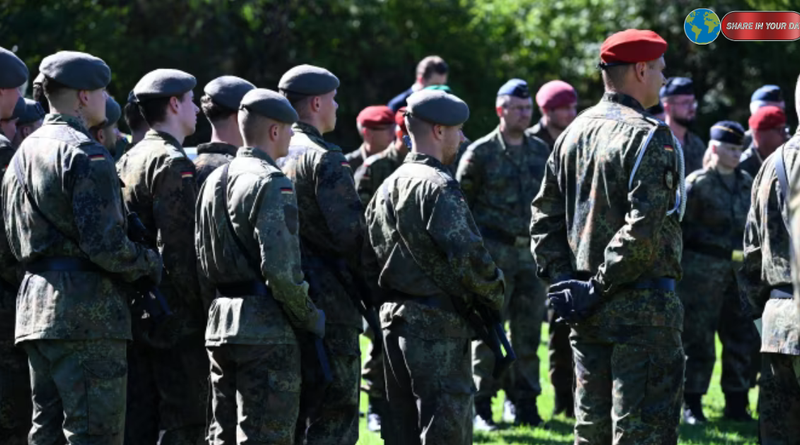
Use a properly licensed editorial image of German Defense Minister Boris Pistorius or German Bundeswehr forces, preferably connected to the Lithuania brigade or a current German defense procurement event.
Image ALT: Germany military rebuild and Bundeswehr forces in Europe
Source link: Original Wall Street Journal article
Credible supporting sources: Germany’s Bundestag reports that planned 2027 defense spending could reach €139.6 billion, while the Bundeswehr says its Lithuania brigade is expected to reach operational readiness by the end of 2027. DDeutscher Bundestag+1
If you provide your target website/domain, I can also replace the suggested internal links with specific internal-link placements and anchor text.