Portsmouth Anti-Migrant Protest Sparks Police Investigation
The Portsmouth anti-migrant protest has triggered a police investigation after several officers were injured and vehicles were damaged during disorder following the arrival of migrants by small boat.
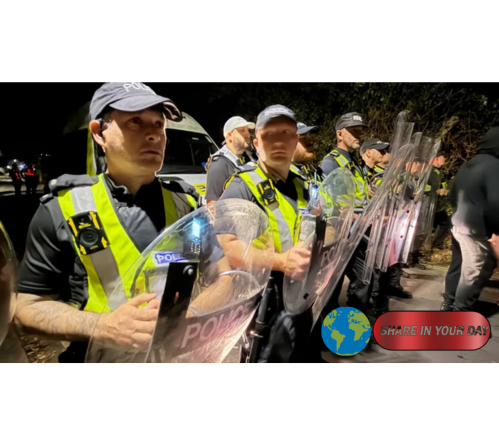
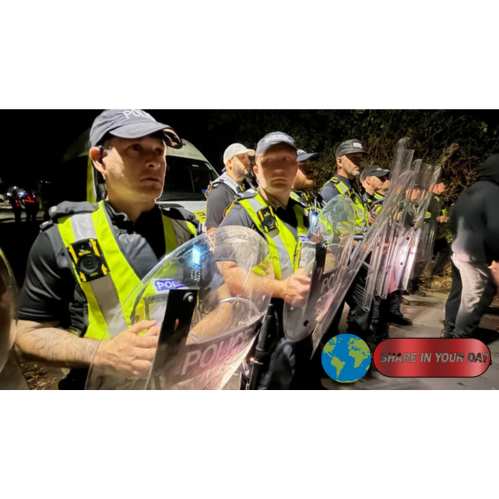
Around 200 demonstrators gathered near the Eastney area of Portsmouth on Sunday night, with some wearing masks and confronting police officers in riot equipment. The protest followed the arrival of a dinghy carrying migrants across the English Channel from France.
Hampshire and Isle of Wight Constabulary said a small number of officers were treated at the scene for injuries, although none was seriously hurt. Police also reported damage to vehicles belonging to police, the Coastguard and Border Force.
The incident has intensified an already heated political debate over immigration, border security and the UK’s response to Channel crossings.
Government Condemns Portsmouth Anti-Migrant Protest
The British government has strongly condemned the disorder.
Policing Minister Sarah Jones described the behavior as intimidating and “thuggish” and warned that people who crossed the line from peaceful protest into criminal activity could face legal consequences. The government also stressed that peaceful protest remains a fundamental democratic right.
The distinction between lawful protest and violence has become a central issue following the Portsmouth incident. Authorities say criminal damage and assaults cannot be justified as part of a political demonstration.
The response came after a weekend of heightened tensions at two major English ports.
On Saturday, demonstrators had also disrupted traffic around Dover. The Portsmouth protest the following day raised concerns that similar demonstrations could spread to other locations associated with Channel crossings.
What Happened During the Portsmouth Protest?
The Portsmouth anti-migrant protest began after a small boat carrying migrants reached the southern English coast.
According to reports, the vessel had traveled from France and was intercepted in waters near Portsmouth. Coastguard and lifeboat teams were involved in bringing those on board safely ashore.
Reports have put the number of migrants on the boat at roughly 120 to 140, with the BBC reporting 120 in its initial account. Other reports have cited approximately 140 people.
After the arrival, demonstrators gathered around the Eastney Landing area. Roads were blocked for several hours as protesters attempted to prevent vehicles carrying the migrants from leaving.
Police formed lines using riot shields as they attempted to keep the area under control and protect vehicles involved in the operation.
A dispersal order was eventually imposed. By the early hours of Monday, demonstrators had been dispersed.
Police subsequently launched an investigation to identify people suspected of assault, criminal damage and other offenses.
Police Officers Injured as Vehicles Are Damaged
One of the most serious elements of the Portsmouth anti-migrant protest was the reported violence directed toward police.
Hampshire and Isle of Wight Constabulary said several officers sustained injuries, although none required serious medical treatment. Vehicles used by police and other emergency agencies were also damaged.
Police emphasized that peaceful protest and criminal violence are fundamentally different.
The force said its investigation would focus on individuals suspected of assaulting officers, damaging vehicles and committing other offenses during the unrest. At the time of the initial reports, no arrests had been announced.
The situation highlights the difficult role police face during demonstrations involving highly sensitive political issues.
Officers must protect the right to lawful protest while also preventing violence, maintaining public order and ensuring emergency operations can continue.
Why Did Migrants Arrive in Portsmouth?
The arrival itself attracted significant attention because Portsmouth is not the UK’s traditional main landing point for Channel migrants.
Dover and nearby parts of Kent have historically been much more closely associated with small-boat crossings. Portsmouth lies farther west along England’s southern coastline.
The boat involved in Sunday’s incident reportedly departed from the Normandy region of France rather than the area around Calais. That route is substantially longer than the commonly used crossing toward Dover.
The change has raised questions about whether people smugglers are adapting their routes in response to increased French enforcement.
Police and local officials have expressed concerns that towns not traditionally associated with Channel arrivals may not have the same infrastructure or procedures in place to handle sudden migrant landings.
Portsmouth City Council leader Steve Pitt said the Home Office faced serious questions over the decision to bring the migrants ashore in the area, arguing that the incident created unnecessary disruption for the city.
Portsmouth Anti-Migrant Protest Follows Dover Demonstration
The Portsmouth unrest did not happen in isolation.
A day earlier, a large group of masked demonstrators gathered around Dover, blocking roads and disrupting traffic at one of Britain’s busiest ports.
The protesters reportedly wore dark clothing and some covered their faces while demonstrating against small-boat crossings.
The Dover incident was followed less than 24 hours later by the much larger confrontation in Portsmouth. The sequence has increased concern among authorities about coordinated or rapidly mobilized anti-migrant demonstrations.
Reuters reported that hundreds of people took part in the Portsmouth demonstration and that police were investigating injuries and vehicle damage.
The incidents have therefore become part of a wider discussion about public order and the increasingly contentious politics surrounding migration in Britain.
UK Small-Boat Crossings Remain a Major Political Issue
Immigration has remained one of the most politically sensitive issues in the United Kingdom.
Small boats crossing the English Channel have become a major focus of successive governments, with policymakers under pressure to reduce arrivals and disrupt people-smuggling networks.
According to figures cited by the BBC, 17,138 people had crossed the Channel in small boats between January 1 and September 6, 2026. That represented a 43% decrease compared with the same period in the previous year.
Despite the decline, the overall number remains politically significant.
The government has emphasized cooperation with France and increased efforts to prevent boats from departing. British and French authorities have also discussed strengthening patrols and tackling smuggling networks.
However, local communities remain concerned about how arrivals are processed once boats reach British waters.
Changing Routes Could Create New Challenges
The Portsmouth incident has also raised a broader question: could Channel migration routes be changing?
Historically, Dover and Kent have been central to the UK’s response to small-boat arrivals. A landing farther west could complicate the logistics of reception, processing and transportation.
The journey from Normandy to the Portsmouth area is considerably longer than the typical route toward Dover. That may increase risks for people attempting the crossing while also creating new challenges for emergency responders.
Authorities must therefore consider not only how to reduce crossings but also how to prepare for arrivals in locations that have less experience dealing with them.
The incident could prompt further discussions between the Home Office, Border Force, local councils, police forces and maritime authorities.
Police Face Pressure After Portsmouth Anti-Migrant Protest
The police response is likely to come under further scrutiny following the Portsmouth anti-migrant protest.
Authorities must determine whether they had adequate intelligence before the demonstration developed and whether sufficient officers were available to manage the crowd.
The protest followed a similar demonstration in Dover, making the timing particularly significant.
At the same time, police must balance operational concerns with legal protections for peaceful assembly.
Officials have repeatedly emphasized that people are entitled to express opposition to government immigration policy. However, blocking roads, damaging property or attacking officers can result in criminal investigation.
That distinction is expected to remain central as authorities investigate the Portsmouth events.
What Happens Next?
The immediate focus is now on identifying people suspected of criminal offenses.
Police are expected to review footage, social media material and other evidence gathered during the demonstration. Investigators will also examine reports involving damaged vehicles and injuries to officers.
The government is meanwhile facing pressure from different directions.
Immigration campaigners are demanding tougher action against illegal crossings and people-smuggling networks. At the same time, civil liberties groups are likely to stress the importance of protecting peaceful protest and avoiding unnecessary restrictions on political expression.
For Portsmouth, the episode has also raised practical questions about the city’s role in dealing with future migrant arrivals.
If smugglers continue using routes farther west along England’s southern coast, local authorities may need greater resources and clearer contingency plans.
A Wider Test for Britain’s Migration Policy
The Portsmouth anti-migrant protest illustrates how quickly Britain’s migration debate can move from political disagreement to public-order challenges.
The arrival of migrants by small boat remains a complicated issue involving border enforcement, asylum law, international cooperation and local government capacity.
For the government, reducing crossings remains a major political objective. Yet the latest events show that even when overall arrival numbers fall, individual landings can still trigger significant disruption.
The Portsmouth incident also demonstrates the importance of separating legitimate political debate from violence and criminality.
Authorities now face the task of investigating the disorder while maintaining public confidence and preparing for possible future arrivals.
As Britain continues negotiations and enforcement efforts with France, the coming months could reveal whether the recent decline in Channel crossings becomes a sustained trend — and whether new routes emerge in response.
For Portsmouth residents, meanwhile, the weekend’s events have brought the national immigration debate directly into their streets.
The police investigation will determine whether those responsible for assaults and damage are identified and prosecuted. The broader political argument over Britain’s borders, however, is certain to continue.