iPhone Ultra Price Was Originally Targeted at $1,999
The iPhone Ultra price could be higher than Apple originally intended. According to the latest reporting surrounding Apple’s first foldable iPhone, the company initially targeted a starting price of $1,999, but rising component costs have reportedly forced Apple to consider a price as high as $2,199.
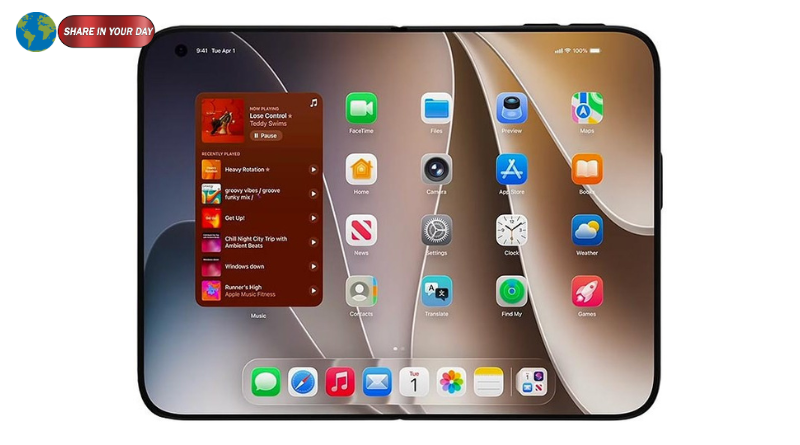
The development adds another major question to Apple’s highly anticipated foldable iPhone launch. While the company has not officially announced the final price, reports suggest that Apple has been weighing several pricing strategies in recent weeks.
The latest information comes as Apple prepares to unveil its first foldable iPhone. The device is widely expected to carry the iPhone Ultra name and sit above the conventional iPhone lineup as the company’s most expensive smartphone.
For consumers, the difference between $1,999 and $2,199 is significant. It could also determine whether Apple’s first foldable becomes an aspirational product for a relatively small group of customers or a more accessible flagship aimed at a broader premium market.
Why the iPhone Ultra Price Could Reach $2,199
The main issue appears to be cost.
According to reporting summarized by 9to5Mac, Apple initially targeted a $1,999 entry price for the foldable iPhone. However, the company has more recently discussed a starting price of approximately $2,199 as component expenses increase.
Foldable smartphones are significantly more complicated to manufacture than traditional smartphones. Apple would need to integrate a flexible display, sophisticated hinge hardware and a thin chassis while maintaining the durability and reliability expected from an iPhone.
Memory costs are also reportedly contributing to the pressure.
The latest reports indicate that a memory shortage has caused Apple to exceed some of its original cost targets. That could make it harder for the company to preserve a $1,999 retail price while maintaining its usual margins.
In other words, the higher iPhone Ultra price may not simply reflect Apple trying to charge more for a premium product. It could also reflect the unusually expensive technology required to manufacture the device.
Apple’s Foldable iPhone Is Expected to Be Ultra-Premium
Apple already has a premium iPhone strategy, but the rumored iPhone Ultra would take that approach to another level.
For comparison, Apple currently sells the iPhone 17 starting at $799 in the United States, while the iPhone 17 Pro starts at $1,099. The company’s current iPhone lineup also includes the iPhone Air, which starts at $999.
That means a $1,999 iPhone Ultra would cost roughly twice as much as an iPhone Air and substantially more than the entry-level iPhone 17 Pro.
At $2,199, the gap would become even more dramatic.
The pricing strategy would position the foldable iPhone as a completely different category rather than simply another iPhone model.
That approach would make sense if Apple views the device as a technology showcase. A foldable phone can effectively combine a conventional smartphone with a much larger tablet-style display, potentially giving customers a device that serves multiple purposes.
iPhone Ultra Price Could Exceed $3,000
The starting price may not be the most expensive version.
Reports indicate that higher-storage configurations of the iPhone Ultra could approach $3,000.
This would place the highest-end version in an entirely different pricing category from Apple’s standard iPhone models.
Storage upgrades have traditionally been an important part of Apple’s premium pricing strategy. If the iPhone Ultra launches with several storage tiers, customers could see the cost rise sharply as they move toward larger capacities.
For example, a hypothetical $1,999 entry-level configuration could leave significant room for Apple to charge hundreds of dollars more for additional storage.
That means shoppers interested in the iPhone Ultra should not assume that the headline price will represent the cost of every version.
The entry-level configuration may be designed primarily to establish the product’s starting point, while higher-capacity models could target customers who are less sensitive to price.
What the iPhone Ultra Could Look Like
The rumored iPhone Ultra is expected to use a book-style folding design.
When closed, it would function like a conventional smartphone. When opened, the internal display could provide a much larger workspace suitable for video, gaming, multitasking and productivity.
Recent reports have pointed toward an internal display measuring approximately 7.7 to 7.8 inches, paired with an outer screen in the range of roughly 5.3 to 5.5 inches.
The design is expected to emphasize a relatively wide internal display, potentially giving the device an experience closer to a small tablet than a conventional phone.
Apple is also reportedly focusing heavily on the foldable display’s crease.
The hinge and screen technology will be critical because Apple enters the foldable market several years after Samsung and other manufacturers. That gives the company an opportunity to learn from earlier foldable devices and potentially deliver a more refined first-generation product.
Apple May Make Some Surprising Hardware Compromises
Despite the Ultra branding, the foldable iPhone may not have every feature found on Apple’s Pro models.
One of the more interesting rumors concerns biometric authentication.
Reports suggest that Apple could use Touch ID integrated into the side button instead of Face ID. The reason could be the difficulty of fitting Face ID hardware into an extremely thin foldable design with displays on both sides of the device.
Camera hardware could also involve compromises.
Current reports suggest that the iPhone Ultra may feature two rear cameras rather than the three-camera system found on the Pro models. Some reports indicate that Apple could omit a dedicated telephoto camera because of the internal space limitations created by the folding mechanism.
That creates an interesting question.
Would customers be willing to pay nearly $2,000 or more for a phone that potentially lacks some camera features found on cheaper Pro models?
Apple’s answer appears to be that the foldable design itself will be the primary selling point.
iPhone Ultra Price Compared With Apple’s Current Lineup
Apple’s current U.S. lineup provides useful context for understanding just how ambitious the rumored pricing would be.
The iPhone 17 starts at $799, while the iPhone Air starts at $999 and the iPhone 17 Pro starts at $1,099.
That creates a substantial gap between Apple’s mainstream premium smartphones and the rumored iPhone Ultra.
A $1,999 starting price would make the foldable approximately:
- $900 more than the iPhone 17 Pro
- $1,000 more than the iPhone Air
- $1,200 more than the standard iPhone 17
At $2,199, the gap would become even larger.
This is one reason analysts have expected Apple to treat the foldable as a niche luxury product rather than a replacement for the conventional iPhone.
Apple Could Use the iPhone Ultra to Define a New Category
The high iPhone Ultra price may actually be part of Apple’s broader strategy.
Apple has previously demonstrated that it is willing to introduce expensive products when it believes a new category can command premium pricing. The Apple Vision Pro is an obvious example of a product positioned well above Apple’s mainstream consumer hardware.
The iPhone Ultra could follow a similar path.
Rather than trying to sell the foldable to every iPhone customer, Apple could target enthusiasts, professionals and customers who want the newest form factor regardless of price.
That strategy would also protect Apple’s existing iPhone lineup.
A customer who does not want to spend $2,000 could still buy an iPhone 17 or iPhone 17 Pro. Meanwhile, customers seeking the most advanced and unusual iPhone would have a new premium option.
Competition Could Put Pressure on Apple
Apple will also need to consider the existing foldable market.
Samsung has spent years developing its Galaxy Z Fold line, while Google and other manufacturers have also introduced book-style foldable smartphones.
That means Apple is not entering an empty market.
A $1,999 starting price would put the iPhone Ultra near the pricing territory of premium Android foldables. A $2,199 starting price, however, could make Apple’s device noticeably more expensive than some competitors.
The difference could be justified if Apple’s software, hardware integration and ecosystem provide enough value.
Apple will likely argue that the combination of iOS, Apple silicon, cameras, battery technology and ecosystem integration makes the higher price worthwhile.
Whether consumers agree will ultimately depend on the final hardware and real-world experience.
The $1,999 Target Still Matters
Even if Apple launches the iPhone Ultra at $2,199, the reported $1,999 target remains important.
It suggests that Apple was actively trying to keep the starting price below the psychologically important $2,000 threshold.
That number has marketing value.
A starting price of $1,999 allows Apple to describe the product as a sub-$2,000 smartphone. Moving to $2,199 removes that advantage and places the product firmly into ultra-premium territory.
The reported shift also highlights how difficult foldable manufacturing remains.
Apple is known for demanding strict quality standards from its suppliers. If the company is unwilling to compromise on the display, hinge, thickness or durability, those requirements could push manufacturing costs higher.
When Will Apple Reveal the iPhone Ultra?
Apple is expected to unveil the iPhone Ultra alongside its next-generation premium iPhones at its September 2026 event. Current reporting points to a September 9 announcement, although availability could be constrained depending on production.
Apple’s official product pages currently list the iPhone 17, iPhone 17 Pro and iPhone Air as part of its available iPhone lineup, meaning the foldable remains outside Apple’s confirmed retail lineup until its official announcement.
Until Apple officially announces the product, every specification and price discussed above should be treated as reported information rather than confirmed specifications.
That distinction is particularly important with pricing because Apple could change the final number right up until launch.
What the iPhone Ultra Price Means for Buyers
The biggest question is not whether Apple can build a foldable iPhone. After years of development, the company appears ready to enter the category.
The bigger question is whether consumers will consider the device worth its price.
At $1,999, the iPhone Ultra would already be one of the most expensive mainstream smartphones available. At $2,199, it would become an even more exclusive product.
For early adopters, the appeal will likely come from the combination of Apple’s ecosystem and a completely new form factor.
For everyone else, the conventional iPhone Pro models may offer a better balance of features and price.
Apple therefore faces a delicate pricing decision. A lower price could make the foldable more attractive and generate greater demand, but it could also reduce margins on an expensive product to manufacture.
A higher price would protect profitability and reinforce the Ultra brand, but it could limit sales.
Final Verdict: The iPhone Ultra Could Be Apple’s Biggest Pricing Test
The reported change from a $1,999 target to a possible $2,199 starting price shows just how expensive Apple’s first foldable iPhone could become.
The device is expected to introduce a book-style folding design, a large internal display and several new hardware approaches. However, rumors also point toward compromises involving cameras and biometric authentication.
Apple’s current iPhone lineup starts far below the rumored Ultra price, making the foldable a clear step into luxury territory.
For now, the iPhone Ultra price remains unconfirmed.
The most important figure to watch is whether Apple ultimately chooses the psychologically attractive $1,999 starting point or accepts a higher $2,199 price because of rising component and memory costs.
If Apple launches at $1,999, it could make a major statement about the company’s ambitions in foldables.
If it launches at $2,199 or higher, Apple will be signaling something very different: that its first foldable iPhone is designed not to compete on price, but to establish an entirely new premium tier.
Either way, the iPhone Ultra is shaping up to be one of Apple’s most closely watched products in years.