UK Veterans War Exercise: 5 Key Facts Revealed
The UK is preparing a major UK veterans war exercise for 2027 that will test how effectively former military personnel can be recalled, equipped and used during a national crisis. The exercise will involve members of Britain’s Strategic Reserve, a pool of roughly 95,000 former regular and reserve personnel who retain a liability for recall. BBBC Mirror+1
The announcement represents a significant change in the way Britain is approaching military readiness. For years, the Strategic Reserve existed largely in the background. Now, ministers want to test whether the system can actually work if the country faces a serious emergency.
Armed Forces Minister Louise Sandher-Jones told the House of Lords National Resilience Committee that the planned exercise would challenge the Ministry of Defence on a scale not seen for a very long time. BBBC Mirror
The exercise is not being presented as evidence that Britain expects a war to begin in 2027. Instead, officials say the purpose is to test procedures before they are ever needed.
What Is the UK Veterans War Exercise?
The planned UK veterans war exercise is part of a broader effort to improve Britain’s ability to mobilise military personnel during a crisis.
The 2027 exercise will test procedures for calling former service personnel back into military service, identifying their roles, providing equipment and preparing them for deployment.
The exact number of veterans who will participate has not yet been announced.
The Strategic Reserve is different from Britain’s regular part-time reserve forces. It is largely made up of people who have previously served in the Armed Forces and retain a legal liability to be recalled under certain circumstances.
The government has estimated the Strategic Reserve at approximately 95,000 people. HHansard
That makes it a potentially important source of trained personnel if Britain ever needs to expand its military capacity rapidly.
However, having tens of thousands of former service personnel on a database is not the same as being able to mobilise them effectively.
The upcoming exercise is designed to find out whether the system works in practice.
1. Britain Wants to Test Its Strategic Reserve
One of the biggest reasons for the exercise is simple: Britain needs to know whether it can actually use the reserve when required.
The Ministry of Defence has previously acknowledged the need to improve information about former service personnel, including their contact details, locations and other relevant information.
A written parliamentary response said the government was working to improve its information on ex-Regular Service personnel who still have Strategic Reserve liabilities. It also said future exercises would help improve assurance of that information. UUK Parliament+1
This matters because people move.
They change jobs, addresses and telephone numbers. Their professional skills also evolve after leaving military service.
A reserve system therefore needs to remain current.
The 2027 exercise will provide a practical test of whether the Ministry of Defence can identify the right people and reach them quickly.
That is very different from simply having a list of former soldiers, sailors and air personnel.
2. Around 95,000 Former Personnel Are in the Strategic Reserve
The size of Britain’s Strategic Reserve is another reason the announcement has attracted attention.
Parliamentary evidence puts the number at approximately 95,000. HHansard
These are not 95,000 active-duty troops waiting on military bases.
They are former service personnel who retain obligations that could allow the government to recall them under specified circumstances.
That distinction is important.
The reserve is designed to provide additional manpower when the country faces circumstances serious enough to require it.
The government has been working to strengthen this system.
In January 2026, the Ministry of Defence announced measures intended to expand and improve the Strategic Reserve, describing former service personnel as a valuable pool of skills and experience that could be used during a crisis. GGOV.UK
The government said the changes were designed to strengthen Britain’s readiness and improve its ability to draw on former personnel when necessary.
The 2027 exercise will put those changes to a practical test.
3. The Recall Age Has Been Raised
Another significant development is the change to the age limit for members of the Strategic Reserve.
The government has increased the upper age limit for certain former personnel from 55 to 65. The change is intended to broaden the pool of people who could potentially be called upon during a serious crisis. BBBC Mirror+1
That does not mean every veteran aged between 55 and 65 will automatically be sent back into military service.
Instead, the change increases the government’s ability to draw upon experienced former personnel when the legal conditions for recall are met.
The policy reflects a wider concern about Britain’s available military manpower.
Modern armed forces require highly specialised skills, from intelligence and engineering to logistics, communications and technical operations.
A former service member may therefore possess valuable experience even years after leaving active duty.
For the Ministry of Defence, the Strategic Reserve provides a way to retain access to some of that expertise.
4. The Exercise Is About More Than Soldiers
It would be easy to interpret the announcement as simply a plan to put retired soldiers back into uniform.
The reality is more complicated.
A large-scale mobilisation requires an extensive administrative and logistical system.
Authorities need to know who is available.
They need to contact those individuals.
They need to establish their status and determine what role they could perform.
They also need to provide uniforms, weapons where appropriate, communications equipment, accommodation, transportation and other military resources.
Medical and administrative checks may also be required.
That means the 2027 exercise is effectively a test of an entire mobilisation chain.
Sandher-Jones said the exercise would go through procedures to “call out, use and equip” the Strategic Reserve. BBBC Mirror+1
That language is important.
The exercise is not simply about discovering whether veterans are willing to answer a telephone call.
It is about determining whether the government can turn a large pool of former military personnel into an organised and usable force.
5. The UK Is Trying to Improve War Readiness
The announcement comes as Britain is placing greater emphasis on national resilience and defence readiness.
The government has been reviewing the country’s ability to respond to major emergencies, including military threats.
The Strategic Reserve reforms are part of that wider process.
The Ministry of Defence’s January announcement described the reserve as an important source of skilled former personnel during times of crisis. GGOV.UK
A government impact assessment also says the Ministry plans to conduct synthetic exercises from 2027 onwards to evaluate the effectiveness of mobilisation procedures.
Those exercises are expected to help measure issues such as recall effectiveness, reserve engagement, availability of people with specialist skills and the speed with which personnel can be accessed. GGOV.UK
This suggests the 2027 exercise will not necessarily be a one-off event.
Instead, it could become part of a longer-term programme designed to make Britain’s reserve system more reliable.
Why Is Britain Focusing on Veterans Now?
The renewed focus on former service personnel comes as Western governments reassess military readiness.
For decades after the Cold War, many European countries reduced their military capabilities and placed less emphasis on large-scale mobilisation.
The security environment has since changed.
Russia’s war in Ukraine, concerns about European defence capacity and pressure on NATO members to strengthen their armed forces have all contributed to a renewed focus on preparedness.
Britain is responding by looking not only at the size of its active military but also at the wider pool of people who could contribute during a major emergency.
That includes reservists and former service personnel.
The approach effectively asks a basic question:
If Britain suddenly needed more trained personnel, how quickly could it find them?
The 2027 exercise should provide some answers.
The Strategic Reserve Is Not the Same as a General Draft
The announcement has also generated concern and speculation about whether Britain is moving toward compulsory military service.
The Strategic Reserve should not be confused with a general military draft.
The people involved are former service personnel who already have a legal recall liability.
The exercise is intended to test that existing system.
It does not mean the British government has announced a nationwide programme requiring civilians to join the Armed Forces.
That distinction is important when interpreting headlines about veterans being “called up.”
The exercise is about testing mobilisation procedures among people who already have a connection to the military.
A Former Soldier Is Now Helping Lead the Policy
There is an unusual personal element to the story.
Louise Sandher-Jones, the Armed Forces Minister discussing the reforms, previously served in the British Army as an intelligence officer.
She is also herself part of the Strategic Reserve.
According to the BBC report, Sandher-Jones said that when she left the Army and discovered she was in the Strategic Reserve, she essentially put the information aside and did not expect to think about it again.
She now says that attitude has changed and that the reserve represents a real commitment for those who remain part of it. BBBC Mirror
Her comments highlight one of the central challenges facing the system.
A reserve is only useful if the people in it understand their status and the government knows how to reach them.
The exercise will therefore test both sides of that relationship.
What Happens If a Crisis Occurs?
The purpose of a reserve mobilisation system is to provide additional military capacity when the situation requires it.
The exact process would depend on the circumstances and the legal authority under which personnel were recalled.
The government has already been changing the rules surrounding the Strategic Reserve.
The January 2026 government announcement said the Armed Forces Bill would strengthen the reserve by changing recall arrangements for former personnel. GGOV.UK
The objective is to make the system more useful during serious national emergencies.
That does not mean every member would be mobilised simultaneously.
Instead, the government would potentially draw upon the personnel and skills it needed.
A communications specialist could have a very different role from a former infantry soldier. An engineer or intelligence specialist could provide expertise that is difficult to replace quickly.
This is why maintaining accurate records of skills and experience is so important.
The Biggest Test May Be Administrative
The most important result of the 2027 exercise may not be how veterans perform in the field.
It could be what happens before they ever reach a military base.
Can the government contact them?
Are their addresses accurate?
Do their records show their current skills?
Can they be processed quickly?
Is the required equipment available?
Can they be transported to the correct location?
Are commanders able to integrate them into existing units?
These questions may sound mundane, but they are fundamental to military mobilisation.
A country could theoretically have tens of thousands of trained former personnel available and still struggle to deploy them if its administrative system is outdated.
That is precisely why the UK government has been working to improve its reserve records and mobilisation processes. UUK Parliament+1
What the 2027 Exercise Could Reveal
The exercise could expose weaknesses that are difficult to identify through paperwork alone.
For example, a database may show that a particular veteran lives at a certain address, while the reality may be completely different.
Another former service member may have developed valuable civilian expertise that is not reflected in military records.
Equipment could also become an issue.
If thousands of former personnel are recalled simultaneously, the military must have enough suitable equipment and facilities to accommodate them.
Training is another consideration.
Former service personnel may have extensive military experience, but that does not necessarily mean they can immediately perform every role after years away from active service.
The exercise should help officials identify those gaps.
What It Means for Britain’s Defence Strategy
The renewed focus on the Strategic Reserve suggests that Britain is thinking more seriously about the depth of its military manpower.
Modern warfare places enormous demands on personnel.
Technology can provide significant advantages, but armed forces still require people to operate systems, maintain equipment, analyse intelligence, provide logistics and command units.
A reserve of experienced former personnel can therefore act as an additional layer of resilience.
The government has already described the Strategic Reserve as a pool of valuable skills and experience. GGOV.UK
The challenge is turning that potential into a reliable capability.
The 2027 exercise is an important step because it will test the system before a real emergency forces Britain to rely upon it.
What the Announcement Does Not Mean
Despite the dramatic nature of some headlines, the announcement does not mean Britain is preparing to send veterans into a war next year.
The exercise is a preparedness drill.
It is designed to test mobilisation procedures and resilience.
The UK government has not announced that a war will occur in 2027, nor does the exercise itself indicate that one is inevitable.
Military exercises are designed precisely because governments want to identify weaknesses before real-world crises occur.
In that sense, the announcement is better understood as a readiness measure rather than a prediction of conflict.
Final Takeaway
The planned UK veterans war exercise marks a major shift in Britain’s approach to its Strategic Reserve.
Roughly 95,000 former regular and reserve personnel are estimated to have a recall liability, and the government wants to establish whether it can actually contact, equip and mobilise them if a major crisis occurs. BBBC Mirror+1
The 2027 exercise will test that system at a scale ministers say has not been seen for a very long time.
The move follows changes that have expanded the reserve’s potential role, including raising the relevant age limit from 55 to 65 and strengthening the government’s ability to use former personnel during serious emergencies. BBBC Mirror+1
For Britain, the biggest lesson may be simple: military readiness is not just about how many troops are currently serving.
It is also about how quickly a country can access trained people when circumstances change.
The 2027 exercise will reveal whether Britain’s Strategic Reserve is a functioning military resource or simply a large list of former personnel.
That answer could become increasingly important as the UK reassesses its defence posture and national resilience.
Image ALT Text
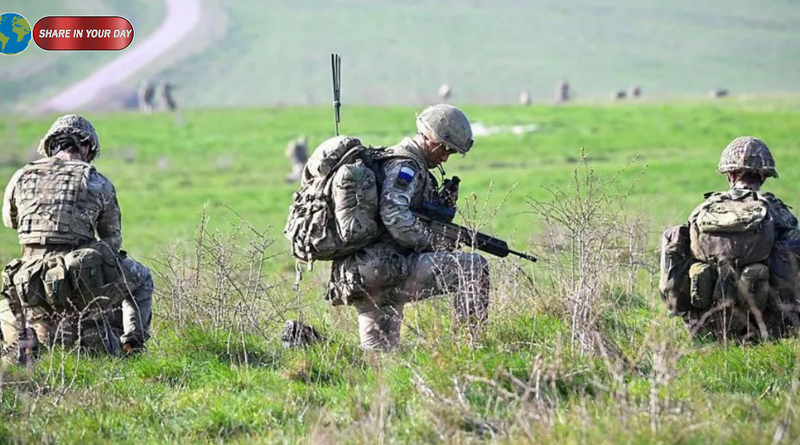
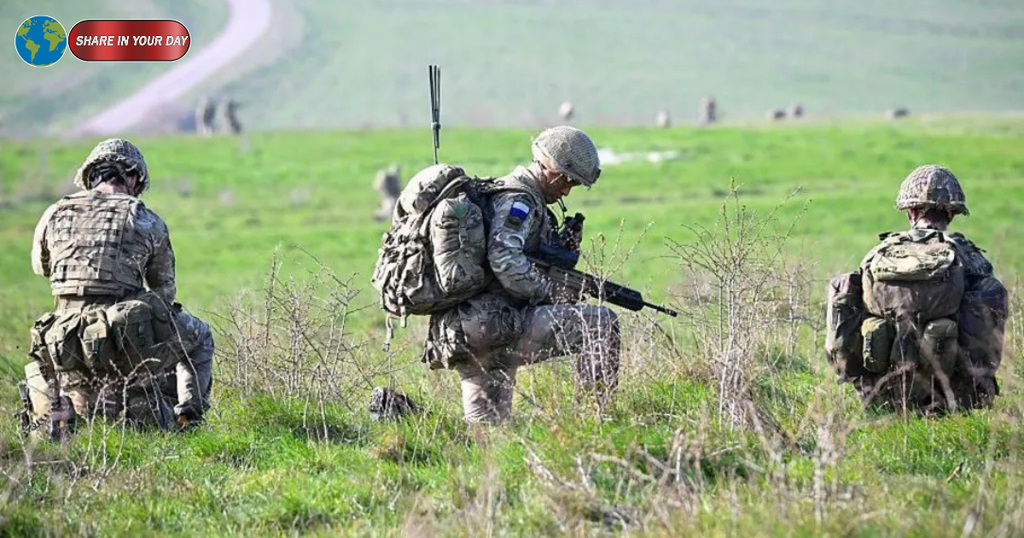
UK veterans war exercise: British military veterans preparing for Strategic Reserve mobilisation
Recommended Image
Use a legitimate editorial or government image showing British Army personnel during a military exercise. The UK Ministry of Defence provides suitable imagery through its official channels.
Suggested External Links
- BBC News — Some veterans to be called up to test UK’s war resilience
- UK Government — Strategic Reserve reforms
- UK Parliament — Armed Forces Bill evidence
Internal Link Suggestions
If your website already has related content, link naturally to:
- UK defence news
- British Army news
- NATO and European security coverage
- UK military spending
- Russia-Ukraine war developments
- Military technology and defence analysis