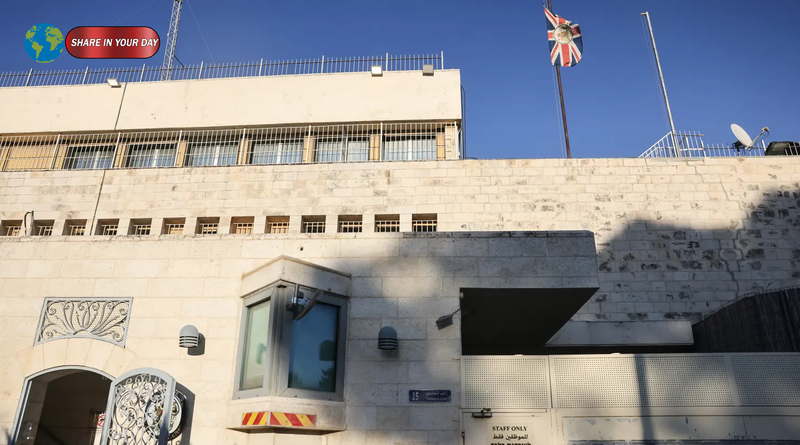
Israel has ordered the UK Israel consulate in East Jerusalem to close within 30 days
marking a dramatic escalation in diplomatic tensions between the two countries. The move came after Britain announced new restrictions targeting trade with Israeli settlements in the occupied West Bank, prompting a sharp Israeli response against British diplomats and officials.
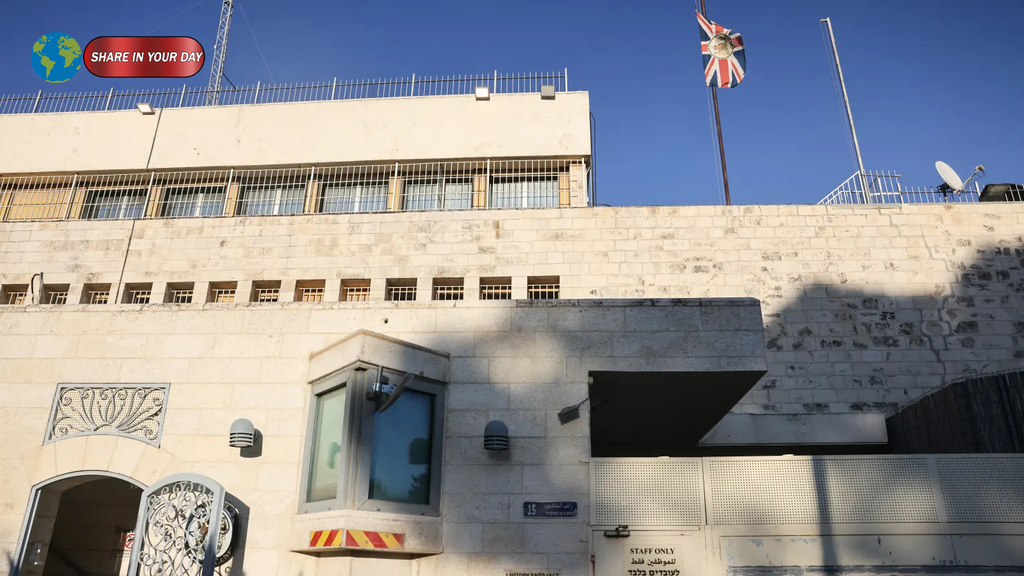
The dispute is quickly becoming one of the most serious diplomatic confrontations between Britain and Israel in recent years. Alongside the planned closure of the British consulate, Israel has ordered British representatives connected to a Gaza coordination mission and diplomats based in Ramallah to leave within seven days, according to sources cited by Reuters.
Britain, meanwhile, has defended its decision to impose measures against Israeli settlement activity. Foreign Secretary Ed Miliband said the government had considered the consequences before deciding it could no longer stand by as settlement expansion and settler violence continued in the West Bank.
The confrontation highlights a widening gap between Israel and several of its traditional Western partners over the future of the West Bank, the two-state solution and the conduct of the war in Gaza.
UK Israel Consulate Ordered to Close Within 30 Days
The central development is Israel’s demand that the British consulate in East Jerusalem shut down within 30 days.
Israeli officials told Reuters that diplomats assigned to the consulate would also lose their accreditation at the end of the 30-day period. The consulate has a long history in Jerusalem and represents British interests concerning Jerusalem, the West Bank and Gaza, particularly on Palestinian-related issues.
The decision is significant because the British diplomatic presence in Jerusalem plays a role beyond ordinary consular services. It has also been an important channel for Britain’s engagement with Palestinian institutions and communities.
Israel’s Foreign Minister Gideon Sa’ar announced the decision after Britain introduced its latest settlement-related measures. Israeli officials have described Britain’s actions as unacceptable interference in Israel’s affairs.
The move also comes only weeks before Israel’s general election, adding a domestic political dimension to the confrontation.
British Foreign Secretary Ed Miliband said he regretted the decision but said Israel’s response was not unexpected. He argued that London had weighed the potential costs of taking action and concluded that failing to respond to developments in the West Bank carried greater risks.
UK government statement on the two-state solution
Why the UK Israel Consulate Dispute Started
The dispute began with Britain’s decision to take tougher action against Israeli settlements in the West Bank.
On September 8, Britain joined France and Canada in announcing measures targeting trade involving Israeli settlements. Nine additional countries — Denmark, Finland, Iceland, Ireland, Norway, Poland, Portugal, Spain and Sweden — also endorsed the broader initiative or said they would consider similar national measures.
The British government says the measures are designed to protect the possibility of a future Palestinian state.
London has argued that continued settlement expansion, combined with rising settler violence, threatens the territorial basis required for a viable two-state solution.
The UK’s measures go beyond individual sanctions against people accused of violence. Britain has said it will ban imports from Israeli settlements and take action against companies and individuals involved in settlement-related services, including construction, infrastructure, financing and real estate.
That represents a significant escalation from previous British policies.
Earlier in 2026, Britain had already introduced sanctions against networks accused of financing or enabling settler violence. The government also warned British businesses against economic and financial activity in Israeli settlements.
UK and allies sanction networks enabling settler violence
UK Israel Consulate Closure Comes With Other Retaliation
The closure of the UK Israel consulate is only one part of Israel’s response.
British officials connected to a U.S.-led Gaza coordination mission in Israel, along with British diplomats stationed in Ramallah, have reportedly been given seven days to leave. Israel has also ended Britain’s role in training Palestinian security forces in the West Bank.
Israel has additionally banned 12 British lawmakers and other British nationals from entering the country.
The restrictions reportedly include prominent critics of Israel, including former Labour leader Jeremy Corbyn. Israeli officials have justified the entry bans by accusing targeted individuals of anti-Israel activity or antisemitism.
The measures indicate that Israel is targeting not only Britain’s commercial policy but also diplomatic and security cooperation.
That could have practical consequences.
The British consulate has traditionally provided an important platform for Britain’s engagement with Palestinian officials and civil society. Restrictions on British diplomats could therefore reduce London’s ability to communicate directly with Palestinian institutions from Jerusalem and the West Bank.
Britain Defends Settlement Sanctions
Despite Israel’s retaliation, the British government has shown little sign of reversing its decision.
Miliband said Britain had considered the risks and concluded that action was necessary. He has argued that settlement expansion and settler violence are undermining the possibility of a negotiated political settlement.
The British government has also stressed that its policies are directed at settlement activity and Israeli government policies rather than Israeli people.
That distinction has become an important part of London’s public argument.
Britain has simultaneously reaffirmed Israel’s security interests and condemned the October 7, 2023, Hamas attack. In its joint statement with partner countries, London said the two-state solution remains its preferred framework for achieving lasting peace and security for both Israelis and Palestinians.
The British position reflects a broader shift among some Western governments from criticism of settlement expansion toward direct economic measures.
For years, European governments have described Israeli settlements in the West Bank as illegal under international law while maintaining significant diplomatic and economic relationships with Israel.
The latest measures suggest some governments increasingly believe statements alone are insufficient.
Growing Pressure Over West Bank Settlements
The West Bank has become a major source of friction between Israel and its Western allies.
Britain and several other governments have recently criticized Israel’s plans for expanded settlement construction, including the E1 project.
The UK government has warned that development in the E1 area could threaten the territorial continuity of a future Palestinian state by creating a barrier between parts of the West Bank and East Jerusalem.
The British government has also cited increased violence by Israeli settlers against Palestinians.
In June, Britain announced another package of sanctions targeting individuals and organizations accused of financing or enabling settler violence. London said those measures were intended to support Palestinian communities and protect prospects for a two-state solution.
The latest trade restrictions go further because they focus on settlement-related economic activity rather than only specific individuals.
That distinction matters.
Settlement products represent only a relatively small share of Israel’s overall exports. As a result, analysts and diplomats have described the measures as having a largely symbolic economic impact.
Their political significance, however, could be much greater.
UK Israel Consulate Crisis Tests a Longstanding Relationship
Britain and Israel have maintained close ties for decades, including cooperation on intelligence, defense, trade and regional security.
The current dispute therefore carries significance beyond the fate of one diplomatic building.
The closure of the UK Israel consulate could complicate Britain’s ability to maintain its traditional diplomatic network concerning Palestinian affairs.
It could also make future negotiations more difficult if communication channels between London and Israeli authorities become increasingly restricted.
At the same time, Britain is not alone in adopting a tougher position.
France and Canada have also announced restrictions concerning goods originating from Israeli settlements. Other European countries have endorsed the broader effort or said they were considering additional measures.
This coordinated approach increases the political pressure on Israel.
However, the response from Washington has been more cautious.
U.S. Secretary of State Marco Rubio has said the United States does not want to see destabilizing developments in the West Bank but has not directly endorsed the British sanctions. The contrast highlights differences between Washington and several European governments over how to respond to Israeli settlement policy.
Israel Faces a Difficult Diplomatic Calculation
Israel’s decision to target Britain presents its own risks.
London remains an important Western power and a significant diplomatic actor. A prolonged confrontation could make cooperation more difficult in areas where Britain and Israel have traditionally worked together.
The Israeli government also faces criticism from its domestic opposition over its international relationships.
Opposition leader Yair Lapid has criticized the government’s handling of the diplomatic situation, although Israeli political parties remain deeply divided over Palestinian statehood and settlement policy.
Foreign Minister Sa’ar, meanwhile, has accused Britain of interfering in Israeli affairs and criticized the sanctions as politically motivated.
The government is also expected to consider additional responses toward other countries that joined or supported Britain’s settlement initiative.
That means the dispute could expand beyond Britain.
International Reaction Remains Divided
The British government’s decision has generated strong reactions inside the United Kingdom.
Britain’s chief rabbi condemned the sanctions as a deeply troubling moment, while other British Jewish organizations rejected the suggestion that criticism of Israeli government policies should be equated with hostility toward Jewish people.
Miliband, who has described himself as a proud British Jew, has also rejected that characterization.
The disagreement illustrates how controversial the issue has become inside Britain itself.
Supporters of the sanctions say the government is responding to settlement expansion and violence in the West Bank. Critics argue that the measures could damage Britain’s relationship with Israel and potentially create wider diplomatic and security problems.
The debate is likely to continue as the new measures are implemented.
What Happens Next?
The immediate deadline is the 30-day period imposed on the UK Israel consulate.
Unless the decision is reversed or an alternative arrangement is reached, Britain’s diplomatic presence at the East Jerusalem consulate will be significantly reduced.
British representatives connected to the Gaza coordination mission and diplomats in Ramallah face an even shorter seven-day deadline, according to sources cited by Reuters.
The next major question is whether Israel will impose further measures against Britain or extend its response to France, Canada and other countries involved in the settlement initiative.
Another question is whether Britain will respond with additional sanctions.
Neither side appears eager to publicly back down.
For Britain, the government has presented the settlement measures as part of a broader commitment to Palestinian statehood and the two-state solution. For Israel, the retaliatory measures are being framed as a defense of national sovereignty against what officials describe as foreign interference.
That leaves little room for an easy compromise.
UK Israel Consulate Closure Could Reshape Diplomacy
The confrontation over the UK Israel consulate is therefore about more than a building in East Jerusalem.
It reflects a wider disagreement over the future of the Israeli-Palestinian conflict and the role Western governments should play in influencing events on the ground.
Britain’s decision to target settlement trade demonstrates that some Western governments are moving from diplomatic criticism toward concrete economic pressure.
Israel’s decision to close the British consulate demonstrates that it is prepared to respond forcefully to that pressure.
The economic effects of the sanctions may be limited. Settlement goods account for only a small part of Israel’s overall trade. But diplomatic consequences can be harder to measure.
The loss of diplomatic access, the disruption of security cooperation and the deterioration of political trust could have consequences well beyond the immediate dispute.
For now, the 30-day deadline has become a symbol of the rapidly changing relationship between London and Jerusalem.
As Britain maintains its sanctions and Israel considers further retaliation, the confrontation could become an important test of how far Western allies are willing to go in challenging Israeli settlement policies — and how Israel will respond when longstanding partners move from criticism to direct action.
The outcome could shape Britain’s Middle East policy for years to come.