BRICS Summit 2026: Major India Talks Revealed
The BRICS Summit 2026 has brought some of the world’s most influential emerging economies together in New Delhi as leaders confront growing tensions over war, trade, energy security and the changing global order.
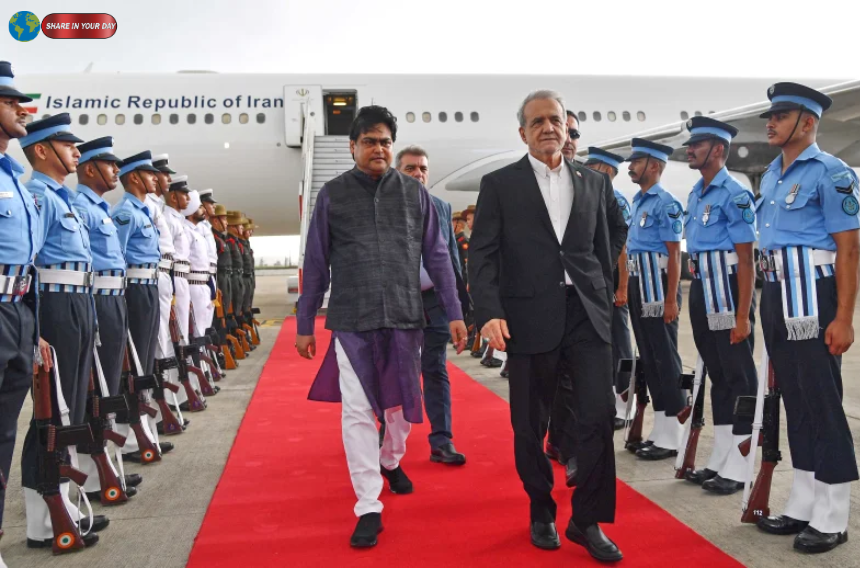
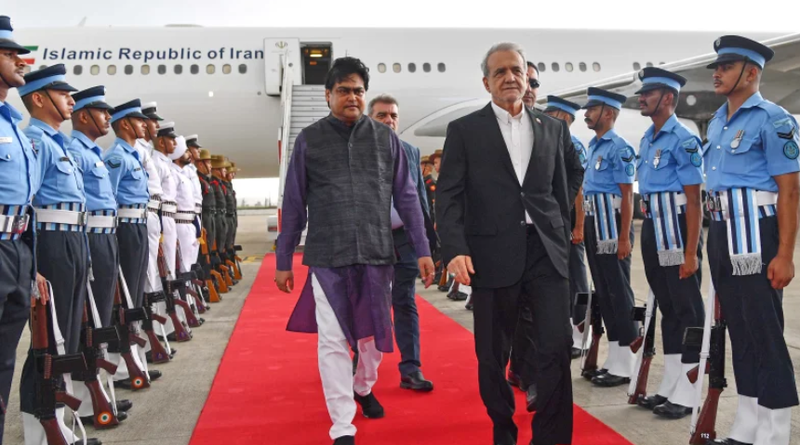
Hosted by Indian Prime Minister Narendra Modi, the 18th BRICS summit is taking place on September 12 and 13, 2026. The meeting comes at a particularly sensitive moment, with conflicts in the Middle East and Ukraine continuing to affect energy markets, shipping routes and international diplomacy. AP News+1
The summit has also created an important diplomatic opportunity for India and China. Chinese President Xi Jinping arrived in New Delhi for his first visit to India in seven years, while Xi and Modi held talks focused on improving bilateral relations, expanding business ties and maintaining peace along their disputed Himalayan border. Reuters+1
For BRICS, however, the gathering is about much more than relations between two Asian powers.
The expanded group is increasingly seeking a stronger voice for the Global South while questioning aspects of a global system traditionally dominated by the United States and its Western allies.
BRICS Summit 2026 Brings Major Powers Together
The BRICS Summit 2026 is being held in New Delhi under India’s chairmanship. India took over the rotating BRICS presidency at the beginning of 2026 and has placed resilience, innovation, cooperation and sustainability among the central themes of its chairship. Wikipedia+1
BRICS has changed dramatically since it was first established.
The group originally consisted of Brazil, Russia, India and China. South Africa joined in 2011, transforming BRIC into BRICS. More recently, the organization expanded again, adding Egypt, Ethiopia, Iran and the United Arab Emirates in 2024, followed by Indonesia in 2025. Reuters
Saudi Arabia has also been invited to join, although its formal membership status remains complicated. Reuters
The expanded organization now represents a substantial share of the world’s population and economic activity.
That growth has increased BRICS’ geopolitical significance, but it has also made consensus more difficult.
Member countries do not always share the same foreign-policy goals. India, China, Russia and other members have different relationships with the United States, Europe and one another.
The New Delhi summit therefore presents both an opportunity and a test for the organization.
India Uses the Summit to Push Diplomacy
India has sought to position itself as a bridge between different parts of the international system.
Modi has repeatedly emphasized that BRICS should not be viewed simply as an anti-Western organization. Instead, New Delhi wants the group to concentrate on cooperation, economic development and a stronger voice for developing countries. AP News+1
That position is particularly important as India maintains relationships with both Western governments and countries such as Russia and Iran.
The summit allows Modi to engage directly with leaders whose geopolitical interests sometimes conflict with those of Washington and its allies.
At the same time, India continues to have extensive economic and strategic interests in Western markets.
That balancing act is one of the defining features of India’s current foreign policy.
Xi Jinping’s India Visit Draws Global Attention
One of the most closely watched developments at the summit has been the meeting between Modi and Xi.
Xi’s visit marks his first trip to India in seven years and comes after years of tension between the two countries. Relations deteriorated sharply following a deadly 2020 border clash in the Himalayas. Reuters+1
Although military tensions have eased, the underlying territorial dispute has not disappeared.
India and China maintain substantial military deployments near their disputed frontier, while negotiations over the border have progressed slowly.
Against that background, Modi and Xi’s meeting carries significance beyond the BRICS framework.
The two leaders discussed the need for peace along the border while also exploring opportunities to improve trade, business connections and transportation links.
India and China have strong economic ties, but their relationship is heavily imbalanced.
Chinese customs data showed bilateral trade reached a record $155.6 billion in 2025. India imported approximately $132 billion worth of goods from China during the 2025-26 fiscal year, leaving New Delhi with a trade deficit exceeding $100 billion. Reuters
That imbalance is one of the issues the two governments are now attempting to address.
BRICS Leaders Focus on Middle East Tensions
The Middle East crisis has become another major issue at the BRICS Summit 2026.
Leaders expressed concern about escalating violence in the region and called for restraint and diplomatic solutions. They also condemned unilateral sanctions that are not authorized by the United Nations Security Council. AP News
The wording carries particular significance because Russia has faced extensive Western sanctions following its invasion of Ukraine.
Iran, another BRICS member, is also directly affected by the current regional conflict.
The summit’s declaration expressed concern about attacks on civilian infrastructure and peaceful nuclear facilities operating under international safeguards. Leaders emphasized the importance of protecting nuclear safety and security during armed conflicts. AP News
The statement did not explicitly name the United States or Israel.
Nevertheless, its language was widely viewed as an indirect criticism of military actions involving Iran.
Energy Security Becomes a Critical Concern
The conflict in the Middle East is also creating economic pressure far beyond the region.
Oil prices and energy supplies are particularly sensitive to instability in the Gulf. Any prolonged disruption to shipping or energy infrastructure could affect countries that rely heavily on imported fuel.
That makes the issue especially important for developing economies.
India, China and other large BRICS members require enormous amounts of energy to support economic growth. Higher oil prices can increase transportation costs, inflation and pressure on household budgets.
At the summit, BRICS leaders therefore face a difficult challenge.
They must promote political cooperation while also addressing the practical economic consequences of global conflicts.
BRICS Wants a Stronger Global Voice
The broader purpose of the organization remains closely connected to reforming international institutions.
BRICS was originally created partly because its members believed emerging economies did not have sufficient influence over global economic decision-making.
Today, the organization represents more than 40% of the world’s population and nearly a quarter of global GDP, according to Reuters. Reuters
Its members argue that institutions such as the United Nations and global financial organizations should better reflect the changing distribution of economic power.
India has supported greater representation for developing nations in international institutions.
China and Russia have gone further in advocating a world order less dependent on Western institutions and financial systems.
These differences make BRICS both influential and complicated.
The Dollar Question Remains Sensitive
Reducing dependence on the U.S. dollar has been an important subject within BRICS for years.
Some members have advocated greater use of national currencies for international trade and the development of alternative payment mechanisms.
Russia and China have been particularly supportive of efforts to reduce reliance on Western financial infrastructure. Iran has also promoted greater use of national currencies in trade. AP News+1
However, India has taken a more cautious approach.
New Delhi does not want BRICS cooperation to become a direct confrontation with Washington. The country’s economic and strategic relationships with the United States remain extremely important.
That explains why the dollar issue remains politically sensitive.
Rather than creating an immediate alternative to the existing financial system, BRICS appears more focused on gradually expanding options for cross-border trade and payments.
BRICS Expansion Creates New Opportunities
The expansion of BRICS has significantly increased its geographic reach.
The organization now includes major economies and energy producers from Asia, Africa and the Middle East.
That creates opportunities for greater cooperation in areas such as energy, infrastructure, agriculture, technology, healthcare and trade.
The group is also attempting to increase cooperation among small and medium-sized businesses and promote economic opportunities for developing countries.
The New Development Bank remains one of BRICS’ most important institutions. Reuters reports that the bank has financed nearly $43 billion in projects. Reuters
Such institutions allow BRICS members to pursue development financing outside traditional Western-led structures.
Yet expansion also creates new disagreements.
Countries joining BRICS do not automatically share the same priorities.
Some have close relationships with the United States. Others are openly critical of Washington.
Some members have disputes with one another.
The organization must therefore find common ground without pretending those differences do not exist.
India and China Seek a Careful Reset
The meeting between Modi and Xi may ultimately become one of the most important developments of the summit.
The two countries have powerful incentives to improve their relationship.
China is India’s largest or among its largest trading partners, while India is one of the world’s most important emerging markets.
Businesses on both sides have complained about restrictions, visa difficulties, regulatory obstacles and limited market access.
Both governments have therefore expressed interest in improving commercial connections.
At the same time, the border dispute remains a major obstacle.
Modi has stressed that peace in the border areas is essential for the broader development of India-China relations. Xi has emphasized China’s long-term strategic approach toward India. Reuters
That suggests the relationship is entering a period of cautious engagement rather than complete normalization.
Russia Remains an Important BRICS Player
Russian President Vladimir Putin is also participating in the summit as Moscow seeks stronger relationships outside the Western alliance system.
Russia’s position within BRICS has become more important since the invasion of Ukraine led to extensive Western sanctions.
The organization has provided Moscow with a diplomatic platform alongside countries that have refused to completely align with Western policy toward Russia.
India, meanwhile, continues to maintain longstanding defense, energy and economic ties with Moscow while also expanding its relationship with the United States and Europe.
That makes Modi’s diplomatic role particularly complicated.
India wants to maintain strategic autonomy rather than become fully aligned with any single major power.
What the BRICS Summit Means for the Global Economy
The significance of the BRICS Summit 2026 extends beyond politics.
The decisions and statements made by the group could influence international trade, energy markets, investment and currency arrangements.
BRICS members collectively represent a huge consumer market.
They also include some of the world’s largest producers of oil, gas, agricultural products and manufactured goods.
Greater cooperation could therefore produce significant economic benefits.
However, geopolitical divisions remain a major limitation.
BRICS does not operate like the European Union, where members have built extensive common institutions and policies.
It is better understood as a coalition of countries with overlapping interests but substantial differences.
That makes every major agreement a product of negotiation.
A Test of BRICS Unity
The biggest question facing the organization is whether its expansion will make it more powerful or more divided.
A larger membership gives BRICS greater geographic and economic weight.
But it also introduces more competing interests.
China wants a stronger alternative to U.S.-led global institutions. India wants greater influence for developing countries but does not necessarily want confrontation with Washington. Russia seeks diplomatic and economic alternatives while remaining deeply involved in the Ukraine conflict.
Iran has its own regional priorities.
The Gulf countries have different relationships with both China and the United States.
Brazil and South Africa bring additional perspectives from Latin America and Africa.
Keeping all these countries aligned will be difficult.
What Comes Next After the Summit?
The New Delhi summit is unlikely to solve every major international dispute.
However, it could influence the direction of global diplomacy during a period of significant uncertainty.
The most important outcomes may come from bilateral meetings rather than the formal BRICS declaration.
The Modi-Xi meeting could determine whether India-China relations continue to improve.
Discussions involving Iran and Gulf countries could shape regional diplomacy.
Conversations about trade and energy could influence economic policy.
And negotiations over financial cooperation could determine how quickly BRICS develops alternatives to existing international payment systems.
The group will also have to demonstrate that its expanding membership can produce practical results rather than simply issuing political statements.
BRICS Enters a New Era
The BRICS Summit 2026 represents a significant moment for a group that has changed dramatically since its creation.
What began as a small coalition of emerging economies has become a much broader platform representing countries across several continents.
Its members increasingly want a greater role in shaping international institutions, trade rules and global diplomacy.
But greater influence comes with greater responsibility.
BRICS must prove that its members can cooperate despite major differences in foreign policy, economics and regional interests.
The New Delhi summit offers an important test.
India has attempted to present BRICS as a platform for cooperation rather than confrontation. China has used the gathering to rebuild ties with India. Russia continues to seek stronger relationships beyond the West, while Iran and other members are pushing for diplomatic responses to growing regional tensions.
The result is a summit that reflects the complexity of the modern international system.
The world is becoming more multipolar, but that does not necessarily mean it is becoming more united.
For BRICS, the challenge now is to turn its growing influence into practical cooperation.
If it succeeds, the organization could become an increasingly important force in global economic and political affairs.
If internal divisions deepen, however, its rapid expansion could become its greatest weakness.
For now, the New Delhi summit has demonstrated one undeniable fact: BRICS has become too important to ignore.