Anthony Ippolito Opens Up About Playing Sylvester Stallone
Taking on one of Hollywood’s most recognizable figures is never a simple acting assignment. For Anthony Ippolito, portraying a young Sylvester Stallone in I Play Rocky came with an especially daunting challenge: eventually facing the man whose life he was recreating on screen.
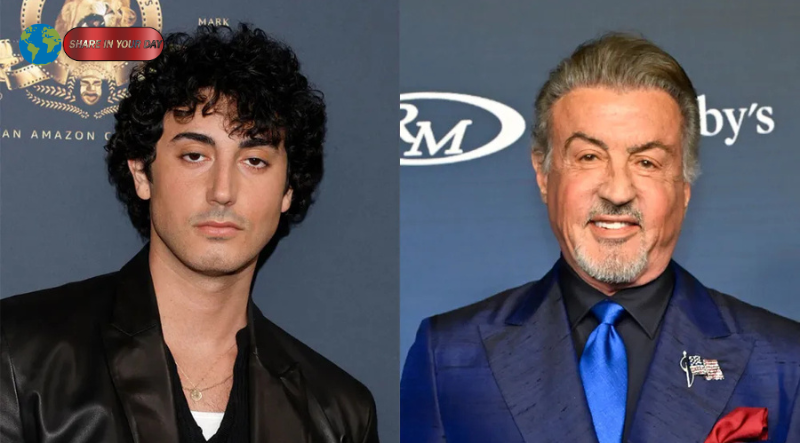
Ippolito has stepped into the role of Stallone for Peter Farrelly’s new film about the extraordinary struggle to get Rocky made. The project explores the period when Stallone was still a relatively unknown actor who had written a screenplay about an underdog boxer and refused to give up his demand to play the lead himself.
The role required Ippolito to reproduce more than Stallone’s physical appearance. He had to capture the actor’s distinctive voice, mannerisms, determination and personality while portraying a younger version of a performer whose career would eventually become synonymous with Rocky.
That responsibility became even more intimidating when Ippolito had the opportunity to speak with Stallone himself before filming.
According to The Hollywood Reporter, Ippolito described the experience as extremely overwhelming and daunting.
For an actor stepping into the shoes of a living Hollywood legend, the pressure is easy to understand.
Anthony Ippolito Had a Lot to Prove
The challenge facing Anthony Ippolito was unusual because I Play Rocky is not simply another fictional interpretation of an established character.
He is playing the real man behind one of cinema’s most famous fictional characters.
That distinction matters.
Stallone created Rocky Balboa and then fought to play him at a time when studios were reluctant to hand the leading role to an unknown actor. His determination ultimately became part of the mythology surrounding the original 1976 movie.
Farrelly’s film turns that behind-the-scenes struggle into its own underdog story.
Reuters reported from the Toronto International Film Festival that Farrelly sees Stallone’s real-life journey as closely mirroring the fictional Rocky story. Stallone was struggling to establish himself as an actor when he wrote and pitched Rocky, but he refused to sell the screenplay if someone else would be cast as Rocky.
That meant Ippolito was not merely researching an actor. He was researching the person whose determination helped create one of the most enduring franchises in movie history.
How Anthony Ippolito Prepared for Stallone
Ippolito approached the role with extensive research.
The actor told TheWrap that he studied Stallone’s career between 1972 and 1976, examining footage from the early period when Stallone was working as a journeyman actor and taking smaller roles.
That research was important because I Play Rocky focuses on Stallone before he became the global movie star audiences know today.
Instead of simply imitating the familiar Stallone persona, Ippolito had to understand the younger actor who was still fighting for recognition.
The preparation also extended to the physical side of the performance.
Ippolito trained for the film’s boxing sequences alongside Stephan James, who plays Carl Weathers. The two actors trained at Gleason’s Gym, and the physical work was demanding enough that both suffered injuries during preparation.
For Ippolito, that physical transformation was essential.
Stallone’s body became an important part of Rocky’s identity. The original film presented the character as a working-class boxer who was physically tough but emotionally vulnerable. Recreating the physicality of that era required more than wearing the right clothes or copying Stallone’s posture.
It required Ippolito to build the physical confidence of a fighter.
The Actor Auditioned Before He Even Had the Script
Ippolito’s journey to I Play Rocky is itself remarkably similar to the kind of determined behavior associated with Stallone.
The actor reportedly learned about the project through an article before he had even received the screenplay. Rather than waiting for an official audition, he decided to make his own audition tape.
He did not even have the script.
Instead, Ippolito created his own material and tried to imagine how a young Stallone might move and behave.
TheWrap reported that Ippolito hung a heavy bag in his grandmother’s basement and worked on the physicality of the character. He filmed the audition with a friend and his cousin.
It was an unconventional approach, but it worked.
His agent sent the material to the producers and casting director. The team responded by providing the script and requesting a formal audition.
Ippolito then pushed even further, filming additional scenes on his own before eventually winning the role.
That story makes his casting particularly fitting.
The actor did not simply wait for the opportunity. He created one.
Meeting Sylvester Stallone Added Another Layer of Pressure
Once Ippolito had been cast, the biggest challenge remained: portraying Stallone convincingly enough for audiences while knowing the real Stallone could eventually see the performance.
That is a very different pressure from portraying a historical figure who is no longer alive.
Stallone remains an active Hollywood presence and is deeply associated with the character and story at the center of the movie.
For Ippolito, speaking with Stallone therefore carried considerable emotional weight.
The Hollywood Reporter’s report highlights how overwhelming the interaction felt for the younger actor.
That reaction is understandable.
Stallone’s career was transformed by Rocky. The movie earned 10 Academy Award nominations and won three Oscars, including Best Picture.
The film eventually became a cultural phenomenon, producing multiple sequels and later inspiring the Creed spinoffs.
Playing the person responsible for creating all of that is an enormous responsibility.
I Play Rocky Turns Stallone’s Real Life Into an Underdog Story
At the center of I Play Rocky is an idea that has always made the original movie so powerful: sometimes the greatest underdog story happens before the story even reaches the screen.
Rocky Balboa was fictional.
Stallone’s struggle was real.
That distinction is central to Farrelly’s film.
Reuters reported that Farrelly described Stallone’s life as the real Rocky Balboa story. The director emphasized the actor’s refusal to compromise his vision even when he had financial reasons to do so.
Stallone was an obscure actor when he wrote Rocky. He had the opportunity to potentially sell his screenplay, but he wanted to play the central character himself.
The decision could have ended differently.
Instead, it helped launch one of the most successful film franchises in Hollywood history.
That makes I Play Rocky more than a traditional Hollywood biopic. It is a story about persistence, creative control and the willingness to take an enormous risk.
Why Anthony Ippolito Is a Natural Choice for the Role
Ippolito already has experience portraying major Hollywood figures.
One of his notable previous performances was playing a young Al Pacino in the Paramount+ series The Offer, which dramatized the making of The Godfather.
That experience likely helped prepare him for the unusual demands of I Play Rocky.
Playing Stallone requires balancing imitation and interpretation.
Audiences know Stallone extremely well. His voice, physical presence and distinctive speech patterns are instantly recognizable.
A performance that goes too far could become a parody.
A performance that is too restrained could fail to convince audiences that they are watching a younger version of the future star.
Early reactions to Ippolito’s performance have been notably positive. The Hollywood Reporter has highlighted his portrayal, while other festival coverage has also pointed to his resemblance and ability to channel Stallone.
The challenge now is whether that performance can connect with audiences beyond the festival circuit.
Peter Farrelly Takes on the Story Behind a Classic
Director Peter Farrelly may be best known for comedy, but his filmmaking career has also included more dramatic material.
His 2018 film Green Book won the Academy Award for Best Picture.
With I Play Rocky, Farrelly is returning to the idea of an inspirational story built around an unlikely path to success.
The concept is particularly suited to the director because the story already contains a natural dramatic structure.
There is an unknown actor.
There is a screenplay.
There are skeptical producers.
There is a role that the writer refuses to surrender.
And there is the possibility of failure.
Those ingredients make the making of Rocky almost as cinematic as Rocky itself.
The Legacy of Rocky Still Shapes the New Film
Few sports movies have had the cultural impact of Rocky.
The original 1976 film introduced audiences to Rocky Balboa, an underdog boxer from Philadelphia who gets an extraordinary opportunity to fight heavyweight champion Apollo Creed.
The movie became much larger than a boxing story.
Its themes of resilience, self-belief and personal dignity helped turn Rocky into an enduring cultural figure.
The franchise subsequently expanded through sequels and later the Creed films, with Michael B. Jordan taking the lead in the newer series.
Stallone also continued to appear as Rocky, maintaining his connection to the character decades after the original movie.
That legacy makes I Play Rocky particularly timely as the original film approaches its 50th anniversary.
Amazon MGM Studios has positioned the new movie as a theatrical event for November 2026. The studio says the film will open in select theaters on November 6 before expanding later in the month.
Stallone Has Seen the Film — and His Reaction Matters
One of the most important questions surrounding I Play Rocky was always going to be how Stallone himself would react.
Farrelly has now provided an answer.
According to Reuters, Stallone watched the film alone and ultimately loved it. Farrelly acknowledged that he was nervous about the actor seeing the movie without an audience because he did not know how Stallone would respond.
That approval could be particularly meaningful for Ippolito.
For any actor portraying a living icon, the subject’s reaction carries unusual weight. In this case, Stallone is not simply the person being portrayed. He is the creator of the character and the story that made the entire project possible.
His positive response gives the film an important endorsement before its theatrical release.
I Play Rocky Could Become Another Underdog Success Story
There is an appealing symmetry to the project.
Rocky was once considered a risky film about an unknown boxer.
Stallone was an unknown actor.
He insisted on playing the lead.
The gamble worked.
Decades later, I Play Rocky is telling that story through another actor taking an enormous creative risk.
Anthony Ippolito’s decision to audition before he even had a script echoes the determination of the man he plays.
That parallel could ultimately become one of the most compelling aspects of the film.
Rather than presenting Stallone as an already-established celebrity, I Play Rocky takes audiences back to a period when success was far from guaranteed.
For Ippolito, that means portraying Stallone at the precise moment when the future Hollywood legend was still trying to prove himself.
And that is why the role has been so daunting.
What Comes Next for Anthony Ippolito
The success of I Play Rocky could represent a significant career moment for Ippolito.
He has already demonstrated that he can portray recognizable figures, but playing Stallone in a major theatrical production places him under an entirely different level of scrutiny.
The film has premiered at the 2026 Toronto International Film Festival, where it has generated significant attention and awards-season discussion.
For Ippolito, the challenge is no longer simply convincing filmmakers that he can play Stallone.
Now he has to convince audiences.
The early signs are encouraging.
His preparation was extensive. His casting story reflects the determination of the character he portrays. And, most importantly, the real Sylvester Stallone has reportedly approved of the final film.
That combination gives I Play Rocky a strong foundation heading into its theatrical release.
The Real Rocky Story Comes Full Circle
Anthony Ippolito’s experience making I Play Rocky demonstrates why the project has attracted so much attention.
The actor was nervous about meeting Stallone.
He trained intensely to recreate the physicality of the young performer.
He studied Stallone’s early career.
And before he even had a script, he created his own audition because he wanted the opportunity badly enough to take the risk.
That persistence mirrors the very story he was hired to portray.
The original Rocky became famous because its hero refused to quit. Stallone’s real-life journey followed much the same path.
Now, 50 years after the original movie changed Hollywood history, I Play Rocky is bringing that story back to the big screen.
For audiences who grew up with Rocky Balboa, the film offers a behind-the-scenes look at the man who created him.
For younger viewers, it may provide an introduction to the remarkable struggle that came before the franchise became a global phenomenon.
And for Anthony Ippolito, it represents something even more personal: the opportunity to step into the shoes of one of Hollywood’s most recognizable figures.
It is a daunting role.
But if the story of Stallone and Rocky has taught audiences anything, it is that the biggest opportunities often begin with someone willing to take an unlikely shot.