Iranian Cargo Ship Struck Near Strait of Hormuz as Regional Tensions Escalate
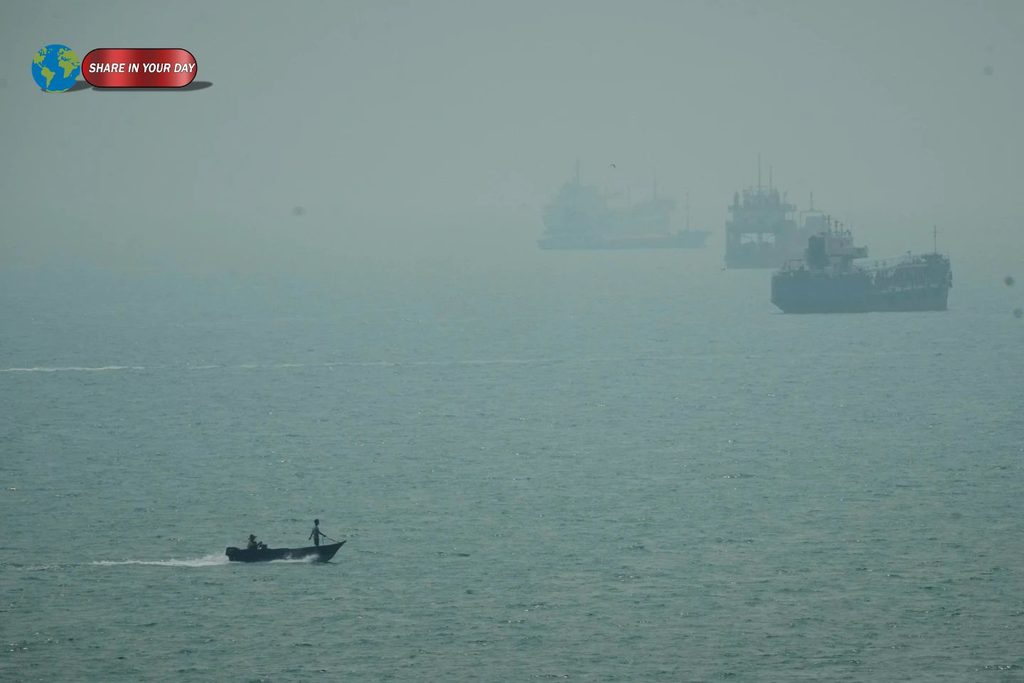
An Iranian commercial vessel was struck early Sunday near Qeshm Island in the Strait of Hormuz, killing at least one person and injuring several others, according to Iranian state media, adding another dangerous episode to an increasingly tense confrontation in one of the world’s most important maritime corridors.
Iranian authorities said the vessel was hit off the coast of Qeshm Island, a strategically important location near the southern entrance to the Strait of Hormuz. State media reported that one person died and four others were wounded in the incident.
The identity of those responsible remained unclear. Iranian officials described the attacker as a “terrorist enemy,” but no group immediately claimed responsibility.
The U.S. military did not immediately comment on the reported strike. The incident comes as American and Iranian forces remain locked in a widening confrontation that has severely disrupted commercial shipping across the region.
Strait of Hormuz Becomes a Major Flashpoint
The Strait of Hormuz has become one of the most closely watched waterways in the world as the conflict between Iran, the United States and Israel continues.
The narrow passage connects the Persian Gulf with the Gulf of Oman and serves as a critical route for international energy shipments. Any prolonged disruption can have consequences far beyond the Middle East, potentially affecting crude oil supplies, fuel prices and global trade.
Commercial traffic through the waterway has already fallen sharply as ship operators face growing security risks. Vessels moving through the region have had to contend with the possibility of missile attacks, projectiles and military activity.
The United Kingdom Maritime Trade Operations organization said Sunday that a vessel was struck by a projectile while traveling through the Strait of Hormuz. It reported that a serious fire broke out and that local authorities were evacuating people from the vessel.
It was not immediately clear whether the incident reported by the British maritime monitoring organization involved the same ship described by Iranian authorities.
Iran Postpones Regional Shipping Talks
The ship strike came just as Iran was preparing to hold discussions with neighboring countries over the future of navigation through the strategic waterway.
Iran had planned to brief foreign ministers from regional countries during a meeting in Oman. The talks were expected to address the increasingly complicated security situation surrounding the Strait of Hormuz and Iran’s efforts to influence the management of shipping.
Oman’s Foreign Minister Badr Albusaidi said the meeting had been postponed in an effort to build greater consensus among participating countries.
An Iranian Foreign Ministry official said the postponement came at the request of some regional governments.
The delay represents another setback for diplomatic efforts aimed at reducing tensions around maritime traffic. Regional governments have strong economic incentives to keep shipping lanes open, particularly as the conflict has already contributed to higher energy prices and greater uncertainty for international trade.
Trump Says Iran Wants a Deal
Despite the latest violence, President Donald Trump said Sunday that Iran was eager to reach an agreement with Washington.
Speaking in Ireland, Trump said Iranian officials were repeatedly contacting the United States and wanted a deal “so bad.” His comments suggested that Washington still sees a potential diplomatic opening despite the continuing military confrontation.
Trump was later asked whether the United States had carried out the strike on the Iranian cargo vessel.
The president declined to provide a direct answer.
That response added to uncertainty surrounding the incident, particularly because American forces have previously targeted Iranian-flagged vessels as part of efforts to restrict Iranian maritime activity.
The lack of an immediate U.S. confirmation left questions about whether the attack was connected to the broader military campaign or represented another form of escalation in the Strait of Hormuz.
Wider Regional Threats
The maritime crisis is not limited to the Strait of Hormuz.
Iran-backed Houthi fighters in Yemen have intensified their activities around the Red Sea and the Bab el-Mandeb Strait, another critical international shipping route.
The Houthis recently captured strategically important territory, raising fears that commercial vessels could face increasing danger along an alternative route used by ships seeking to avoid the Strait of Hormuz.
Their attacks have already forced many shipping companies to reconsider routes through the Red Sea. The latest developments have raised concerns that separate conflicts around Hormuz and the Bab el-Mandeb could combine to create an even larger disruption to global maritime commerce.
The situation is particularly significant for energy markets. The Strait of Hormuz is a major passage for oil and other energy products, meaning prolonged instability can quickly translate into higher costs for consumers and businesses.
Oil prices have already risen sharply during the conflict, with Brent crude recently moving above $100 a barrel amid fears that supply disruptions could persist.
Diplomatic Pressure Mounts
The latest ship strike highlights the difficult position facing countries across the Gulf.
Governments in the region have an interest in maintaining relations with both Iran and the United States while protecting their economies from the consequences of military escalation.
Qatar, Oman, the United Arab Emirates and other regional states depend heavily on secure maritime routes. Any prolonged closure or major disruption of the Strait of Hormuz could affect energy exports, imports and transportation costs across the global economy.
Iranian President Masoud Pezeshkian has continued to project defiance, saying the country would not be forced into submission. At the same time, Trump has suggested that Tehran remains interested in negotiations.
Those competing messages illustrate the uncertainty surrounding the next stage of the conflict.
For now, the reported attack on the Iranian cargo vessel has further complicated efforts to stabilize shipping through the Strait of Hormuz. With military forces operating in the area and diplomatic discussions postponed, the strategic waterway remains at the center of a rapidly evolving regional crisis.