1,400 Yemenis Flee to Djibouti Amid Fierce Fighting
About 1,400 Yemenis flee to Djibouti within a single 24-hour period as fighting intensifies along Yemen’s western coast, marking a dramatic new phase in the country’s worsening humanitarian crisis. The sudden movement of civilians across the Bab el-Mandeb Strait comes as Houthi forces expand their control over strategically important areas near the Red Sea.
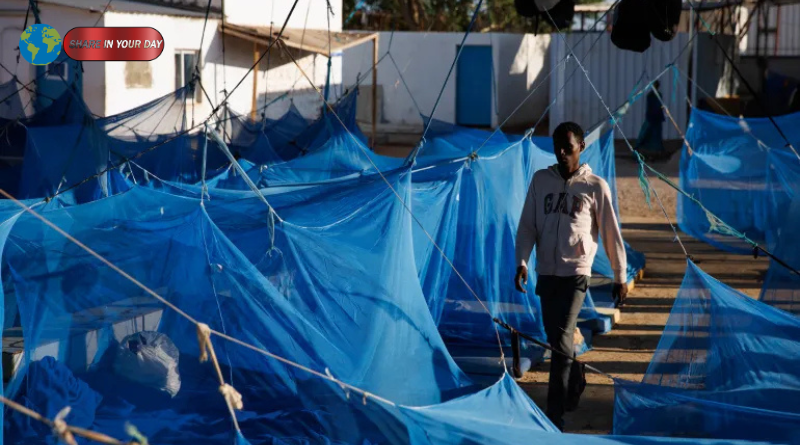
The arrivals are being recorded in and around Obock, a coastal area in northern Djibouti located only a short distance across the water from Yemen. Aid agencies say women and children are among those reaching Djiboutian shores, while more people are expected to attempt the dangerous sea crossing if fighting continues to spread.
The development is significant not only because of the speed of the refugee movement, but also because it highlights how quickly renewed fighting in Yemen is spilling across the Red Sea into neighboring countries.
Djibouti has long served as a destination for Yemenis escaping conflict. But the latest influx is occurring against the backdrop of a much larger displacement emergency inside Yemen.
Yemenis Flee to Djibouti as Fighting Escalates
Djibouti’s Economy and Finance Minister Ilyas Moussa Dawaleh said approximately 1,400 refugees arrived from Yemen within 24 hours. The announcement came as Houthi forces tightened their grip on territory around the strategically important Bab el-Mandeb Strait.
The figure represented an abrupt increase in cross-border movement.
In a separate update, officials said hundreds of people had arrived in Obock after encountering difficulties while crossing the sea. Some refugees reportedly had to be rescued after their boats ran out of fuel during the journey.
The International Organization for Migration (IOM) said vulnerable people, including women and children, were among those arriving.
The situation also developed rapidly after the initial 1,400-person figure. Later IOM reporting said that more than 2,000 people fleeing hostilities had reached northern Djibouti, indicating that the flow continued after the first 24-hour period.
That progression underscores the speed of the crisis.
International Organization for Migration
Why Are Yemenis Fleeing Across the Red Sea?
The immediate reason for the new displacement is the sharp escalation of fighting along Yemen’s western coastline.
Houthi forces have made significant territorial gains in recent days, including the capture of the Red Sea port city of Mocha. Their advance has also brought them closer to islands and maritime routes surrounding the Bab el-Mandeb Strait.
The developments have triggered fears that Yemen could once again slide into a broader and more destructive war.
The country experienced years of devastating conflict before a 2022 truce produced a period of relative calm. Although that truce did not formally end the war, large-scale fighting declined significantly.
The latest offensive has changed that environment.
Civilians living in western Yemen are now facing renewed frontline fighting, shelling and rapidly shifting military positions. For many families, remaining in their communities has become increasingly dangerous.
Some people have already been displaced multiple times during Yemen’s long-running conflict.
The IOM has warned that families are once again being forced to abandon homes with very few possessions.
Yemen Displacement Has Surged
The movement toward Djibouti represents only a small portion of the broader displacement crisis.
The IOM reported that more than 82,000 people had been displaced inside Yemen since the beginning of September as fighting spread across western provinces. Another recent IOM figure placed total displacement since July at more than 76,000 before the latest increase.
Taiz has been among the hardest-hit areas.
According to IOM reporting cited in recent coverage, around 8,300 families, representing roughly 50,000 people, had been displaced from districts in Taiz province. Communities including Jabal Habashi, Al-Maafer, Maqbanah, Mawza and Al-Waziiyah have been affected by the fighting.
That means the movement toward Djibouti should not be viewed as an isolated refugee episode.
Instead, it is part of a much broader wave of civilian displacement caused by the renewed conflict.
For families who have already spent years living with war, another forced journey can mean losing homes, livelihoods, schools and access to basic healthcare all over again.
Obock Becomes a Key Refuge for Yemeni Families
For people fleeing Yemen, Obock provides one of the nearest points of refuge across the water.
The coastal city is located roughly 20 kilometers from the Yemeni coast, making it a natural destination for people attempting to escape by boat. But the short geographical distance does not make the journey safe.
The Bab el-Mandeb Strait is a heavily trafficked maritime corridor. It connects the Red Sea with the Gulf of Aden and is one of the world’s most strategically important waterways.
For refugees traveling in small boats, however, the crossing can become extremely dangerous.
Fuel shortages, overcrowded vessels, unpredictable weather and regional military activity can all increase the risks.
The arrival of refugees who required rescue after running out of fuel illustrates the dangers facing civilians attempting to escape by sea.
Humanitarian organizations therefore face two challenges at once: helping people who have already reached Djibouti while preparing for potentially larger arrivals.
Women and Children Among the Arrivals
The latest arrivals include vulnerable groups who require immediate humanitarian assistance.
The IOM said women and young children were among those reaching the northern Djiboutian coast. Many were transferred to the Markazi site in Obock, where aid organizations have been providing basic assistance.
The assistance includes drinking water, high-energy biscuits and hot meals.
Such support is essential for people who may have spent hours at sea without adequate food or water.
Children face particular risks during displacement. Sudden flight can expose them to dehydration, illness, psychological trauma and interruptions to education.
Families who arrive with few possessions may also need clothing, shelter, medical attention and longer-term protection.
The United Nations Children’s Fund said it was working alongside the Djiboutian government to support children arriving from Yemen. UNICEF reported that around 1,400 people, including women and many children, had arrived on the Djiboutian coast during the 24-hour period.
Djibouti Faces Growing Humanitarian Pressure
Djibouti is accustomed to hosting displaced people from across the region, but the sudden influx from Yemen presents additional pressure.
The country already hosts tens of thousands of refugees and asylum seekers. Earlier 2026 figures cited by Al Jazeera indicated that more than 36,000 registered refugees were living in Djibouti, with significant populations originating from Somalia, Ethiopia and Yemen.
The new arrivals therefore enter an existing humanitarian system rather than an empty one.
Aid agencies must provide emergency assistance while also supporting the communities receiving refugees.
That creates pressure on food supplies, shelter, healthcare services, sanitation and other essential resources.
IOM Director General Amy Pope has called for greater international support for both new arrivals and the local communities hosting them. The agency has warned that more people could cross into Djibouti if fighting continues to intensify.
Bab el-Mandeb Adds a Wider Security Concern
The humanitarian emergency is unfolding in one of the world’s most strategically important maritime regions.
The Bab el-Mandeb Strait is a critical link between the Red Sea and Gulf of Aden. Ships traveling through the corridor can ultimately connect with the Suez Canal, making the waterway important for international trade and energy transportation.
Houthi territorial gains near the strait have therefore attracted international attention beyond Yemen itself.
Reuters reported that Houthi advances along Yemen’s western coastline had brought the group closer to controlling strategically important areas around the Bab el-Mandeb Strait. The developments have raised concerns about potential disruptions to maritime traffic and energy supplies.
Reuters coverage of the Yemen conflict
The security implications are particularly important because Djibouti hosts several foreign military facilities, including a major U.S. military base.
As the Houthis move closer to the African side of the strait, regional governments and international powers are closely monitoring developments.
A New Threat to an Already Fragile Region
The latest refugee movement also demonstrates how conflict can quickly cross national boundaries without a formal expansion of fighting into another country.
The battles remain centered in Yemen, but their consequences are being felt in Djibouti.
Refugees need immediate protection. Coastal authorities need to conduct rescues. Humanitarian agencies must arrange food and shelter. At the same time, governments must monitor the possibility of further security risks.
That combination makes the situation particularly difficult for Djibouti.
The country is geographically close to the conflict but has limited resources compared with larger regional states.
The arrival of more than 2,000 Yemenis in a short period could therefore become a major test of its humanitarian response capacity if the fighting continues.
More Refugees Could Arrive in the Coming Days
Humanitarian agencies have warned that the current wave may not be over.
The IOM said more people were expected to flee as fighting intensified. That warning is particularly significant because displacement inside Yemen has already reached tens of thousands in a matter of weeks.
If major population centers along the western coast remain under threat, families may have increasingly limited options.
Some could move south toward Aden or other parts of Yemen. Others may attempt to reach Djibouti by sea.
Neither option is easy.
Roads and communications can be disrupted by fighting, while crossing the Red Sea presents its own risks.
For civilians, the decision to leave often comes down to a simple calculation: remain in an increasingly dangerous area or attempt an uncertain journey to safety.
What Happens Next?
The immediate priority is protecting civilians and ensuring humanitarian organizations can reach people affected by the fighting.
The scale of displacement means emergency assistance will likely remain necessary for weeks or longer if the conflict continues.
For Djibouti, the priority will be receiving new arrivals safely, providing temporary shelter and ensuring access to food, clean water and healthcare.
For Yemen, however, the larger challenge is preventing the renewed conflict from becoming another prolonged nationwide war.
The latest developments have already demonstrated how quickly a military offensive can generate a humanitarian crisis.
The movement of Yemenis flee to Djibouti is therefore more than a story about refugees crossing a narrow stretch of sea. It is an indication of the speed at which Yemen’s renewed fighting is reshaping lives across the Red Sea.
The first 1,400 arrivals were a warning. The subsequent increase to more than 2,000 people reaching Djibouti suggests that the displacement crisis is continuing to grow.
As long as fighting continues along Yemen’s western coast, humanitarian organizations expect civilians to remain on the move.
And with the Bab el-Mandeb Strait at the center of both the military and humanitarian crisis, the consequences could extend well beyond Yemen and Djibouti.