Saudi Arabia-Houthi Conflict: 5 Tough Choices
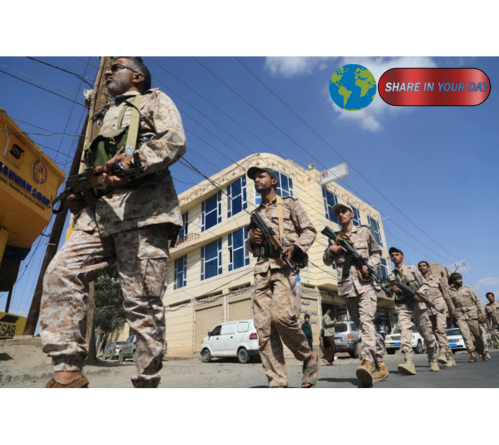
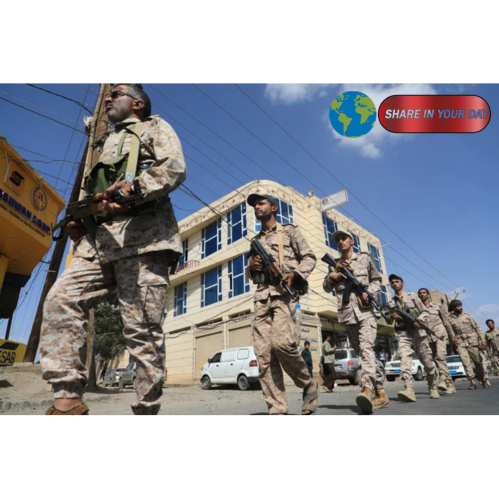
The Saudi Arabia-Houthi conflict is entering a dangerous new phase as Iran-backed Houthi forces expand their position along Yemen’s Red Sea coast while launching attacks against Saudi Arabia. The rapid developments have left Riyadh facing a difficult strategic dilemma: respond militarily and risk a wider war, or hold back and allow the Houthis to strengthen their grip over territory and critical shipping routes.
The stakes are much larger than the Yemen battlefield. The Houthis’ advance toward the Bab el-Mandeb Strait threatens one of the world’s most important maritime chokepoints. At the same time, attacks affecting Saudi energy infrastructure are putting additional pressure on global oil markets already shaken by the wider conflict involving Iran and the United States.
For Saudi Arabia, the challenge is particularly serious because the kingdom has spent years trying to move away from the Yemen war and concentrate on economic transformation, regional stability and its ambitious development agenda.
Now, however, Riyadh is being pushed back toward a conflict it had hoped to contain.
Saudi Arabia-Houthi conflict reaches a critical point
The latest escalation follows a rapid Houthi advance in Yemen.
The Iran-backed movement has seized strategically important territory along the Red Sea coast, including the port city of Mokha and a strategically positioned island near the Bab el-Mandeb Strait, according to recent reporting. These gains could give the Houthis greater leverage over maritime traffic entering and leaving the Red Sea.
The Bab el-Mandeb is particularly important because it connects the Red Sea with the Gulf of Aden and the wider Indian Ocean. Any prolonged disruption there could force commercial vessels to take longer routes, increasing shipping costs, insurance premiums and delivery times.
The Houthis have also intensified attacks against Saudi territory.
Recent attacks have included drones and missiles aimed at areas in southern Saudi Arabia. Saudi authorities have reported injuries and damage, while the Houthis have portrayed their attacks as retaliation for Saudi military operations in Yemen.
The escalation has therefore created a cycle of attack and retaliation that could become increasingly difficult to stop.
1. Riyadh could launch a major military response
The most direct option for Saudi Arabia is to increase military pressure on the Houthis.
Saudi Arabia has extensive military capabilities and has already demonstrated its willingness to conduct air operations in Yemen. However, the experience of the previous Yemen war also shows the limits of military power.
Saudi Arabia intervened in Yemen in 2015 to support the internationally recognized government against the Houthis. The conflict became a prolonged and costly war before a ceasefire in 2022 significantly reduced the fighting.
A return to large-scale military operations could therefore produce an outcome Riyadh does not want.
Instead of quickly weakening the Houthis, an expanded campaign could trigger more missile and drone attacks against Saudi cities, military installations and energy infrastructure.
Analysts cited in recent reporting have also warned that Houthi military capabilities are more sophisticated than they were during the earlier stages of the Yemen war. That makes any new Saudi campaign potentially more dangerous than the previous one.
The kingdom must therefore consider not only whether it can strike the Houthis, but also whether it can withstand the retaliation.
2. Saudi Arabia could pursue diplomacy
A second option is diplomacy.
Saudi Arabia could attempt to reopen political channels with the Houthis or work indirectly through Iran and other regional intermediaries.
This approach would fit Riyadh’s broader effort in recent years to reduce regional tensions. Saudi Arabia has sought to improve relations with neighboring powers and reduce the security risks that could undermine its economic transformation plans.
However, diplomacy may be difficult under current circumstances.
The Houthis have demanded an end to restrictions they associate with the Saudi-led campaign and have shown little indication that they are prepared to surrender the strategic advantages gained during their recent offensive.
Iran also has its own calculations.
The Houthi advance gives Tehran additional leverage over a second strategic maritime chokepoint at a time when the Strait of Hormuz is already at the center of the wider regional confrontation.
That means Tehran may see advantages in maintaining pressure rather than quickly restoring the status quo.
3. Riyadh needs to protect its oil infrastructure
The Saudi Arabia-Houthi conflict is also becoming an energy-security problem.
Saudi Arabia is the world’s leading oil exporter, making its infrastructure a critical part of the global energy system.
The kingdom has historically relied heavily on maritime routes through the Persian Gulf. But the wider conflict has made alternative export routes increasingly important.
Saudi Arabia has used its East-West pipeline to move crude from fields in the east toward the Red Sea. This route provides an alternative to shipping oil through the Strait of Hormuz.
Recent drone attacks, however, have disrupted that strategy.
Saudi Arabia temporarily shut a major pipeline after an attack that authorities said originated from Iraq. Reuters reported that the disruption threatened a route that had become especially important because of the wider regional conflict.
The problem is compounded by Houthi control and military activity around the Red Sea.
If both the Strait of Hormuz and Bab el-Mandeb become unreliable, Saudi Arabia could face significantly fewer options for exporting crude.
That would not only affect Riyadh.
It could also contribute to higher oil prices worldwide.
4. The United States may not provide the response Riyadh wants
Saudi Arabia has historically relied on its relationship with the United States for security support.
That relationship remains important, but Washington’s willingness to become directly involved in another Yemen campaign appears uncertain.
Recent reporting indicates that Saudi Crown Prince Mohammed bin Salman sought U.S. military assistance against the Houthis, but President Donald Trump did not agree to direct U.S. participation. CNN previously reported that Washington was providing intelligence-related support while avoiding direct involvement in Saudi strikes.
This creates a serious problem for Riyadh.
A Saudi military campaign is much easier to sustain when the kingdom can count on American intelligence, weapons, logistics and defensive support.
Without that assistance, Saudi Arabia would have to assume more of the burden itself.
The United States is also dealing with competing military demands elsewhere in the region. U.S. forces have been heavily involved in the broader confrontation with Iran and efforts surrounding the Strait of Hormuz.
That means Washington may be reluctant to open another major front.
For Saudi Arabia, uncertainty over American involvement could make any decision to escalate significantly more difficult.
5. Riyadh could seek a wider regional coalition
Another possibility is for Saudi Arabia to build a broader regional security coalition.
Saudi officials have already discussed their concerns with partners, while several Arab governments have condemned Houthi attacks against Saudi territory.
Countries including Egypt, Jordan, the United Arab Emirates, Qatar and others have expressed support for Saudi sovereignty in the face of the attacks.
A wider coalition could help Riyadh share the burden of protecting shipping routes and defending critical infrastructure.
However, there is an important difference between diplomatic support and military participation.
Some Gulf and Arab states have strong reasons to avoid becoming directly involved in another regional war.
The broader conflict involving Iran has already created significant economic and security risks. Governments that depend on stable trade and energy markets may prefer diplomatic pressure rather than direct military intervention.
That leaves Saudi Arabia with a difficult balancing act.
Why the Bab el-Mandeb matters so much
The importance of the Saudi Arabia-Houthi conflict cannot be separated from the geography of the Red Sea.
The Bab el-Mandeb Strait is a narrow maritime passage connecting the Red Sea with the Gulf of Aden.
Ships traveling between Europe and Asia have historically used this corridor, particularly those passing through the Suez Canal.
When the route becomes unsafe, shipping companies can reroute vessels around the Cape of Good Hope. But that adds thousands of miles to some journeys and increases fuel consumption and delivery times.
The Houthis’ growing presence around the strait therefore has implications far beyond Yemen.
Reuters reported that the Houthi advance has strengthened Iran’s strategic position because it potentially gives Tehran and its allies influence over another major maritime route.
That is one reason the latest fighting is attracting international attention.
The conflict is no longer simply about which faction controls parts of Yemen.
It is increasingly connected to global trade, energy security and the balance of power across the Middle East.
Oil markets are watching Saudi Arabia closely
The energy consequences could be especially severe.
Saudi Arabia’s oil production has already been affected by the wider regional crisis. Reuters reported that Saudi production had fallen sharply, while disruptions to pipeline infrastructure and maritime routes created additional uncertainty for global supplies.
If attacks against Saudi energy infrastructure continue, traders could price a larger risk premium into crude.
That could push fuel costs higher for consumers around the world.
The danger is particularly significant because the global oil market is already facing supply disruptions associated with the Strait of Hormuz.
A second major chokepoint becoming unreliable would make the situation considerably more difficult.
For Saudi Arabia, protecting energy infrastructure is therefore not merely an economic objective. It is becoming a central national-security priority.
The humanitarian risk is rising in Yemen
The military consequences are only part of the story.
Yemen’s civilian population has already endured years of war, displacement, economic hardship and humanitarian crisis.
The renewed fighting risks reversing the relative calm that followed the 2022 ceasefire.
Recent Houthi advances and government counterattacks have already triggered new displacement. AP reported that tens of thousands of people have been displaced amid the renewed fighting along Yemen’s Red Sea coast.
Further escalation could create another major humanitarian emergency.
Civilian infrastructure, ports and roads are particularly vulnerable when fighting spreads through coastal areas.
The international community therefore faces a difficult challenge: prevent the conflict from expanding while keeping humanitarian assistance moving to communities that need it.
A wider regional war is the biggest concern
The most dangerous scenario would be for the Yemen conflict to become a permanent extension of the broader Iran-U.S. confrontation.
The Houthis have close ties with Iran, but the movement also has its own political and military objectives.
If the Yemen battlefield continues independently even after other regional fighting declines, the conflict could become increasingly difficult to resolve.
That possibility has already been raised by regional analysts.
The Houthis’ ability to threaten Saudi territory, Red Sea shipping and energy infrastructure gives the group leverage well beyond the borders of Yemen.
For Iran, meanwhile, the relationship provides another pressure point against Saudi Arabia and the United States.
That combination makes de-escalation more complicated.
What happens next for Saudi Arabia?
The immediate question is whether Riyadh chooses escalation or restraint.
A major military response could demonstrate strength and potentially prevent the Houthis from consolidating their new territorial gains. But it could also produce years of renewed conflict and expose Saudi infrastructure to heavier attacks.
Diplomacy could reduce the immediate risk, but it could also require concessions that Saudi leaders consider unacceptable.
Relying heavily on the United States could provide important military advantages, yet Washington’s current priorities may prevent the level of involvement Riyadh wants.
And building a regional coalition could help protect shipping, but convincing neighboring governments to join another war would be difficult.
There is no easy solution.
Conclusion: Saudi Arabia faces a dangerous strategic test
The latest escalation has put Saudi Arabia in one of its most difficult regional positions in years.
The kingdom wants security, economic stability and a predictable environment for its long-term development plans. Yet the rapid Houthi advance in Yemen is threatening those goals from several directions at once.
The Saudi Arabia-Houthi conflict now involves much more than a dispute between Riyadh and an armed movement in Yemen.
It affects the Bab el-Mandeb Strait, Red Sea shipping, Saudi oil exports, relations with Iran, the future role of the United States in Gulf security and the humanitarian situation in Yemen.
For Saudi Arabia, every available option carries a price.
The central question is no longer simply whether Riyadh will respond.
It is how far the kingdom is willing to go — and whether it can stop the conflict from becoming another prolonged regional war.