Fed Rate Hikes in 2027: What John Williams’ Outlook Means
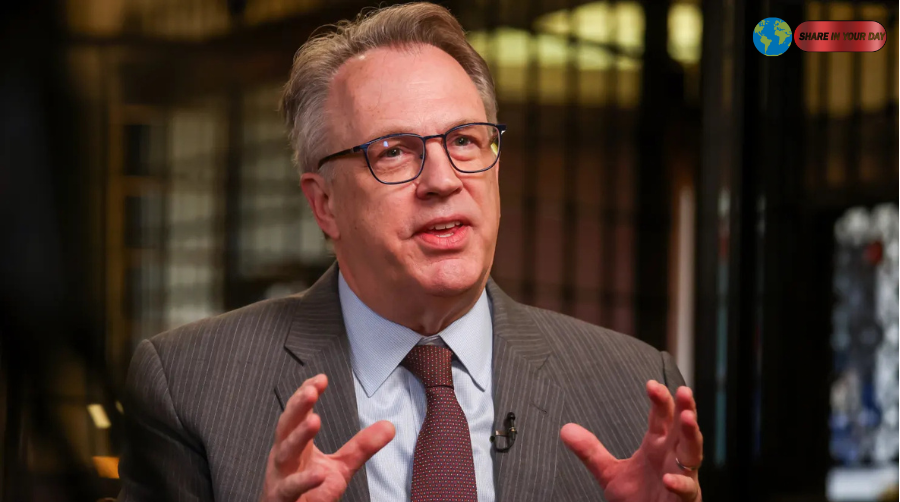
The outlook for Fed rate hikes in 2027 is becoming a key question for financial markets after Federal Reserve Bank of New York President John Williams said he currently sees no need for additional interest-rate increases next year, provided inflation continues moving toward the central bank’s target.
In an interview reported on October 13, Williams maintained his view that one additional rate increase could be appropriate before the end of 2026. However, he indicated that further tightening in 2027 may not be necessary if current economic trends continue.
Reuters
+1
His comments offer an important perspective on the Federal Reserve’s next steps as policymakers weigh persistent price pressures against the broader condition of the U.S. economy.
Inflation remains a central concern, with energy costs, tariffs and demand associated with artificial intelligence infrastructure influencing the outlook. At the same time, Williams sees signs that underlying inflation pressures are easing.
The distinction between his current expectations and a firm policy commitment is crucial. Williams has not ruled out future increases under different economic conditions. Instead, his position reflects an assessment of the available evidence and the possibility that inflation could move closer to the Fed’s 2% target in 2027.
For investors, businesses and consumers, the debate matters because interest rates influence borrowing costs, savings returns, mortgage financing and corporate investment. Whether the Fed raises rates again, holds them steady or eventually changes direction will depend on how the economic data develop over the coming months.
Fed Rate Hikes in 2027: What Williams Actually Said
Williams’ latest remarks suggest that he sees a possible end to the current tightening cycle after one more increase in 2026.
“I haven’t changed my view that it may be appropriate to have one more rate hike,” Williams said in an interview with Bloomberg News, according to reporting published October 13. He added that he did not currently see a reason to believe the Fed would need to raise rates further after that.
Bloomberg Law News
+1
The comments are significant because they distinguish between the possibility of another increase this year and the need for additional action in 2027.
Williams believes inflation can slow considerably over the next year as some of the forces pushing prices higher begin to fade. He has pointed to declining measures of underlying inflation and argued that the overall economy is not overheating, even as certain sectors experience unusually strong demand.
Quartz
+1
However, his position is not a guarantee that rates will remain unchanged throughout 2027. Federal Reserve officials assess economic conditions as new information becomes available, and an unexpected acceleration in inflation could alter their calculations.
The Fed’s broader objective remains price stability alongside sustainable employment. If inflation proves more persistent than expected, policymakers could decide that additional restraint is necessary.
For now, Williams’ comments indicate that he sees a path toward stabilizing interest rates after a possible final increase this year. That outlook depends on inflation progressing in the right direction and the economy avoiding a renewed buildup of broad price pressures.
Why Inflation Remains Central to the Fed’s Decision
Inflation is the main factor shaping the debate over future interest-rate increases.
The Federal Reserve aims to bring inflation to 2% over time. When prices rise too quickly, higher interest rates can help cool demand by making borrowing more expensive for households and businesses.
Williams has identified several forces affecting the inflation outlook, including tariffs, energy costs and investment connected to artificial intelligence infrastructure. These pressures can influence prices differently, making it difficult for policymakers to determine whether inflation is experiencing a temporary increase or a more persistent shift.
Bloomberg Law News
+1
Tariffs can increase the cost of imported products and materials. Businesses may pass some of those costs on to consumers, although the ultimate impact depends on factors such as competition, supply chains and companies’ ability to absorb higher expenses.
Energy prices create another challenge. Higher fuel and electricity costs can directly affect household budgets while increasing transportation and production expenses for businesses.
Yet energy-driven inflation does not necessarily indicate that every part of the economy is experiencing excessive demand. If energy prices stabilize or decline, some of the upward pressure on overall inflation may ease without requiring additional interest-rate increases.
This distinction helps explain Williams’ relatively measured outlook. He sees reasons to believe that current price pressures may weaken, even though the path toward the Fed’s target remains uncertain.
Policymakers will need to evaluate several months of inflation data rather than relying on a single encouraging report. The durability of the improvement will be essential in determining whether further tightening is necessary.
AI Investment Creates a Complicated Economic Picture
Artificial intelligence investment has become another important factor in discussions about the U.S. economy and monetary policy.
Companies are committing substantial resources to data centers, computing infrastructure, semiconductor technology and the electricity systems needed to support AI development. That spending can stimulate economic activity by creating demand for equipment, construction, energy and specialized services.
However, rapid investment can also create bottlenecks.
When demand for infrastructure rises faster than available supply, prices for certain goods and services can increase. Limited electricity capacity, construction resources and specialized equipment may add to costs in parts of the economy.
Williams has acknowledged that AI-related demand is outpacing supply in some areas. Nevertheless, he has emphasized that the Federal Reserve must evaluate the broader economy rather than allowing conditions in a single sector to determine monetary policy.
Quartz
+1
That distinction matters for the outlook for Fed rate hikes in 2027.
If AI investment continues to drive demand in selected industries but does not produce widespread inflation, policymakers may have less reason to tighten monetary policy further. Conversely, if strong investment contributes to broader and more persistent price increases, it could complicate efforts to return inflation to target.
There is also a longer-term possibility. AI technology could improve productivity by allowing businesses to produce more goods and services with fewer resources. Higher productivity can help support economic growth while reducing the pressure on prices.
However, those benefits are not automatic, and their timing remains uncertain. The immediate economic effects of infrastructure spending may differ from the productivity gains that could emerge over several years.
For the Fed, the challenge is to distinguish between temporary demand pressures and lasting changes in the economy’s productive capacity.
What Williams’ Outlook Means for Interest Rates in 2026
Although much of the attention is focused on 2027, the possibility of another increase before the end of 2026 remains important.
Williams has maintained that one additional rate hike this year may be appropriate. His view reflects concern that inflation has not yet returned sustainably to the Fed’s target, even as some underlying indicators have improved.
Bloomberg Law News
+1
The timing of any move will depend on the Federal Open Market Committee’s assessment of incoming data. The committee considers inflation, employment, economic growth and financial conditions when deciding whether borrowing costs should rise, remain unchanged or eventually decline.
The next scheduled Fed policy meeting is October 27–28, 2026. Policymakers will have to evaluate the latest available economic information before deciding whether another increase is justified.
Quartz
Williams’ comments should not be interpreted as confirmation that a rate increase will happen at that meeting. His support for one more move this year is an indication of his current assessment, not a binding decision by the entire committee.
Other policymakers may have different views about the appropriate level of restraint. Some have expressed concern that inflation could remain elevated for longer, potentially requiring additional action beyond the single increase Williams currently considers appropriate.
Quartz
+1
This difference of opinion illustrates a broader challenge facing the central bank: acting forcefully enough to contain inflation without unnecessarily restricting economic activity.
If inflation continues to ease, the Fed may have more flexibility to hold rates steady after a final increase. If price pressures strengthen, however, officials could reconsider their current outlook.
Why Investors Are Watching the 2027 Rate Outlook
Interest-rate expectations can influence financial markets well before the Federal Reserve announces a decision.
When investors believe rates will remain higher for longer, Treasury yields and borrowing costs may adjust to reflect that expectation. When markets anticipate a pause in rate increases, yields can move in the opposite direction, although other economic factors also play a role.
Williams’ comments on October 13 provided a reason for investors to reassess the possibility of further tightening in 2027. Reuters reported that his outlook contributed to changing expectations about the future path of U.S. monetary policy.
Reuters
+1
Treasury yields and bond prices
Treasury yields are particularly sensitive to expectations for interest rates, inflation and economic growth.
Two-year Treasury yields are often closely watched because they tend to reflect expectations about the Fed’s policy decisions over the near term. Longer-term yields also respond to factors such as economic growth prospects, government borrowing and investors’ expectations for inflation over many years.
If investors become more confident that the Fed will stop raising rates after 2026, some yields could come under downward pressure. However, this is not guaranteed: stronger economic growth, higher inflation expectations or changes in Treasury supply can push yields higher even when near-term policy expectations soften.
Stocks and business investment
Interest-rate expectations can also influence stock valuations.
Lower expected borrowing costs may improve the financial outlook for companies that depend on debt financing or future earnings growth. Technology businesses, including companies investing heavily in AI infrastructure, can be particularly sensitive to changes in financing costs.
However, stock prices do not respond to interest rates alone. Corporate earnings, economic growth, competition and investor risk appetite all matter.
Williams’ remarks may therefore affect how markets evaluate future policy, but they do not establish a reliable direction for stock prices.
The U.S. dollar
Changes in interest-rate expectations can also influence currency markets.
If U.S. rates are expected to remain relatively high compared with those in other countries, dollar-denominated assets may become more attractive to some investors. If expected U.S. rates decline relative to overseas rates, that advantage may weaken.
Reuters reported that the dollar retreated on October 13 amid several market developments, including reassessment of the Federal Reserve’s future rate path. The currency’s movement also reflected changes in oil prices and broader investor uncertainty.
Reuters
The dollar’s reaction illustrates why Williams’ comments should be viewed as one influence among many rather than a standalone explanation for financial-market movements.
How Higher Rates Could Affect American Households
The debate over Fed rate hikes in 2027 also has practical consequences for consumers.
Federal Reserve policy does not directly set every interest rate paid by households. Instead, it influences broader financial conditions, which lenders and financial markets use when determining borrowing costs.
Mortgages and housing affordability
Mortgage rates can respond to changes in Treasury yields, inflation expectations and investor demand for mortgage-backed securities.
If financial markets anticipate fewer rate increases, mortgage rates could ease under favorable conditions. However, they may remain elevated if long-term yields rise or investors demand higher compensation for inflation and other risks.
For prospective homebuyers, this means that expectations about the Fed alone cannot determine whether buying a home will become more affordable. Home prices, household income, insurance, property taxes and local housing supply also affect the overall cost.
Credit cards and personal loans
Many credit-card interest rates are variable and linked to benchmark rates. When the Fed raises its policy rate, borrowing costs on some variable-rate products can rise as well.
If the central bank pauses further increases, the immediate pressure from additional policy tightening may diminish. Yet existing balances can remain expensive, and a pause does not automatically mean that lenders will reduce their rates.
Personal loans and other forms of consumer credit also depend on borrowers’ credit profiles, lender pricing and broader market conditions.
Savings accounts and certificates of deposit
Higher interest rates can benefit savers by increasing the returns available on certain deposit accounts and fixed-term savings products.
However, the effect varies by institution and product. Banks do not always adjust deposit rates immediately or by the same amount as the Fed changes its benchmark.
If policy rates eventually stabilize, savers may need to compare available offers rather than assume that every bank will maintain the same returns.
The central point for households is that Williams’ outlook provides useful context, but it does not guarantee lower borrowing costs or a particular return on savings in 2027.
Could the Fed Still Raise Rates in 2027?
Yes. Williams’ comments describe his current outlook, not an unconditional promise that the Fed will avoid rate increases next year.
Monetary policy decisions depend on economic conditions, and several developments could change the current assessment.
- Inflation remains elevated: If price increases prove more persistent than expected, policymakers could conclude that additional rate increases are necessary.
- Energy prices rise again: A renewed energy shock could push headline inflation higher and complicate the Fed’s efforts to achieve price stability.
- Labor-market conditions change: Unexpectedly strong demand and wage pressures could influence the inflation outlook, while a weakening labor market could affect the balance of risks facing policymakers.
- AI-related demand spreads: If infrastructure spending contributes to wider price pressures rather than remaining concentrated in specific industries, the Fed may need to reassess its position.
- Economic data contradict expectations: A series of stronger-than-expected inflation reports could undermine confidence that price pressures are easing.
Williams’ position is based on the expectation that underlying inflation will continue to moderate. He has indicated that he expects inflation to move closer to the Fed’s 2% target in 2027 as some of the effects of tariffs and elevated energy prices diminish.
Bloomberg Law News
+1
Other Fed officials have expressed more cautious views about the possibility of additional tightening. That disagreement underscores why investors should avoid treating one policymaker’s assessment as the final word on the central bank’s future decisions.
The Fed’s collective decisions will depend on the evidence available at each meeting.
What to Watch Before the Next Fed Decision
Several indicators will help clarify whether Williams’ outlook remains consistent with the direction of the economy.
Inflation reports
Consumer Price Index and Personal Consumption Expenditures data will help show whether price pressures are easing broadly or remaining stubbornly high.
Employment data
Job creation, unemployment and wage growth will provide clues about demand and the potential for labor costs to influence inflation.
Energy prices and supply conditions
Changes in oil and energy markets could affect consumer inflation directly and alter business costs.
Fed statements and meeting minutes
Policy announcements, economic projections and meeting minutes can reveal how far officials agree or disagree about the appropriate path for interest rates.
The October 27–28 policy meeting will be an important near-term checkpoint. However, one meeting will not settle the outlook for all of 2027. Investors will continue assessing economic data and subsequent Fed communications as the year progresses.
Quartz
Conclusion: A Potential Pause in 2027, Not a Guarantee
John Williams’ latest comments offer a clearer view of how at least one influential Federal Reserve policymaker sees the path ahead. He continues to consider one additional rate increase in 2026 appropriate, but currently sees no compelling reason to expect further increases in 2027.
His outlook rests on the expectation that underlying inflation will ease as some tariff-related and energy-driven pressures fade. He also recognizes that strong AI infrastructure investment is creating demand imbalances in certain sectors, even though he does not view the overall U.S. economy as overheating.
For financial markets, the distinction is important. Expectations of fewer rate increases could influence Treasury yields, currency movements, financing conditions and investment decisions. For households, the effects may eventually extend to mortgages, credit cards and savings products, although the impact will vary.
The key takeaway is that a pause in rate increases during 2027 is a possibility, not a settled outcome. Inflation, employment and economic growth will determine whether Williams’ current outlook remains appropriate.
Investors and consumers should therefore follow the underlying economic data rather than assume that interest rates will follow a predetermined path. The Federal Reserve’s decisions will continue to evolve as officials assess whether inflation is moving sustainably toward their target.