Oil Prices Today: Trump Rejection Sparks Fresh Jump
Oil prices today moved higher as renewed uncertainty over the conflict between the United States and Iran pushed traders to reassess the outlook for crude supplies and shipping through the Strait of Hormuz.
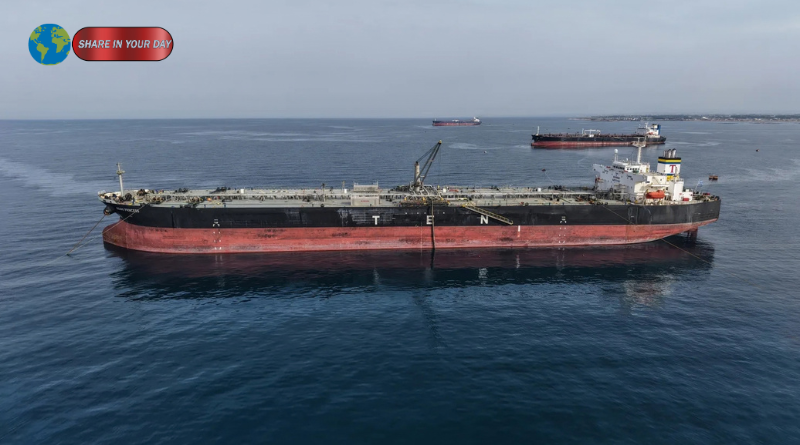
U.S. crude futures for November delivery climbed to around $93.62 a barrel, while international benchmark Brent crude rose to approximately $106.31 a barrel in early Asian trading, according to CNBC’s report published Sept. 28, 2026. The move followed President Donald Trump’s rejection of an Iranian proposal intended to help resolve the conflict and reopen the strategically important Strait of Hormuz.
The latest move comes after oil prices had shown signs of easing as traders watched for diplomatic progress. However, the rejection of Iran’s proposal has revived concerns that the disruption affecting Middle Eastern energy flows could persist.
Reuters separately reported that Brent crude was up 1.27% at $105.64 a barrel and West Texas Intermediate was 0.76% higher at $93.11 during early Monday trading.
The developments leave investors focused on three major questions: whether Washington and Tehran can restart meaningful negotiations, how quickly traffic through the Strait of Hormuz can normalize, and how much additional crude can reach international markets from producers elsewhere.
Oil Prices Today React to Trump’s Iran Decision
The latest rise in oil prices today followed Trump’s decision to reject an Iranian peace proposal.
Iran had presented a proposal at the United Nations General Assembly in New York, saying it had been transmitted to the United States through Qatari mediators. The proposal was tied to the reopening of the Strait of Hormuz and the potential restart of nuclear negotiations.
Trump confirmed that he rejected the proposal, while also indicating that U.S. negotiators could hold additional talks with Iran during the week. Reuters reported that the president said he expected more negotiations even after turning down Tehran’s offer.
That combination has left markets in an unusual position.
On one hand, the possibility of future talks could eventually reduce the geopolitical premium embedded in crude prices. On the other, the lack of an immediate agreement means traders still have to account for the possibility of additional disruptions.
For oil markets, that uncertainty can be enough to generate sharp price movements.
Brent Crude Remains Above $100
One of the clearest signals from oil prices today is the continuing strength of Brent crude.
Brent is widely used as an international benchmark and is particularly sensitive to developments affecting seaborne crude shipments. The benchmark moved above $100 a barrel as geopolitical tensions intensified earlier in September.
Reuters reported that Brent settled at $107.63 a barrel on Sept. 10 after a surge of more than 6%, while WTI reached $102.48. The jump came amid attacks affecting tankers and concerns surrounding the Strait of Hormuz.
Prices subsequently pulled back as traders received signs that some Middle Eastern crude flows were recovering.
That recovery remains important because the oil market is not responding solely to military developments. Physical supply data, tanker movements, pipeline availability and refinery operations are all influencing prices.
The result is a market where headlines about diplomacy can produce rapid declines, while new attacks or shipping disruptions can quickly reverse those moves.
WTI Crude Faces a Different Set of Pressures
WTI, the primary U.S. crude benchmark, has also experienced significant volatility.
According to the CNBC report, November WTI futures climbed to $93.62 in early trading on Sept. 28.
WTI has recently been affected not only by Middle Eastern supply concerns but also by U.S. refined-product markets.
Reuters reported that WTI had fallen 7.9% during the previous week as concerns emerged that Washington could potentially restrict diesel exports in an effort to address record domestic diesel prices. Such a measure could influence U.S. refinery operations and alter crude demand.
This makes the U.S. market somewhat different from the international market.
Brent reflects the conditions of the globally traded crude market, while WTI is more directly connected to North American production, refining capacity, inventories and transportation infrastructure.
Even so, the two benchmarks remain closely connected. A major disruption to global supplies can affect both.
Why the Strait of Hormuz Matters So Much
The Strait of Hormuz remains at the center of the oil market’s current uncertainty.
The narrow waterway connects the Persian Gulf with the Gulf of Oman and the wider global shipping network. Before the current conflict, a substantial share of global oil supplies moved through the route.
The disruption has therefore created concerns far beyond the Middle East.
Reuters reported earlier in September that tanker traffic through the strait had fallen sharply during the conflict. On Sept. 22, preliminary shipping data showed only two commodity vessels crossing the waterway on the previous day, compared with an average of roughly 125 large commercial ships per day before the conflict escalated.
However, shipping activity has not remained completely frozen.
More recent data indicate that some crude flows have recovered. Reuters reported on Sept. 28 that crude exports from key Middle Eastern producers were expected to reach 12.8 million barrels per day in September, the highest level since the war began in February.
Shipments through the Strait of Hormuz were also expected to reach about 7.4 million barrels per day during September, according to preliminary Kpler data cited by Reuters.
That recovery is one reason oil prices have not moved in only one direction.
Saudi Arabia Adds Another Layer of Supply Risk
Saudi Arabia has also become a major factor in the oil-price equation.
Attacks on the kingdom’s East-West Pipeline disrupted crude movements through the Red Sea port of Yanbu. Saudi Arabia subsequently increased shipments from its eastern Gulf terminals.
Reuters reported that Saudi Aramco loaded about 14 million barrels of crude onto seven very large crude carriers at Ras Tanura on Sept. 20. Oil flows through the Strait of Hormuz also increased substantially compared with August levels.
The shift shows how producers are adapting to infrastructure problems.
Instead of relying on a single export route, Saudi Arabia has redirected some crude through alternative facilities and shipping channels.
That flexibility can help prevent an even larger supply shock. Nevertheless, it also places additional pressure on maritime transportation and increases the importance of secure tanker routes.
Middle East Oil Exports Are Recovering, But Risks Remain
The latest figures provide an important counterpoint to the surge in oil prices today.
Middle Eastern crude exports are recovering even while the geopolitical situation remains unstable.
Reuters reported that September exports from key regional producers were heading toward 12.8 million barrels per day, helped by increased shipments from Saudi Arabia and the United Arab Emirates.
That recovery could limit the upside in crude prices if it continues.
However, oil traders remain concerned that another attack on infrastructure, tankers or shipping lanes could reverse those gains.
This explains why crude prices have remained highly sensitive to individual developments.
The market is effectively balancing two opposing forces: improving physical supply on one side and continuing geopolitical risk on the other.
Diesel Prices Add Pressure to the Oil Market
Crude oil is not the only energy product under pressure.
Diesel prices have also become an important part of the story.
Reuters reported that record U.S. diesel prices have intensified concerns about inflation and prompted renewed debate over potential restrictions on American diesel exports.
Any significant reduction in U.S. diesel exports could have consequences outside the United States.
Europe and other importing regions rely on international refined-product markets. If U.S. supplies become less available, buyers could compete for barrels from other exporters.
That could increase regional fuel prices even if crude oil prices themselves stabilize.
For consumers, the distinction is important. Crude oil prices influence gasoline and diesel markets, but retail fuel prices also depend on refining margins, transportation costs, taxes, inventories and regional supply conditions.
Goldman Sachs Sees a Potential $120 Scenario
The possibility of another major price spike has not disappeared.
The Economic Times, citing Goldman Sachs analysis, reported that crude prices could reach as high as $120 a barrel under a scenario involving intensified attacks on Middle Eastern shipping. The same report said the bank expects prices could move toward $80 if exports return to normal.
These figures should be viewed as scenario analysis rather than a guaranteed forecast.
Oil prices can change quickly when physical supply conditions change. A sustained improvement in shipping through Hormuz could reduce the geopolitical premium, while new attacks could produce the opposite effect.
That uncertainty has made forecasting particularly difficult.
JPMorgan Highlights Unusual Market Uncertainty
The uncertainty is also affecting major financial institutions.
According to the Economic Times, JPMorgan said it had lost visibility into the oil market and no longer had a clear baseline scenario for how the conflict might develop.
That assessment reflects the unusually complicated combination of military, diplomatic and supply-chain developments.
Oil prices normally respond to familiar variables such as production, inventories and demand. The current market adds another layer: the ability of ships to safely transport crude from major producing regions.
As a result, traders are watching geopolitical developments almost as closely as traditional energy data.
What Could Move Oil Prices Next?
Several developments could determine the next major move in oil prices today and the broader crude market.
1. U.S.-Iran negotiations
Renewed diplomatic negotiations could reduce fears of a prolonged disruption.
If Washington and Tehran reach an agreement that allows shipping through the Strait of Hormuz to normalize, the market could receive a significant increase in confidence.
2. Strait of Hormuz traffic
The volume of tankers and other commercial vessels crossing the strait will remain a key indicator.
A sustained increase in traffic would suggest that physical supply constraints are easing. A renewed decline could put upward pressure on crude prices.
3. Saudi export capacity
Saudi Arabia’s ability to maintain exports through alternative routes will also matter.
The country’s efforts to redirect shipments have already helped offset some infrastructure disruptions. Continued high export volumes could provide additional supply to international markets.
4. Attacks on energy infrastructure
New attacks involving tankers, pipelines, refineries or export terminals could quickly change market expectations.
Recent price spikes demonstrate how sensitive crude markets have become to disruptions across the region.
5. U.S. diesel policy
Potential changes to U.S. diesel exports could influence refining activity and international fuel markets.
The issue could therefore affect not only refined-product prices but also the relationship between WTI and global crude benchmarks.
What Oil Prices Today Mean for Consumers
For households and businesses, higher crude prices can eventually translate into more expensive gasoline, diesel, transportation and other energy-related costs.
However, the impact is not immediate or identical everywhere.
Retail fuel prices depend on local taxes, refinery capacity, transportation costs, currency movements and competition between fuel suppliers.
Businesses that rely heavily on diesel, aviation fuel or road transportation can be particularly sensitive to prolonged increases in energy costs.
Higher fuel expenses can also affect shipping and logistics, potentially increasing the cost of goods transported over long distances.
If elevated crude prices persist, the broader economic effects could therefore extend beyond energy companies and oil-producing nations.
Oil Market Remains Caught Between Diplomacy and Supply Risks
The latest rise in oil prices today illustrates how quickly crude markets can change when geopolitical expectations shift.
Trump’s rejection of Iran’s latest proposal has increased uncertainty over when the conflict could be resolved, while continued negotiations leave open the possibility of a diplomatic breakthrough.
At the same time, physical oil flows are showing signs of recovery.
Middle Eastern exports have increased, Saudi Arabia has redirected shipments, and some traffic through the Strait of Hormuz has resumed. Those developments provide a counterweight to geopolitical risk.
For now, the market remains focused on whether that supply recovery can continue.
If shipping conditions improve and negotiations produce a durable agreement, the risk premium embedded in crude could decline. If attacks intensify or shipping disruptions worsen, oil prices could face renewed upward pressure.
The next phase of the market will therefore depend not on one headline alone, but on the interaction between diplomacy, shipping activity and actual barrels reaching international consumers.