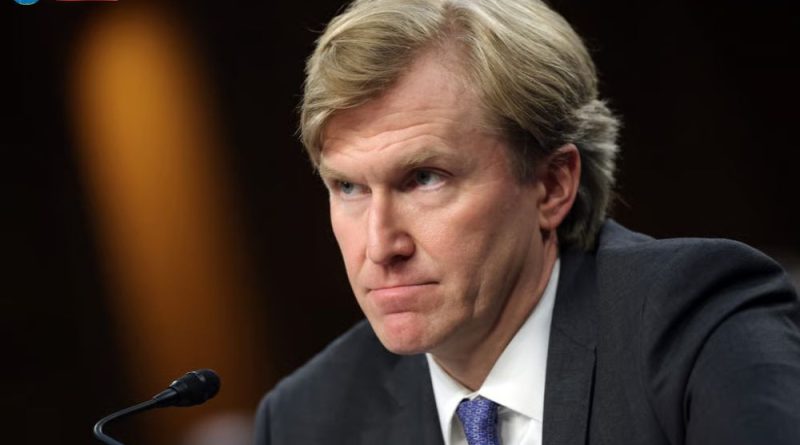
Senior Pentagon officials have openly stated that continued assistance to Ukraine “must not rely on significant U.S. contributions,” emphasizing that European nations must increase both funding and defense production.
The statement was delivered during high-level defense discussions, highlighting what officials describe as an unavoidable strategic necessity rather than a temporary adjustment.
At the center of this shift is a recognition that U.S. military resources are finite. Washington has increasingly prioritized other global challenges, forcing a reassessment of its role in the Ukraine conflict.
Collapse of US Military Aid in 2025
One of the most striking factors behind the Ukraine Support Shift Pentagon stance is the dramatic decline in U.S. military assistance.
According to data from the Ukraine Support Tracker, American military aid to Ukraine fell by approximately 99 percent in 2025, effectively halting large-scale direct support.
This represents a sharp reversal from earlier years, when the United States was the dominant provider of advanced weapons systems, intelligence, and financial aid.
Historically, U.S. contributions have played a disproportionately important role. Although they accounted for a smaller share of total equipment, they often included the most advanced and decisive military capabilities.
The sudden reduction has forced allies to rethink how Ukraine’s war effort will be sustained.
Europe Steps Into the Spotlight
As U.S. contributions declined, European nations moved quickly to fill the gap. Data shows that Europe increased its financial and humanitarian aid by 59 percent, while military assistance rose by 67 percent compared to earlier averages.
This surge has helped maintain overall support levels for Ukraine, preventing a collapse in its defense capabilities. However, Pentagon officials argue that Europe must go even further.
Countries such as Germany, the United Kingdom, and the Netherlands have already committed new packages focused on air defense systems, drones, and long-range strike capabilities.
The expectation is that Europe will transition from a supporting role into the primary driver of Ukraine’s defense.
The Role of NATO and New Funding Models
To adapt to the new reality, NATO allies are increasingly relying on alternative funding mechanisms such as the Prioritised Ukraine Requirements List (PURL).
This program allows countries to purchase U.S.-made weapons for Ukraine using their own budgets, ensuring continued access to advanced technology without direct American funding.
In 2025 alone, the initiative generated billions of euros in arms purchases, demonstrating its growing importance.
However, experts warn that the long-term success of this model depends on sustained political will and industrial capacity within Europe.
Political Drivers Behind the Shift
The Ukraine Support Shift Pentagon policy is deeply tied to changes in U.S. domestic and foreign policy priorities.
Under the current administration, there has been a clear emphasis on reducing overseas military commitments and focusing on national interests. Vice President JD Vance has even highlighted the halt in Ukraine aid as a key policy achievement.
This reflects a broader debate within the United States about the country’s global role. While some leaders advocate continued support for Ukraine, others argue that Europe should bear the primary responsibility for regional security.
Competing Global Priorities
Another major factor influencing the Pentagon’s stance is the growing strain on U.S. military resources.
Recent reports indicate that the United States is balancing multiple conflicts, including escalating tensions in the Middle East. In some cases, weapons originally intended for Ukraine have been delayed or considered for redeployment elsewhere.
This highlights a key challenge: the U.S. defense industry is under pressure to meet competing demands, making it increasingly difficult to sustain large-scale support for Ukraine.
Implications for Ukraine’s War Effort
For Ukraine, the implications of the Ukraine Support Shift Pentagon policy are significant.
While European support has increased, the reduction in U.S. assistance raises concerns about the availability of advanced weaponry and long-term sustainability. American systems have historically been among the most effective on the battlefield.
Without consistent access to such resources, Ukraine may face greater difficulty maintaining its defensive and offensive operations.
At the same time, the shift could encourage Ukraine to further develop its domestic defense industry and strengthen ties with European partners.
A Changing Global Security Landscape
The Pentagon’s message reflects a broader transformation in global security dynamics.
For decades, the United States has been the primary guarantor of security in Europe. However, recent developments suggest a move toward a more balanced distribution of responsibilities.
European leaders have increasingly called for greater strategic autonomy, including higher defense spending and expanded industrial capacity.
This trend aligns with the Pentagon’s vision of a more self-reliant Europe capable of managing regional security challenges.
Challenges Facing European Allies
Despite their increased contributions, European nations face several obstacles in taking on a larger role:
- Limited defense production capacity
- Budget constraints in some countries
- Coordination challenges within NATO
- Political divisions over long-term strategy
Addressing these challenges will be essential to ensuring that Ukraine continues to receive adequate support.
Long-Term Outlook for Ukraine Support
Looking ahead, the Ukraine Support Shift Pentagon strategy is likely to shape the future of the conflict and the broader international response.
If European nations successfully scale up their efforts, Ukraine may be able to sustain its defense despite reduced U.S. involvement. However, failure to do so could weaken its position and alter the balance of power on the battlefield.
The situation also raises important questions about the future of NATO and the evolving role of the United States in global security.
Conclusion
The Pentagon’s warning that Ukraine support cannot rely on American contributions marks a defining moment in the war and in transatlantic relations.
It signals a clear shift in strategy—one that places greater responsibility on European allies while reflecting changing U.S. priorities.
As the conflict continues, the success of this new approach will depend on Europe’s ability to step up and sustain its commitments. For Ukraine, the stakes remain extraordinarily high.
In an increasingly complex geopolitical landscape, the Ukraine Support Shift Pentagon directive underscores a simple reality: global alliances are evolving, and so too are the responsibilities within them.