Macklemore’s tour exit from Ed Sheeran’s U.S. stadium shows has become one of the most closely watched music controversies of September 2026 after the rapper’s outspoken support for Palestine triggered backlash and venue restrictions.
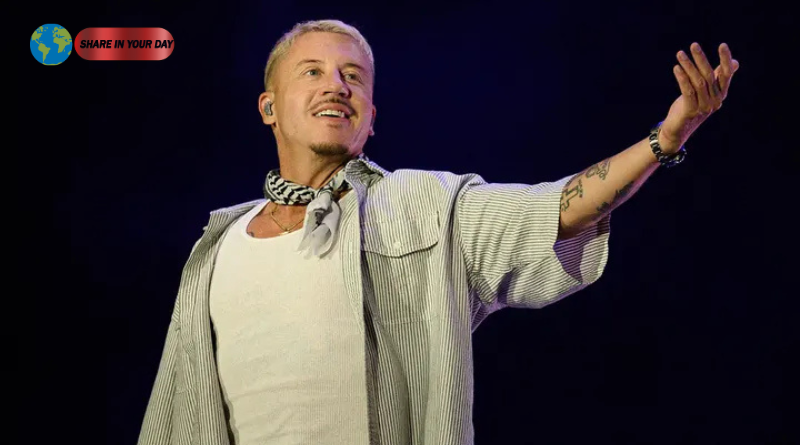
The Macklemore tour exit followed performances at New Jersey’s MetLife Stadium on Sept. 4 and 5, where the rapper used his opening sets to deliver a political message about the Israel-Gaza conflict. He wore a keffiyeh, displayed footage connected to Gaza and performed his pro-Palestinian song “Hind’s Hall.” He also encouraged the crowd to chant “Free Palestine.”
The controversy intensified when Robert Kraft, owner of the New England Patriots and the Kraft Group, confirmed that Macklemore would not be allowed to perform at Gillette Stadium during Sheeran’s upcoming shows.
Sheeran is scheduled to perform at the Massachusetts venue on Sept. 25 and 26. According to reporting from Fox News and ESPN, Kraft said Macklemore’s recent actions and what he described as a broader history of antisemitic rhetoric and imagery were factors in the decision.
The situation ultimately expanded beyond one stadium.
Messina Touring Group, the promoter for Sheeran’s U.S. Loop Tour, confirmed that Macklemore would not appear at the remaining U.S. dates after multiple venues indicated that they would not host shows with him on the lineup.
Macklemore Tour Exit Began With MetLife Stadium Performances
The controversy traces back to Macklemore’s opening performances for Sheeran in New Jersey.
During the Sept. 4 show at MetLife Stadium, Macklemore addressed the situation in Gaza and the occupied West Bank. He told the audience that people affected by the conflict had not been forgotten and used his performance to draw attention to the Palestinian cause.
The following performance continued the political message.
Macklemore performed “Hind’s Hall,” a song that directly addresses the Israel-Gaza conflict. The performance included imagery depicting destruction in Gaza, while the rapper wore a keffiyeh and encouraged fans to voice support for Palestine.
The performances quickly spread across social media, generating support from some viewers and strong criticism from others.
An Israeli American Council petition reportedly called for Macklemore to be removed from the tour. The controversy also drew criticism from singer Pink, who objected to the imagery and argued that the discussion needed to acknowledge the fears and experiences of Jewish people as well.
That reaction placed Sheeran’s tour in the middle of a politically charged debate that extended well beyond music.
Robert Kraft Blocks Macklemore From Gillette Stadium
Robert Kraft became a central figure in the controversy after Gillette Stadium refused to allow Macklemore to perform during Sheeran’s Massachusetts dates.
Kraft, whose Kraft Group owns Gillette Stadium, said the venue has a responsibility to maintain a welcoming environment and prevent events at the stadium from becoming platforms for hate speech.
In a statement reported by ESPN, Kraft pointed specifically to Macklemore’s recent stage actions and material shared during the MetLife Stadium performances. He also referred to what he characterized as a broader history of antisemitic rhetoric and imagery that he said had been deeply offensive to members of the Jewish community.
The decision is significant because Gillette Stadium is not simply a concert venue.
It is the home of the New England Patriots and is controlled by Kraft-related business interests. That gives Kraft considerable influence over which artists can perform at the facility.
The dispute also carries particular weight because Kraft has been a prominent public voice against antisemitism.
His position has long extended beyond professional football, making his decision regarding Macklemore part of a broader public stance about combating anti-Jewish hate.
Macklemore Says Robert Kraft Influenced Other Stadium Owners
Macklemore offered a different perspective on how the situation developed.
In a lengthy statement posted to Instagram, the rapper said Sheeran told him that Kraft had contacted the singer following the MetLife Stadium performances.
Macklemore claimed Kraft had rallied other stadium owners and that Sheeran faced a situation in which upcoming shows could be affected if the rapper remained part of the tour.
Those claims have become an important part of the controversy, although they should be distinguished from what the tour promoter has independently confirmed.
Messina Touring Group said multiple venues had notified the tour that they would not allow concerts to proceed with Macklemore on the lineup. The promoter said keeping him on the tour could have resulted in cancellations and affected hundreds of thousands of fans.
That explanation ultimately resulted in Macklemore’s removal from the remaining U.S. dates.
Eight of the final 10 scheduled tour stops were reportedly set to take place at NFL stadiums, making venue approval particularly important to the tour’s continuation.
Ed Sheeran’s Role Comes Under Scrutiny
The controversy has also placed Ed Sheeran in an uncomfortable position.
Macklemore and Sheeran have a longstanding friendship, according to Macklemore’s own comments. Yet the decision to remove him from the tour illustrates the difficult balance major artists face when political activism collides with commercial entertainment.
Macklemore said Sheeran’s team made the decision to remove him from the U.S. tour.
At the same time, Macklemore suggested that the decision was driven by pressure from stadium operators rather than simply by Sheeran’s personal disagreement with his political views.
Sheeran’s representatives have not publicly offered a detailed response comparable to Macklemore’s account, according to current reporting.
The distinction matters because the decision involves several different parties: the artist, the tour promoter, venue operators and the stadium owners.
Each has different commercial and legal considerations.
Why Macklemore’s “Hind’s Hall” Performance Matters
The song at the center of much of the controversy is “Hind’s Hall.”
Macklemore released the song as a direct response to pro-Palestinian demonstrations and the Israel-Gaza conflict. It became one of his most prominent examples of political activism through music.
His decision to perform it during a major stadium tour was therefore not an isolated comment.
Instead, it represented a deliberate use of a huge entertainment platform to communicate a political position.
At MetLife Stadium, that message reached a large concert audience. Video from the performances then circulated online, extending the reach far beyond the venue itself.
For supporters, Macklemore’s actions represented freedom of expression and an attempt to draw attention to Palestinian suffering.
For critics, the performances crossed a line by bringing a highly divisive geopolitical conflict into a major commercial concert and using imagery and language they considered offensive.
That disagreement is at the heart of the controversy.
The Antisemitism Debate
One of the most sensitive aspects of the dispute is the disagreement over the line between criticism of Israel, advocacy for Palestinians and antisemitism.
Kraft has characterized Macklemore’s conduct and broader history as including rhetoric and imagery that he believes are antisemitic. Macklemore, meanwhile, has rejected the characterization and argued that supporting Palestinian rights should not automatically be treated as hostility toward Jewish people.
This distinction has become increasingly important in public debates surrounding the Israel-Gaza conflict.
Artists, activists and political organizations have repeatedly disagreed over where legitimate political criticism ends and discriminatory rhetoric begins.
The Macklemore dispute illustrates how quickly that debate can become consequential when it reaches a major commercial platform.
A stadium has to consider the expectations of performers, fans, business partners and venue operators. At the same time, artists increasingly use concerts as platforms for social and political expression.
The conflict between those interests has no simple answer.
Macklemore Says Losing the Tour Was Worth It
Despite losing his position on Sheeran’s U.S. tour, Macklemore has indicated that he does not regret speaking about Palestine.
In his statement, the rapper acknowledged the professional consequences but maintained that drawing attention to what he considers injustice was more important than protecting his place on a major stadium tour.
That position is consistent with Macklemore’s previous political activism.
He has used his music and public appearances to address social issues for years. The current controversy, however, places his activism on a much larger stage because of Sheeran’s international audience and the number of stadiums involved.
The dispute could therefore have consequences beyond the remaining dates on the Loop Tour.
It may influence how artists, promoters and venues handle political statements during major concerts in the future.
What Happens to Ed Sheeran’s U.S. Shows?
For fans attending Sheeran’s remaining U.S. shows, the immediate consequence is relatively straightforward: Macklemore will no longer be part of the lineup.
The tour promoter has confirmed that he will not perform at the remaining U.S. dates after venues objected to his participation.
Sheeran’s scheduled performances themselves are not being canceled because of Macklemore’s removal.
The decision instead demonstrates how much control venues can exercise over supporting acts, particularly when stadium shows involve multiple commercial stakeholders.
This is especially relevant for large tours.
A stadium concert is not simply a performer renting a stage for a night. It involves venue contracts, promoters, local authorities, security, sponsors, ticket buyers and other commercial interests.
If one element becomes sufficiently controversial, the financial consequences can affect the entire event.
A Bigger Debate Over Politics and Concerts
The Macklemore tour exit raises a broader question: how much political expression should artists be allowed to bring onto major commercial stages?
Musicians have historically used concerts to advocate for political causes.
Artists have spoken about war, civil rights, climate change, elections and humanitarian crises for decades. Fans often expect performers to express themselves freely.
However, stadium operators also have the right to establish rules governing their venues.
That creates a difficult tension.
An artist may see a concert as an opportunity to speak directly to thousands of people. A venue owner may view the same event as a commercial property that must remain accessible to a diverse audience and avoid becoming associated with hateful or inflammatory speech.
The Macklemore controversy brings those competing perspectives into sharp focus.
What the Macklemore Tour Exit Means
The Macklemore tour exit is now more than a disagreement over one performance.
It has become a high-profile confrontation involving music, free expression, venue control, the Israel-Gaza conflict and accusations of antisemitism.
Kraft has defended his decision by arguing that Gillette Stadium should not provide a platform for what he considers hate speech or offensive rhetoric. Macklemore has defended his political advocacy and disputed the characterization of his message.
Meanwhile, Sheeran’s tour promoter has emphasized the practical issue: multiple venues objected to Macklemore remaining on the lineup, creating the possibility that concerts could be canceled and fans affected.
The dispute therefore illustrates the complicated reality of modern stadium touring.
Artists have enormous platforms, but those platforms are often shared with businesses and venue operators that can impose their own boundaries.
For Macklemore, the immediate cost is clear. He has lost his place on one of the biggest U.S. stadium tours of 2026.
But the controversy has also amplified the political message he wanted audiences to hear.
Whether that outcome strengthens his position or further damages his relationship with major venues remains to be seen.
For now, the remaining U.S. dates of Ed Sheeran’s tour will continue without Macklemore, while the debate over political expression, antisemitism and the limits of artistic freedom continues far beyond the concert stage.